Departments of Chemistry, University of Southern California, Los Angeles, CA, USA.
Department of Biochemistry and Institute for Protein Design, University of Washington, Seattle, WA, USA.
Nat Chem. 2021 May;13(5):441-450. doi: 10.1038/s41557-021-00648-8. Epub 2021 Mar 15.
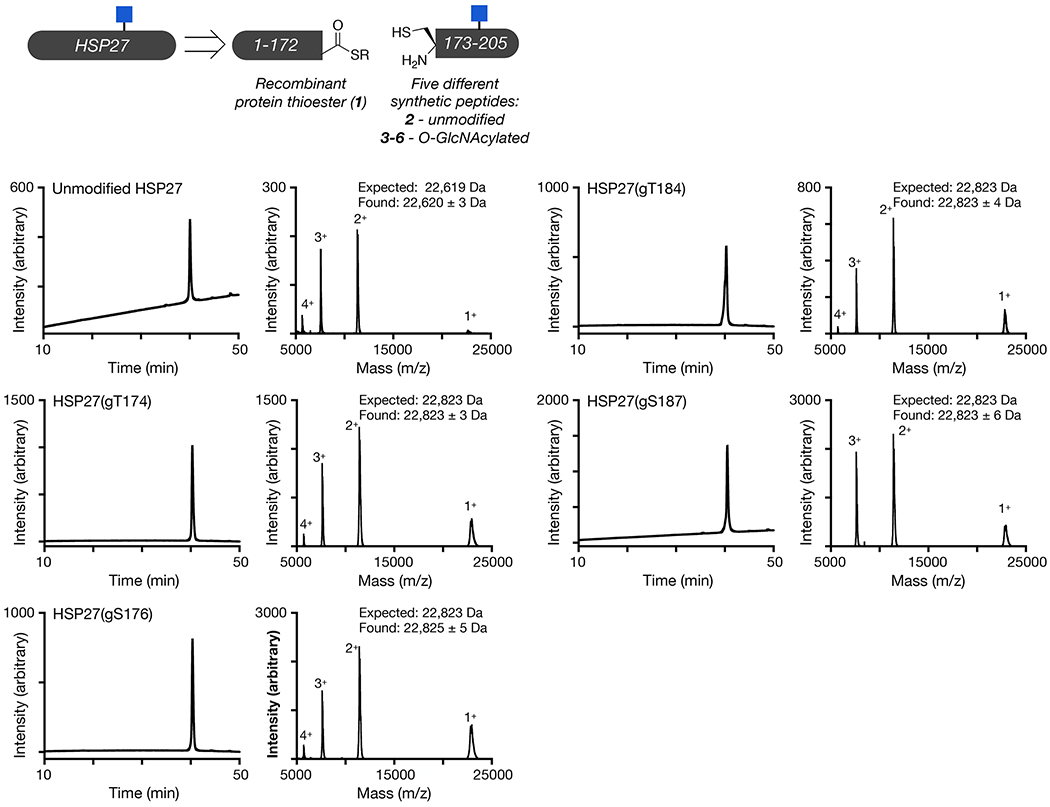
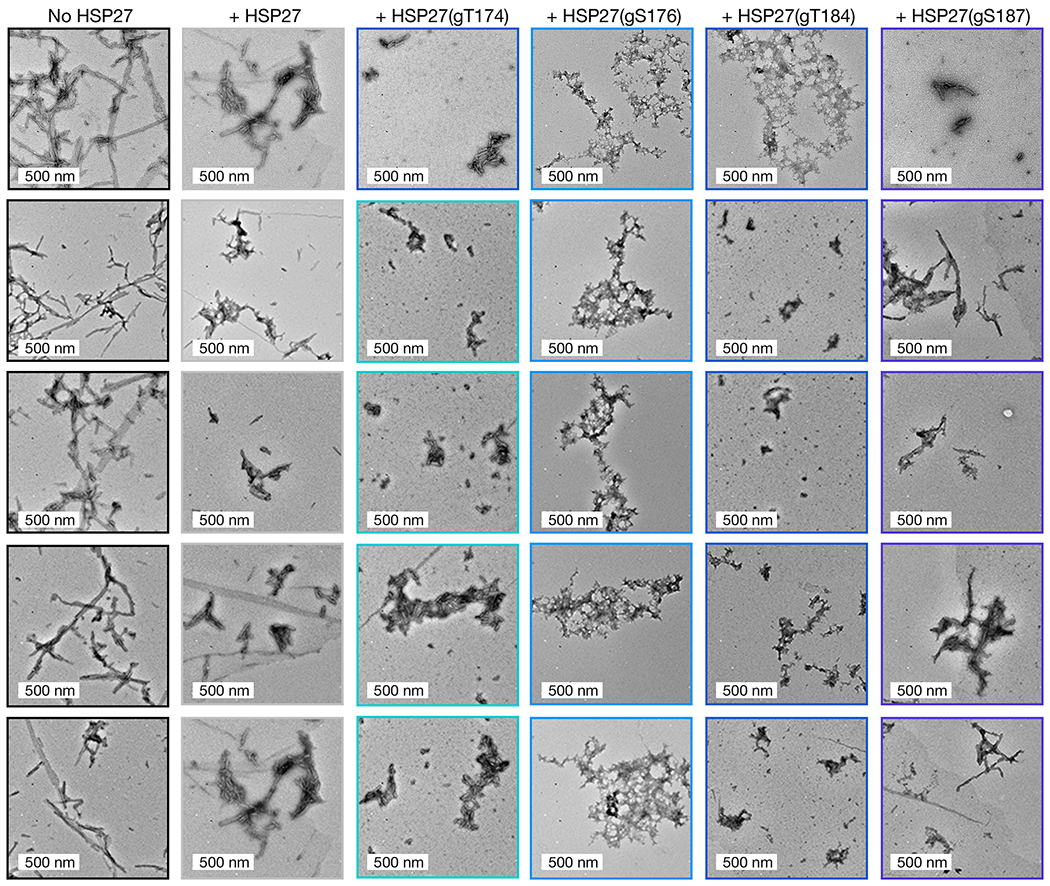
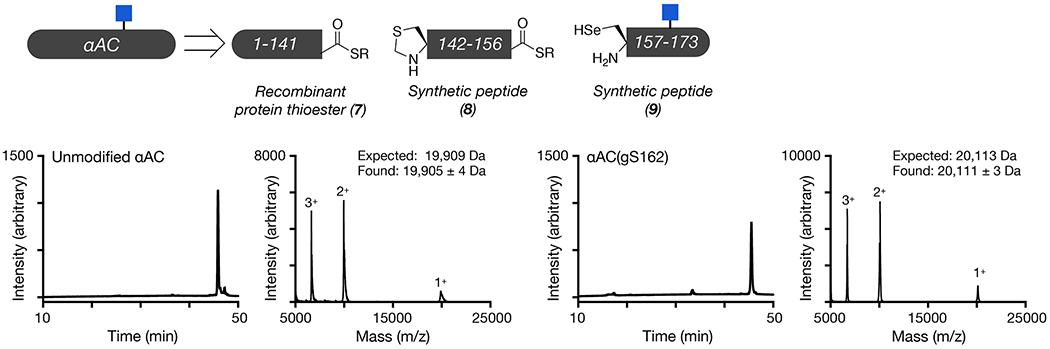
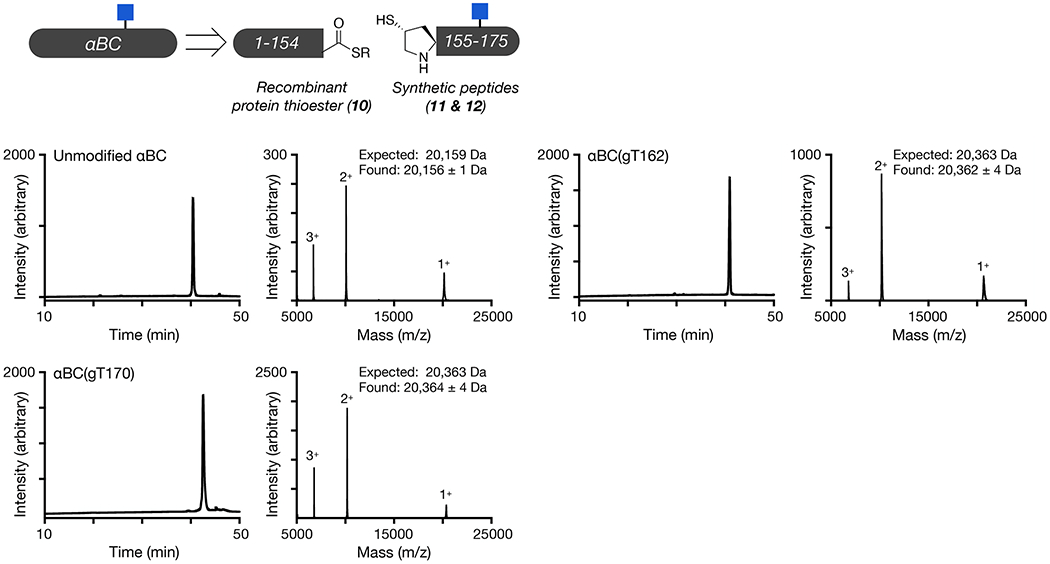
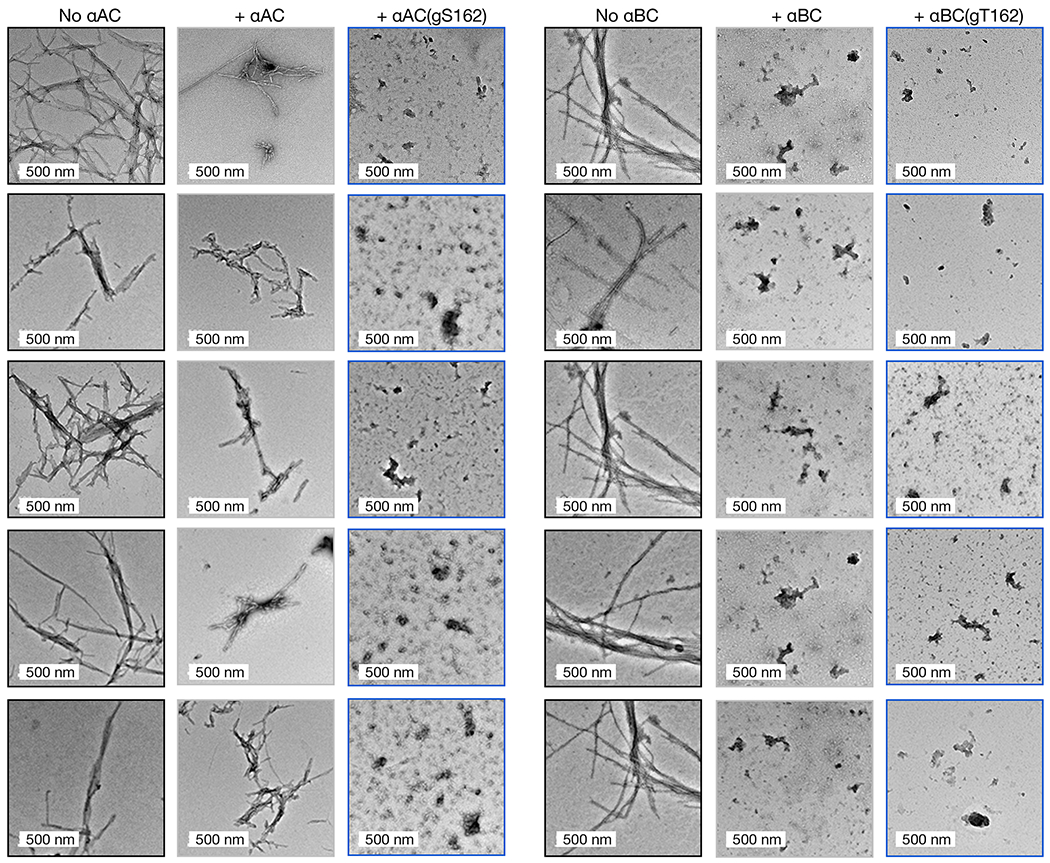
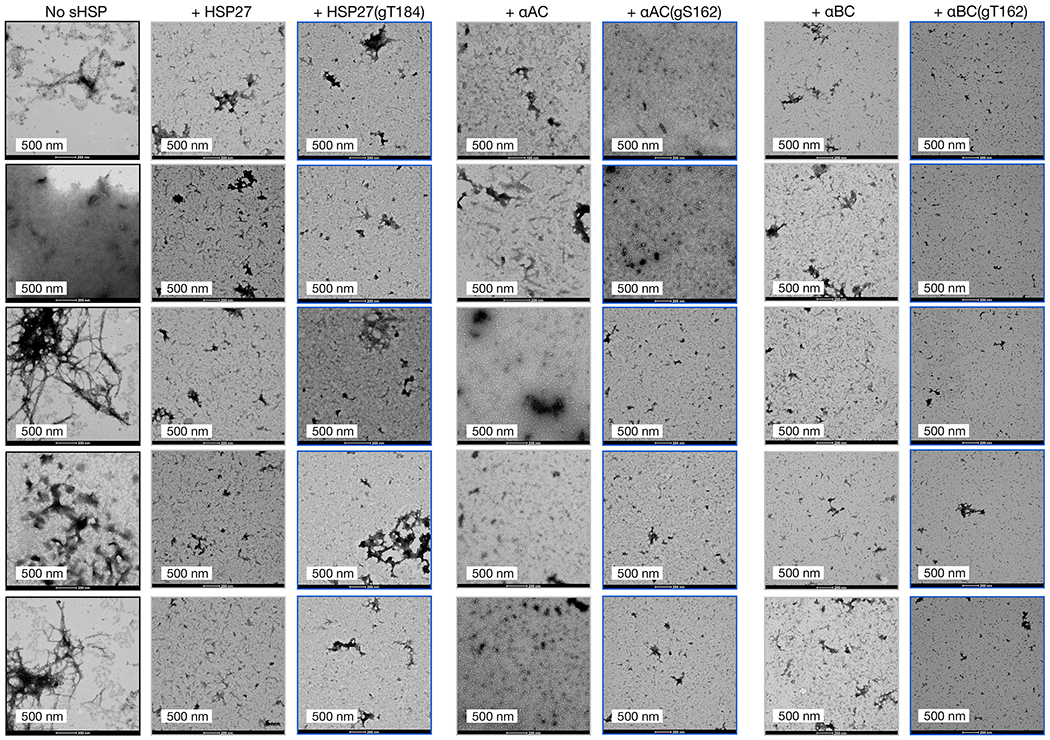
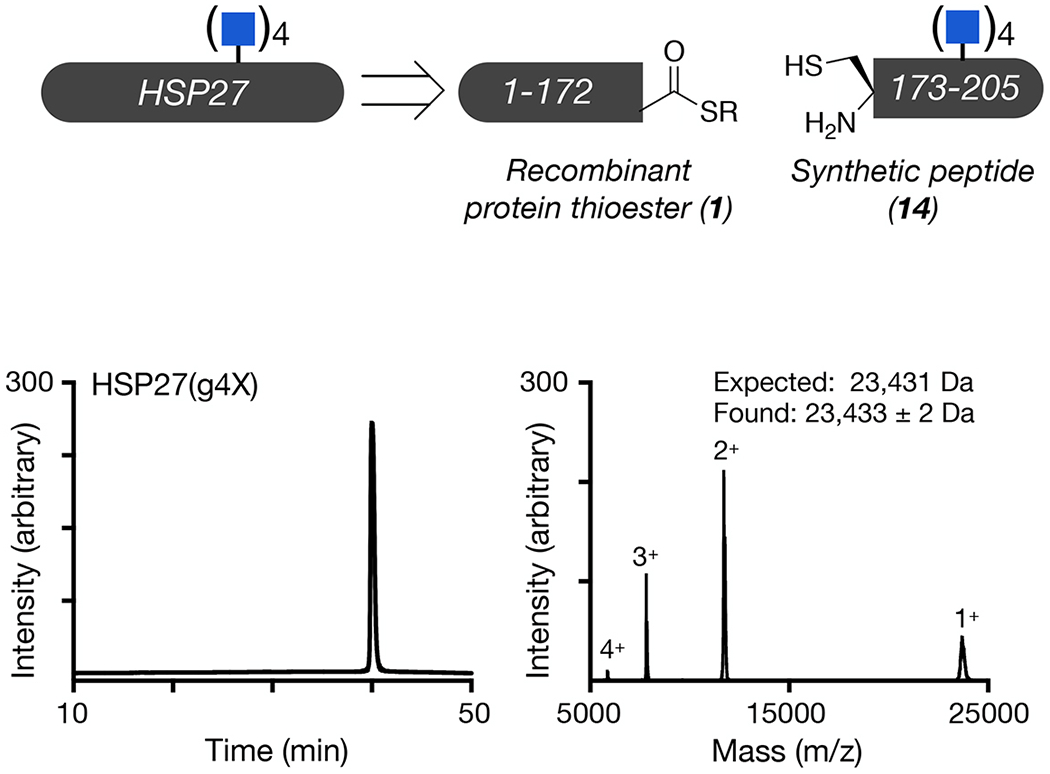
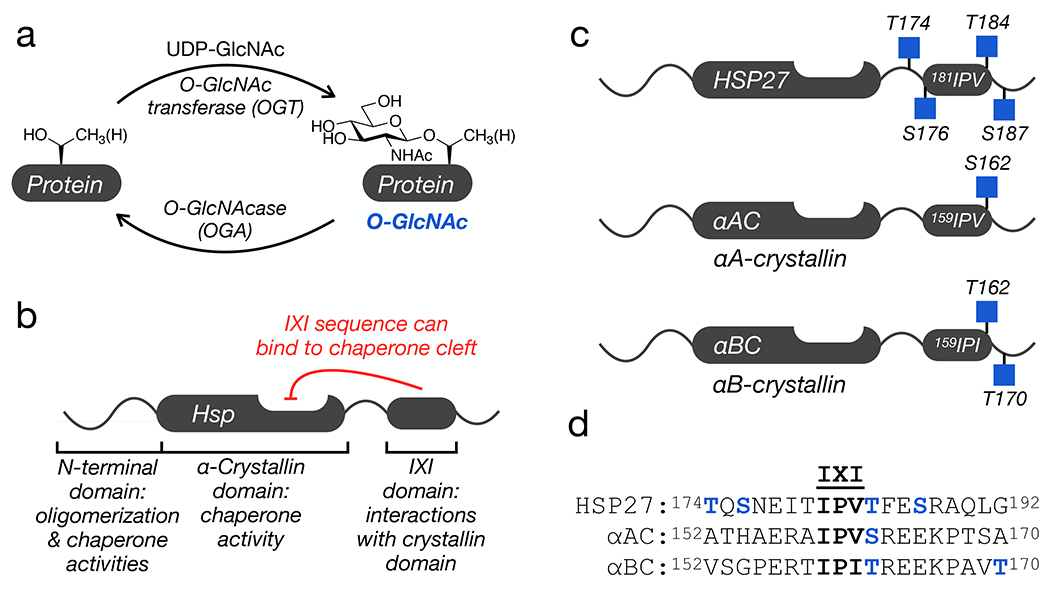
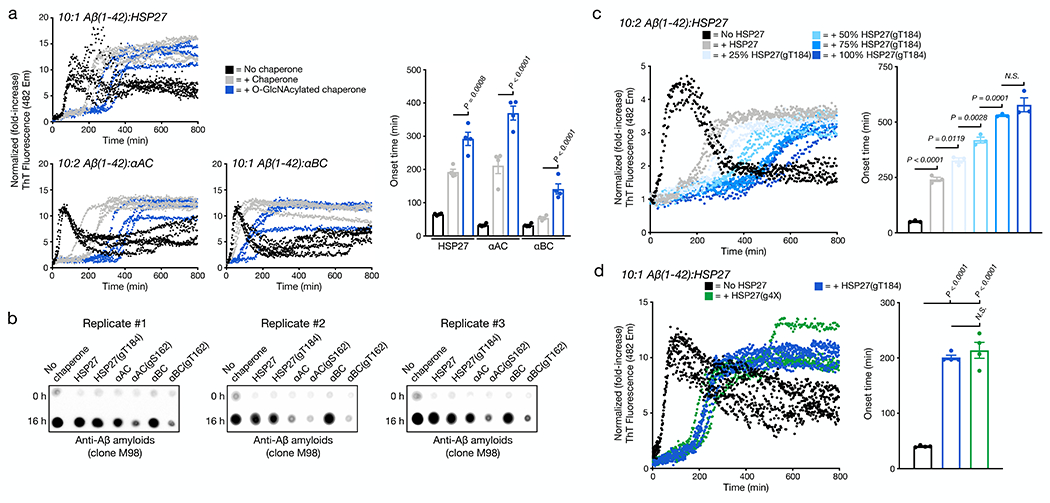
A major role for the intracellular post-translational modification O-GlcNAc appears to be the inhibition of protein aggregation. Most of the previous studies in this area focused on O-GlcNAc modification of the amyloid-forming proteins themselves. Here we used synthetic protein chemistry to discover that O-GlcNAc also activates the anti-amyloid activity of certain small heat shock proteins (sHSPs), a potentially more important modification event that can act broadly and substoichiometrically. More specifically, we found that O-GlcNAc increases the ability of sHSPs to block the amyloid formation of both α-synuclein and Aβ(1-42). Mechanistically, we show that O-GlcNAc near the sHSP IXI-domain prevents its ability to intramolecularly compete with substrate binding. Finally, we found that, although O-GlcNAc levels are globally reduced in Alzheimer's disease brains, the modification of relevant sHSPs is either maintained or increased, which suggests a mechanism to maintain these potentially protective O-GlcNAc modifications. Our results have important implications for neurodegenerative diseases associated with amyloid formation and potentially other areas of sHSP biology.
O-GlcNAc 的一个主要作用似乎是抑制蛋白质聚集。该领域的大多数先前研究都集中在淀粉样蛋白形成蛋白本身的 O-GlcNAc 修饰上。在这里,我们使用合成蛋白质化学发现 O-GlcNAc 还可以激活某些小分子热休克蛋白 (sHSP) 的抗淀粉样活性,这是一种更重要的修饰事件,可以广泛且亚化学计量地发挥作用。更具体地说,我们发现 O-GlcNAc 增加了 sHSP 阻止 α-突触核蛋白和 Aβ(1-42)形成淀粉样纤维的能力。从机制上讲,我们表明 sHSP 的 IXI 结构域附近的 O-GlcNAc 阻止了其与底物结合的分子内竞争能力。最后,我们发现尽管阿尔茨海默病患者大脑中的 O-GlcNAc 水平普遍降低,但相关 sHSP 的修饰要么保持不变,要么增加,这表明了维持这些潜在保护性 O-GlcNAc 修饰的机制。我们的研究结果对与淀粉样蛋白形成相关的神经退行性疾病以及潜在的其他 sHSP 生物学领域具有重要意义。