National Heart and Lung Institute, Imperial College London, 72 Du Cane Road, Hammersmith Hospital, ICTEM Building, W12 0NN London, UK.
Institute for Molecular and Translational Therapeutic Strategies, Hannover Medical School, OE 8886, Carl-Neuberg-Str. 1, J3 Building, Level 1, Room 3030, 30625 Hannover, Germany.
Cardiovasc Res. 2022 Feb 21;118(3):814-827. doi: 10.1093/cvr/cvab084.
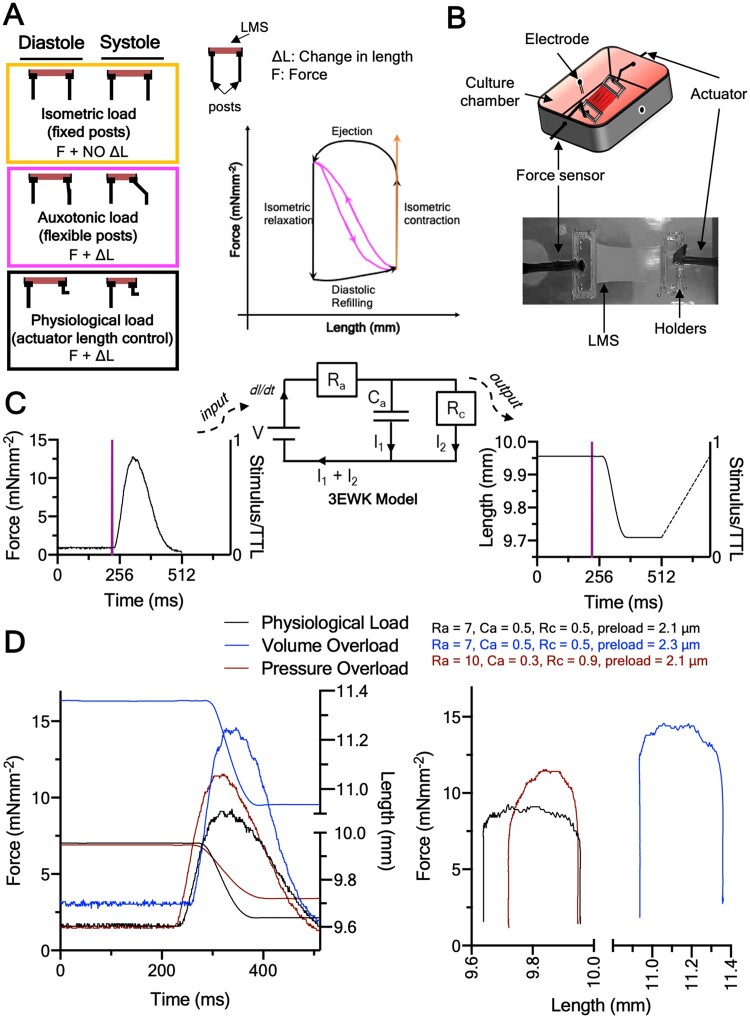
Cardiac remodelling is the process by which the heart adapts to its environment. Mechanical load is a major driver of remodelling. Cardiac tissue culture has been frequently employed for in vitro studies of load-induced remodelling; however, current in vitro protocols (e.g. cyclic stretch, isometric load, and auxotonic load) are oversimplified and do not accurately capture the dynamic sequence of mechanical conformational changes experienced by the heart in vivo. This limits translational scope and relevance of findings.
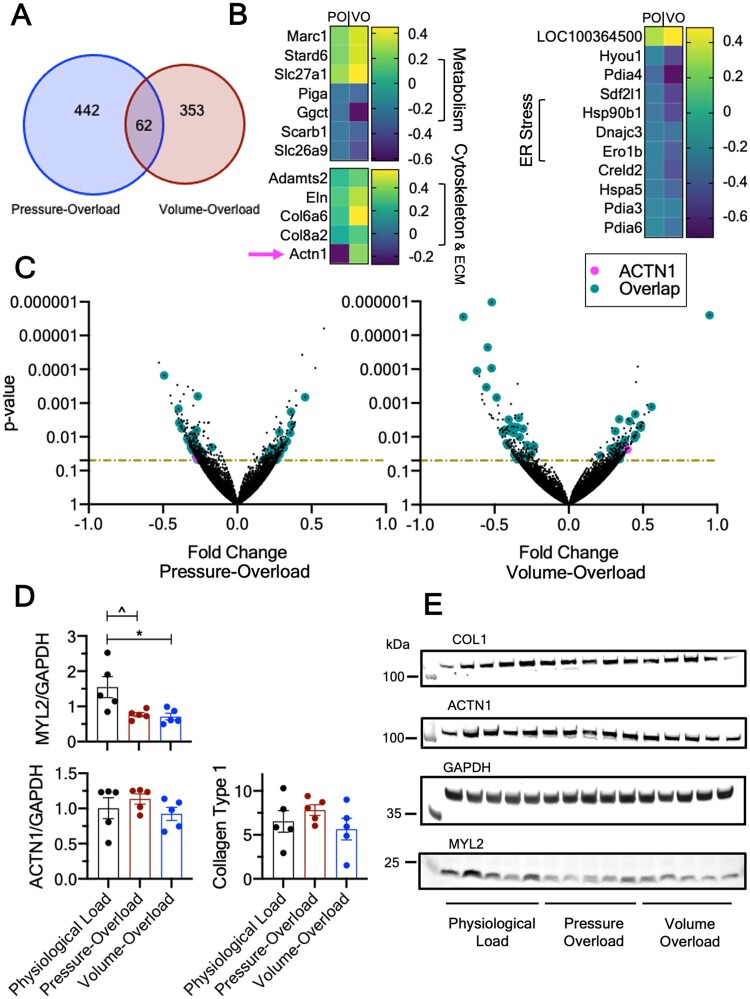
We developed a novel methodology to study chronic load in vitro. We first developed a bioreactor that can recreate the electromechanical events of in vivo pressure-volume loops as in vitro force-length loops. We then used the bioreactor to culture rat living myocardial slices (LMS) for 3 days. The bioreactor operated based on a 3-Element Windkessel circulatory model enabling tissue mechanical loading based on physiologically relevant parameters of afterload and preload. LMS were continuously stretched/relaxed during culture simulating conditions of physiological load (normal preload and afterload), pressure-overload (normal preload and high afterload), or volume-overload (high preload & normal afterload). At the end of culture, functional, structural, and molecular assays were performed to determine load-induced remodelling. Both pressure- and volume-overloaded LMS showed significantly decreased contractility that was more pronounced in the latter compared with physiological load (P < 0.0001). Overloaded groups also showed cardiomyocyte hypertrophy; RNAseq identified shared and unique genes expressed in each overload group. The PI3K-Akt pathway was dysregulated in volume-overload while inflammatory pathways were mostly associated with remodelling in pressure-overloaded LMS.
We have developed a proof-of-concept platform and methodology to recreate remodelling under pathophysiological load in vitro. We show that LMS cultured in our bioreactor remodel as a function of the type of mechanical load applied to them.
心脏重构是心脏适应其环境的过程。机械负荷是重构的主要驱动因素。心脏组织培养常用于体外研究负荷诱导的重构;然而,目前的体外方案(例如循环拉伸、等长负荷和辅助性负荷)过于简化,无法准确捕捉心脏在体内经历的动态机械构象变化序列。这限制了发现的转化范围和相关性。
我们开发了一种新的方法来研究体外慢性负荷。我们首先开发了一种生物反应器,该生物反应器可以将体内压力-容积环的机电事件重新创建为体外力-长度环。然后,我们使用该生物反应器培养大鼠活体心肌切片(LMS)3 天。生物反应器基于三元素风箱循环模型运行,能够根据后负荷和前负荷的生理相关参数对组织进行机械加载。在培养过程中,LMS 持续拉伸/放松,模拟生理负荷(正常前负荷和后负荷)、压力超负荷(正常前负荷和高后负荷)或容积超负荷(高前负荷和正常后负荷)的条件。在培养结束时,进行功能、结构和分子测定,以确定负荷诱导的重构。与生理负荷相比,压力和容积超负荷的 LMS 的收缩性明显降低,后者更为明显(P<0.0001)。超负荷组还表现出心肌细胞肥大;RNAseq 鉴定了每个超负荷组中共同和独特表达的基因。PI3K-Akt 途径在容积超负荷中失调,而炎症途径与压力超负荷的 LMS 重构大多相关。
我们已经开发了一种概念验证平台和方法,可在体外重现病理生理负荷下的重构。我们表明,在我们的生物反应器中培养的 LMS 会根据施加给它们的机械负荷类型进行重构。