Amere Subbarao Sreedhar
CSIR-Centre for Cellular and Molecular Biology, Uppal Road, Hyderabad, 500007, India.
Inflammopharmacology. 2021 Apr;29(2):343-366. doi: 10.1007/s10787-021-00796-w. Epub 2021 Mar 15.
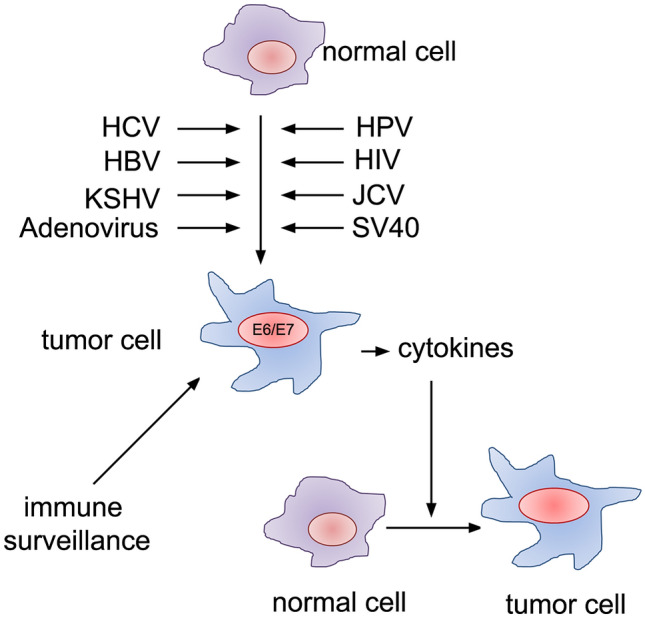
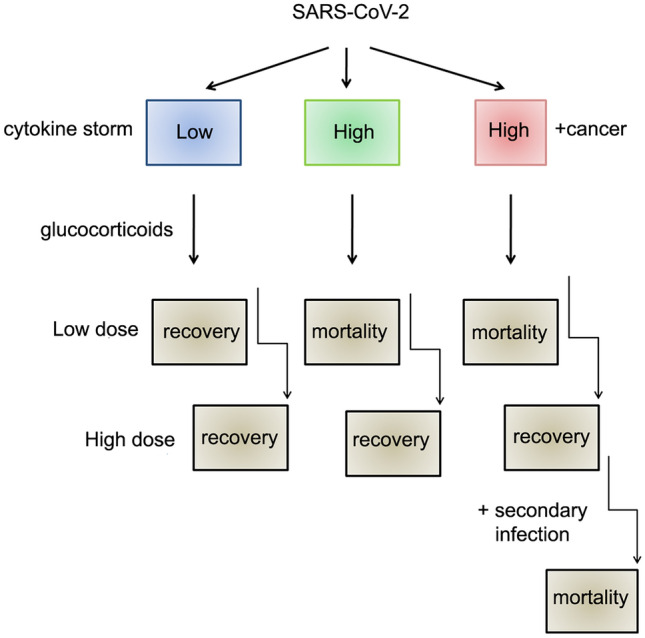
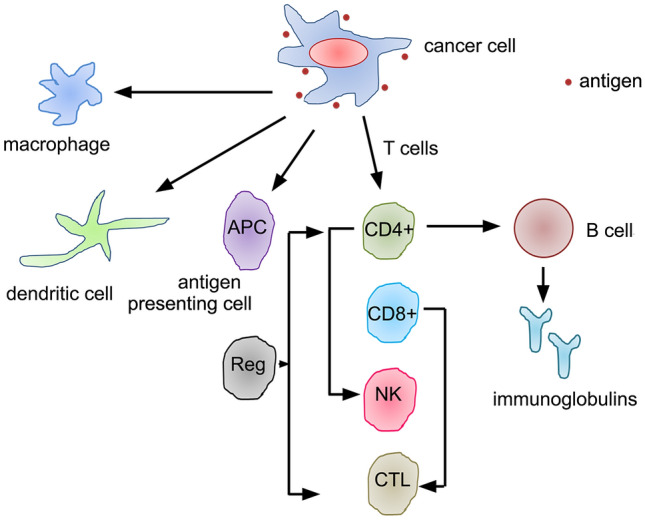
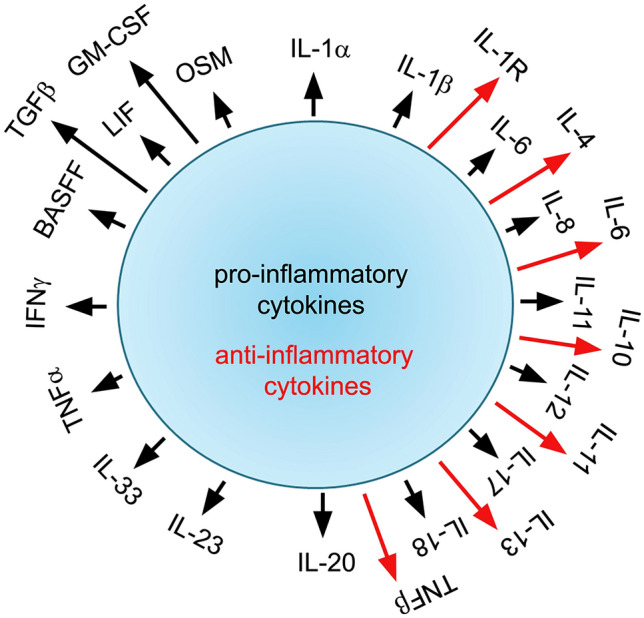
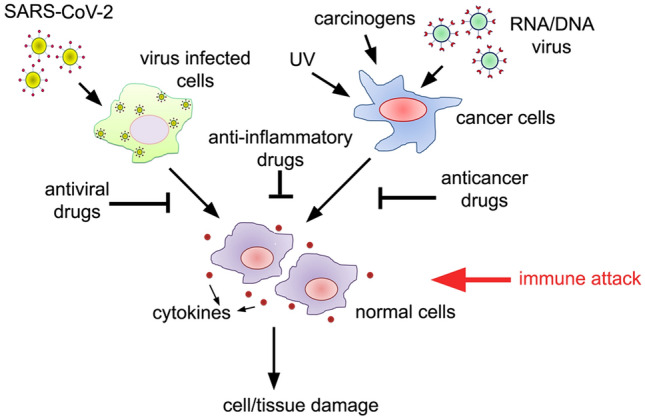
Inflammation is an intrinsic defence mechanism triggered by the immune system against infection or injury. Chronic inflammation allows the host to recover or adapt through cellular and humoral responses, whereas acute inflammation leads to cytokine storms resulting in tissue damage. In this review, we present the overlapping outcomes of cancer inflammation with virus-induced inflammation. The study emphasises how anti-inflammatory drugs that work against cancer inflammation may work against the inflammation caused by the viral infection. It is established that the cytokine storm induced in response to SARS-CoV-2 infection contributes to disease-associated mortality. While cancer remains the second among the diseases associated with mortality worldwide, cancer patients' mortality rates are often observed upon extended periods after illness, usually ranging from months to years. However, the mortality rates associated with COVID-19 disease are robust. The cytokine storm induced by SARS-CoV-2 infection appeared to be responsible for the multi-organ failure and increased mortality rates. Since both cancer and COVID-19 disease share overlapping inflammatory mechanisms, repurposing some anticancer and anti-inflammatory drugs for COVID-19 may lower mortality rates. Here, we review some of these inflammatory mechanisms and propose some potential chemotherapeutic agents to intervene in them. We also discuss the repercussions of anti-inflammatory drugs such as glucocorticoids and hydroxychloroquine with zinc or antiviral drugs such as ivermectin and remdesivir against SARS-CoV-2 induced cytokine storm. In this review, we emphasise on various possibilities to reduce SARS-CoV-2 induced cytokine storm.
炎症是免疫系统针对感染或损伤触发的一种内在防御机制。慢性炎症使宿主能够通过细胞和体液反应恢复或适应,而急性炎症则会导致细胞因子风暴,进而造成组织损伤。在本综述中,我们阐述了癌症炎症与病毒诱导的炎症的重叠结果。该研究强调了对抗癌症炎症的抗炎药物可能如何对抗由病毒感染引起的炎症。已证实,针对严重急性呼吸综合征冠状病毒2(SARS-CoV-2)感染诱导的细胞因子风暴会导致与疾病相关的死亡。虽然癌症在全球与死亡相关的疾病中仍位居第二,但癌症患者的死亡率通常在患病后的较长时期内出现,通常从数月到数年不等。然而,与2019冠状病毒病(COVID-19)相关的死亡率很高。SARS-CoV-2感染诱导的细胞因子风暴似乎是多器官衰竭和死亡率增加的原因。由于癌症和COVID-19疾病具有重叠的炎症机制,将一些抗癌和抗炎药物重新用于治疗COVID-19可能会降低死亡率。在此,我们综述其中一些炎症机制,并提出一些潜在的化疗药物来干预这些机制。我们还讨论了糖皮质激素和羟氯喹与锌等抗炎药物或伊维菌素和瑞德西韦等抗病毒药物对抗SARS-CoV-2诱导的细胞因子风暴的影响。在本综述中,我们强调了减少SARS-CoV-2诱导的细胞因子风暴的各种可能性。