Department of Biochemistry, College of Science, University of Jeddah, Jeddah, Saudi Arabia.
University of Jeddah Center for Scientific and Medical Research, University of Jeddah, Jeddah, Saudi Arabia.
Front Immunol. 2020 Dec 9;11:590459. doi: 10.3389/fimmu.2020.590459. eCollection 2020.
SARS-CoV-2 causes ongoing pandemic coronavirus disease of 2019 (COVID-19), infects the cells of the lower respiratory tract that leads to a cytokine storm in a significant number of patients resulting in severe pneumonia, shortness of breathing, respiratory and organ failure. Extensive studies suggested the role of Vitamin D in suppressing cytokine storm in COVID-19 and reducing viral infection; however, the precise molecular mechanism is not clearly known. In this work, bioinformatics and systems biology approaches were used to understand SARS-CoV-2 induced cytokine pathways and the potential mechanism of Vitamin D in suppressing cytokine storm and enhancing antiviral response.
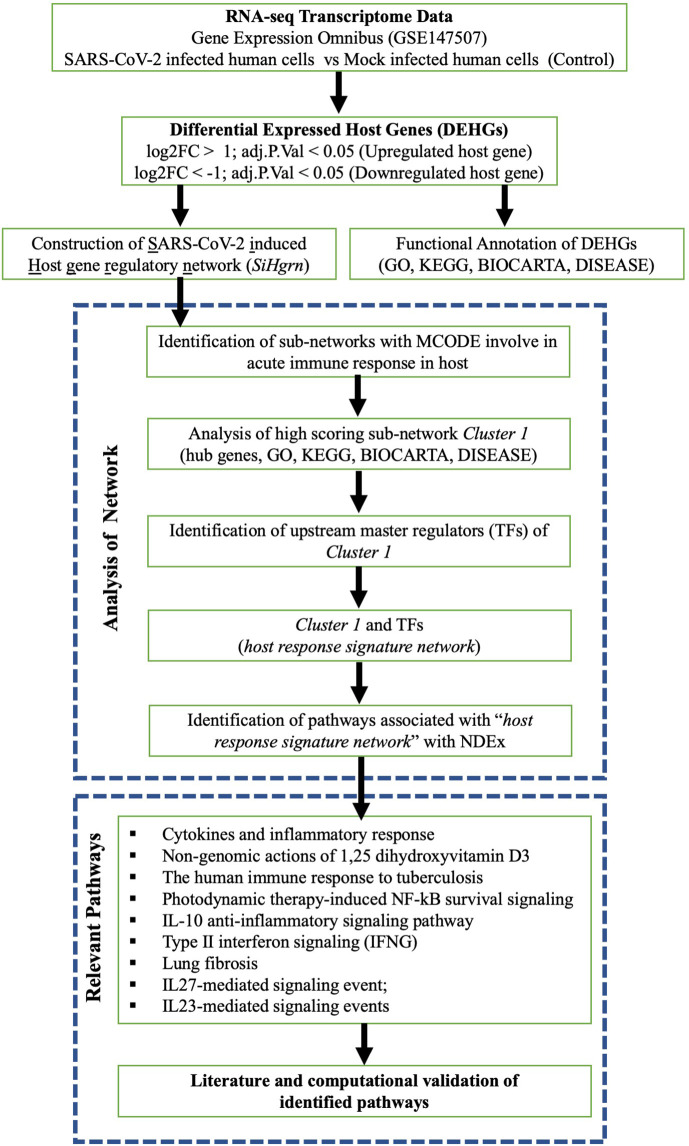
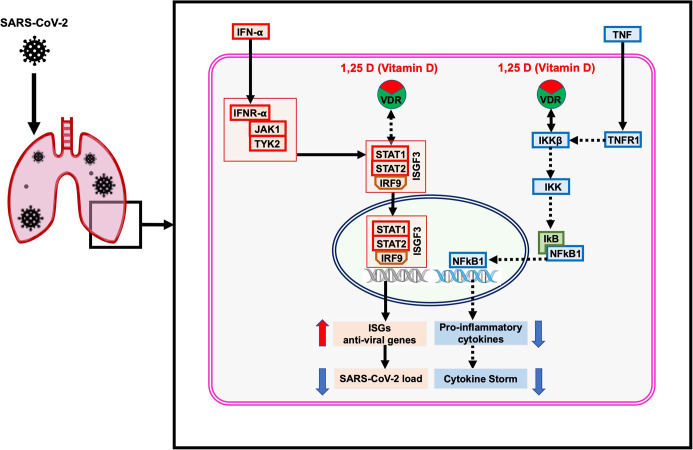
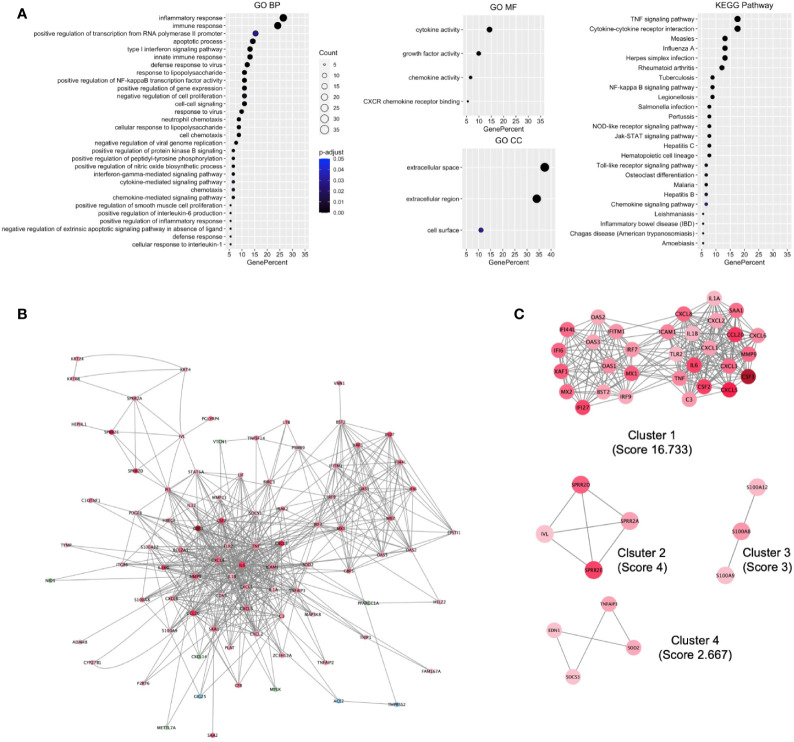
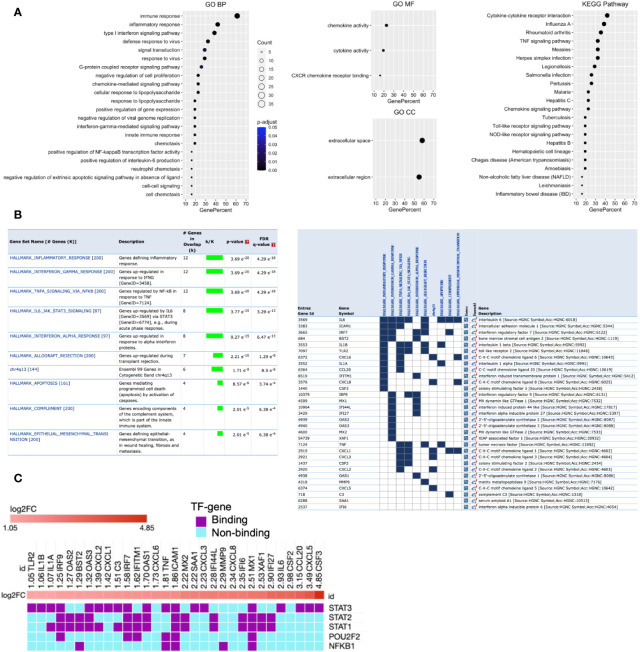
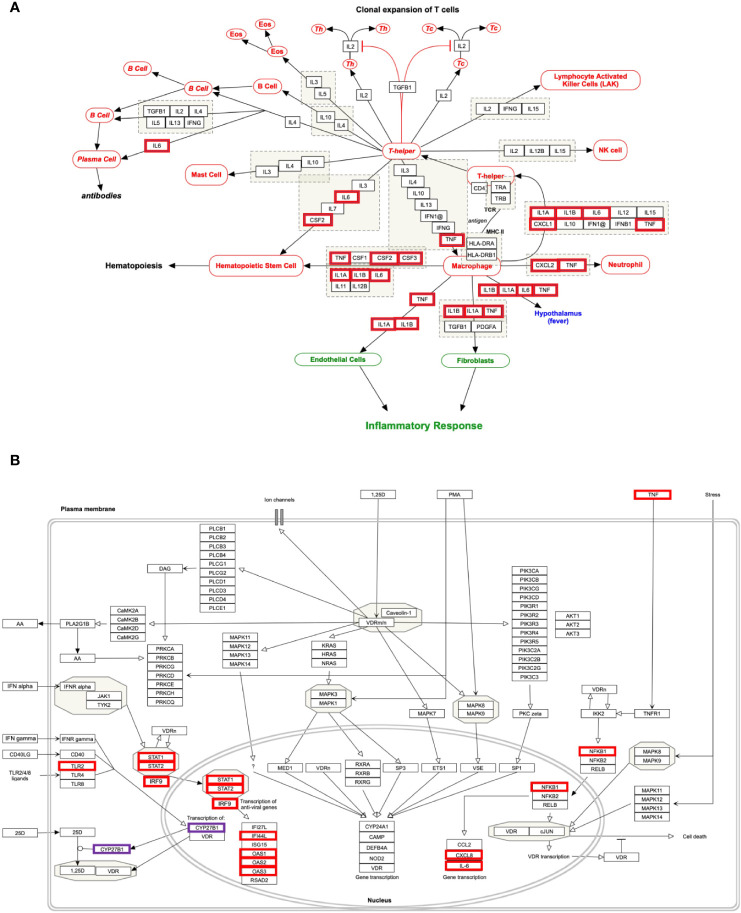
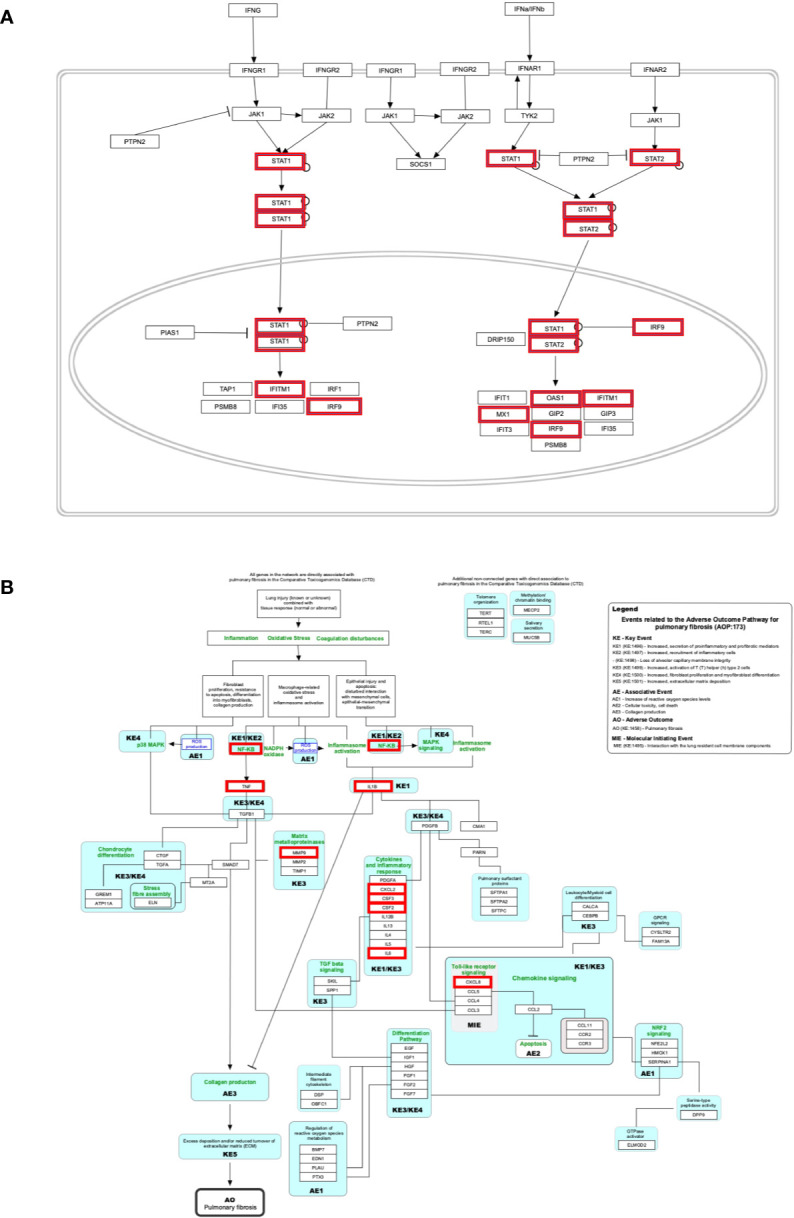
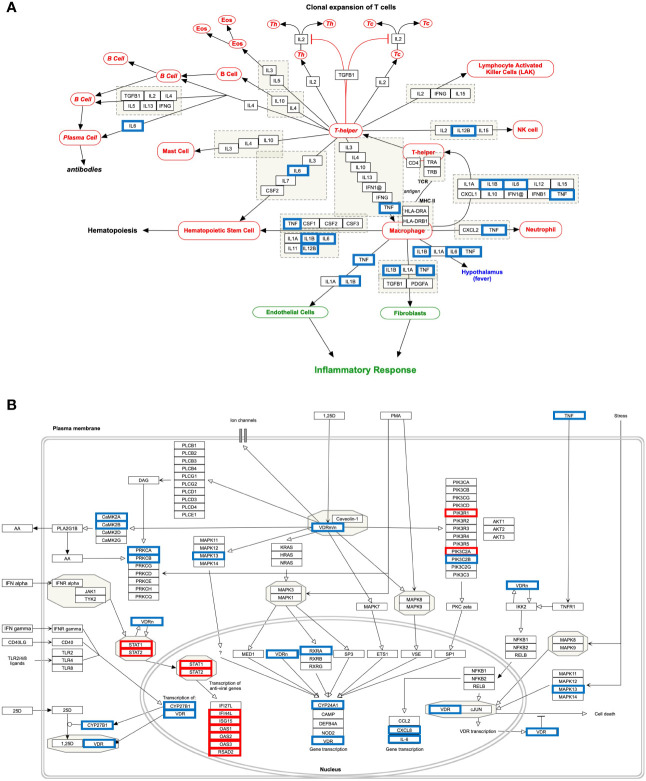
This study used transcriptome data and identified 108 differentially expressed host genes (DEHGs) in SARS-CoV-2 infected normal human bronchial epithelial (NHBE) cells compared to control. Then, the DEHGs was integrated with the human protein-protein interaction data to generate a SARS-CoV-2 induced host gene regulatory network (). Analysis of identified a sub-network "" with the highest MCODE score, 31 up-regulated genes, and predominantly associated immune and inflammatory response. Interestingly, the iRegulone tool identified that "" is under the regulation of transcription factors STAT1, STAT2, STAT3, POU2F2, and NFkB1, collectively referred to as "". Functional enrichment analysis with NDEx revealed that the "" is predominantly associated with critical pathways, including "cytokines and inflammatory response", "non-genomic action of Vitamin D", "the human immune response to tuberculosis", and "lung fibrosis". Finally, in-depth analysis and literature mining revealed that Vitamin D binds with its receptor and could work through two different pathways: (i) it inhibits the expression of pro-inflammatory cytokines through blocking the TNF induced NFkB1 signaling pathway; and (ii) it initiates the expression of interferon-stimulating genes (ISGs) for antiviral defense program through activating the IFN-α induced Jak-STAT signaling pathway.
This comprehensive study identified the pathways associated with cytokine storm in SARS-CoV-2 infection. The proposed underlying mechanism of Vitamin D could be promising in suppressing the cytokine storm and inducing a robust antiviral response in severe COVID-19 patients. The finding in this study urgently needs further experimental validations for the suitability of Vitamin D in combination with IFN-α to control severe COVID-19.
SARS-CoV-2 导致持续流行的 2019 年冠状病毒病(COVID-19),感染下呼吸道细胞,导致大量患者发生细胞因子风暴,进而导致严重肺炎、呼吸急促、呼吸和器官衰竭。广泛的研究表明维生素 D 在抑制 COVID-19 中的细胞因子风暴和减少病毒感染方面发挥作用;然而,确切的分子机制尚不清楚。在这项工作中,我们使用生物信息学和系统生物学方法来理解 SARS-CoV-2 诱导的细胞因子途径以及维生素 D 抑制细胞因子风暴和增强抗病毒反应的潜在机制。
本研究使用转录组数据,鉴定了 108 个在 SARS-CoV-2 感染正常人类支气管上皮(NHBE)细胞与对照相比差异表达的宿主基因(DEHGs)。然后,将 DEHGs 与人类蛋白质-蛋白质相互作用数据集成,生成 SARS-CoV-2 诱导的宿主基因调控网络()。分析确定了具有最高 MCODE 评分的子网络“”,有 31 个上调基因,主要与免疫和炎症反应相关。有趣的是,iRegulone 工具确定“”受转录因子 STAT1、STAT2、STAT3、POU2F2 和 NFkB1 的调节,统称为“”。NDEx 的功能富集分析表明,“”主要与关键途径相关,包括“细胞因子和炎症反应”、“维生素 D 的非基因组作用”、“人类对结核病的免疫反应”和“肺纤维化”。最后,深入分析和文献挖掘表明,维生素 D 与其受体结合,可通过两种不同途径发挥作用:(i)通过阻断 TNF 诱导的 NFkB1 信号通路抑制促炎细胞因子的表达;(ii)通过激活 IFN-α 诱导的 Jak-STAT 信号通路启动干扰素刺激基因(ISGs)的表达以进行抗病毒防御。
本研究全面鉴定了 SARS-CoV-2 感染中与细胞因子风暴相关的途径。维生素 D 的潜在作用机制可能有望抑制严重 COVID-19 患者的细胞因子风暴并诱导强烈的抗病毒反应。本研究的发现迫切需要进一步的实验验证,以确定维生素 D 与 IFN-α 联合控制严重 COVID-19 的适用性。