Iron Research Program, New York Blood Center, New York, NY, USA.
Department of Pathology and Laboratory Medicine, Weill Cornell Medicine, Cornell University, New York, NY, USA.
Br J Haematol. 2021 May;193(3):637-658. doi: 10.1111/bjh.17361. Epub 2021 Mar 15.
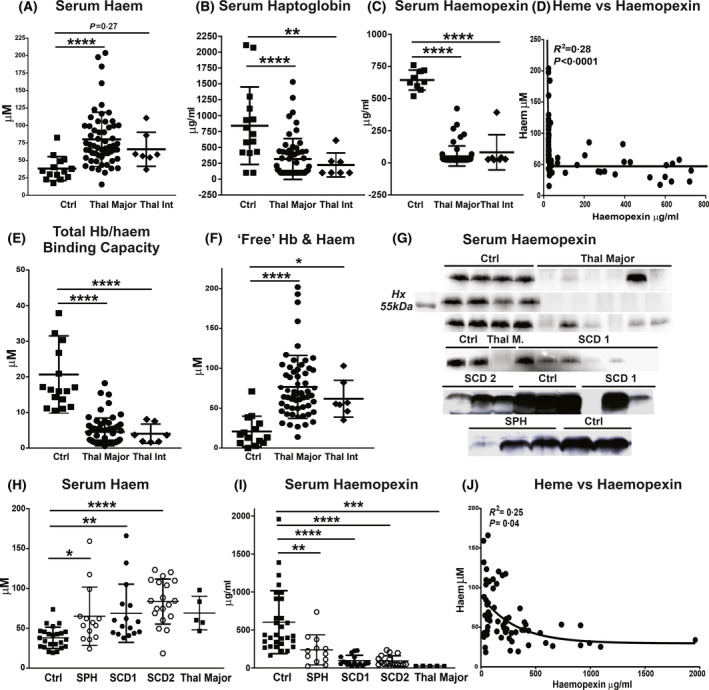
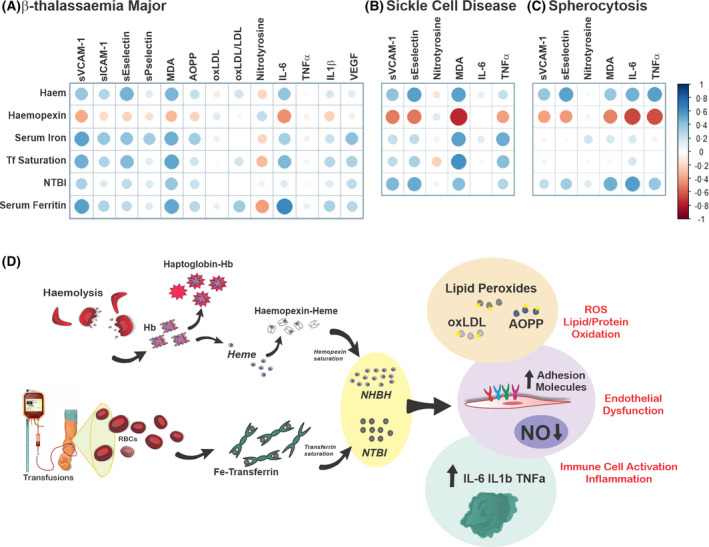
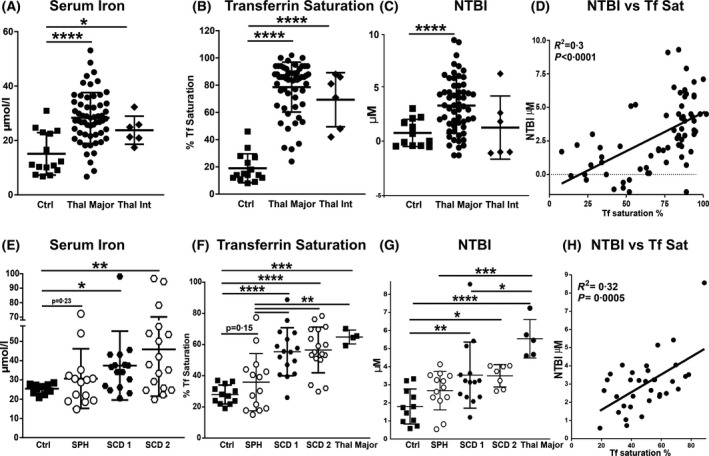
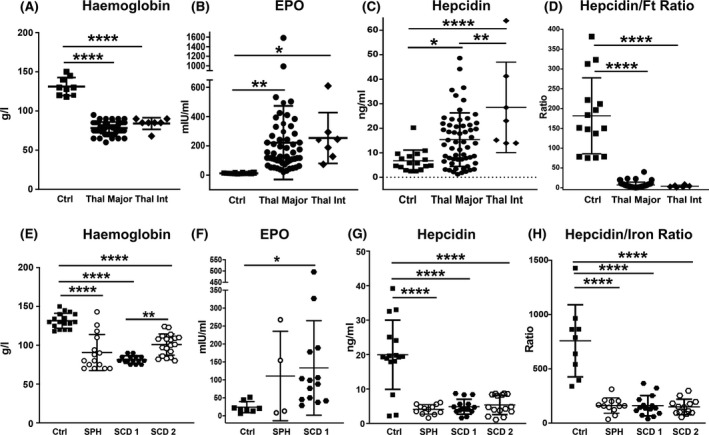
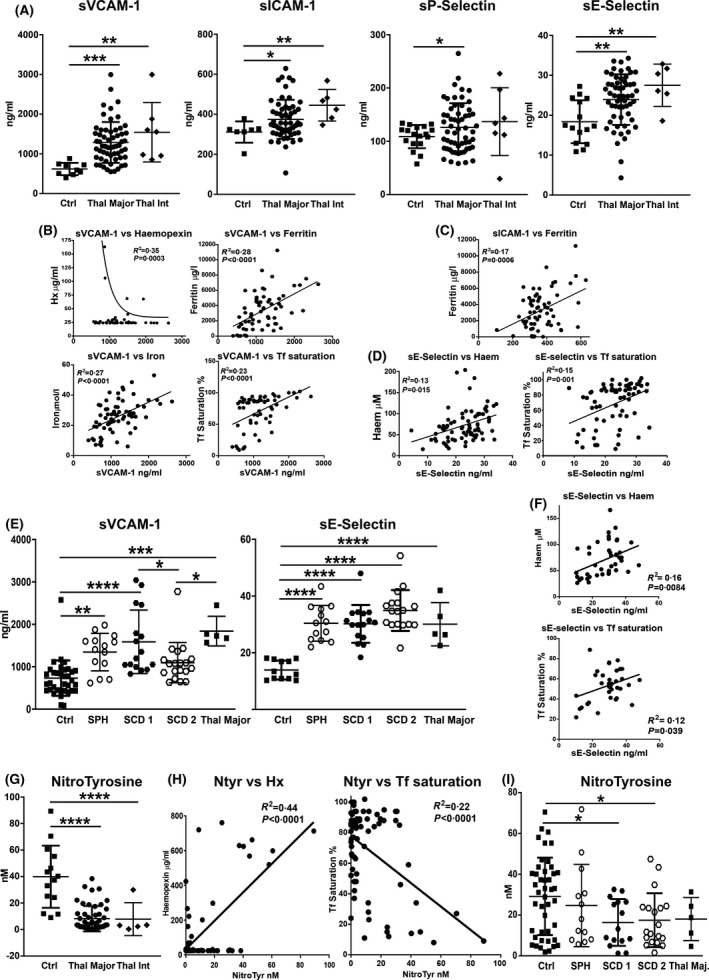
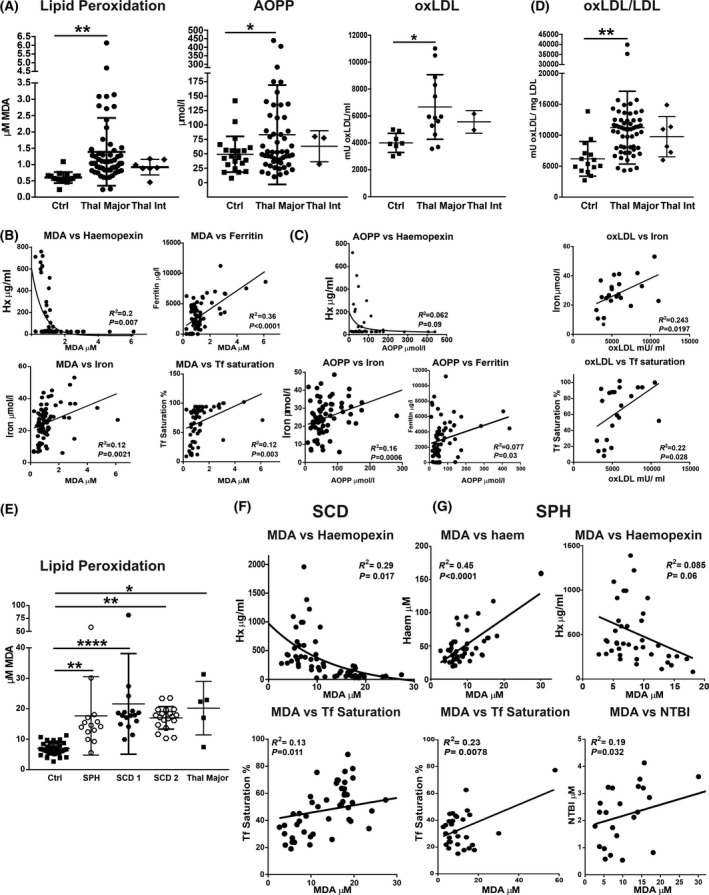
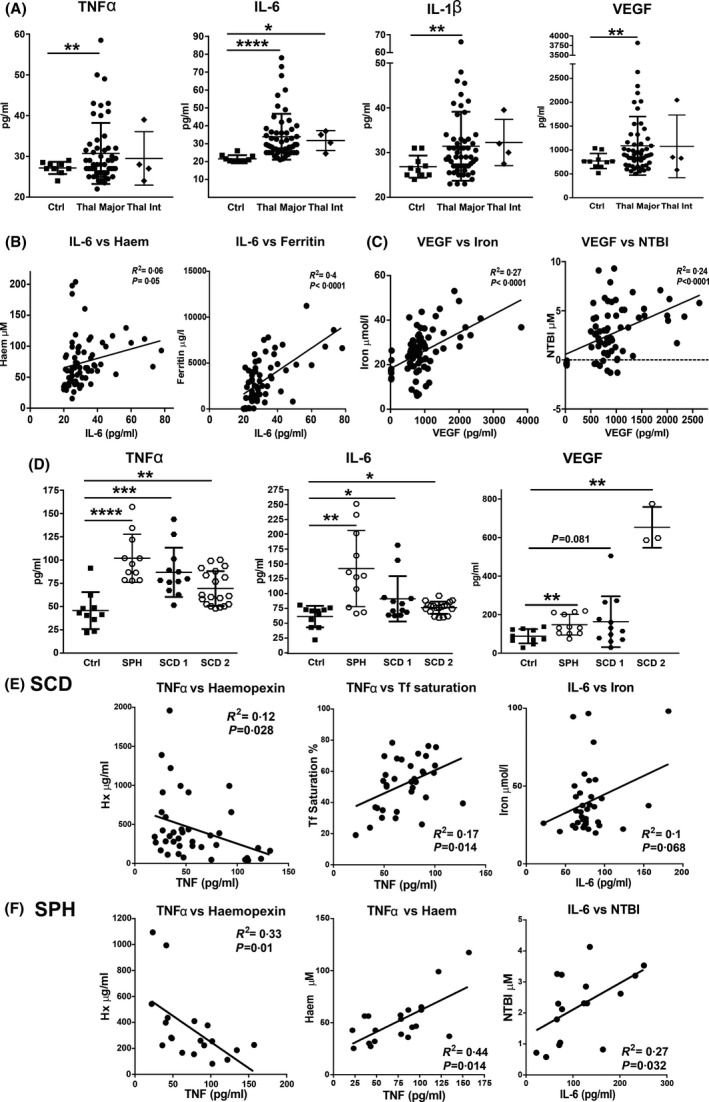
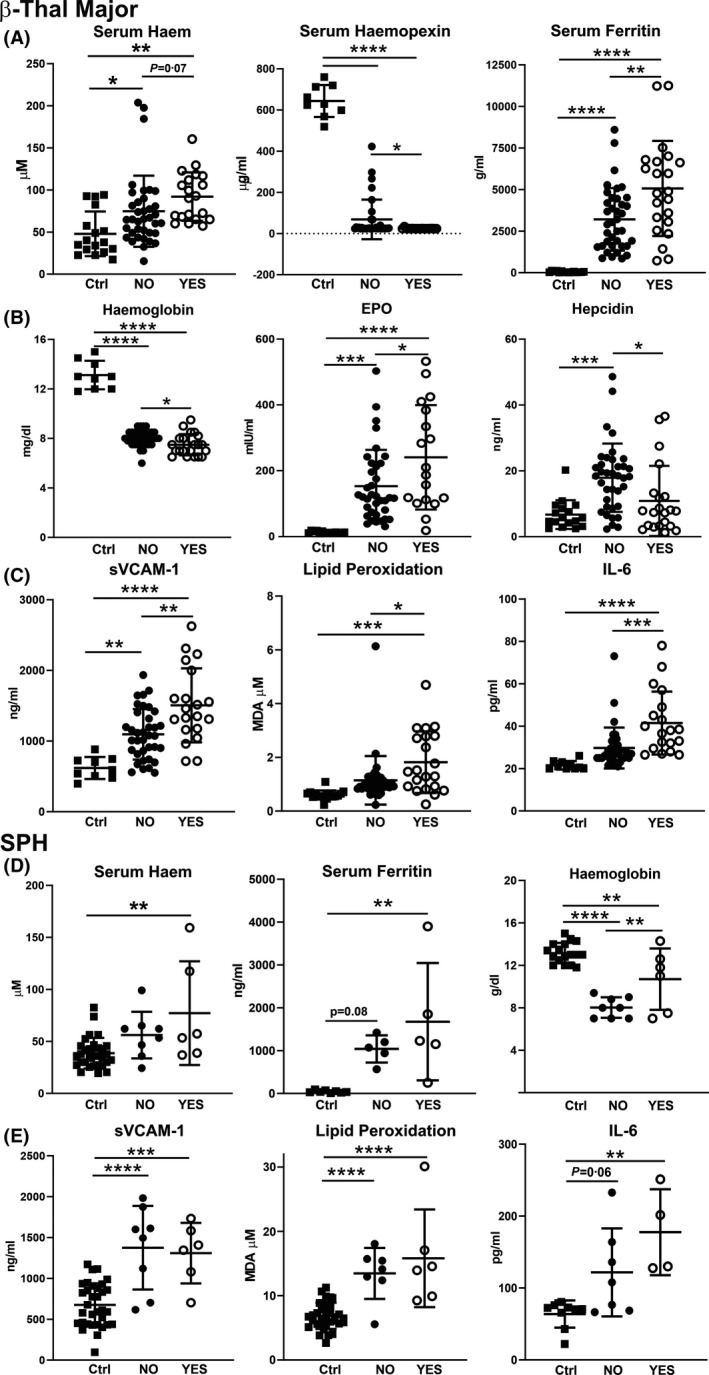
Increasing evidence suggests that free haem and iron exert vasculo-toxic and pro-inflammatory effects by activating endothelial and immune cells. In the present retrospective study, we compared serum samples from transfusion-dependent patients with β-thalassaemia major and intermedia, hereditary spherocytosis and sickle cell disease (SCD). Haemolysis, transfusions and ineffective erythropoiesis contribute to haem and iron overload in haemolytic patients. In all cohorts we observed increased systemic haem and iron levels associated with scavenger depletion and toxic 'free' species formation. Endothelial dysfunction, oxidative stress and inflammation markers were significantly increased compared to healthy donors. In multivariable logistic regression analysis, oxidative stress markers remained significantly associated with both haem- and iron-related parameters, while soluble vascular cell adhesion molecule 1 (sVCAM-1), soluble endothelial selectin (sE-selectin) and tumour necrosis factor α (TNFα) showed the strongest association with haem-related parameters and soluble intercellular adhesion molecule 1 (sICAM-1), sVCAM-1, interleukin 6 (IL-6) and vascular endothelial growth factor (VEGF) with iron-related parameters. While hereditary spherocytosis was associated with the highest IL-6 and TNFα levels, β-thalassaemia major showed limited inflammation compared to SCD. The sVCAM1 increase was significantly lower in patients with SCD receiving exchange compared to simple transfusions. The present results support the involvement of free haem/iron species in the pathogenesis of vascular dysfunction and sterile inflammation in haemolytic diseases, irrespective of the underlying haemolytic mechanism, and highlight the potential therapeutic benefit of iron/haem scavenging therapies in these conditions.
越来越多的证据表明,游离血红素和铁通过激活内皮细胞和免疫细胞,产生血管毒性和促炎作用。在本回顾性研究中,我们比较了依赖输血的β地中海贫血重型和中间型、遗传性球形红细胞增多症和镰状细胞病(SCD)患者的血清样本。溶血、输血和无效红细胞生成导致溶血性患者的血红素和铁过载。在所有队列中,我们观察到系统血红素和铁水平升高,伴随着清除剂耗竭和有毒“游离”物种的形成。与健康供体相比,内皮功能障碍、氧化应激和炎症标志物显著增加。在多变量逻辑回归分析中,与血红素和铁相关的参数相比,氧化应激标志物仍然显著相关,而可溶性血管细胞黏附分子 1(sVCAM-1)、可溶性内皮选择素(sE-选择素)和肿瘤坏死因子α(TNFα)与血红素相关参数的相关性最强,而可溶性细胞间黏附分子 1(sICAM-1)、sVCAM-1、白细胞介素 6(IL-6)和血管内皮生长因子(VEGF)与铁相关参数的相关性最强。虽然遗传性球形红细胞增多症与最高的 IL-6 和 TNFα 水平相关,但β地中海贫血重型与 SCD 相比炎症有限。与单纯输血相比,接受交换的 SCD 患者的 sVCAM1 增加显著降低。这些结果支持游离血红素/铁物种参与溶血性疾病血管功能障碍和无菌性炎症的发病机制,而与潜在的溶血性机制无关,并强调了这些情况下铁/血红素清除治疗的潜在治疗益处。