Division of Pulmonary, Critical Care, and Sleep Medicine, Department of Medicine.
Division of Critical Care Medicine, Albert Einstein College of Medicine, Bronx, New York; and.
Ann Am Thorac Soc. 2021 Aug;18(8):1326-1334. doi: 10.1513/AnnalsATS.202011-1448OC.
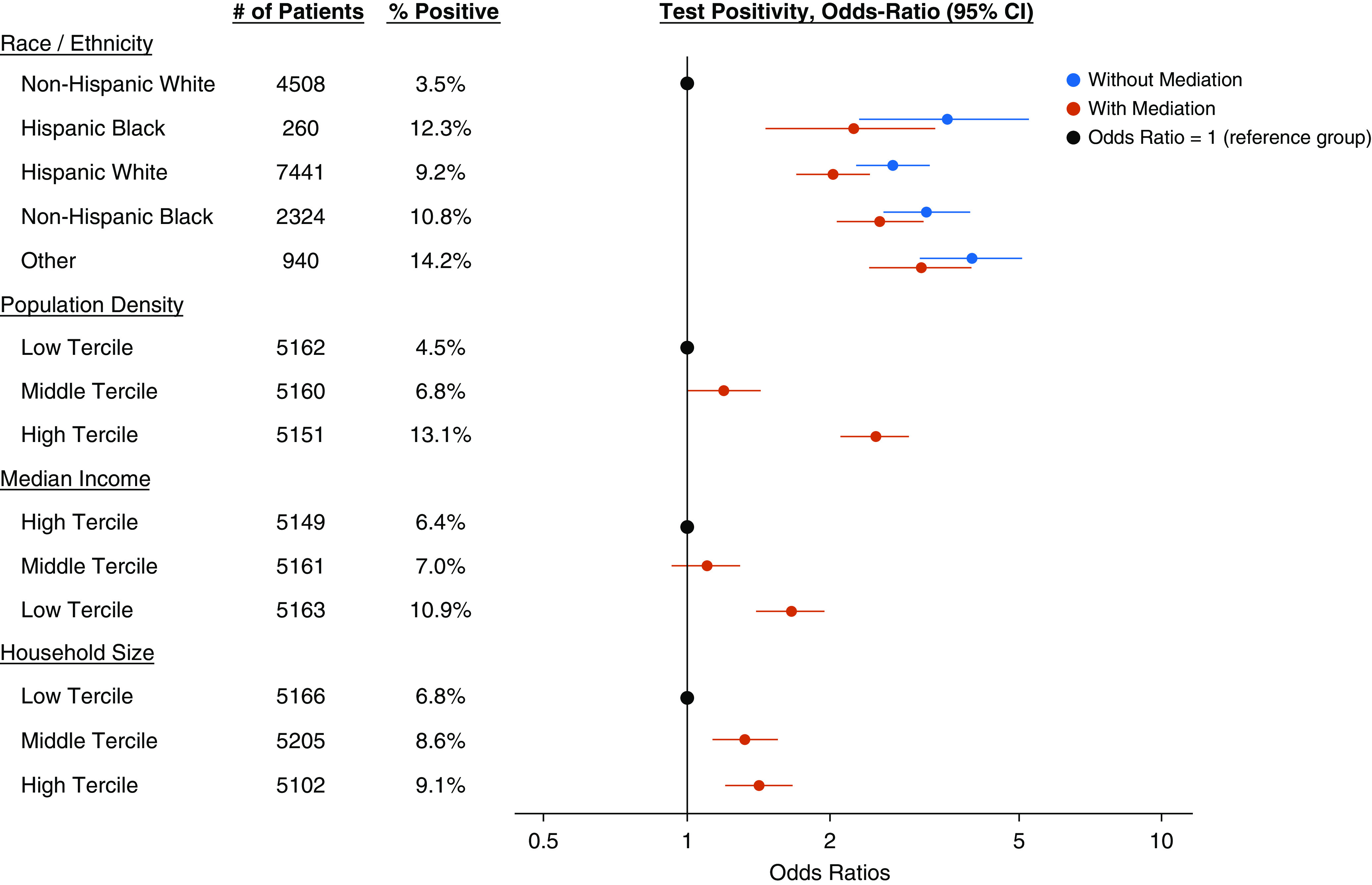
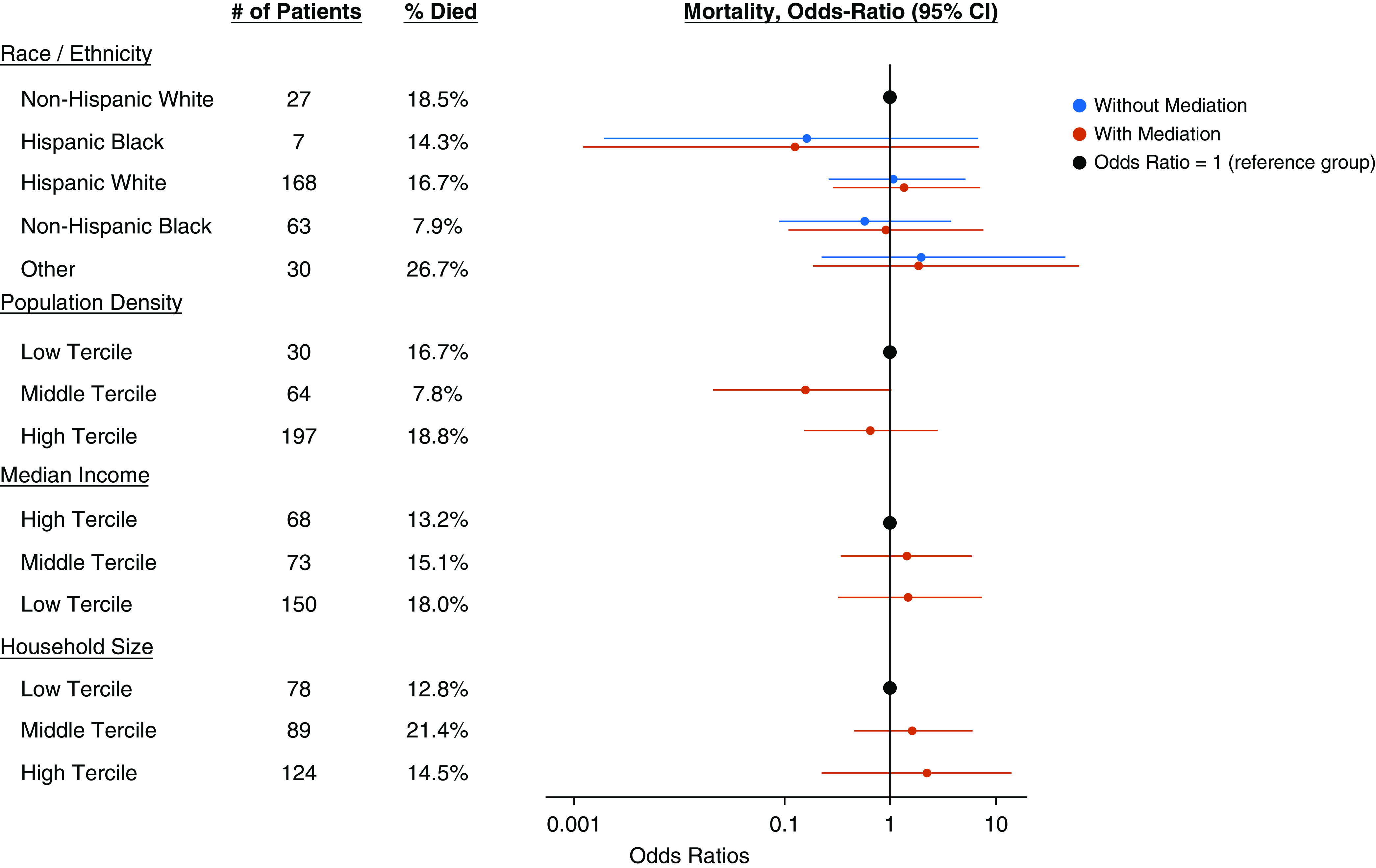
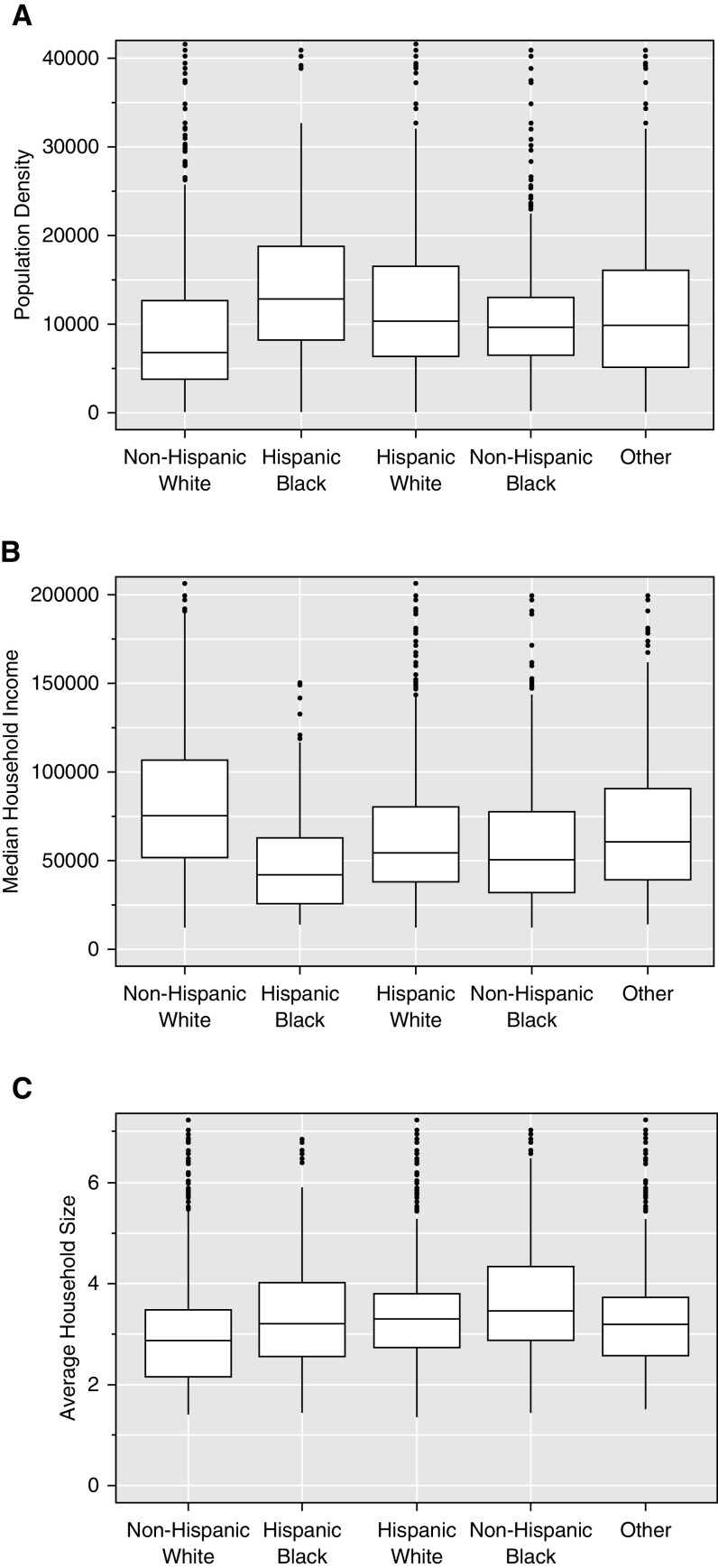
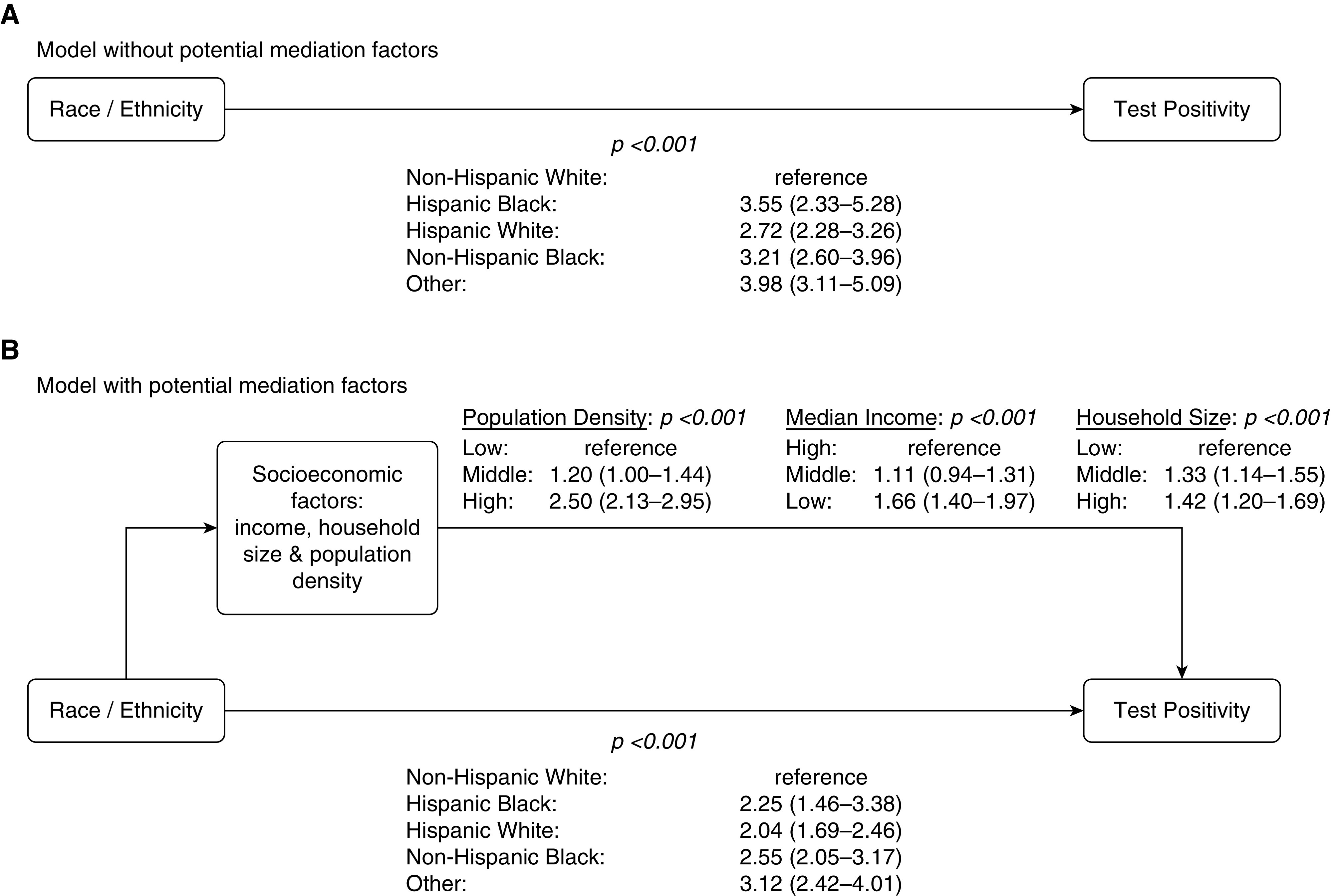
Black race and Hispanic ethnicity are associated with increased risks for coronavirus disease (COVID-19) infection and severity. It is purported that socioeconomic factors may drive this association, but data supporting this assertion are sparse. To evaluate whether socioeconomic factors mediate the association of race/ethnicity with COVID-19 incidence and outcomes. We conducted a retrospective cohort study of adults tested for (cohort 1) or hospitalized with (cohort 2) COVID-19 between March 1, 2020, and July 23, 2020, at the University of Miami Hospital and Clinics. Our primary exposure was race/ethnicity. We considered socioeconomic factors as potential mediators of our exposure's association with outcomes. We used standard statistics to describe our cohorts and multivariable regression modeling to identify associations of race/ethnicity with our primary outcomes, one for each cohort, of test positivity (cohort 1) and hospital mortality (cohort 2). We performed a mediation analysis to see whether household income, population density, and household size mediated the association of race/ethnicity with outcomes. Our cohorts included 15,473 patients tested (29.0% non-Hispanic White, 48.1% Hispanic White, 15.0% non-Hispanic Black, 1.7% Hispanic Black, and 1.6% other) and 295 patients hospitalized (9.2% non-Hispanic White, 56.9% Hispanic White, 21.4% non-Hispanic Black, 2.4% Hispanic Black, and 10.2% other). Among those tested, 1,256 patients (8.1%) tested positive, and, of the hospitalized patients, 47 (15.9%) died. After adjustment for demographics, race/ethnicity was associated with test positivity-odds-ratio (95% confidence interval [CI]) versus non-Hispanic White for Non-Hispanic Black: 3.21 (2.60-3.96), Hispanic White: 2.72 (2.28-3.26), and Hispanic Black: 3.55 (2.33-5.28). Population density mediated this association (percentage mediated, 17%; 95% CI, 11-31%), as did median income (27%; 95% CI, 18-52%) and household size (20%; 95% CI, 12-45%). There was no association between race/ethnicity and mortality, although this analysis was underpowered. Black race and Hispanic ethnicity are associated with an increased odds of COVID-19 positivity. This association is substantially mediated by socioeconomic factors.
黑人和西班牙裔与冠状病毒病(COVID-19)感染和严重程度增加有关。据称,社会经济因素可能导致这种关联,但支持这一说法的数据很少。为了评估社会经济因素是否调节了种族/民族与 COVID-19 发病率和结局的关联。我们对 2020 年 3 月 1 日至 2020 年 7 月 23 日在迈阿密大学医院和诊所接受 COVID-19 检测(队列 1)或住院治疗(队列 2)的成年人进行了回顾性队列研究。我们的主要暴露因素是种族/民族。我们认为社会经济因素可能是我们暴露因素与结局之间关联的潜在中介。我们使用标准统计学方法描述我们的队列,并使用多变量回归模型来确定种族/民族与我们主要结局的关联,每个队列一个,分别是队列 1 的检测阳性率和队列 2 的住院死亡率。我们进行了中介分析,以确定家庭收入、人口密度和家庭规模是否调节了种族/民族与结局的关联。我们的队列包括 15473 名接受检测的患者(29.0%为非西班牙裔白人,48.1%为西班牙裔白人,15.0%为非西班牙裔黑人,1.7%为西班牙裔黑人,1.6%为其他)和 295 名住院患者(9.2%为非西班牙裔白人,56.9%为西班牙裔白人,21.4%为非西班牙裔黑人,2.4%为西班牙裔黑人,10.2%为其他)。在接受检测的患者中,有 1256 名(8.1%)患者检测呈阳性,住院患者中,有 47 名(15.9%)死亡。在调整人口统计学因素后,与非西班牙裔白人相比,非西班牙裔黑人的检测阳性率比值(95%置信区间[CI])为 3.21(2.60-3.96),西班牙裔白人为 2.72(2.28-3.26),西班牙裔黑人为 3.55(2.33-5.28)。人口密度(17%;95%CI,11-31%)和中位收入(27%;95%CI,18-52%)以及家庭规模(20%;95%CI,12-45%)调节了这种关联。种族/民族与死亡率之间没有关联,尽管这项分析的效力不足。黑人种族和西班牙裔与 COVID-19 阳性的几率增加有关。这种关联主要受社会经济因素的调节。