Center for Molecular Biology 'Severo Ochoa' (CBMSO) CSIC/UAM, Madrid 28049, Spain.
Networking Research Center on Neurodegenerative Diseases (CIBERNED), Instituto de Salud Carlos III, Madrid 28031, Spain.
Brain. 2021 Aug 17;144(7):2009-2023. doi: 10.1093/brain/awab087.
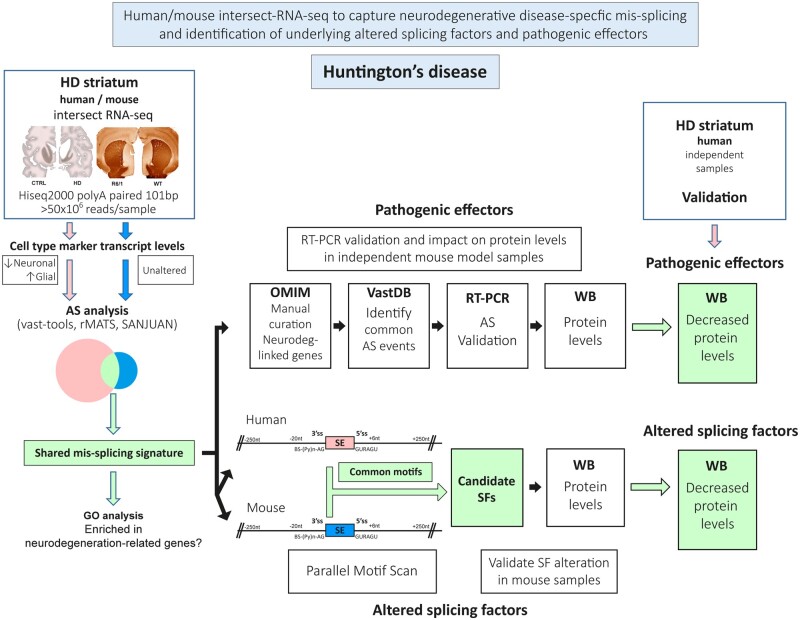
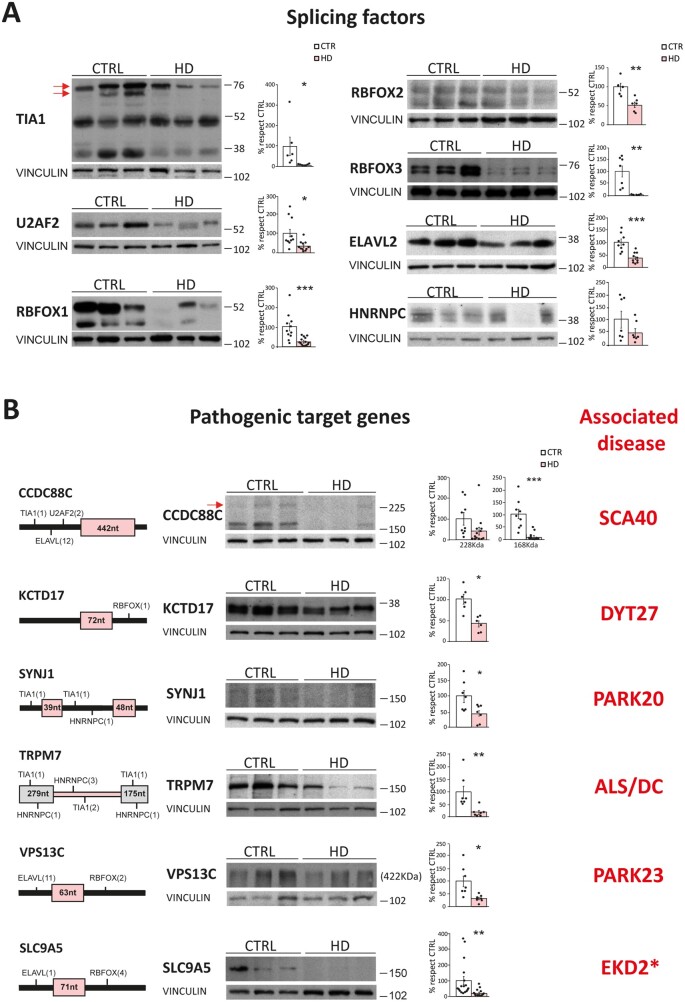
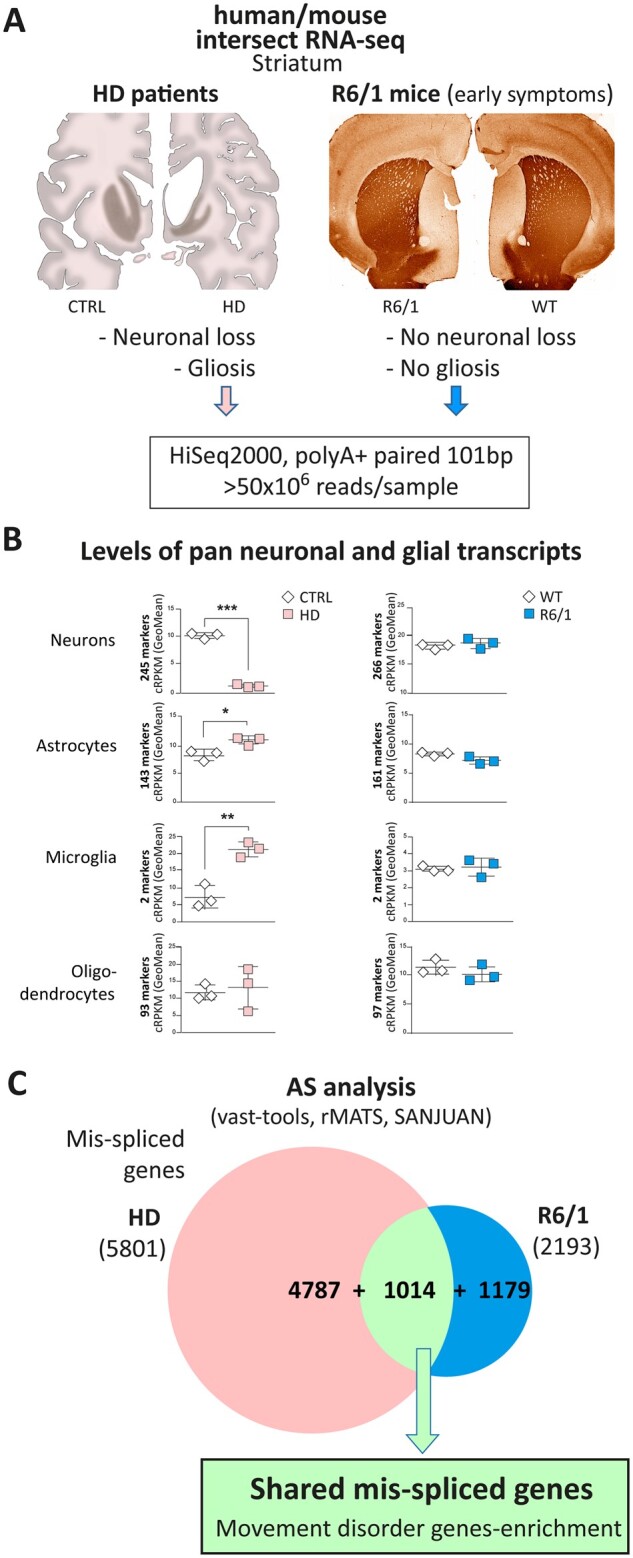
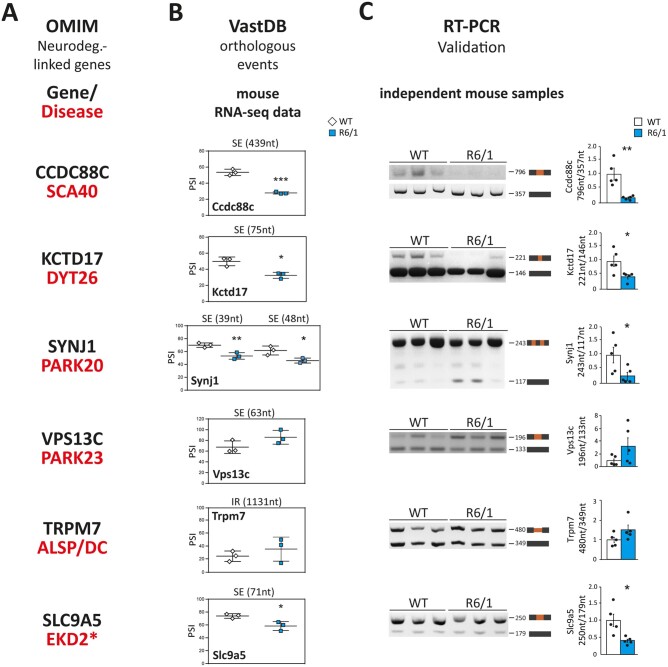
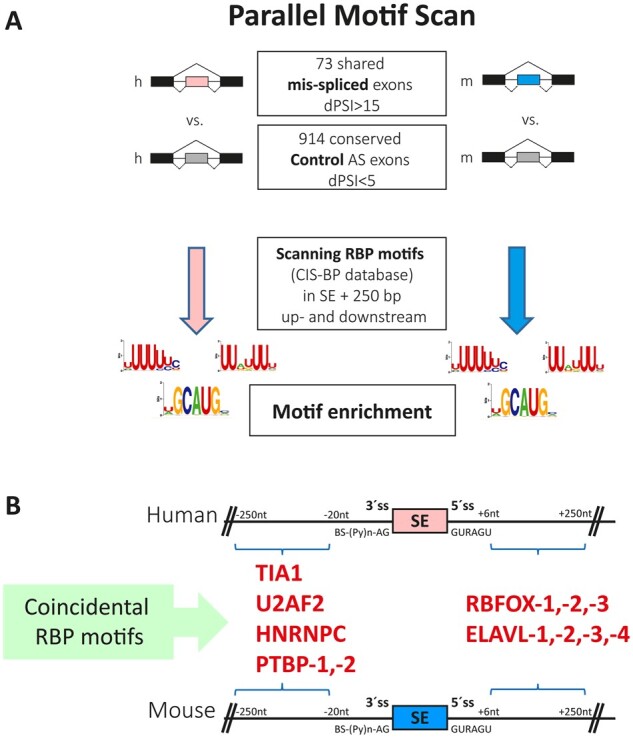
Correction of mis-splicing events is a growing therapeutic approach for neurological diseases such as spinal muscular atrophy or neuronal ceroid lipofuscinosis 7, which are caused by splicing-affecting mutations. Mis-spliced effector genes that do not harbour mutations are also good candidate therapeutic targets in diseases with more complex aetiologies such as cancer, autism, muscular dystrophies or neurodegenerative diseases. Next-generation RNA sequencing (RNA-seq) has boosted investigation of global mis-splicing in diseased tissue to identify such key pathogenic mis-spliced genes. Nevertheless, while analysis of tumour or dystrophic muscle biopsies can be informative on early stage pathogenic mis-splicing, for neurodegenerative diseases, these analyses are intrinsically hampered by neuronal loss and neuroinflammation in post-mortem brains. To infer splicing alterations relevant to Huntington's disease pathogenesis, here we performed intersect-RNA-seq analyses of human post-mortem striatal tissue and of an early symptomatic mouse model in which neuronal loss and gliosis are not yet present. Together with a human/mouse parallel motif scan analysis, this approach allowed us to identify the shared mis-splicing signature triggered by the Huntington's disease-causing mutation in both species and to infer upstream deregulated splicing factors. Moreover, we identified a plethora of downstream neurodegeneration-linked mis-spliced effector genes that-together with the deregulated splicing factors-become new possible therapeutic targets. In summary, here we report pathogenic global mis-splicing in Huntington's disease striatum captured by our new intersect-RNA-seq approach that can be readily applied to other neurodegenerative diseases for which bona fide animal models are available.
纠正剪接错误是治疗神经疾病(如脊髓性肌萎缩症或神经元蜡样脂褐质沉积症)的一种新兴方法,这些疾病是由影响剪接的突变引起的。在病因更复杂的疾病(如癌症、自闭症、肌肉营养不良或神经退行性疾病)中,没有突变的剪接错误效应基因也是很好的治疗靶点候选。下一代 RNA 测序(RNA-seq)促进了对疾病组织中全局剪接错误的研究,以确定这些关键的致病性剪接错误基因。然而,虽然对肿瘤或肌肉营养不良活检的分析可以提供早期致病性剪接错误的信息,但对于神经退行性疾病,这些分析受到死后大脑中神经元丢失和神经炎症的内在限制。为了推断与亨廷顿病发病机制相关的剪接改变,我们在这里对人类死后纹状体组织和早期有症状的小鼠模型进行了 intersect-RNA-seq 分析,在该模型中,神经元丢失和神经胶质增生尚未发生。与人类/小鼠平行基序扫描分析相结合,这种方法使我们能够识别出两种物种中由亨廷顿病致病突变引发的共享剪接错误特征,并推断出上游失调的剪接因子。此外,我们还鉴定了大量与神经退行性变相关的剪接错误效应基因,这些基因与失调的剪接因子一起成为新的潜在治疗靶点。总之,我们在这里报告了我们的新 intersect-RNA-seq 方法在亨廷顿病纹状体中捕获的致病性全局剪接错误,该方法可轻松应用于其他具有可靠动物模型的神经退行性疾病。