Wu Yuxian, Gao Jinghai, Liu Xiaojun
Department of Obstetrics and Gynaecology, Changzheng Hospital, Naval Medical University, 415 Fengyang Road, Shanghai, 200003, China.
Cancer Cell Int. 2021 Mar 16;21(1):171. doi: 10.1186/s12935-021-01865-4.
As a tissue-specific proangiogenic or antiangiogenic agent, angiopoietin-like 4 (ANGPTL4) has recently gained attention in many diseases, such as metabolic syndrome, cardiovascular disease and cancer. However, the roles of ANGPTL4 in angiogenesis and tumor growth in epithelial ovarian cancer, the most lethal gynecologic malignancy, remain unclear.
To identify a novel mechanism of ANGPTL4 inhibition in epithelial ovarian cancer.
Western blot, quantitative reverse transcription PCR, and immunofluorescence analyses were applied to evaluate ANGPTL4 expression in ovarian cancer cell lines. Cell proliferation, migration, and invasion were investigated through 5-ethynyl-2'-deoxyuridine (EdU) incorporation, CCK-8 and Transwell assays. The expression of epithelial-mesenchymal transition (EMT)-related proteins in ovarian cancer cells and tumor-bearing mice was evaluated. CD31 staining was used to identify tumor angiogenesis. Immunoprecipitation was performed to examine the regulatory relationship between ANGPTL4 and the vascular endothelial growth factor receptor 2 (VEGFR2)/vascular endothelial (VE)-cadherin/Src complex. VEGFR2 phosphorylation at Y949 and VE-cadherin expression were assessed by western blotting. Inactivation of VEGFR2 Y949 phosphorylation was achieved in a MISIIR-TAg VEGFR2 mouse model.
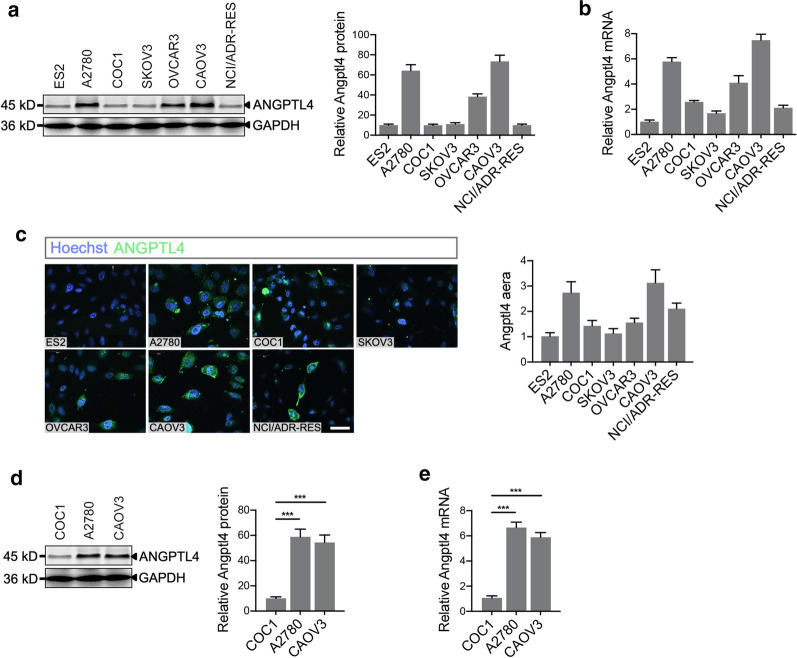
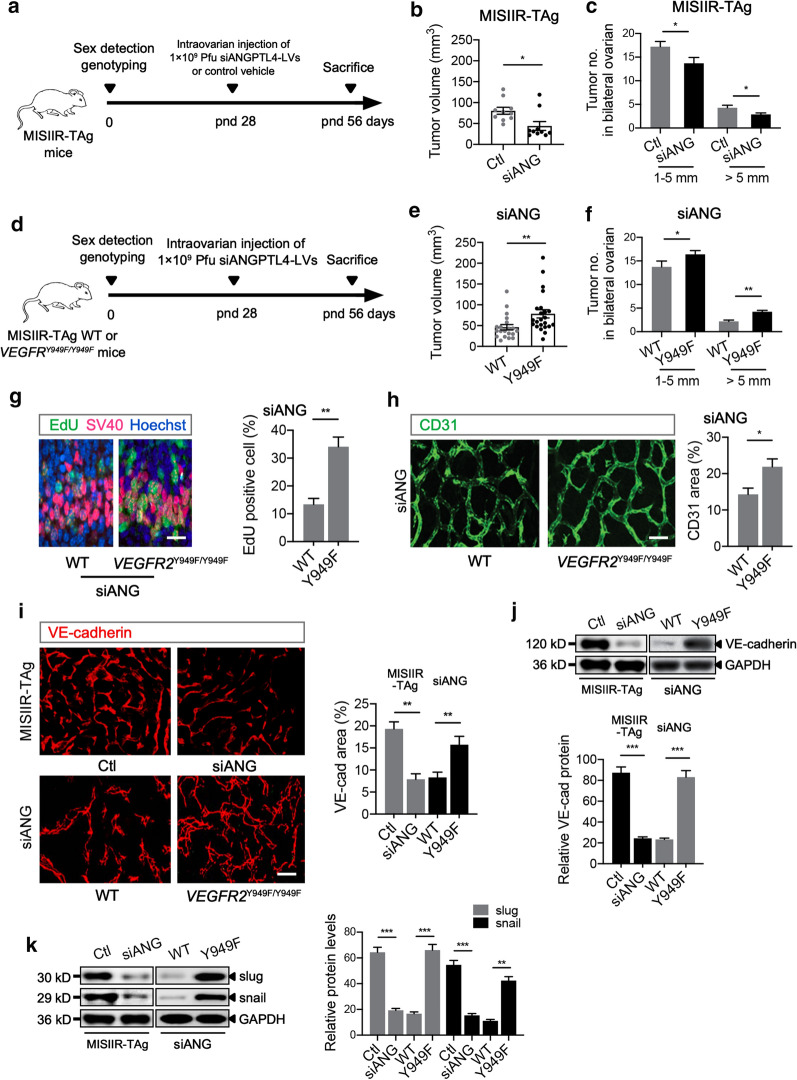
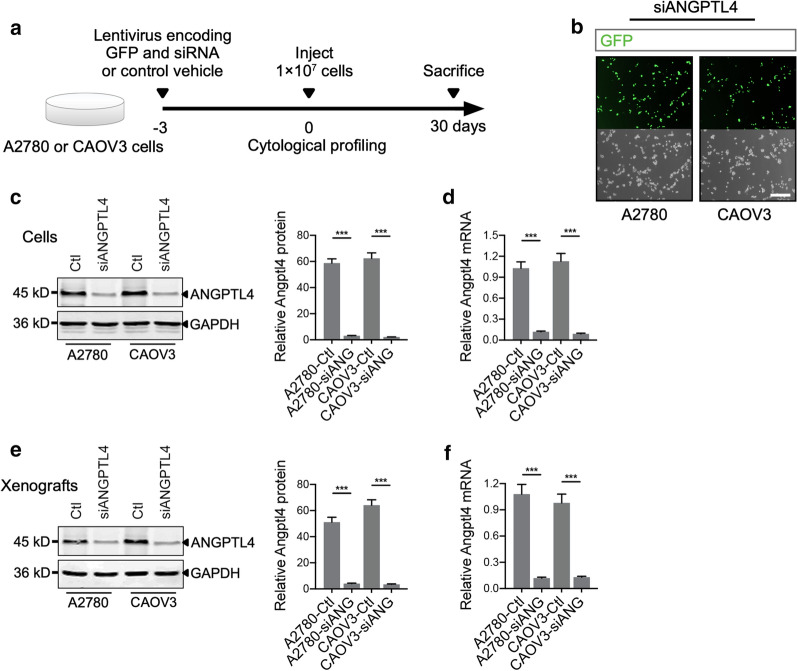
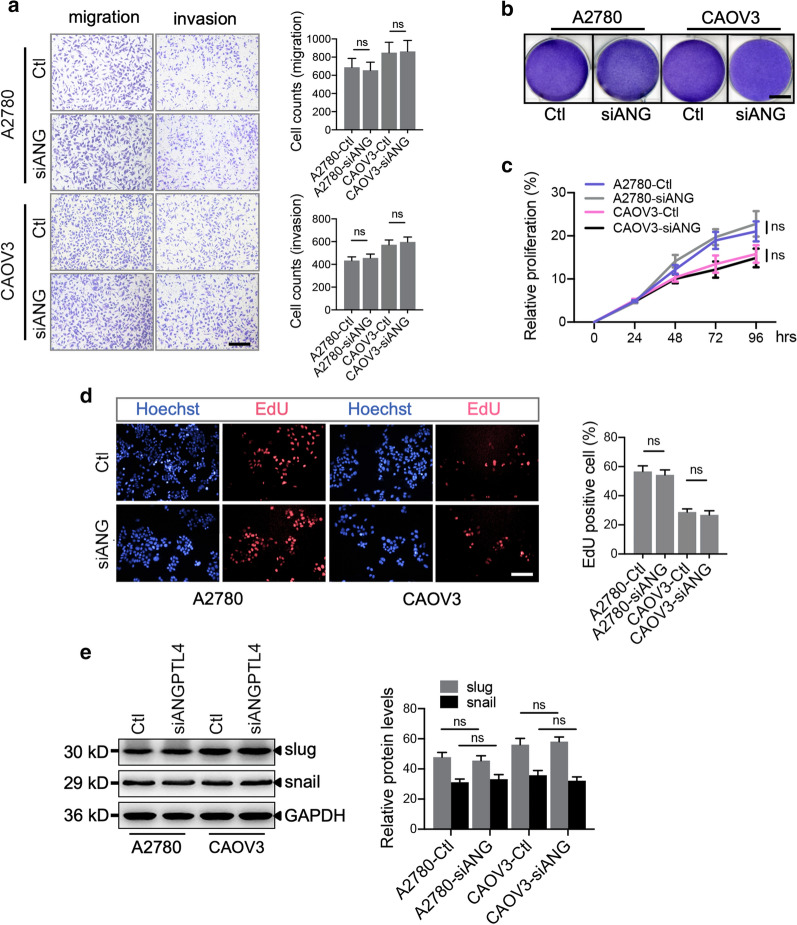
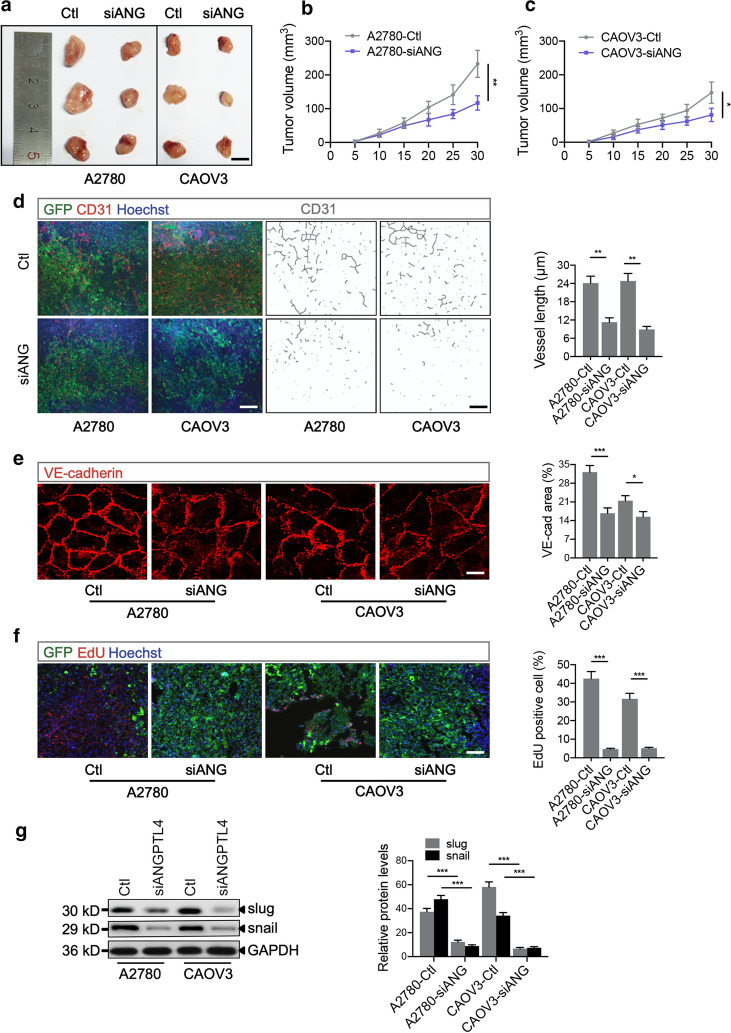
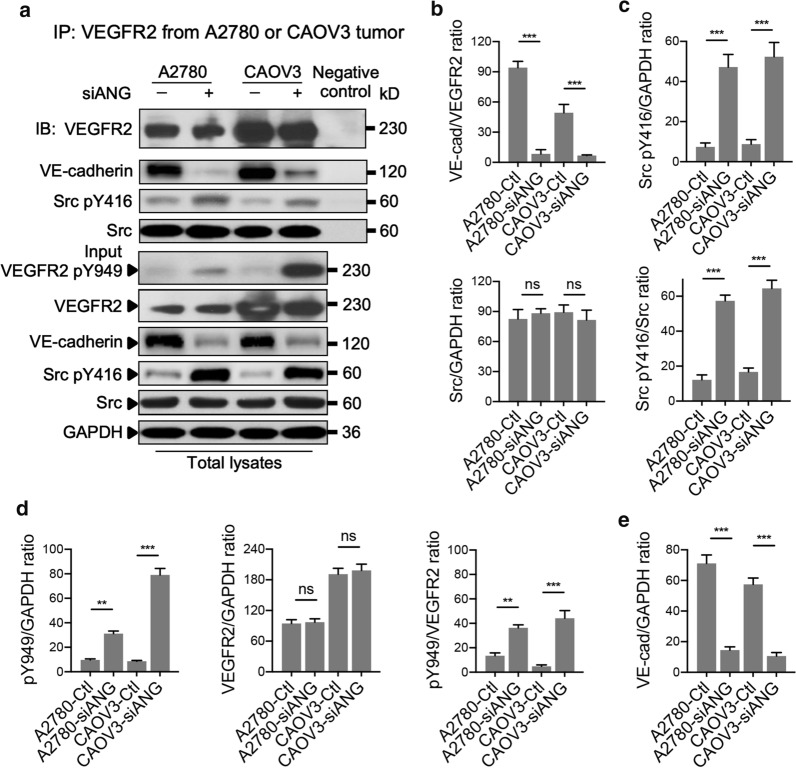
Here, we demonstrated that ANGPTL4 was overexpressed in A2780 and CAOV3 ovarian cancer cells. In vitro assays indicated that inhibition of ANGPTL4 by lentiviral small interfering RNA does not alter ovarian cancer cell proliferation, migration, invasion, and EMT, while ANGPTL4 silencing exhibited significant inhibitory effects on tumor angiogenesis, growth, and metastasis in vivo. Immunoprecipitation analysis showed that suppression of ANGPTL4 was accompanied by dissociation of the VEGFR2/VE-cadherin/Src complex and phosphorylation of VEGFR2 Y949 in A2780 and CAOV3 ovarian tumors. Inactivation of VEGFR2 Y949 phosphorylation in MISIIR-TAg VEGFR2 mice abolished all tumor-suppressive effects of ANGPTL4 inhibition in spontaneous ovarian carcinoma.
Overall, our results indicate that ANGPLT4 silencing delays tumor progression in specific types of ovarian cancer and may be a potential target for individualized treatment of ovarian cancer.
血管生成素样4(ANGPTL4)作为一种组织特异性促血管生成或抗血管生成因子,最近在许多疾病中受到关注,如代谢综合征、心血管疾病和癌症。然而,ANGPTL4在最致命的妇科恶性肿瘤——上皮性卵巢癌的血管生成和肿瘤生长中的作用仍不清楚。
确定ANGPTL4在上皮性卵巢癌中抑制作用的新机制。
应用蛋白质免疫印迹法、定量逆转录PCR和免疫荧光分析评估ANGPTL4在卵巢癌细胞系中的表达。通过5-乙炔基-2'-脱氧尿苷(EdU)掺入、CCK-8和Transwell实验研究细胞增殖、迁移和侵袭情况。评估卵巢癌细胞和荷瘤小鼠中上皮-间质转化(EMT)相关蛋白的表达。采用CD31染色鉴定肿瘤血管生成。进行免疫沉淀以检测ANGPTL4与血管内皮生长因子受体2(VEGFR2)/血管内皮(VE)-钙黏蛋白/Src复合物之间的调控关系。通过蛋白质免疫印迹法评估VEGFR2在Y949位点的磷酸化和VE-钙黏蛋白的表达。在MISIIR-TAg VEGFR2小鼠模型中实现VEGFR2 Y949磷酸化的失活。
在此,我们证明ANGPTL4在A2780和CAOV3卵巢癌细胞中过表达。体外实验表明,慢病毒小干扰RNA抑制ANGPTL4不会改变卵巢癌细胞的增殖、迁移、侵袭和EMT,而ANGPTL4沉默在体内对肿瘤血管生成、生长和转移具有显著抑制作用。免疫沉淀分析表明,在A2780和CAOV3卵巢肿瘤中,ANGPTL4的抑制伴随着VEGFR2/VE-钙黏蛋白/Src复合物的解离和VEGFR2 Y949的磷酸化。MISIIR-TAg VEGFR2小鼠中VEGFR2 Y949磷酸化的失活消除了ANGPTL4抑制对自发性卵巢癌的所有肿瘤抑制作用。
总体而言,我们的结果表明,ANGPLT4沉默可延缓特定类型卵巢癌的肿瘤进展,可能是卵巢癌个体化治疗的潜在靶点。