Institute of Nervous System Diseases, Xuzhou Medical University, Xuzhou, 221002, Jiangsu, China.
Department of Neurosurgery, Affiliated Hospital of Xuzhou Medical University, Xuzhou, 221002, Jiangsu, China.
J Exp Clin Cancer Res. 2021 Mar 16;40(1):99. doi: 10.1186/s13046-021-01897-8.
Due to the hypoxia and nutrient deficiency microenvironment, glioblastoma (GBM) exhibits high autophagy activity and autophagy plays an important role in the progression of GBM. However, the molecular mechanism of autophagy in GBM progression remains unclear. The aim of this study is to delve out the role and mechanism of yes-associated protein (YAP) in GBM autophagy and progression.
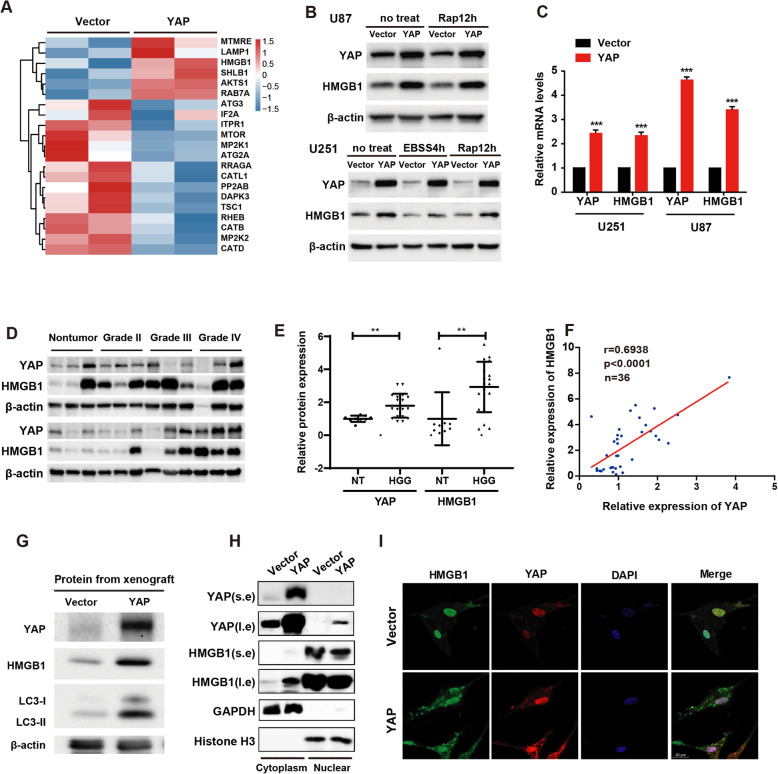
The level of autophagy or autophagy flux were assessed by using western blotting, GFP-LC3 puncta (Live) imaging, transmission electron microscopy and GFP-RFP-LC3 assay. The GBM progression was detected by using CCK8, EdU, nude mouse xenograft and Ki67 staining. Isobaric tags for relative and absolute quantification (iTraq) quantitative proteomics was used to find out the mediator of YAP in autophagy. Expression levels of YAP and HMGB1 in tissue samples from GBM patients were examined by Western blotting, tissue microarray and immunohistochemistry.
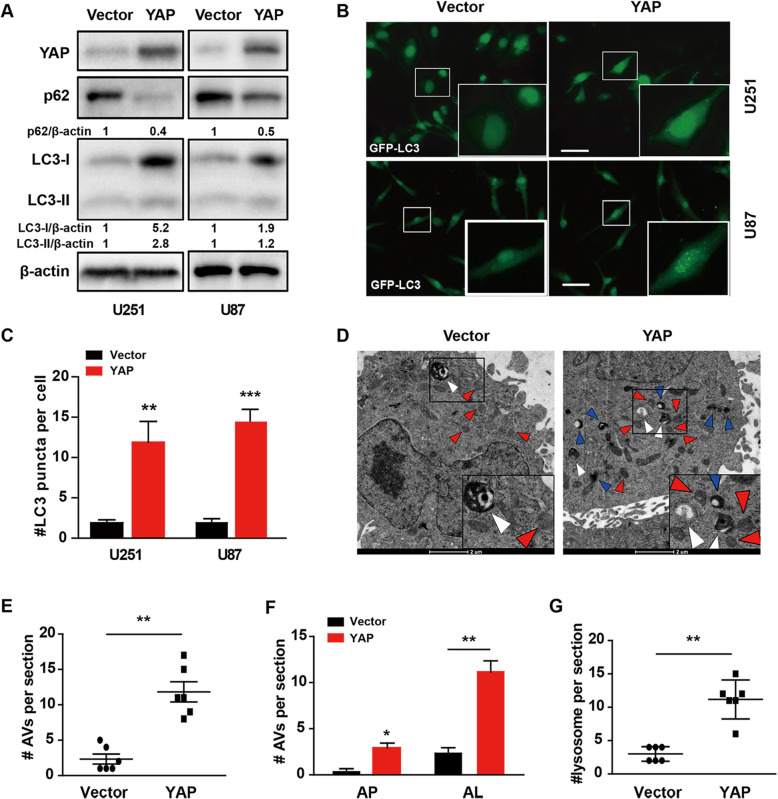
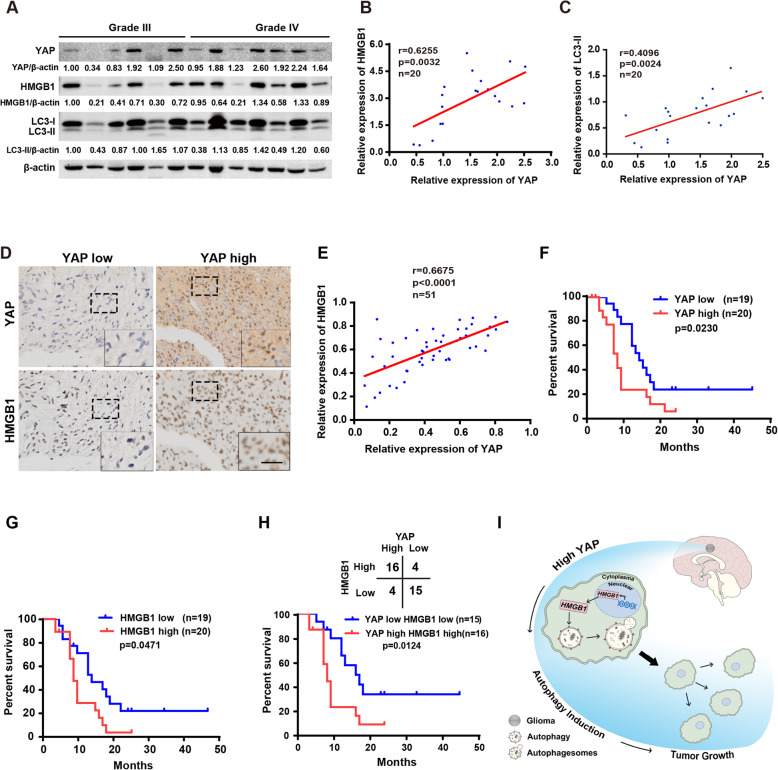
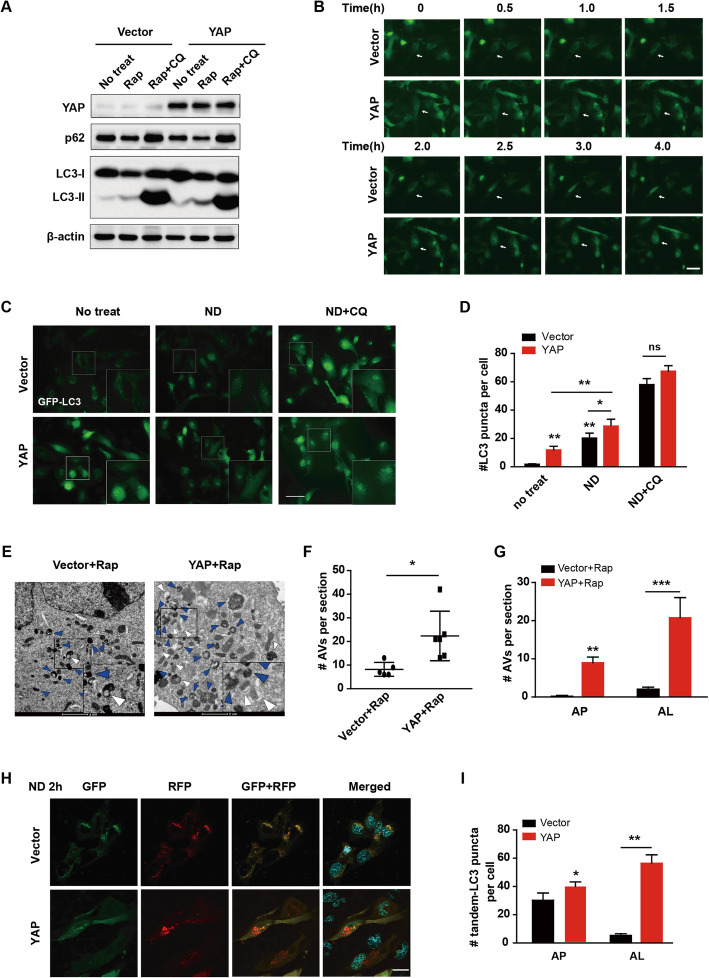
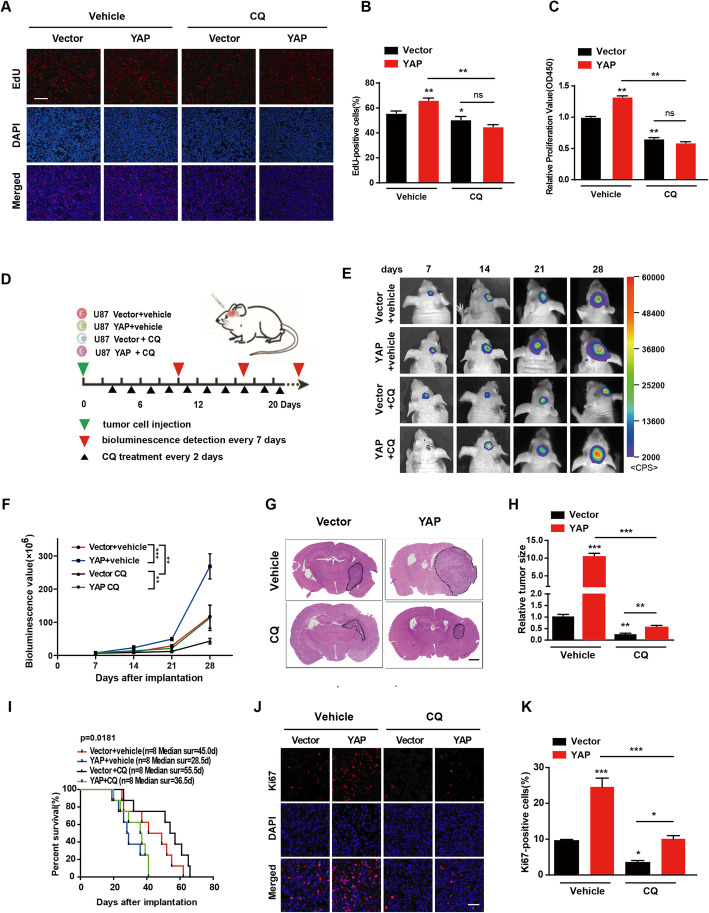
YAP over-expression enhanced glioma cell autophagy under basal and induced conditions. In addition, blocking autophagy by chloroquine abolished the promoting effect of YAP on glioma growth. Mechanistically, YAP over-expression promoted the transcription and translocation of high mobility group box 1(HMGB1), a well-known regulator of autophagy, from nucleus to cytoplasm. Down-regulation of HMGB1 abolished the promoting effect of YAP on autophagy and glioma growth. Furthermore, the expression of YAP and HMGB1 were positively associated with each other and suggested poor prognosis for clinical GBM.
YAP promoted glioma progression by enhancing HMGB1-mediated autophagy, indicating that YAP-HMGB1 axis was a feasible therapeutic target for GBM. Our study revealed a clinical opportunity involving the combination of chemo-radiotherapy with pharmacological autophagy inhibition for treating GBM patients with YAP high expression.
由于缺氧和营养缺乏的微环境,胶质母细胞瘤(GBM)表现出高自噬活性,自噬在 GBM 的进展中起着重要作用。然而,自噬在 GBM 进展中的分子机制尚不清楚。本研究旨在探讨 YAP 在 GBM 自噬和进展中的作用和机制。
通过 Western blot、GFP-LC3 斑点(活细胞)成像、透射电子显微镜和 GFP-RFP-LC3 测定评估自噬或自噬流水平。通过 CCK8、EdU、裸鼠异种移植和 Ki67 染色检测 GBM 进展。使用同位素标记相对和绝对定量(iTRAQ)定量蛋白质组学来发现 YAP 在自噬中的介导物。通过 Western blot、组织微阵列和免疫组织化学检测 GBM 患者组织样本中的 YAP 和 HMGB1 的表达水平。
YAP 过表达增强了基础和诱导条件下的胶质瘤细胞自噬。此外,氯喹阻断自噬可消除 YAP 对胶质瘤生长的促进作用。机制上,YAP 过表达促进了高迁移率族蛋白 B1(HMGB1)的转录和易位,HMGB1 是自噬的一个众所周知的调节因子,从核内到细胞质。下调 HMGB1 可消除 YAP 对自噬和胶质瘤生长的促进作用。此外,YAP 和 HMGB1 的表达呈正相关,与临床 GBM 的预后不良相关。
YAP 通过增强 HMGB1 介导的自噬促进胶质瘤进展,表明 YAP-HMGB1 轴是治疗 YAP 高表达 GBM 的可行治疗靶点。我们的研究揭示了一种临床机会,涉及化学放射治疗与药理学自噬抑制的联合应用,用于治疗 YAP 高表达的 GBM 患者。