Graduate School of Advanced Science and Engineering, Hiroshima University, 1-4-1 Kagamiyama, Higashi-Hiroshima, Hiroshima, 739-8527, Japan.
College of Engineering, Academic Institute, Shizuoka University, 3-5-1, Johoku, Naka-ku, Hamamatsu, Shizuoka, 432-8561, Japan.
Sci Rep. 2021 Mar 16;11(1):5966. doi: 10.1038/s41598-021-85299-y.
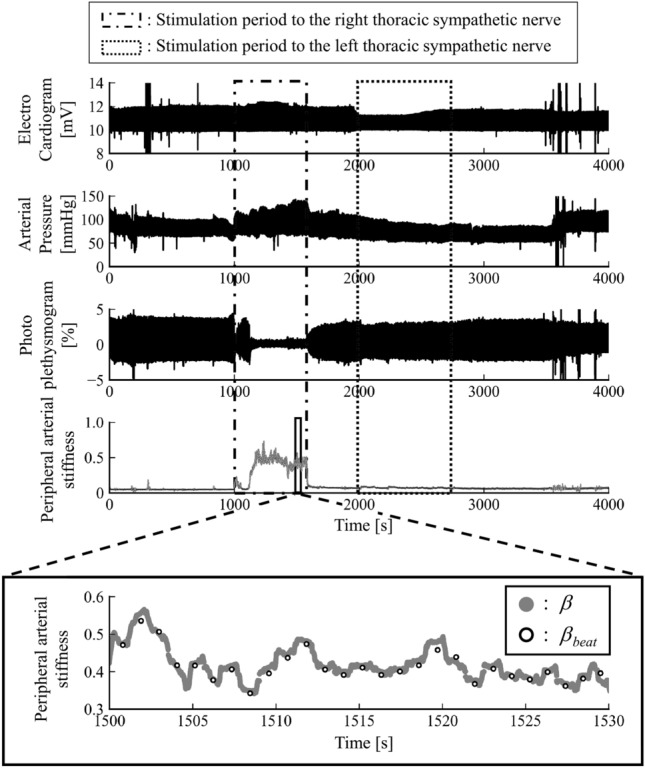
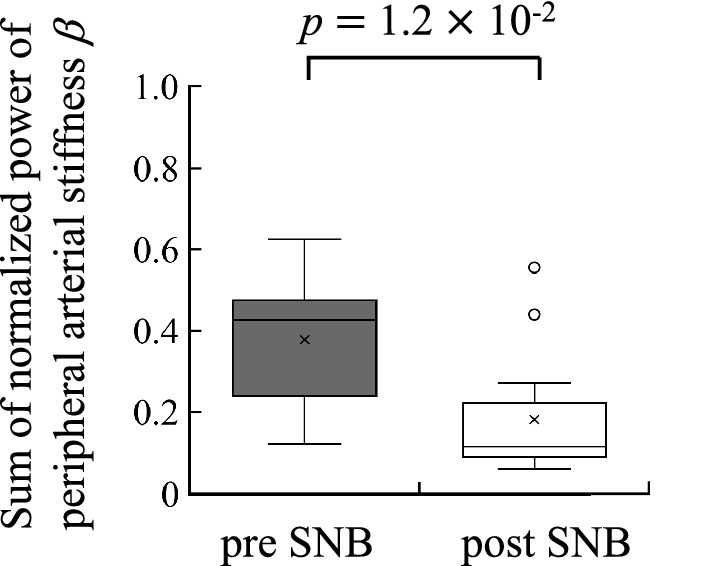
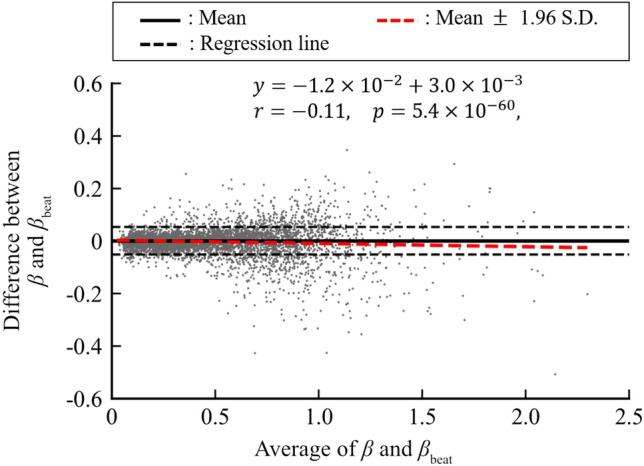
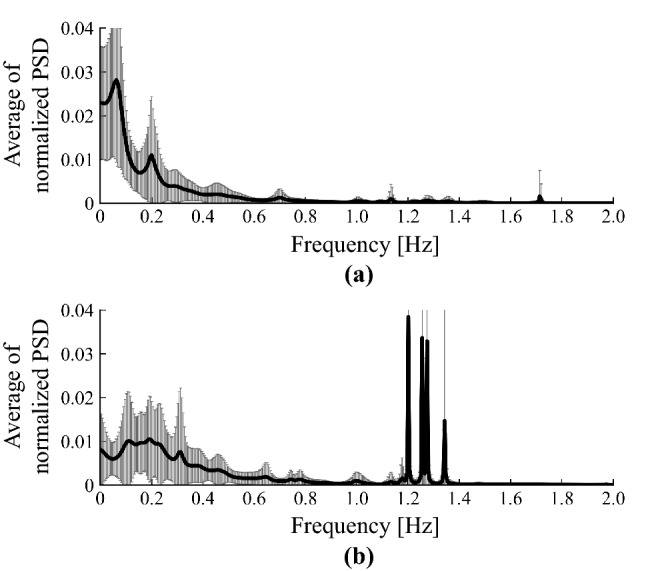
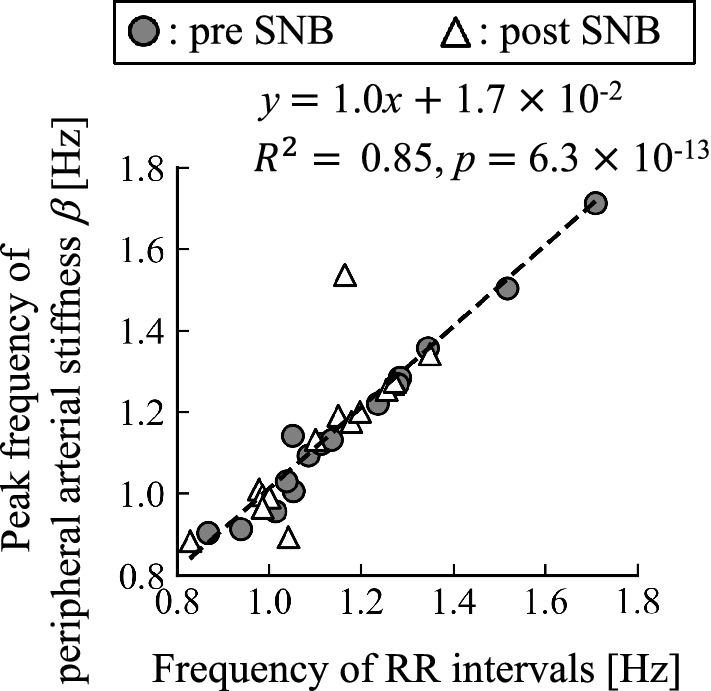
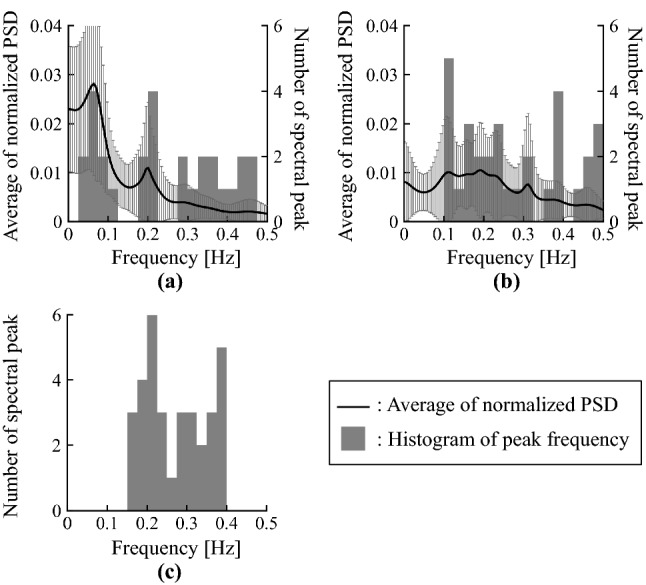
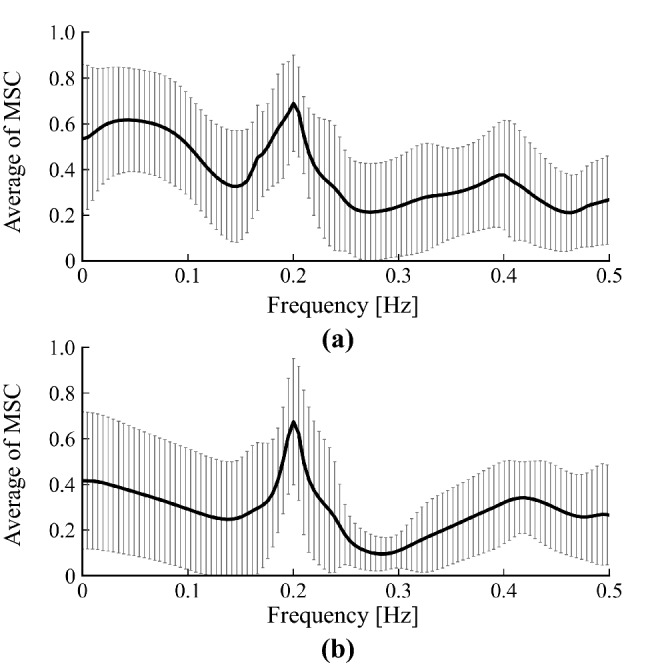
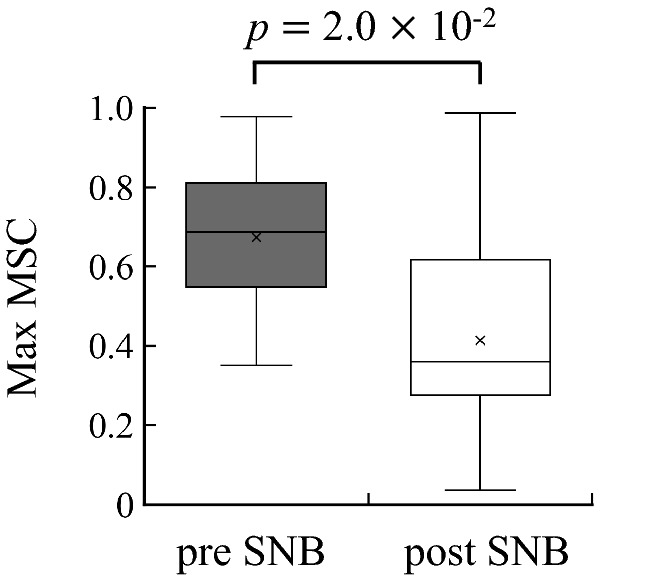
Muscle sympathetic nerve activity (MSNA) is known as an effective measure to evaluate peripheral sympathetic activity; however, it requires invasive measurement with the microneurography method. In contrast, peripheral arterial stiffness affected by MSNA is a measure that allows non-invasive evaluation of mechanical changes of arterial elasticity. This paper aims to clarify the features of peripheral arterial stiffness to determine whether it inherits MSNA features towards non-invasive evaluation of its activity. To this end, we propose a method to estimate peripheral arterial stiffness [Formula: see text] at a high sampling rate. Power spectral analysis of the estimated [Formula: see text] was then performed on data acquired from 15 patients ([Formula: see text] years) who underwent endoscopic thoracic sympathectomy. We examined whether [Formula: see text] exhibited the features of MSNA where its frequency components synchronise with heart and respiration rates and correlates with the low-frequency component of systolic blood pressure. Regression analysis revealed that the local peak frequency in the range of heartbeat frequency highly correlate with the heart rate ([Formula: see text], [Formula: see text]) where the regression slope was approximately 1 and intercept was approximately 0. Frequency analysis then found spectral peaks of [Formula: see text] approximately 0.2 Hz that correspond to the respiratory cycle. Finally, cross power spectral analysis showed a significant magnitude squared coherence between [Formula: see text] and systolic blood pressure in the frequency band from 0.04 to 0.2 Hz. These results indicate that [Formula: see text] inherits the features observed in MSNA that require invasive measurements, and thus [Formula: see text] can be an effective non-invasive substitution for MSNA measure.
肌肉交感神经活动 (MSNA) 被认为是评估外周交感神经活动的有效指标;然而,它需要通过微神经记录法进行有创测量。相比之下,受 MSNA 影响的外周动脉僵硬度是一种允许非侵入性评估动脉弹性机械变化的指标。本文旨在阐明外周动脉僵硬度的特征,以确定其是否具有 MSNA 的特征,从而实现对其活动的非侵入性评估。为此,我们提出了一种方法来以高采样率估计外周动脉僵硬度 [公式:见文本]。然后,对 15 名接受内镜胸交感神经切除术的患者([公式:见文本]岁)获得的数据进行了估计 [公式:见文本] 的功率谱分析。我们检查了 [公式:见文本] 是否表现出与心率和呼吸率同步的频率成分的 MSNA 特征,以及与收缩压低频成分相关的特征。回归分析表明,局部峰值频率在心跳频率范围内高度与心率相关 ([公式:见文本],[公式:见文本]),其中回归斜率约为 1,截距约为 0。然后发现 [公式:见文本] 的频谱峰值大约在 0.2 Hz,对应于呼吸周期。最后,交叉功率谱分析显示 [公式:见文本] 和收缩压在 0.04 至 0.2 Hz 的频带之间具有显著的幅度平方相干性。这些结果表明,[公式:见文本] 继承了需要有创测量的 MSNA 中观察到的特征,因此 [公式:见文本] 可以作为 MSNA 测量的有效非侵入性替代指标。