Carius Brandon M, Long Brit
Emergency Medicine, Brian D. Allgood Army Community Hospital, Camp Humphreys, KOR.
Emergency Medicine, Brooke Army Medical Center, Fort Sam Houston, USA.
Cureus. 2021 Feb 10;13(2):e13256. doi: 10.7759/cureus.13256.
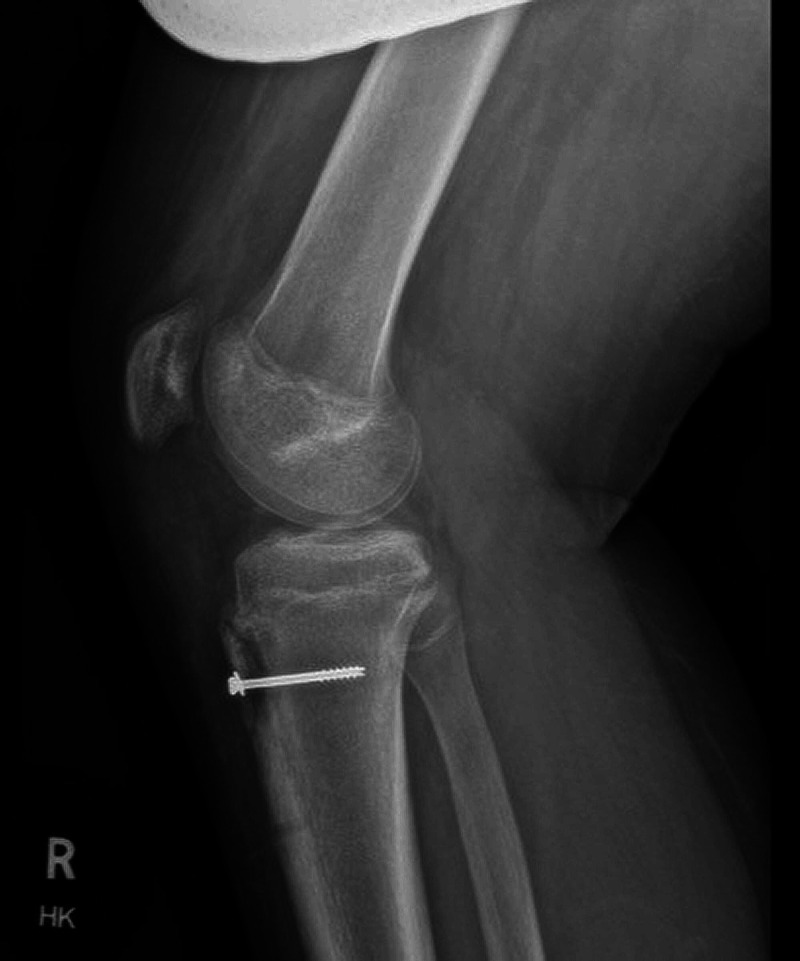
Osgood-Schlatter disease (OSD) proposes that bony microtrauma of the patellar tendon insertion on the tibial tuberosity may be due to inappropriate stress with adolescent activity, and is a common pathology among pediatric patients. Lack of activity restrictions may further contribute to significant bony damage due to continued quadriceps contraction, which in some cases results in a tibial tuberosity avulsion fracture. Evaluation in the ED should include distal neurovascular status, as compartment syndrome has also been documented. Radiographs are generally definitive for diagnosis; however, bedside ultrasound and CT may help further define injury severity and delineate conservative rather than operative management. We highlight the case of a 13-year-old male with a recently diagnosed history of OSD who presented to the ED for severe knee pain after landing forcefully onto the ipsilateral foot and was found to have a large avulsion fracture of the tibial tuberosity. We also provide a brief review of the literature.
奥斯古德-施拉特病(OSD)认为,髌腱在胫骨结节处的骨微创伤可能是由于青少年活动时应力不当所致,是儿科患者中的常见病症。缺乏活动限制可能会因股四头肌持续收缩而进一步导致严重的骨损伤,在某些情况下会导致胫骨结节撕脱骨折。急诊科的评估应包括远端神经血管状况,因为也有文献记载过骨筋膜室综合征。X线片通常对诊断具有决定性意义;然而,床边超声和CT可能有助于进一步明确损伤严重程度,并确定采用保守治疗而非手术治疗。我们重点介绍了一名13岁男性病例,该患者近期被诊断为患有OSD,因同侧脚用力着地后出现严重膝关节疼痛而到急诊科就诊,结果发现胫骨结节有一大块撕脱骨折。我们还对相关文献进行了简要综述。