Division of Clinical Pharmacology & Toxicology, Department of Biomedicine, University and University Hospital Basel, Basel, Switzerland.
Division of Clinical Pharmacology & Toxicology, Department of Pharmaceutical Sciences, University of Basel, Basel, Switzerland.
PLoS Pathog. 2021 Mar 17;17(3):e1009382. doi: 10.1371/journal.ppat.1009382. eCollection 2021 Mar.
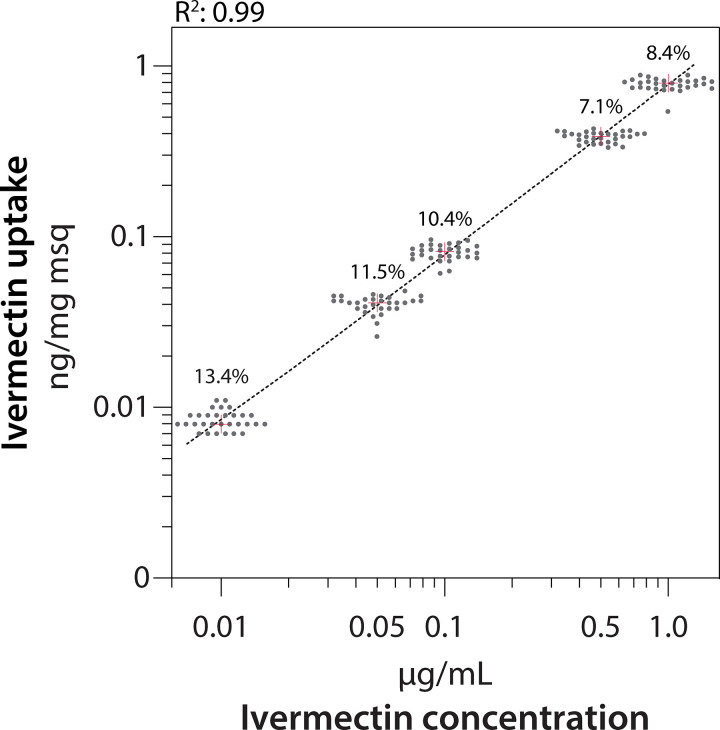
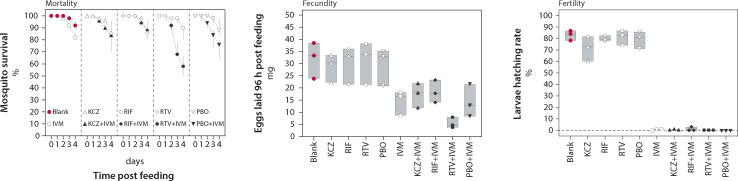
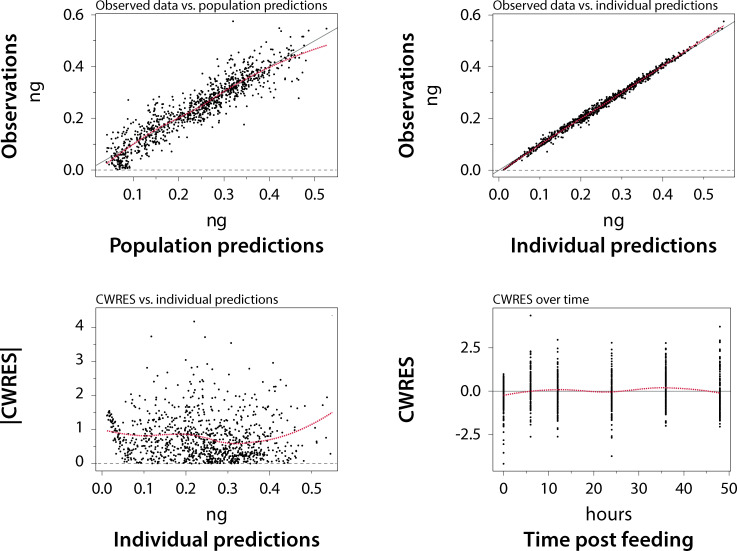
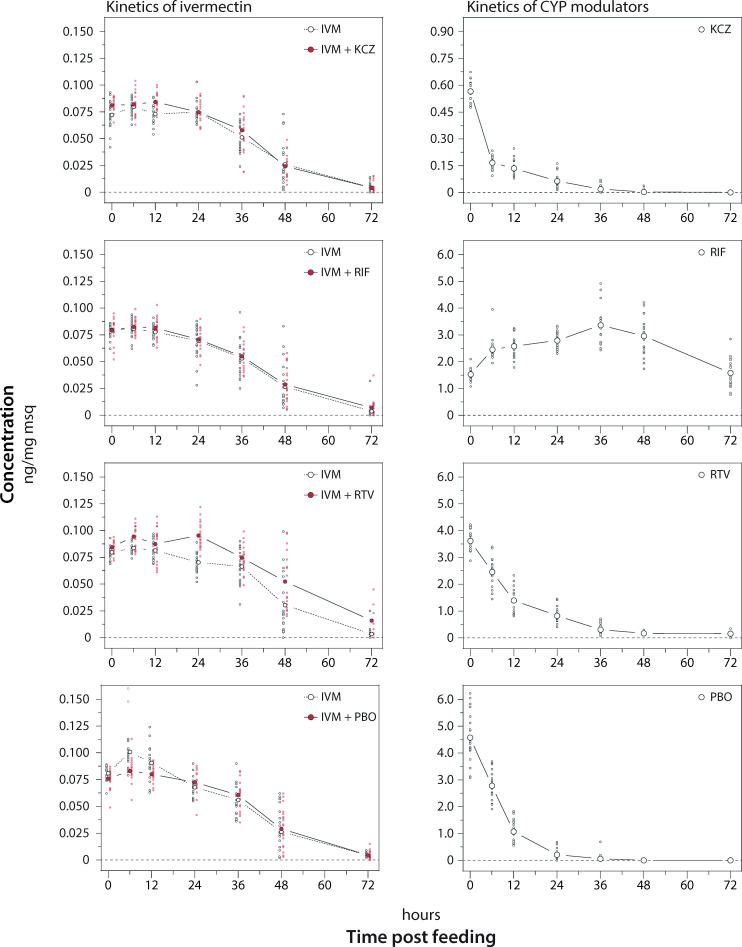
Mosquitoes are vectors of major diseases such as dengue fever and malaria. Mass drug administration of endectocides to humans and livestock is a promising complementary approach to current insecticide-based vector control measures. The aim of this study was to establish an insect model for pharmacokinetic and drug-drug interaction studies to develop sustainable endectocides for vector control. Female Aedes aegypti mosquitoes were fed with human blood containing either ivermectin alone or ivermectin in combination with ketoconazole, rifampicin, ritonavir, or piperonyl butoxide. Drug concentrations were quantified by LC-MS/MS at selected time points post-feeding. Primary pharmacokinetic parameters and extent of drug-drug interactions were calculated by pharmacometric modelling. Lastly, the drug effect of the treatments was examined. The mosquitoes could be dosed with a high precision (%CV: ≤13.4%) over a range of 0.01-1 μg/ml ivermectin without showing saturation (R2: 0.99). The kinetics of ivermectin were characterised by an initial lag phase of 18.5 h (CI90%: 17.0-19.8 h) followed by a slow zero-order elimination rate of 5.5 pg/h (CI90%: 5.1-5.9 pg/h). By contrast, ketoconazole, ritonavir, and piperonyl butoxide were immediately excreted following first order elimination, whereas rifampicin accumulated over days in the mosquitoes. Ritonavir increased the lag phase of ivermectin by 11.4 h (CI90%: 8.7-14.2 h) resulting in an increased exposure (+29%) and an enhanced mosquitocidal effect. In summary, this study shows that the pharmacokinetics of drugs can be investigated and modulated in an Ae. aegypti animal model. This may help in the development of novel vector-control interventions and further our understanding of toxicology in arthropods.
蚊子是登革热和疟疾等主要疾病的传播媒介。对人类和家畜进行大规模的内吸杀虫剂给药是当前基于杀虫剂的病媒控制措施的一种有前途的补充方法。本研究旨在建立一个昆虫药代动力学和药物相互作用研究的模型,以开发可持续的病媒控制内吸杀虫剂。雌性埃及伊蚊在喂食时摄入含有伊维菌素或伊维菌素与酮康唑、利福平、利托那韦或吡咯烷酮的人血。在喂食后选定的时间点通过 LC-MS/MS 定量药物浓度。通过药代动力学建模计算主要药代动力学参数和药物相互作用的程度。最后,检查了治疗的药物效果。蚊子可以在 0.01-1 μg/ml 伊维菌素的范围内以高精度(%CV:≤13.4%)给药,而不会显示饱和(R2:0.99)。伊维菌素的动力学特征是初始滞后期为 18.5 小时(CI90%:17.0-19.8 小时),随后缓慢的零级消除率为 5.5 pg/h(CI90%:5.1-5.9 pg/h)。相比之下,酮康唑、利托那韦和吡咯烷酮在首次消除后立即被排出,而利福平在蚊子体内积累了数天。利托那韦使伊维菌素的滞后期增加了 11.4 小时(CI90%:8.7-14.2 小时),导致暴露增加(增加 29%)和杀蚊效果增强。总之,本研究表明,药物的药代动力学可以在埃及伊蚊动物模型中进行研究和调节。这可能有助于开发新型病媒控制干预措施,并进一步了解节肢动物的毒理学。