Department of Paediatrics, Division of Neonatology, Leiden University Medical Centre, Leiden, the Netherlands.
Centre for Clinical Transfusion Research, Sanquin, Leiden, the Netherlands.
Vox Sang. 2021 Oct;116(9):990-997. doi: 10.1111/vox.13090. Epub 2021 Mar 17.
Guidelines and indications for exchange transfusion in haemolytic disease of the foetus and newborn (HDFN) have changed drastically in the past decades, causing a decline in exchange transfusion rate. This study aims to evaluate the incidence of exchange transfusions (ETs) in neonates with Rh-mediated HDFN over the past 20 years at our centre, and report potentially ET-related complications as well as indicators for bilirubin encephalopathy.
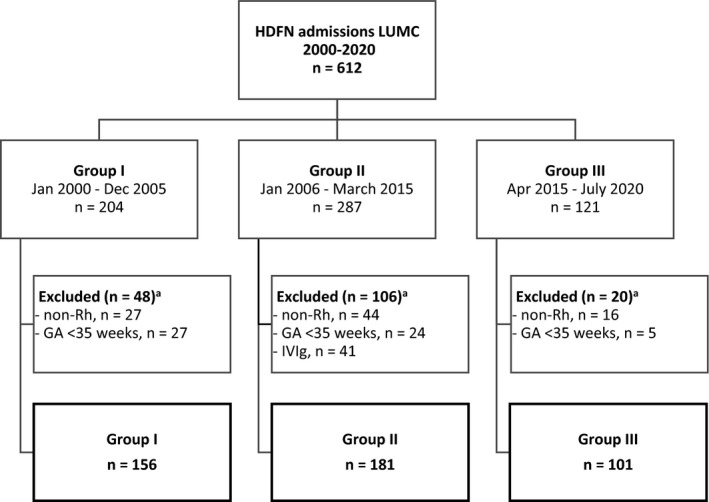
In this observational study, 438 neonates were included with HDFN, born ≥ 35 weeks gestational age at the Leiden University Medical Centre between January 2000 and July 2020. The incidence of ET and procedure-related complications were assessed in three consecutive time periods determined by changes in guidelines and indications for ET.
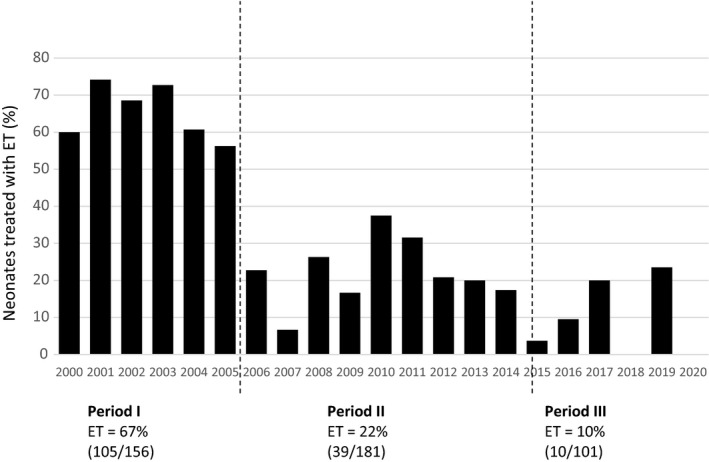
The incidence of ET in our centre declined from (104/156) 67% (time period 2000-2005), to (39/181) 22% (2006-2015) and to (10/101) 10% (2015-2020, p < 0·001). The maximum bilirubin levels in neonates after birth increased from 13·6 mg/dL (or 233 μmol/L), to 15·0 mg/dL (257 μmol/L) and to 15·3 mg/dL (263 μmol/L). The incidence of complications associated with the use of ET (including sepsis, haematologic disorders and respiratory failure) remained stable throughout the years, and no neonates died during the study period.
Exchange transfusion incidence declined significantly over the past two decades. Decrease in ET incidence, and concomitant decrease in exposure and expertise, was not associated with an increase in procedure-related complications.
过去几十年中,胎儿和新生儿溶血病(HDFN)换血治疗的指南和适应证发生了巨大变化,导致换血治疗率下降。本研究旨在评估过去 20 年在本中心接受 Rh 介导的 HDFN 新生儿换血治疗的发生率,并报告潜在的与换血治疗相关的并发症以及胆红素脑病的相关指标。
本观察性研究共纳入 438 例胎龄≥35 周在莱顿大学医学中心出生的 HDFN 新生儿,时间为 2000 年 1 月至 2020 年 7 月。根据换血治疗指南和适应证的变化,将研究分为三个连续时间段,评估换血治疗的发生率和与操作相关的并发症。
本中心换血治疗的发生率从(104/156)67%(2000-2005 年期间)下降到(39/181)22%(2006-2015 年期间)和(10/101)10%(2015-2020 年期间,p<0·001)。新生儿出生后胆红素最高水平从 13.6mg/dL(或 233μmol/L)增加到 15.0mg/dL(257μmol/L)和 15.3mg/dL(263μmol/L)。与换血治疗相关的并发症发生率(包括败血症、血液系统疾病和呼吸衰竭)多年来保持稳定,研究期间无新生儿死亡。
过去 20 年中,换血治疗的发生率显著下降。换血治疗发生率下降,同时暴露和专业知识减少,但与操作相关的并发症发生率没有增加。