Key Laboratory of Systems Bioengineering (Ministry of Education), Tianjin University, Tianjin, China.
SynBio Research Platform, Collaborative Innovation Center of Chemical Science and Engineering (Tianjin), School of Chemical Engineering and Technology, Tianjin University, Tianjin, China.
Microb Cell Fact. 2021 Mar 17;20(1):70. doi: 10.1186/s12934-021-01561-y.
Ascomycin is a multifunctional antibiotic produced by Streptomyces hygroscopicus var. ascomyceticus. As a secondary metabolite, the production of ascomycin is often limited by the shortage of precursors during the late fermentation phase. Polyhydroxybutyrate is an intracellular polymer accumulated by prokaryotic microorganisms. Developing polyhydroxybutyrate as an intracellular carbon reservoir for precursor synthesis is of great significance to improve the yield of ascomycin.
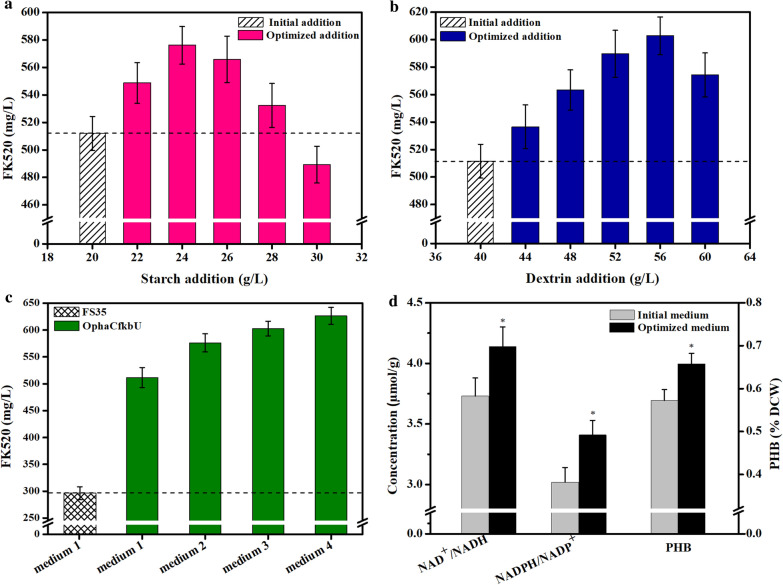
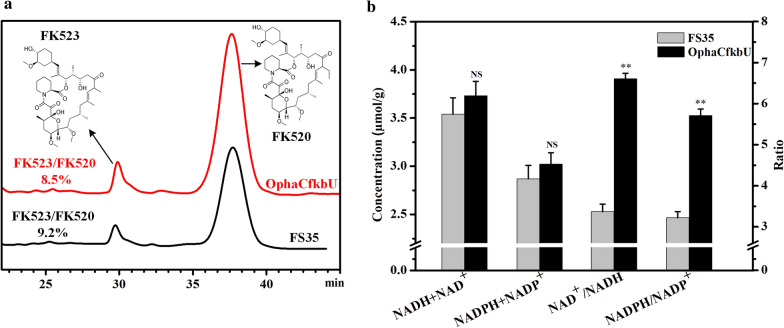
The fermentation characteristics of the parent strain S. hygroscopicus var. ascomyceticus FS35 showed that the accumulation and decomposition of polyhydroxybutyrate was respectively correlated with cell growth and ascomycin production. The co-overexpression of the exogenous polyhydroxybutyrate synthesis gene phaC and native polyhydroxybutyrate decomposition gene fkbU increased both the biomass and ascomycin yield. Comparative transcriptional analysis showed that the storage of polyhydroxybutyrate during the exponential phase accelerated biosynthesis processes by stimulating the utilization of carbon sources, while the decomposition of polyhydroxybutyrate during the stationary phase increased the biosynthesis of ascomycin precursors by enhancing the metabolic flux through primary pathways. The comparative analysis of cofactor concentrations confirmed that the biosynthesis of polyhydroxybutyrate depended on the supply of NADH. At low sugar concentrations found in the late exponential phase, the optimization of carbon source addition further strengthened the polyhydroxybutyrate metabolism by increasing the total concentration of cofactors. Finally, in the fermentation medium with 22 g/L starch and 52 g/L dextrin, the ascomycin yield of the co-overexpression strain was increased to 626.30 mg/L, which was 2.11-fold higher than that of the parent strain in the initial medium (296.29 mg/L).
Here we report for the first time that polyhydroxybutyrate metabolism is beneficial for cell growth and ascomycin production by acting as an intracellular carbon reservoir, stored as polymers when carbon sources are abundant and depolymerized into monomers for the biosynthesis of precursors when carbon sources are insufficient. The successful application of polyhydroxybutyrate in increasing the output of ascomycin provides a new strategy for improving the yields of other secondary metabolites.
作为一种多功能抗生素,阿散酸由吸水链霉菌变种所产生。作为一种次级代谢产物,阿散酸的生产通常受到晚期发酵阶段前体短缺的限制。聚羟基丁酸酯是一种由原核微生物积累的细胞内聚合物。将聚羟基丁酸酯开发为前体合成的细胞内碳库,对于提高阿散酸的产量具有重要意义。
亲株吸水链霉菌变种 FS35 的发酵特性表明,聚羟基丁酸酯的积累和分解分别与细胞生长和阿散酸的产生相关。外源聚羟基丁酸酯合成基因 phaC 和天然聚羟基丁酸酯分解基因 fkbU 的共过表达提高了生物量和阿散酸的产量。比较转录分析表明,在指数生长期储存聚羟基丁酸酯通过刺激碳源的利用来加速生物合成过程,而在静止期分解聚羟基丁酸酯通过增强通过主要途径的代谢通量来增加阿散酸前体的生物合成。辅因子浓度的比较分析证实了聚羟基丁酸酯的生物合成依赖于 NADH 的供应。在晚期指数期发现的低糖浓度下,通过增加辅因子的总浓度,优化碳源的添加进一步加强了聚羟基丁酸酯的代谢。最终,在含有 22 g/L 淀粉和 52 g/L 糊精的发酵培养基中,共表达菌株的阿散酸产量提高到 626.30 mg/L,比初始培养基中亲株的产量(296.29 mg/L)提高了 2.11 倍。
本研究首次报道了聚羟基丁酸酯代谢通过充当细胞内碳库,在碳源丰富时作为聚合物储存,在碳源不足时解聚为单体用于前体的生物合成,有利于细胞生长和阿散酸的产生。聚羟基丁酸酯在提高阿散酸产量方面的成功应用为提高其他次级代谢产物的产量提供了新的策略。