Department of Biomedical Sciences, Cummings School of Veterinary Medicine, Tufts University, 200 Westboro Road, North Grafton, MA, 01536, United States.
Department of Biomedical Sciences, Cummings School of Veterinary Medicine, Tufts University, 200 Westboro Road, North Grafton, MA, 01536, United States.
Behav Brain Res. 2021 May 21;406:113239. doi: 10.1016/j.bbr.2021.113239. Epub 2021 Mar 14.
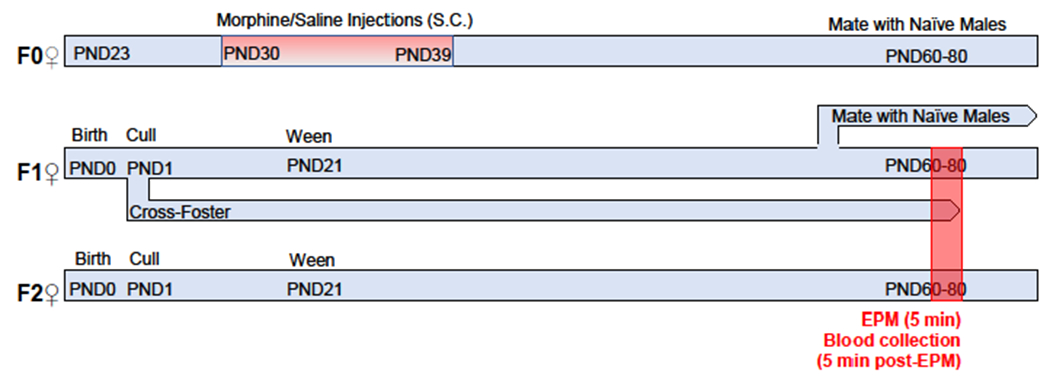
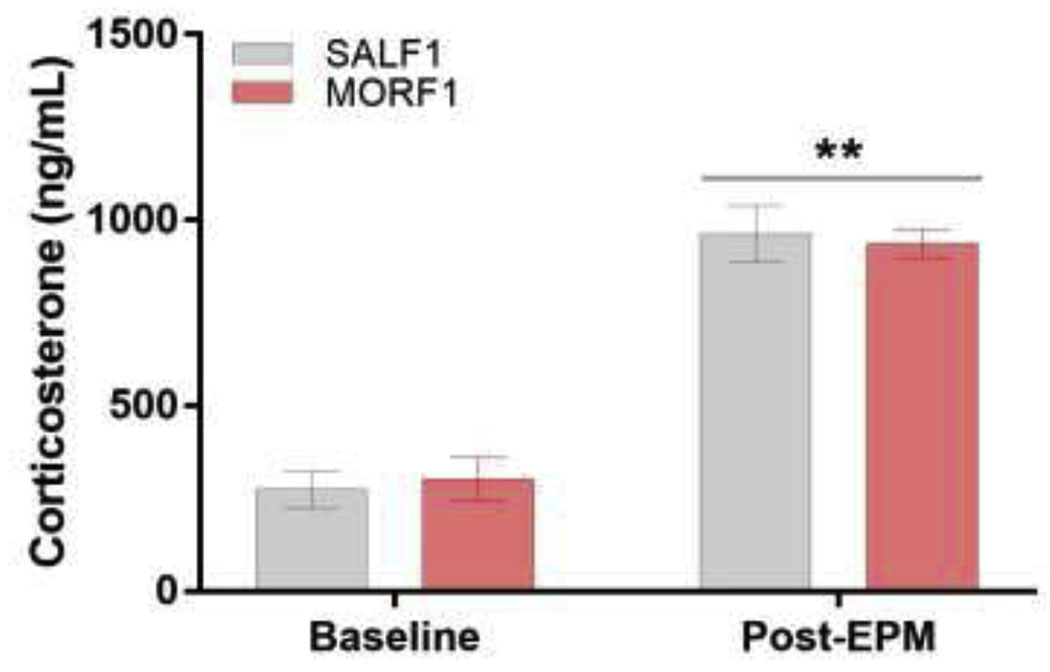
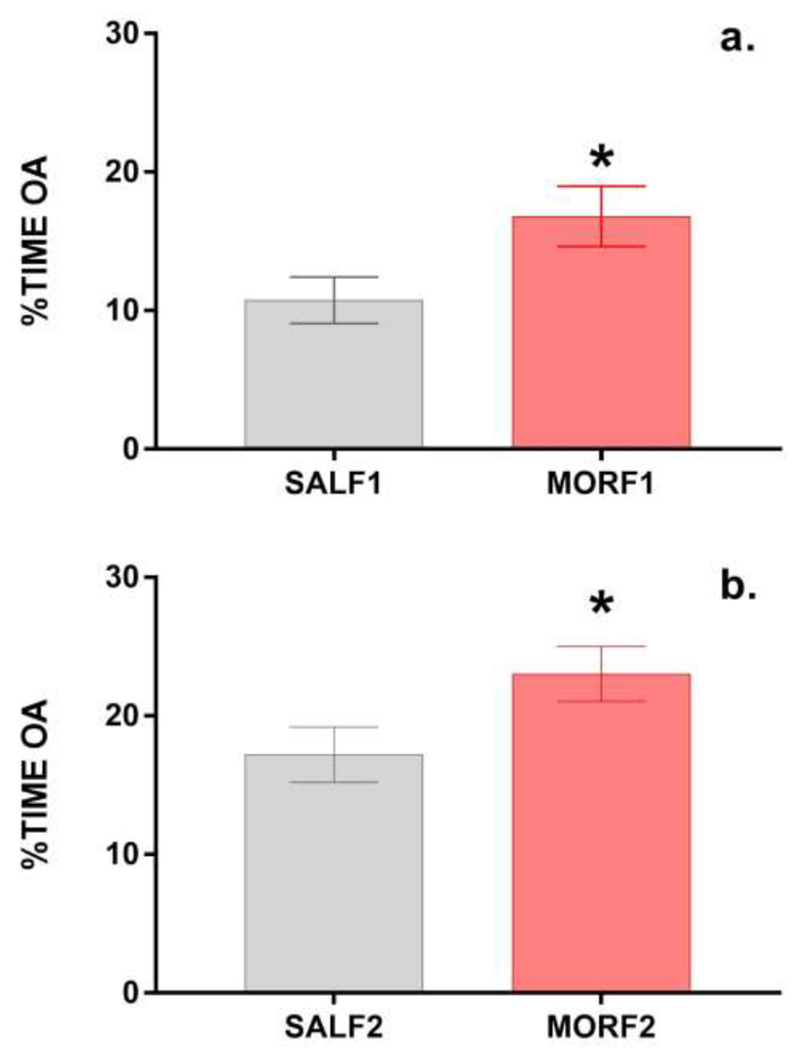
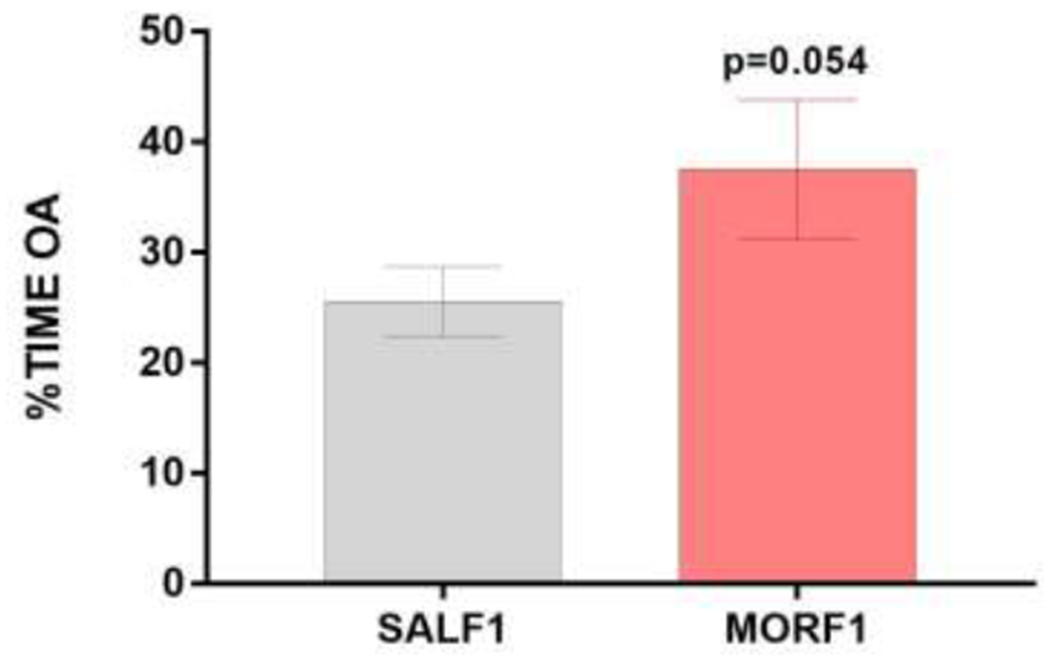
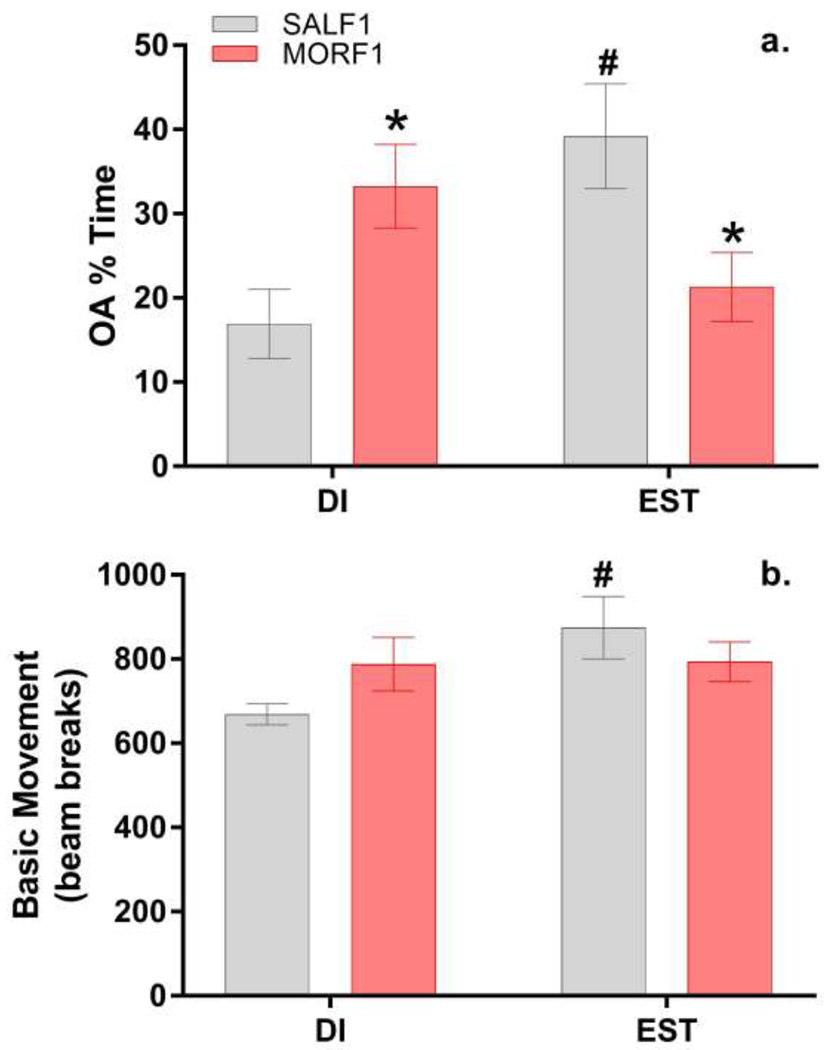
Global opioid use and misuse remains high, despite efforts to decrease rates of prescribing and diversion. Chronic exposure to opioids, particularly during critical periods of development, can lead to long-lasting effects, including effects that may extend to future generations. Using a rodent model, we have demonstrated significant transgenerational effects of female adolescent morphine exposure, despite the absence of in utero drug exposure. While these effects have been observed in both sexes, effects on anxiety-like behavior were only observed in F1 females. The current study was designed to examine both inter- and transgenerational effects of adolescent morphine exposure on anxiety-like behavior. Female Sprague Dawley rats were administered increasing doses of morphine (5-25 mg/kg s.c.) or saline for 10 days during adolescence (PND30-39). Adult diestrous female offspring (MORF1 or SALF1) and grand offspring (F2) were tested for anxiety-like behavior using the elevated plus maze (EPM). F1 females cross-fostered to donor mothers were also examined. The results show that MORF1 and MORF2 females spend significantly more time on the open arms of the EPM compared to SALF1 controls, an effect that persisted in cross-fostered females. Additional studies demonstrate that this effect is estrous cycle dependent, as decreased anxiety-like behavior was observed in diestrus, while increased anxiety-like behavior was observed in estrus. These behavioral effects were not associated with any differences in circulating corticosterone either at baseline or following EPM testing. Thus, female adolescent morphine exposure alters the regulation of anxiety-like behavior in an estrous-dependent manner and this effect persists in the F2 generation.
全球阿片类药物的使用和滥用仍然很高,尽管已经采取措施来降低处方和滥用的比例。在关键发育时期长期接触阿片类药物,可能会导致长期的影响,包括可能会延续到后代的影响。我们使用啮齿动物模型,证明了雌性青春期吗啡暴露的跨代效应,尽管没有宫内药物暴露。虽然这些影响在两性中都观察到了,但只有 F1 雌性观察到了对焦虑样行为的影响。本研究旨在研究青春期吗啡暴露对焦虑样行为的代际和跨代影响。雌性 Sprague Dawley 大鼠在青春期(PND30-39)期间接受递增剂量的吗啡(5-25mg/kg sc)或生理盐水治疗 10 天。成年发情期雌性后代(MORF1 或 SALF1)和孙代(F2)用高架十字迷宫(EPM)测试焦虑样行为。也检查了交叉寄养给供体母亲的 F1 雌性。结果表明,MORF1 和 MORF2 雌性在 EPM 的开放臂上花费的时间明显多于 SALF1 对照,这种效应在交叉寄养的雌性中仍然存在。进一步的研究表明,这种效应依赖于动情周期,因为在动情期观察到焦虑样行为减少,而在发情期观察到焦虑样行为增加。这些行为效应与基础或 EPM 测试后循环皮质酮没有任何差异相关。因此,雌性青春期吗啡暴露以动情周期依赖的方式改变了焦虑样行为的调节,这种效应在 F2 代中仍然存在。