
确定导致肺动脉高压病例的潜在突变
Identifying Potential Mutations Responsible for Cases of Pulmonary Arterial Hypertension.
作者信息
Egom Emmanuel Eroume-A, Moyou-Somo Roger, Essame Oyono Jean Louis, Kamgang Rene
机构信息
Institut du Savoir Montfort (ISM), Hôpital Montfort, Ottawa, ON, Canada.
Laboratory of Endocrinology and Radioisotopes, Institute of Medical Research and Medicinal Plants Studies (IMPM), Yaoundé, Cameroon.
出版信息
Appl Clin Genet. 2021 Mar 11;14:113-124. doi: 10.2147/TACG.S260755. eCollection 2021.
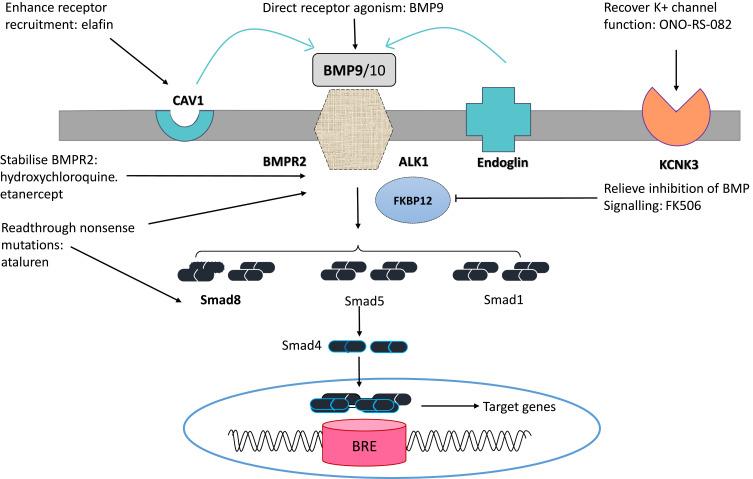
Pulmonary Arterial Hypertension (PAH) is a progressive and devastating disease for which there is an escalating body of genetic and related pathophysiological information on disease pathobiology. Nevertheless, the success to date in identifying susceptibility genes, genetic variants and epigenetic processes has been limited due to PAH clinical multi-faceted variations. A number of germline gene candidates have been proposed but demonstrating consistently the association with PAH has been problematic, at least partly due to the reduced penetrance and variable expressivity. Although the data for bone morphogenetic protein receptor type 2 (BMPR2) and related genes remains undoubtedly the most extensive, recent advanced gene sequencing technologies have facilitated the discovery of further gene candidates with mutations among those with and without familial forms of PAH. An in depth understanding of the multitude of biologic variations associated with PAH may provide novel opportunities for therapeutic intervention in the coming years. This knowledge will irrevocably provide the opportunity for improved patient and family counseling as well as improved PAH diagnosis, risk assessment, and personalized treatment.
肺动脉高压(PAH)是一种进行性且具有毁灭性的疾病,关于该疾病病理生物学的遗传及相关病理生理学信息日益增多。然而,由于PAH临床方面的多维度变异,迄今为止在识别易感基因、基因变异和表观遗传过程方面取得的成功有限。已经提出了许多种系基因候选物,但要始终证明其与PAH的关联一直存在问题,至少部分原因是其外显率降低和表达可变。尽管骨形态发生蛋白受体2型(BMPR2)及相关基因的数据无疑仍是最广泛的,但最近先进的基因测序技术推动了在患有和未患有家族性PAH的人群中发现更多带有突变的基因候选物。深入了解与PAH相关的多种生物学变异可能会在未来几年为治疗干预提供新的机会。这些知识将不可避免地为改善患者和家属咨询以及改进PAH诊断、风险评估和个性化治疗提供机会。
 Zotero 插件