Qi Cong-Cong, Chen Xing-Xing, Gao Xin-Ran, Xu Jing-Xian, Liu Sen, Ge Jin-Fang
Department of Laboratory Animal Science, Fudan University, Shanghai, China.
School of Pharmacy, Anhui Medical University, Hefei, China.
Front Aging Neurosci. 2021 Mar 1;13:633495. doi: 10.3389/fnagi.2021.633495. eCollection 2021.
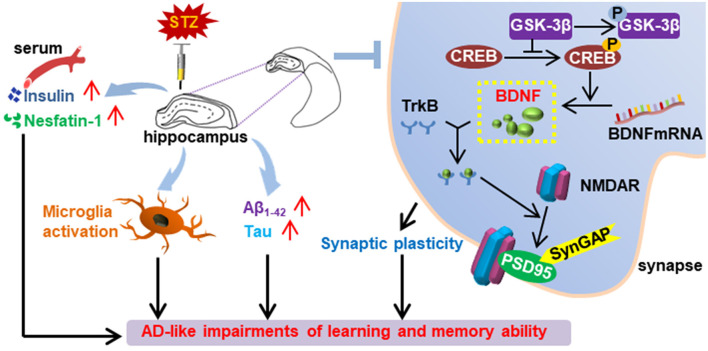
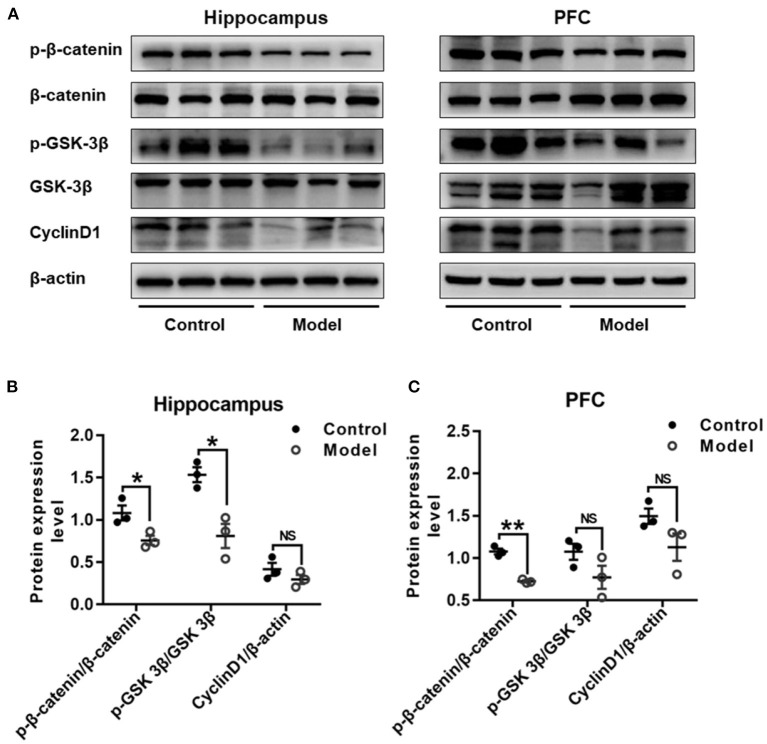
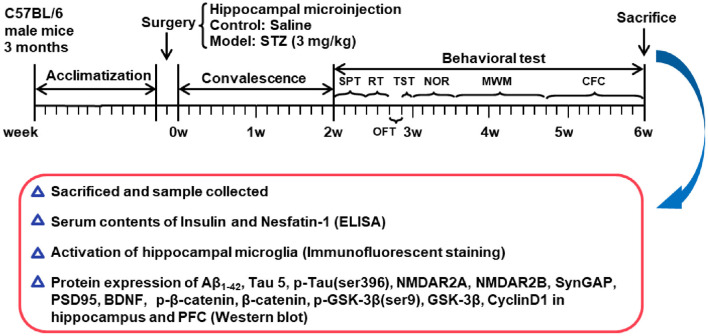
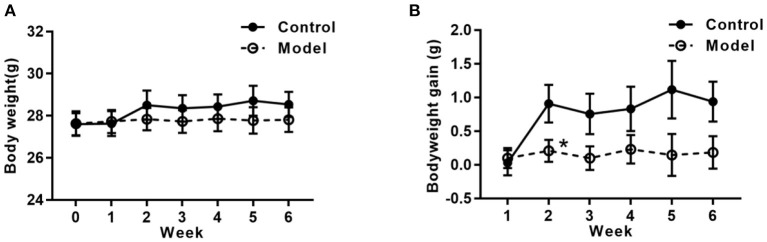
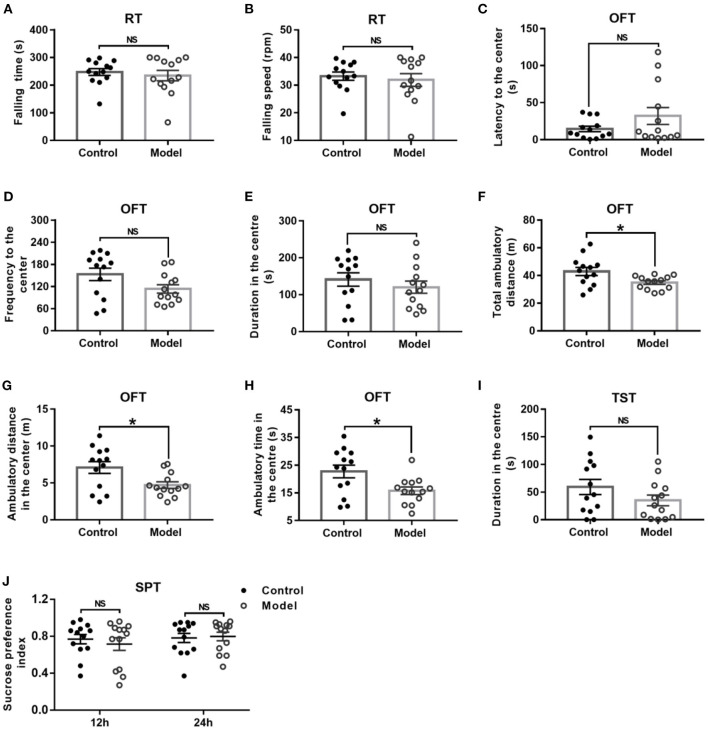
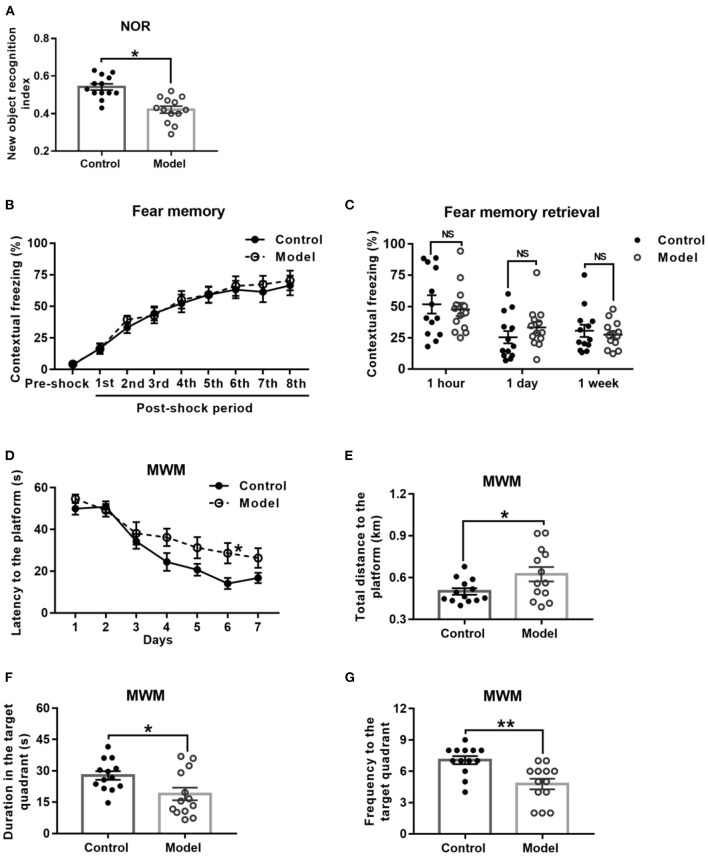
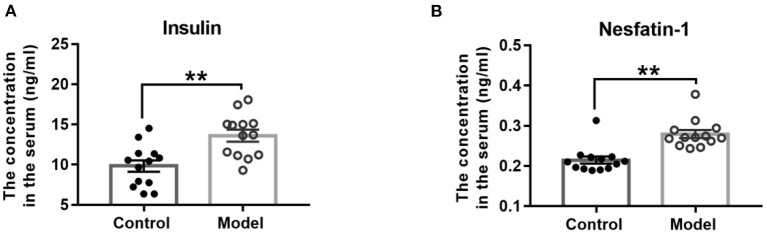
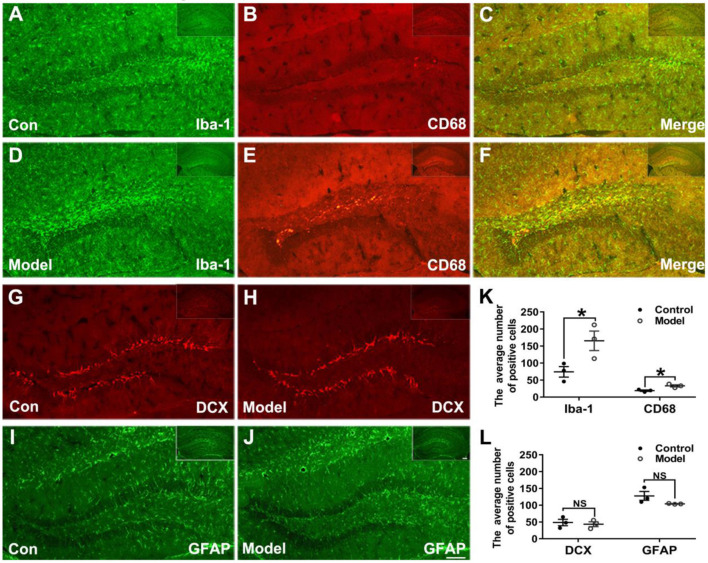
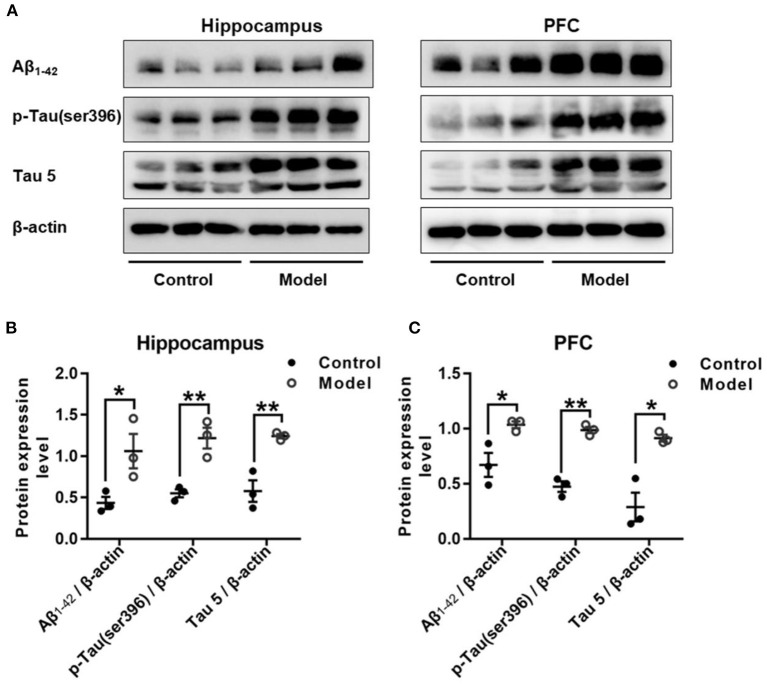
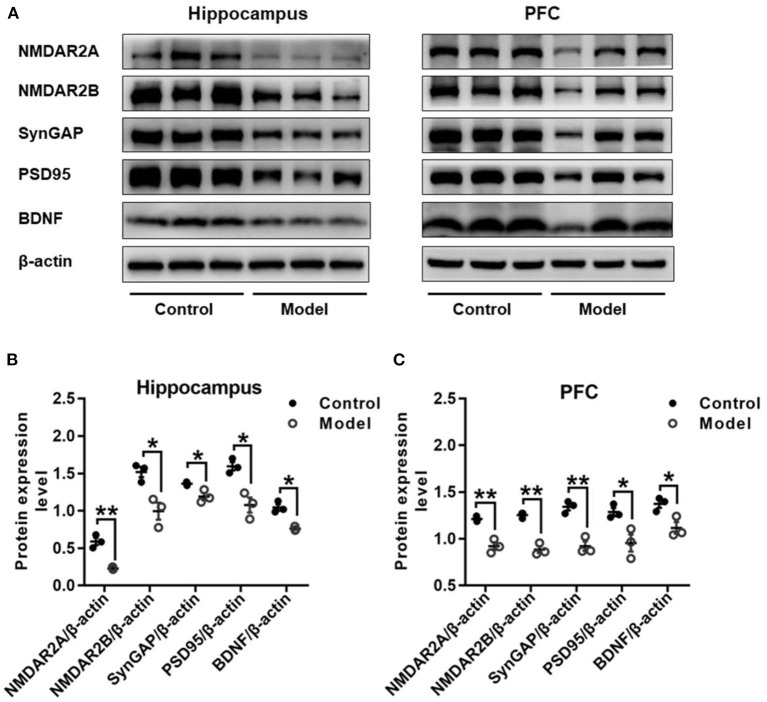
Alzheimer's disease (AD) is a neurodegenerative disease characterized by progressive cognitive decline, psychiatric symptoms and behavioral disorders, resulting in disability, and loss of self-sufficiency. To establish an AD-like mice model, investigate the behavioral performance, and explore the potential mechanism. Streptozotocin (STZ, 3 mg/kg) was microinjected bilaterally into the dorsal hippocampus of C57BL/6 mice, and the behavioral performance was observed. The serum concentrations of insulin and nesfatin-1 were measured by ELISA, and the activation of hippocampal microglia and astrocytes was assessed by immunohistochemistry. The protein expression of several molecular associated with the regulation of synaptic plasticity in the hippocampus and the pre-frontal cortex (PFC) was detected via western blotting. The STZ-microinjected model mice showed a slower bodyweight gain and higher serum concentration of insulin and nesfatin-1. Although there was no significant difference between groups with regard to the ability of balance and motor coordination, the model mice presented a decline of spontaneous movement and exploratory behavior, together with an impairment of learning and memory ability. Increased activated microglia was aggregated in the hippocampal dentate gyrus of model mice, together with an increase abundance of Aβ and Tau in the hippocampus and PFC. Moreover, the protein expression of NMDAR2A, NMDAR2B, SynGAP, PSD95, BDNF, and p-β-catenin/β-catenin were remarkably decreased in the hippocampus and the PFC of model mice, and the expression of p-GSK-3β (ser9)/GSK-3β were reduced in the hippocampus. A bilateral hippocampal microinjection of STZ could induce not only AD-like behavioral performance in mice, but also adaptive changes of synaptic plasticity against neuroinflammatory and endocrinal injuries. The underlying mechanisms might be associated with the imbalanced expression of the key proteins of Wnt signaling pathway in the hippocampus and the PFC.
阿尔茨海默病(AD)是一种神经退行性疾病,其特征为进行性认知衰退、精神症状和行为障碍,最终导致残疾和生活不能自理。为建立AD样小鼠模型,研究其行为表现,并探索潜在机制。将链脲佐菌素(STZ,3mg/kg)双侧微量注射到C57BL/6小鼠的背侧海马体中,观察其行为表现。通过酶联免疫吸附测定法(ELISA)检测血清胰岛素和nesfatin-1浓度,通过免疫组织化学评估海马小胶质细胞和星形胶质细胞的激活情况。通过蛋白质免疫印迹法检测海马体和前额叶皮质(PFC)中几种与突触可塑性调节相关分子的蛋白质表达。STZ微量注射模型小鼠体重增加较慢,血清胰岛素和nesfatin-1浓度较高。尽管在平衡能力和运动协调性方面各组之间无显著差异,但模型小鼠的自发运动和探索行为出现下降,同时学习和记忆能力受损。模型小鼠海马齿状回中活化的小胶质细胞增多,海马体和PFC中Aβ和Tau的丰度增加。此外,模型小鼠海马体和PFC中NMDAR2A、NMDAR2B、SynGAP、PSD95、BDNF和p-β-连环蛋白/β-连环蛋白的蛋白质表达显著降低,海马体中p-GSK-3β(ser9)/GSK-3β的表达减少。双侧海马体微量注射STZ不仅可诱导小鼠出现AD样行为表现,还可诱导突触可塑性针对神经炎症和内分泌损伤的适应性变化。潜在机制可能与海马体和PFC中Wnt信号通路关键蛋白的表达失衡有关。