Haim-Nachum Shilat, Levy-Gigi Einat
School of Education, Bar-Ilan University, Ramat Gan, Israel.
The Gonda Multidisciplinary Brain Research Center, Bar-Ilan University, Ramat Gan, Israel.
Front Psychol. 2021 Feb 26;12:615289. doi: 10.3389/fpsyg.2021.615289. eCollection 2021.
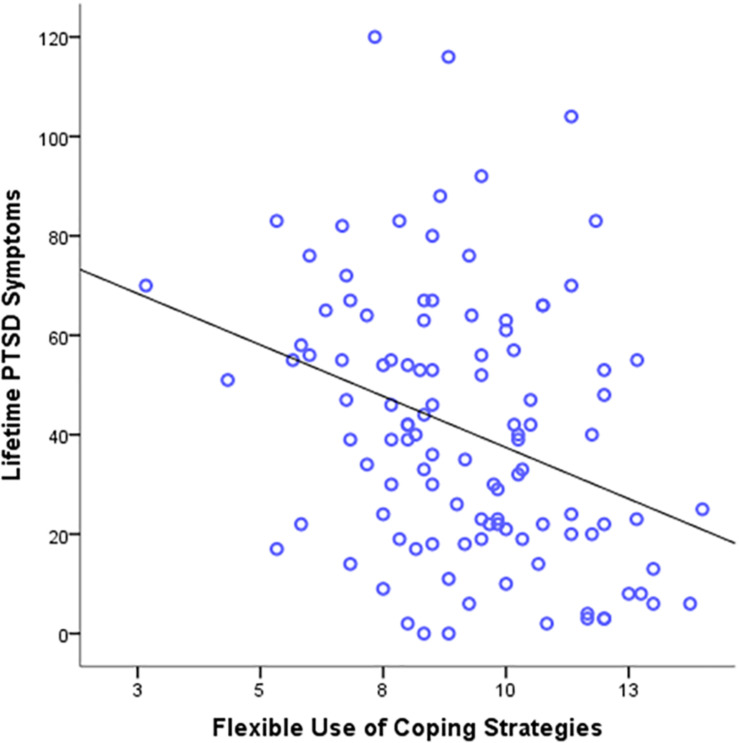
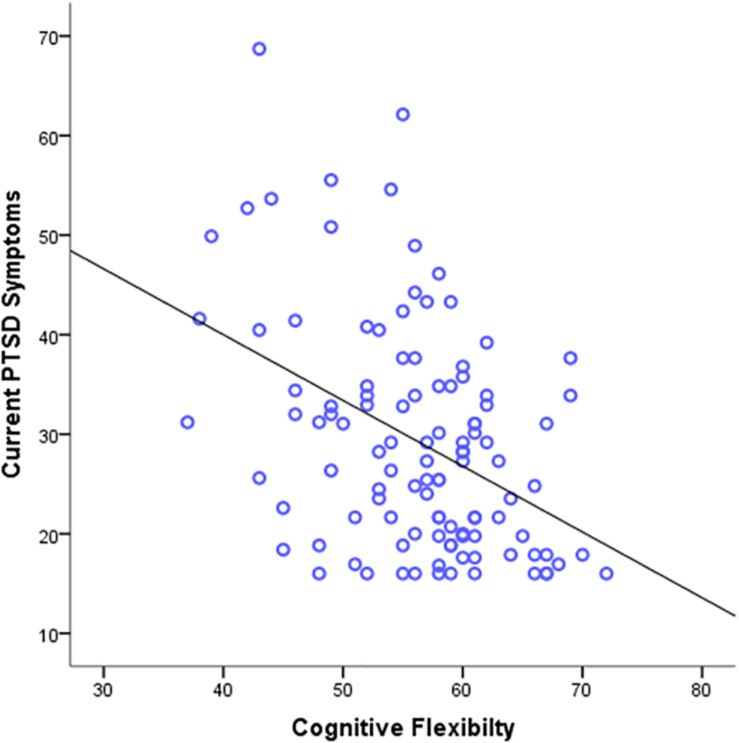
In recent years, researchers have tried to unpack the meaning of the term flexibility and test how different constructs of flexibility are associated with various psychopathologies. For example, it is apparent that high levels of flexibility allow individuals to adaptively cope and avoid psychopathology following traumatic events, but the precise nature of this flexibility is ambiguous. In this study we focus on two central constructs: - the ability to recognize and implement possible responses to a situation- and - the ability to modulate emotional expression and experience across situations. We aim to explore the connection between cognitive and regulatory flexibility and evaluate their relative effect on PTSD symptoms. Trauma-exposed college students ( = 109, age = 25.31, = 4.59) were assessed for cognitive and regulatory flexibility and current and lifetime PTSD symptoms. We predicted and found a relatively weak, yet significant, overlap between participants' cognitive and regulatory flexibility. Importantly, while both cognitive and regulatory flexibility were associated with lifetime PTSD symptoms, only cognitive flexibility was associated with current PTSD symptoms. The findings illuminate the possible value of differentiating between constructs of flexibility in predicting short and long-term effects of traumatic exposure and may pave the ground for developing personalized intervention methods.
近年来,研究人员试图剖析“灵活性”一词的含义,并测试不同的灵活性结构如何与各种精神病理学相关联。例如,很明显,高度的灵活性使个体能够在创伤事件后适应性地应对并避免精神病理学问题,但这种灵活性的确切性质尚不明确。在本研究中,我们关注两个核心结构:——识别并实施对某种情况的可能反应的能力,以及——在不同情况下调节情绪表达和体验的能力。我们旨在探索认知灵活性和调节灵活性之间的联系,并评估它们对创伤后应激障碍(PTSD)症状的相对影响。对有过创伤经历的大学生(n = 109,年龄 = 25.31,标准差 = 4.59)进行了认知灵活性、调节灵活性以及当前和终生PTSD症状的评估。我们预测并发现参与者的认知灵活性和调节灵活性之间存在相对较弱但显著的重叠。重要的是,虽然认知灵活性和调节灵活性都与终生PTSD症状相关,但只有认知灵活性与当前PTSD症状相关。这些发现阐明了在预测创伤暴露的短期和长期影响时区分灵活性结构的可能价值,并可能为开发个性化干预方法奠定基础。