Yin Ying, Liu Xiao-Zhao, He Ximiao, Zhou Li-Quan
Department of Physiology, School of Basic Medicine, Tongji Medical College, Huazhong University of Science and Technology, Wuhan, China.
Institute of Reproductive Health, Tongji Medical College, Huazhong University of Science and Technology, Wuhan, China.
Front Cell Infect Microbiol. 2021 Feb 25;11:609160. doi: 10.3389/fcimb.2021.609160. eCollection 2021.
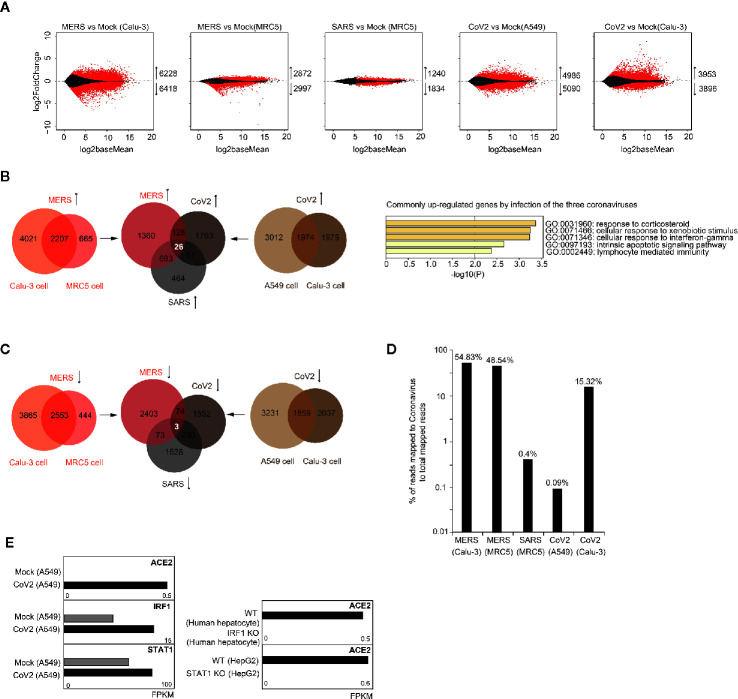
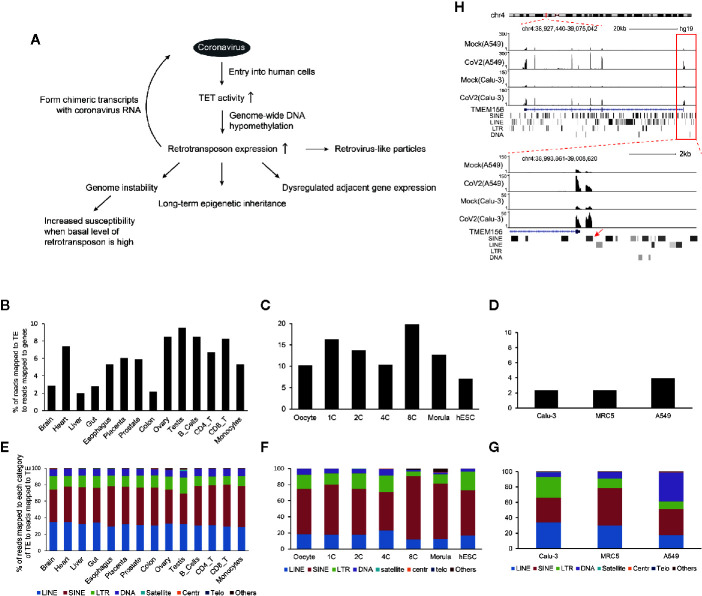
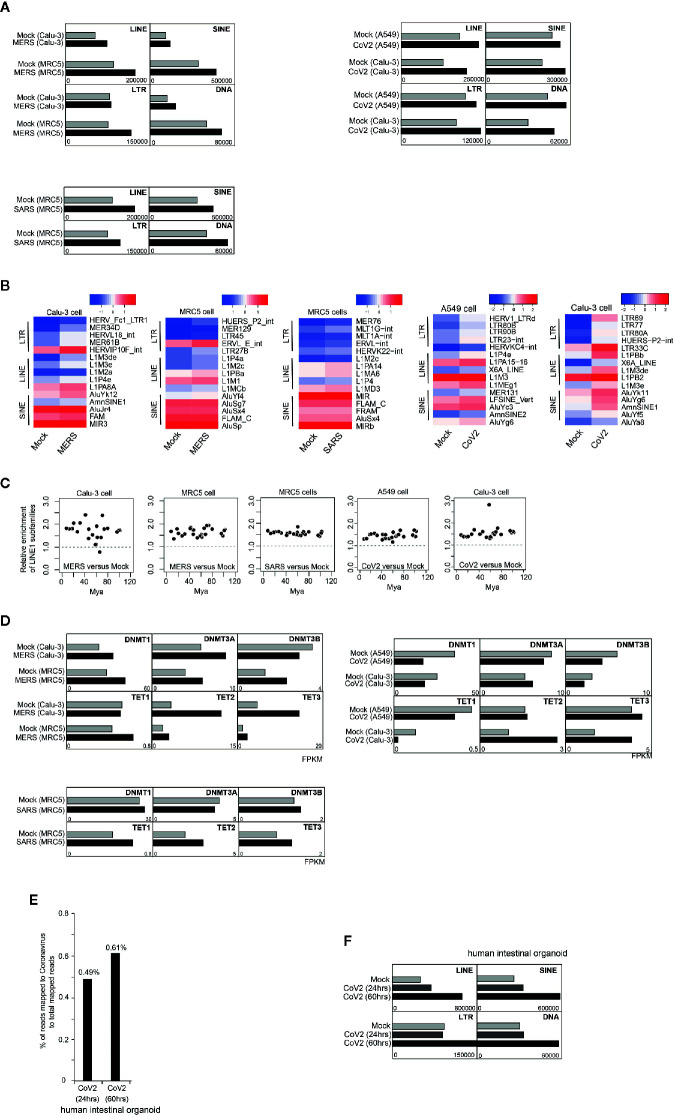
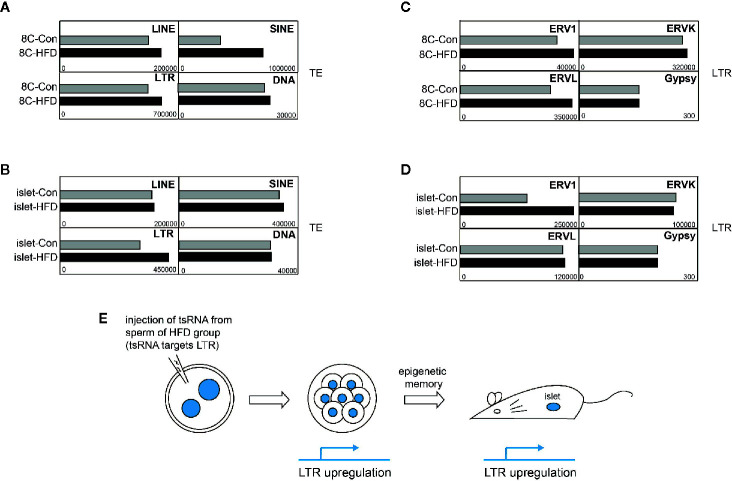
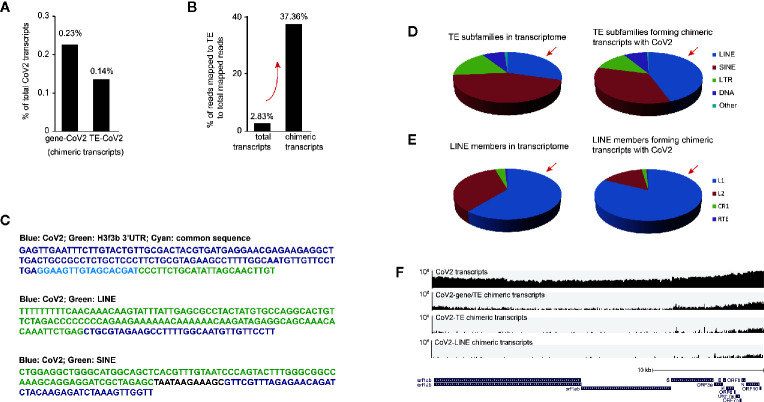
There is an increased global outbreak of diseases caused by coronaviruses affecting respiratory tracts of birds and mammals. Recent dangerous coronaviruses are MERS-CoV, SARS-CoV, and SARS-CoV-2, causing respiratory illness and even failure of several organs. However, profound impact of coronavirus on host cells remains elusive. In this study, we analyzed transcriptome of MERS-CoV, SARS-CoV, and SARS-CoV-2 infected human lung-derived cells, and observed that infection of these coronaviruses all induced increase of retrotransposon expression with upregulation of TET genes. Upregulation of retrotransposon was also observed in SARS-CoV-2 infected human intestinal organoids. Retrotransposon upregulation may lead to increased genome instability and enhanced expression of genes with readthrough from retrotransposons. Therefore, people with higher basal level of retrotransposon such as cancer patients and aged people may have increased risk of symptomatic infection. Additionally, we show evidence supporting long-term epigenetic inheritance of retrotransposon upregulation. We also observed chimeric transcripts of retrotransposon and SARS-CoV-2 RNA for potential human genome invasion of viral fragments, with the front and the rear part of SARS-CoV-2 genome being easier to form chimeric RNA. Thus, we suggest that primers and probes for nucleic acid detection should be designed in the middle of virus genome to identify live virus with higher probability. In summary, we propose our hypothesis that coronavirus invades human cells and interacts with retrotransposon, eliciting more severe symptoms in patients with underlying diseases. In the treatment of patients with coronavirus infection, it may be necessary to pay more attention to the potential harm contributed by retrotransposon dysregulation.
由冠状病毒引起的、影响鸟类和哺乳动物呼吸道的疾病在全球范围内的爆发有所增加。近期危险的冠状病毒有中东呼吸综合征冠状病毒(MERS-CoV)、严重急性呼吸综合征冠状病毒(SARS-CoV)和严重急性呼吸综合征冠状病毒2(SARS-CoV-2),它们会引发呼吸道疾病,甚至导致多个器官功能衰竭。然而,冠状病毒对宿主细胞的深远影响仍不清楚。在本研究中,我们分析了感染MERS-CoV、SARS-CoV和SARS-CoV-2的人肺源细胞的转录组,观察到这些冠状病毒的感染均诱导逆转录转座子表达增加,同时TET基因上调。在感染SARS-CoV-2的人肠道类器官中也观察到逆转录转座子上调。逆转录转座子上调可能导致基因组不稳定性增加,并增强因逆转录转座子通读而产生的基因表达。因此,逆转录转座子基础水平较高的人群,如癌症患者和老年人,可能有更高的出现症状性感染的风险。此外,我们展示了支持逆转录转座子上调长期表观遗传遗传的证据。我们还观察到逆转录转座子与SARS-CoV-2 RNA的嵌合转录本,这可能导致病毒片段对人类基因组的潜在入侵,其中SARS-CoV-2基因组的前部和后部更容易形成嵌合RNA。因此,我们建议核酸检测的引物和探针应设计在病毒基因组中间,以更有可能识别活病毒。总之,我们提出我们的假设,即冠状病毒侵入人类细胞并与逆转录转座子相互作用,在患有基础疾病的患者中引发更严重的症状。在冠状病毒感染患者的治疗中,可能有必要更加关注逆转录转座子失调造成的潜在危害。