Division of Infectious Diseases, Weill Cornell Medicine, New York, New York, USA.
Department of Molecular Biology & Genetics, Cornell University, Ithaca, New York, USA.
JCI Insight. 2021 Dec 22;6(24):e147170. doi: 10.1172/jci.insight.147170.
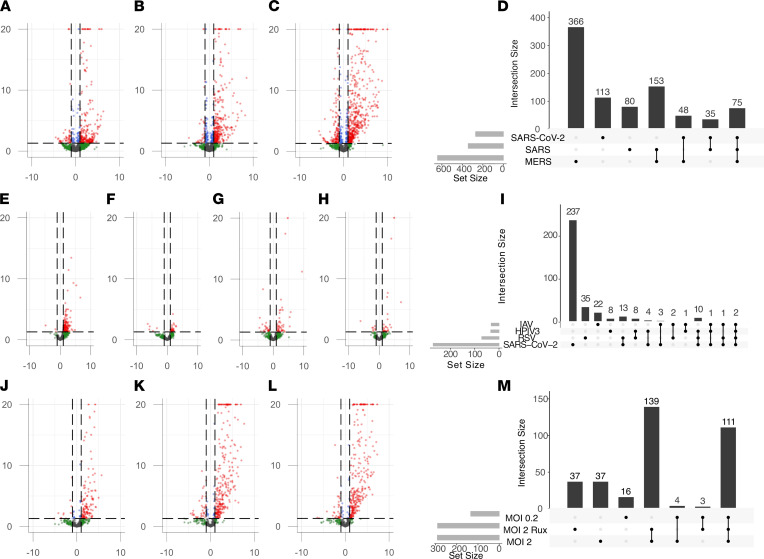
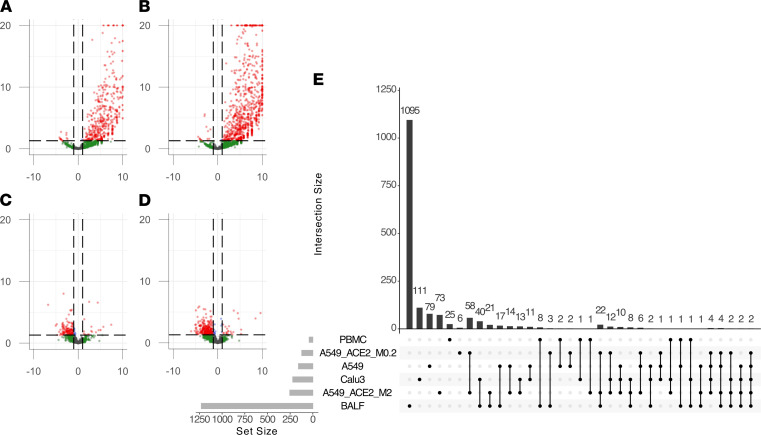
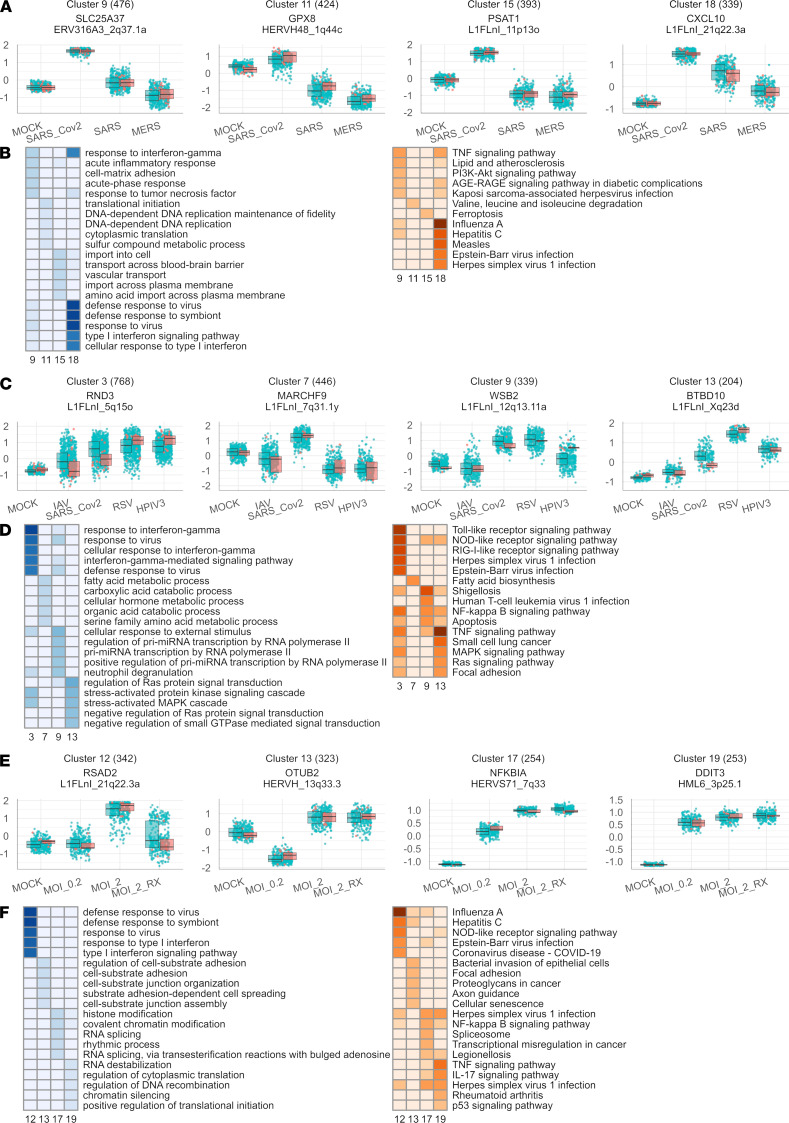
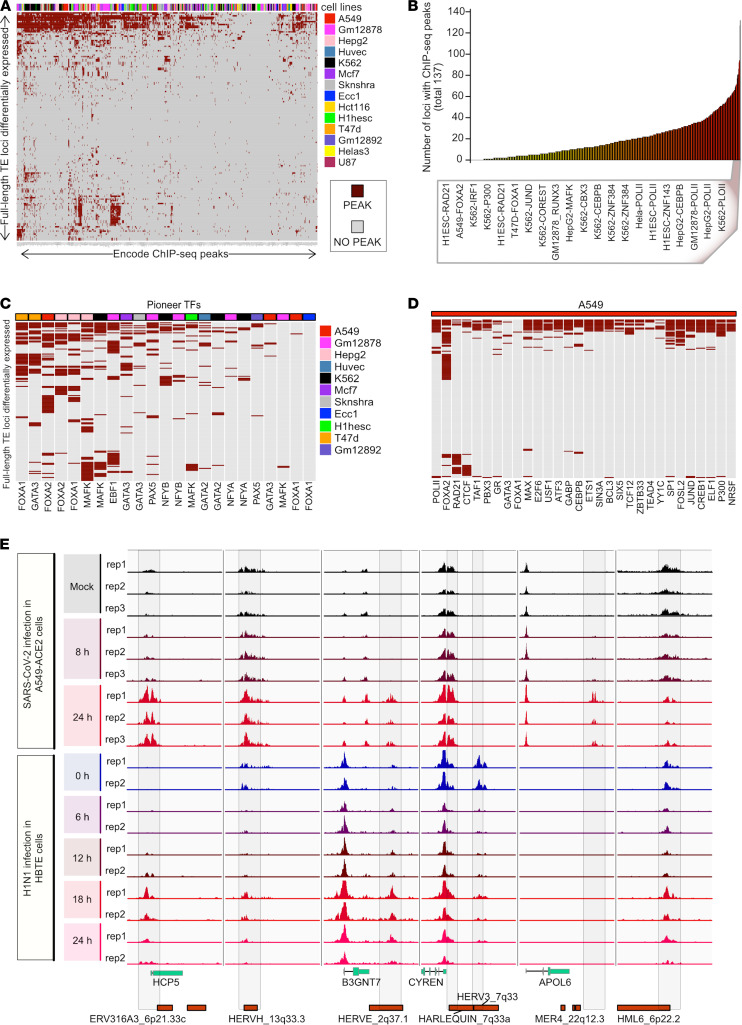
SARS-CoV-2 promotes an imbalanced host response that underlies the development and severity of COVID-19. Infections with viruses are known to modulate transposable elements (TEs), which can exert downstream effects by modulating host gene expression, innate immune sensing, or activities encoded by their protein products. We investigated the impact of SARS-CoV-2 infection on TE expression using RNA-Seq data from cell lines and from primary patient samples. Using a bioinformatics tool, Telescope, we showed that SARS-CoV-2 infection led to upregulation or downregulation of TE transcripts, a subset of which differed from cells infected with SARS, Middle East respiratory syndrome coronavirus (MERS-CoV or MERS), influenza A virus (IAV), respiratory syncytial virus (RSV), and human parainfluenza virus type 3 (HPIV3). Differential expression of key retroelements specifically identified distinct virus families, such as Coronaviridae, with unique retroelement expression subdividing viral species. Analysis of ChIP-Seq data showed that TEs differentially expressed in SARS-CoV-2 infection were enriched for binding sites for transcription factors involved in immune responses and for pioneer transcription factors. In samples from patients with COVID-19, there was significant TE overexpression in bronchoalveolar lavage fluid and downregulation in PBMCs. Thus, although the host gene transcriptome is altered by infection with SARS-CoV-2, the retrotranscriptome may contain the most distinctive features of the cellular response to SARS-CoV-2 infection.
SARS-CoV-2 促进了宿主反应的失衡,这是 COVID-19 发展和严重程度的基础。已知病毒感染会调节转座元件 (TEs),这些元件可以通过调节宿主基因表达、先天免疫感应或其蛋白质产物编码的活性来产生下游效应。我们使用细胞系和原发性患者样本的 RNA-Seq 数据研究了 SARS-CoV-2 感染对 TE 表达的影响。使用生物信息学工具 Telescope,我们表明 SARS-CoV-2 感染导致 TE 转录本的上调或下调,其中一部分与感染 SARS、中东呼吸综合征冠状病毒 (MERS-CoV 或 MERS)、甲型流感病毒 (IAV)、呼吸道合胞病毒 (RSV) 和人副流感病毒 3 型 (HPIV3) 的细胞不同。关键逆转录元件的差异表达特别鉴定了不同的病毒家族,如冠状病毒科,其独特的逆转录元件表达将病毒物种细分。ChIP-Seq 数据的分析表明,在 SARS-CoV-2 感染中差异表达的 TEs 富含参与免疫反应的转录因子和先驱转录因子的结合位点。在 COVID-19 患者的样本中,支气管肺泡灌洗液中的 TE 过度表达,而 PBMCs 中的 TE 下调。因此,尽管 SARS-CoV-2 感染改变了宿主基因转录组,但逆转录组可能包含 SARS-CoV-2 感染细胞反应的最独特特征。