Department of Orthopedics, The First Affiliated Hospital, Division of Life Sciences and Medicine, University of Science and Technology of China, Hefei, China.
College of Chemistry and Chemical Engineering, Xiamen University, Xiamen, China.
JMIR Mhealth Uhealth. 2021 Mar 18;9(3):e18763. doi: 10.2196/18763.
Much effort has been made to optimize the results of total hip arthroplasty and total knee arthroplasty. With the rapid growth of social media use, mobile apps, such as WeChat, have been considered for improving outcomes and patient satisfaction after total hip arthroplasty and total knee arthroplasty.
We aimed to evaluate the effectiveness of a WeChat-based community as an intervention for overall patient satisfaction.
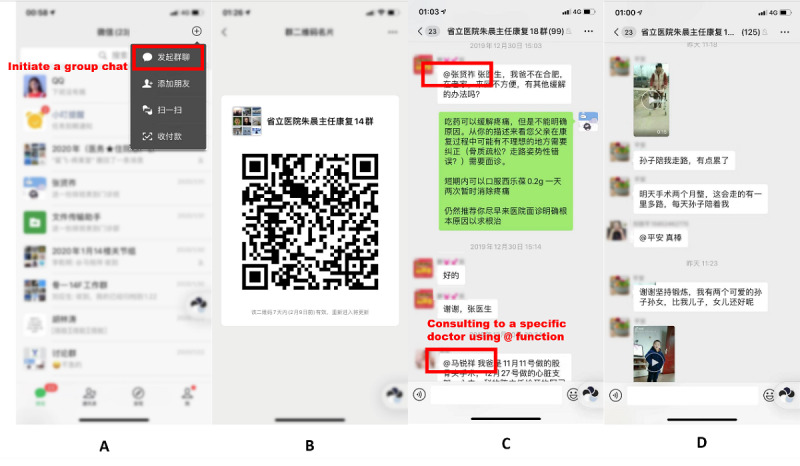
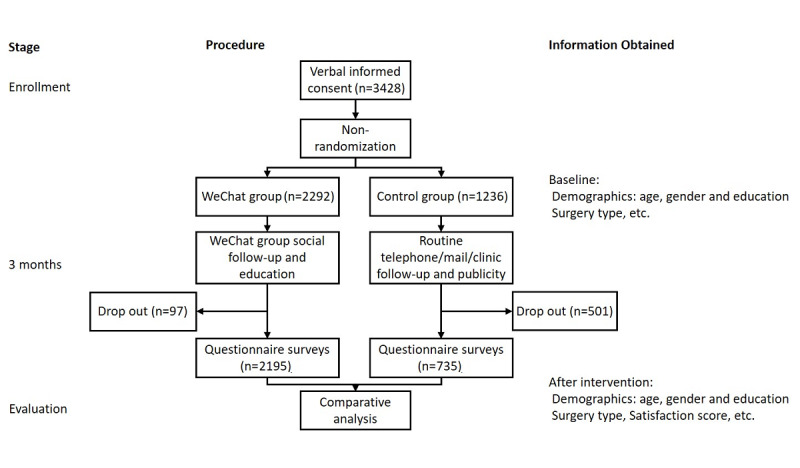
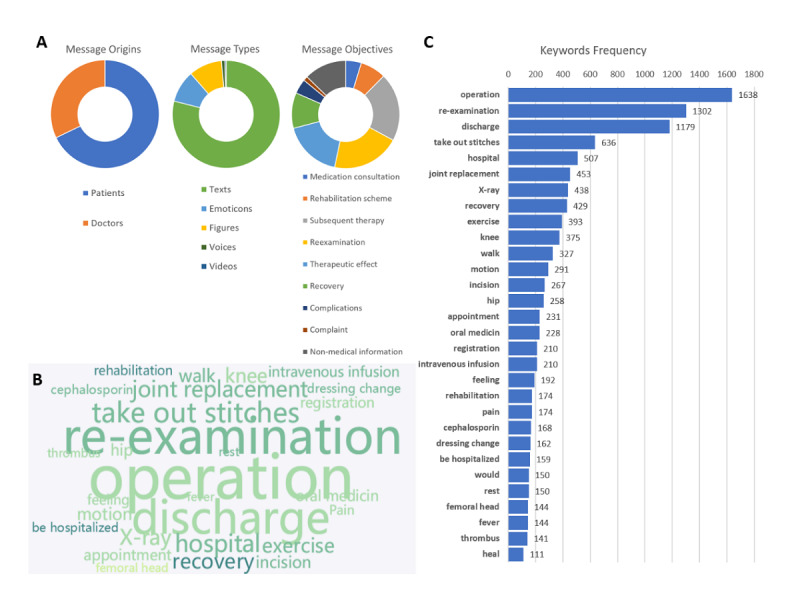
The study was conducted among discharged in-hospital patients who received hip or knee procedures in the First Affiliated Hospital of the University of Science and Technology of China from April 2019 to January 2020. An educational online social community was constructed with the WeChat app. Participants willing to join the community were enrolled in a WeChat group and received 3 months of intervention and follow-up. Those who were not willing to use the account were included in a control group and received routine publicity via telephone, mail, and brochures. The Danish Health and Medicine Authority patient satisfaction questionnaire was used to score perioperative patient education and overall satisfaction. The contents in the group chat were analyzed using natural language processing tools.
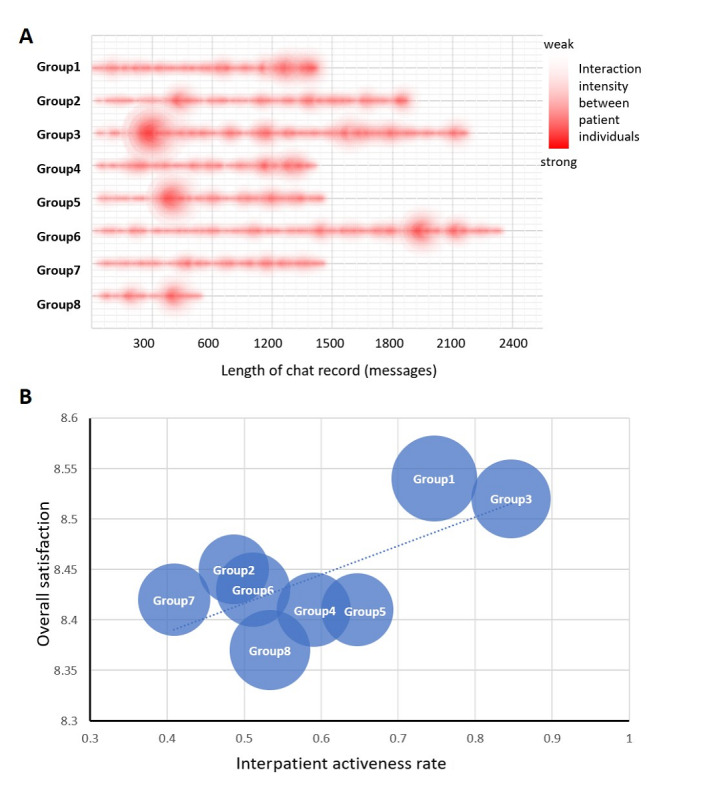
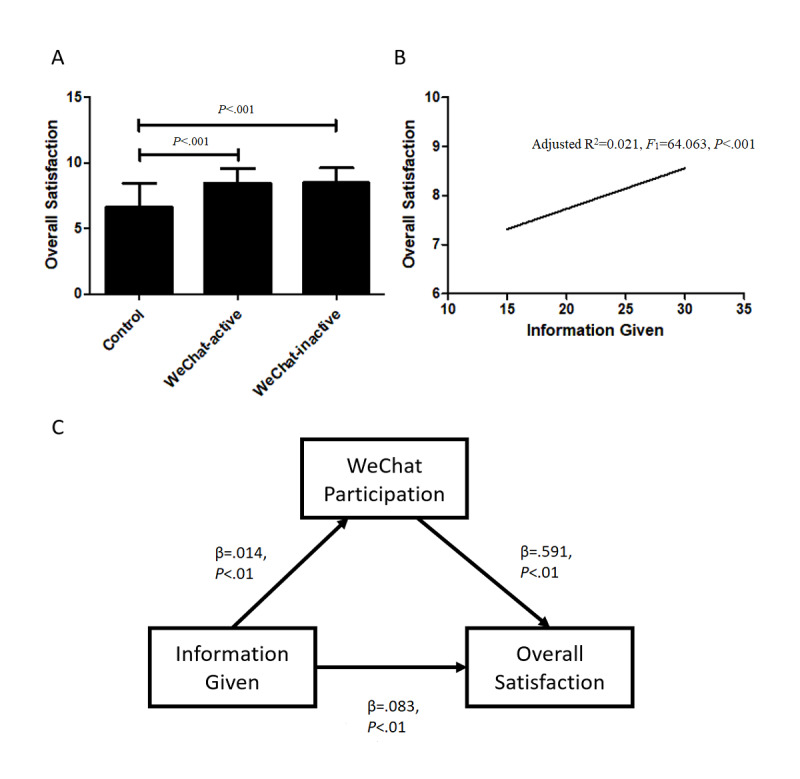
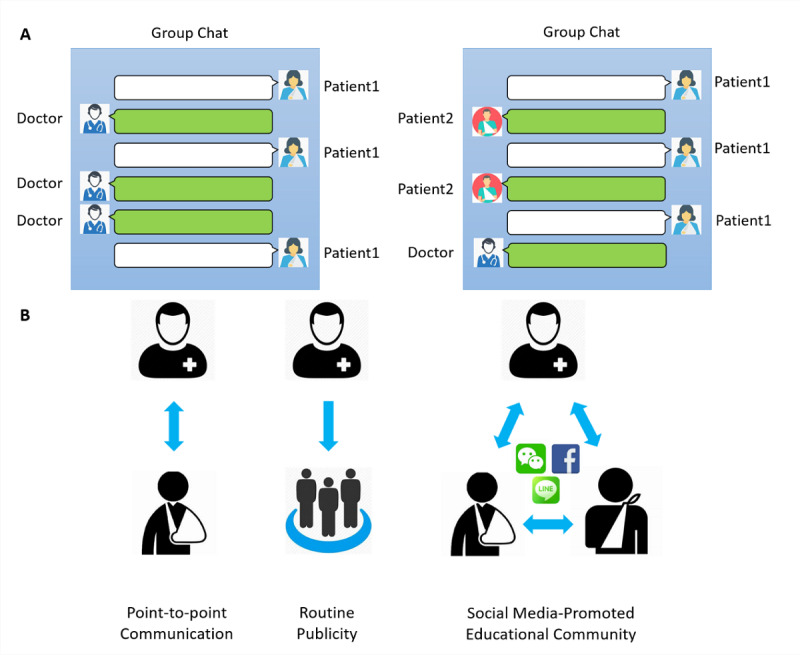
A total of 3428 patients were enrolled in the study, including 2292 in the WeChat group and 1236 in the control group. Participants in the WeChat group had higher overall satisfaction scores than those in the control group (mean 8.48, SD 1.12 vs mean 6.66, SD 1.80, P<.001). The difference between the two groups was significant for primary surgery based on subgroup stratification. To control confounding factors and explore the effects of WeChat participation as a mediating variable between perioperative patient education and overall satisfaction, hierarchical regression was utilized. An interpatient interaction model was found in the community group chat, and it contributed to overall satisfaction. Patients in the group with more interpatient interactions were more likely to have better overall satisfaction.
The social media-promoted educational community using WeChat was effective among joint replacement patients. Provision of more perioperative education is associated with more active patient participation in the community and therefore more patient satisfaction in terms of the overall joint procedure. Community group chat could facilitate interactions among patients and contribute to overall satisfaction.
为了优化全髋关节置换术和全膝关节置换术的效果,已经付出了很多努力。随着社交媒体使用的快速增长,微信等移动应用程序被认为可以改善全髋关节置换术和全膝关节置换术后的效果和患者满意度。
我们旨在评估基于微信的社区作为提高整体患者满意度的干预措施的有效性。
该研究在 2019 年 4 月至 2020 年 1 月期间在中国科学技术大学第一附属医院接受髋关节或膝关节手术的出院住院患者中进行。使用微信应用程序构建了一个在线教育社区。愿意加入社区的参与者被纳入微信组,并接受 3 个月的干预和随访。那些不愿意使用该账户的人被纳入对照组,并通过电话、邮件和宣传册接受常规宣传。使用丹麦卫生和医药管理局患者满意度问卷对围手术期患者教育和整体满意度进行评分。使用自然语言处理工具分析组内聊天的内容。
共有 3428 名患者入组,其中微信组 2292 人,对照组 1236 人。微信组患者的总体满意度评分高于对照组(平均 8.48,标准差 1.12 与平均 6.66,标准差 1.80,P<.001)。基于亚组分层的主要手术,两组之间的差异具有统计学意义。为了控制混杂因素并探索微信参与作为围手术期患者教育和整体满意度之间的中介变量的效果,我们使用了层次回归。在社区组内聊天中发现了一种患者间相互作用模型,它对整体满意度有贡献。在组内互动更多的患者中,整体满意度更高的可能性更大。
在关节置换患者中,使用微信的社交媒体促进的教育社区是有效的。提供更多围手术期教育与患者更积极地参与社区相关,因此在整个关节手术方面更能提高患者的满意度。社区组内聊天可以促进患者之间的互动,并有助于整体满意度。