School of Basic Medical Sciences, Ningxia Key Laboratory of Vascular Injury and Repair, Ningxia Medical University, Yinchuan, 750004, Ningxia, China.
Department of Pathology, General Hospital of Ningxia Medical University, Yinchuan, 750004, Ningxia, China.
Neurochem Res. 2021 Jun;46(6):1359-1371. doi: 10.1007/s11064-021-03270-9. Epub 2021 Mar 18.
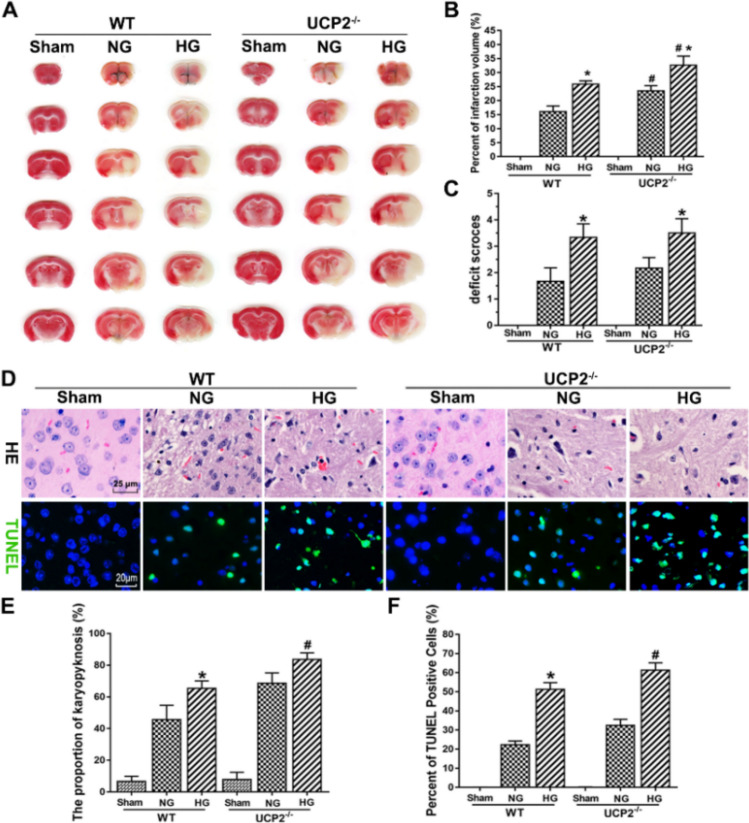
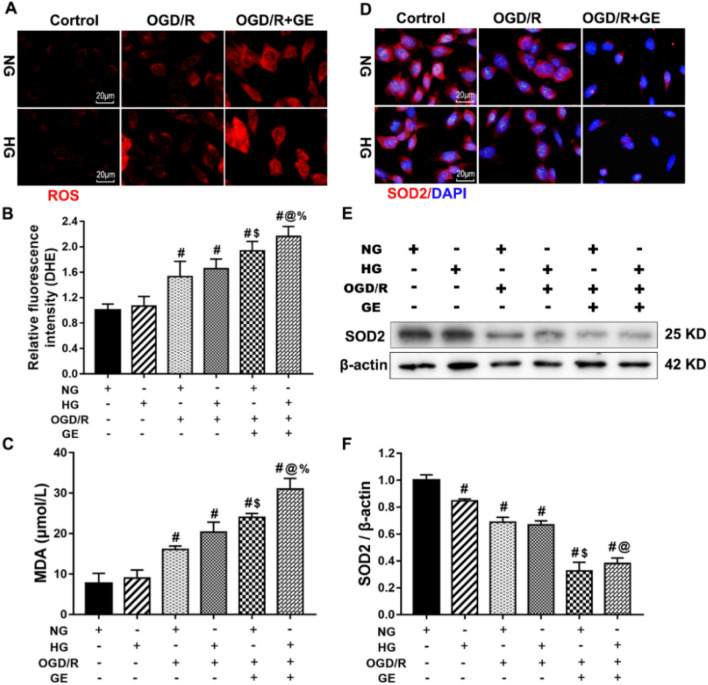
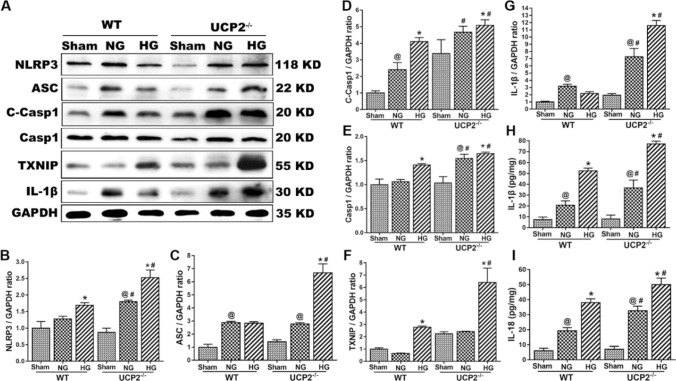
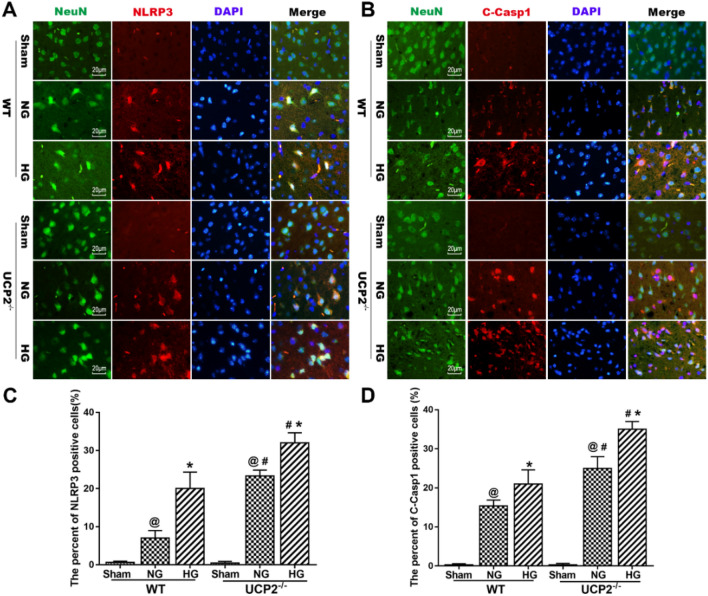
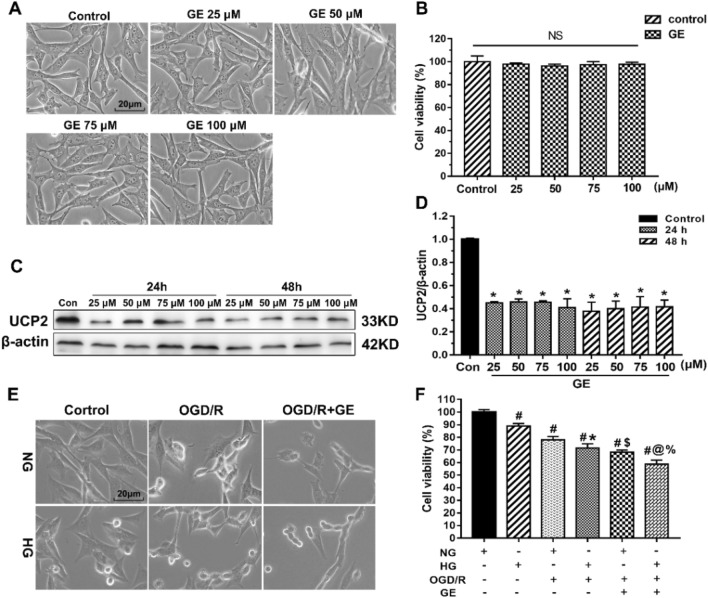
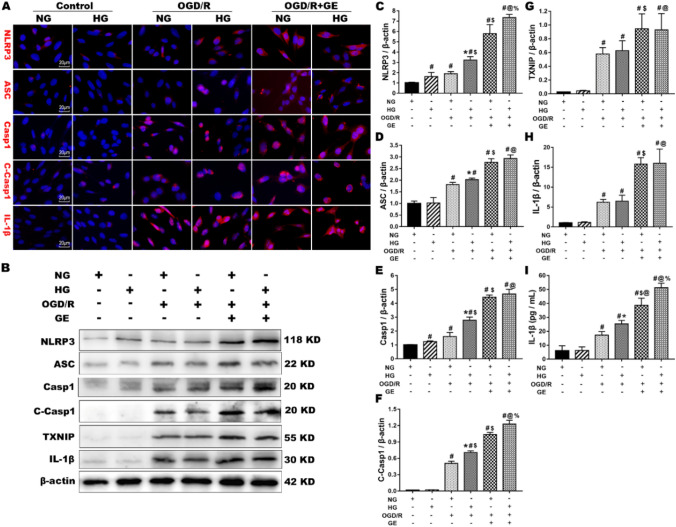
Mitochondrial uncoupling protein 2 (UCP2) deficiency exacerbates brain damage following cerebral ischemia/reperfusion (I/R). The Nod-like receptor protein-3 (NLRP3) inflammasome also plays a vital role in cerebral I/R damage. However, the effect of UCP2 on NLRP3 inflammasome-mediated hyperglycemia and I/R damage is not clear. In the present study, UCP2-knockout (UCP2) and wild-type (WT) mice were used to establish a model of middle cerebral artery occlusion (MCAO) and reperfusion under normo- and hyperglycemic conditions. HT22 cells were established as a model of oxygen-glucose deprivation and reoxygenation (OGD/R) with high glucose to mimic hyperglycemia and I/R in vitro. HT22 cells were treated with/without different concentrations of the UCP2-specific inhibitor genipin for different periods of time. The results showed that UCP2 deficiency significantly increased histopathological changes and apoptosis after cerebral I/R damage in hyperglycemic mice. Moreover, UCP2 deficiency enhanced NLRP3 inflammasome activation in neurons when cerebral I/R damage was exacerbated by hyperglycemia. Furthermore, UCP2 deficiency enhanced NLRP3 inflammasome activation and reactive oxygen species (ROS) production in HT22 cells under OGD/R and high-glucose conditions. UCP2 deficiency aggravated hyperglycemia-induced exacerbation of cerebral I/R damage. UCP2 deficiency also enhanced NLRP3 inflammasome activation and ROS production in neurons in vitro and in vivo. These findings suggest that UCP2 deficiency enhances NLRP3 inflammasome activation following hyperglycemia-induced exacerbation of cerebral I/R damage in vitro and in vivo. UCP2 may be a potential therapeutic target for hyperglycemia-induced exacerbation of cerebral I/R damage.
线粒体解偶联蛋白 2 (UCP2) 缺乏加剧脑缺血/再灌注 (I/R) 后的脑损伤。核苷酸结合寡聚化结构域样受体蛋白 3 (NLRP3) 炎性小体在脑 I/R 损伤中也起着至关重要的作用。然而,UCP2 对 NLRP3 炎性小体介导的高血糖和 I/R 损伤的影响尚不清楚。在本研究中,使用 UCP2 敲除 (UCP2) 和野生型 (WT) 小鼠建立了在正常和高血糖条件下大脑中动脉闭塞 (MCAO) 和再灌注的模型。HT22 细胞作为高糖模拟体外高血糖和 I/R 的氧葡萄糖剥夺和再氧合 (OGD/R) 模型建立。HT22 细胞用/不用 UCP2 特异性抑制剂京尼平的不同浓度处理不同时间。结果表明,UCP2 缺乏显著增加了高血糖小鼠脑 I/R 损伤后的组织病理学变化和细胞凋亡。此外,UCP2 缺乏增强了 NLRP3 炎性小体在神经元中的激活,当脑 I/R 损伤因高血糖而加重时。此外,UCP2 缺乏在 OGD/R 和高糖条件下增强了 HT22 细胞中 NLRP3 炎性小体的激活和活性氧 (ROS) 的产生。UCP2 缺乏加重了高血糖诱导的脑 I/R 损伤的恶化。UCP2 缺乏还增强了体外和体内神经元中 NLRP3 炎性小体的激活和 ROS 的产生。这些发现表明,UCP2 缺乏增强了高血糖诱导的脑 I/R 损伤的 NLRP3 炎性小体的激活。UCP2 可能是治疗高血糖诱导的脑 I/R 损伤恶化的潜在靶点。