Department of Clinical and Experimental Epilepsy, University College London Queen Square Institute of Neurology, London, UK.
Department of Neuromuscular Diseases, University College London Queen Square Institute of Neurology, London, UK.
Epilepsia. 2021 May;62(5):1256-1267. doi: 10.1111/epi.16867. Epub 2021 Mar 18.
Mutations in KCNC1 can cause severe neurological dysfunction, including intellectual disability, epilepsy, and ataxia. The Arg320His variant, which occurs in the voltage-sensing domain of the channel, causes a highly penetrant and specific form of progressive myoclonus epilepsy with severe ataxia, designated myoclonus epilepsy and ataxia due to potassium channel mutation (MEAK). KCNC1 encodes the voltage-gated potassium channel K 3.1, a channel that is important for enabling high-frequency firing in interneurons, raising the possibility that MEAK is associated with reduced interneuronal function.
To determine how this variant triggers MEAK, we expressed K 3.1b in cortical interneurons in vitro and investigated the effects on neuronal function and morphology. We also performed electrophysiological recordings of oocytes expressing K 3.1b to determine whether the mutation introduces gating pore currents.
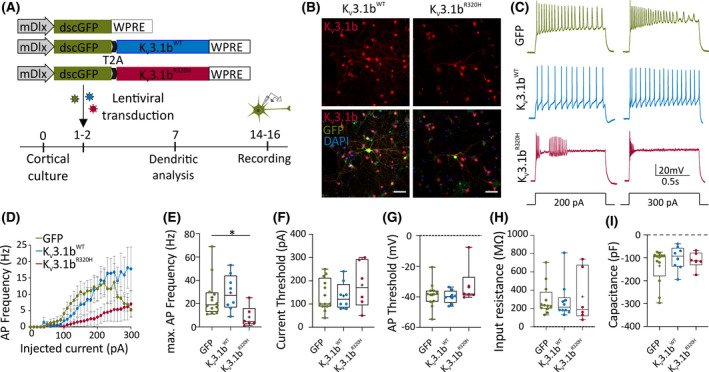
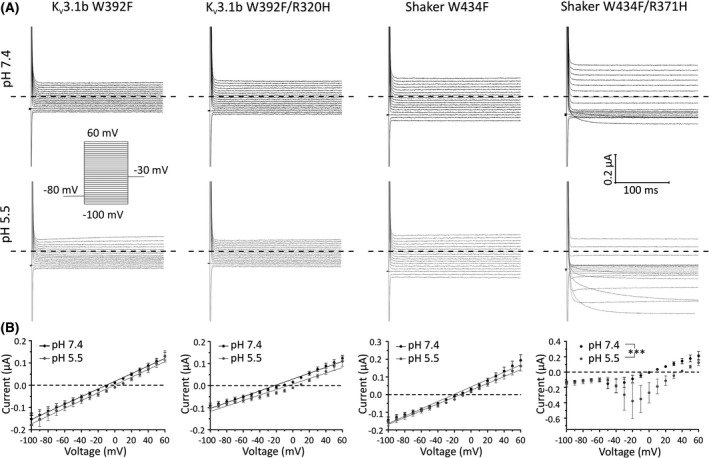
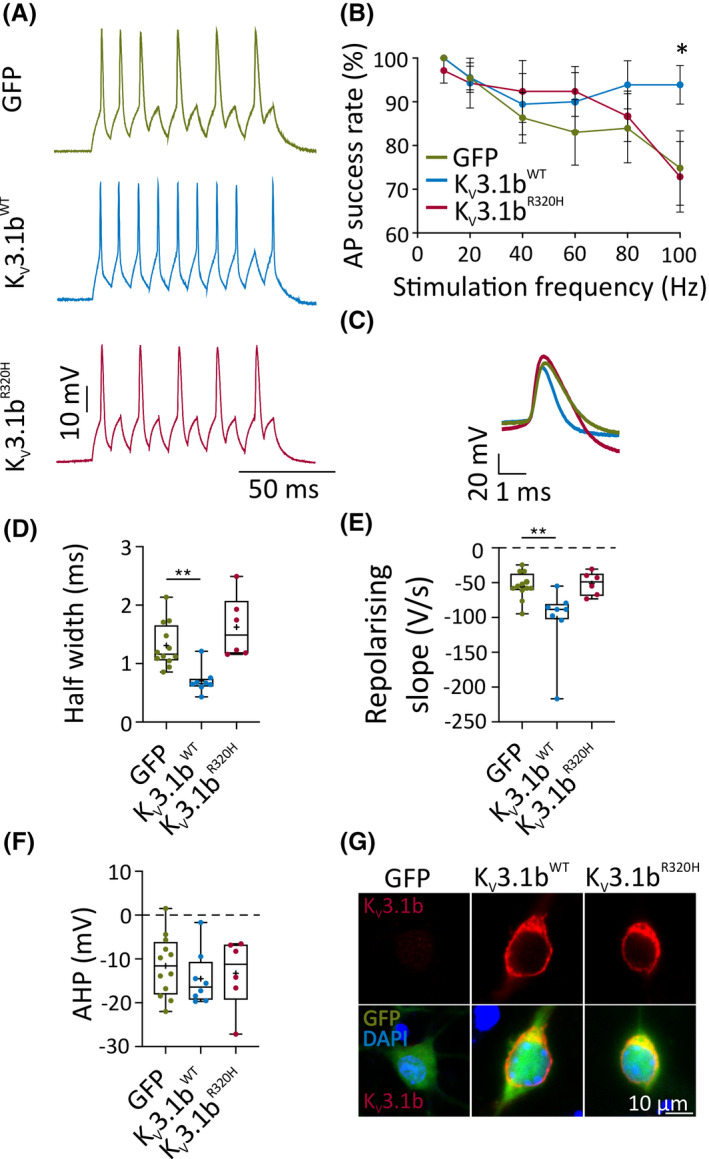
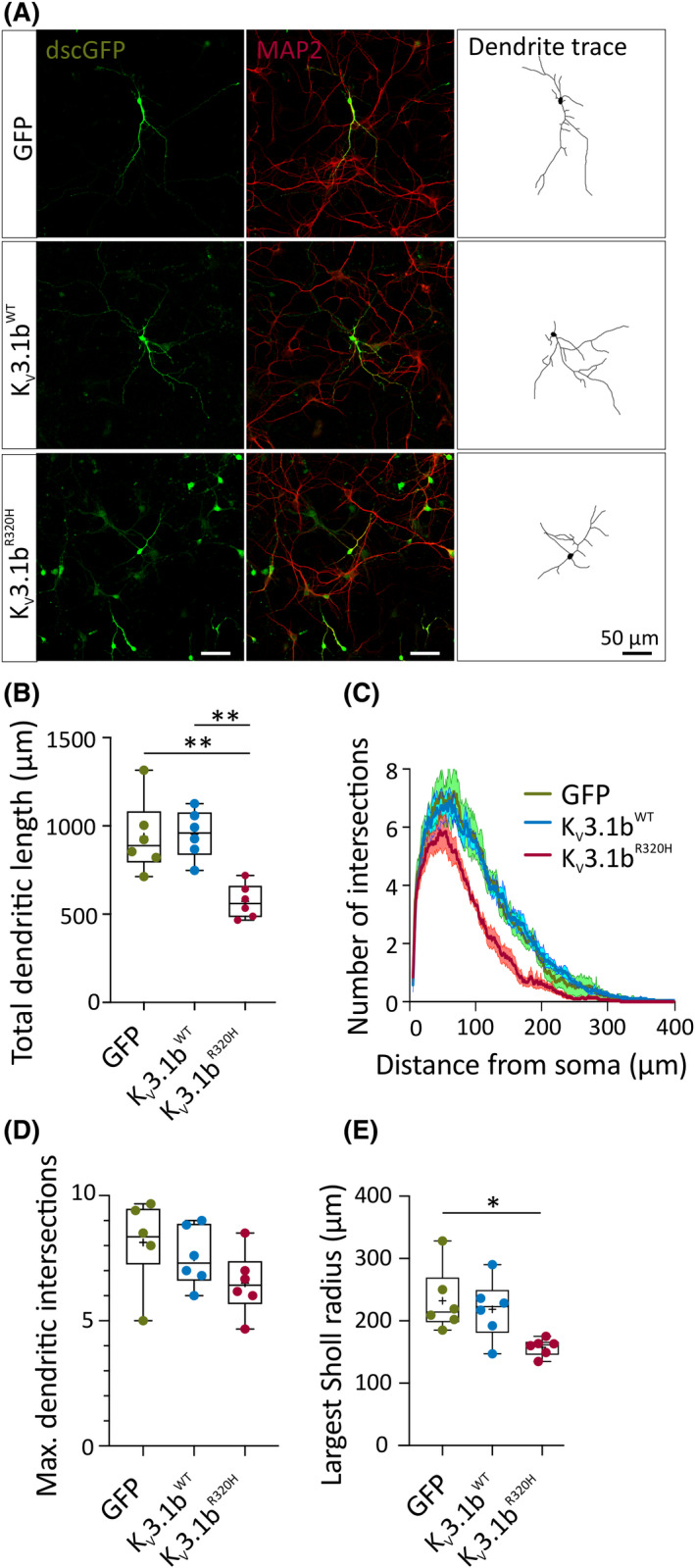
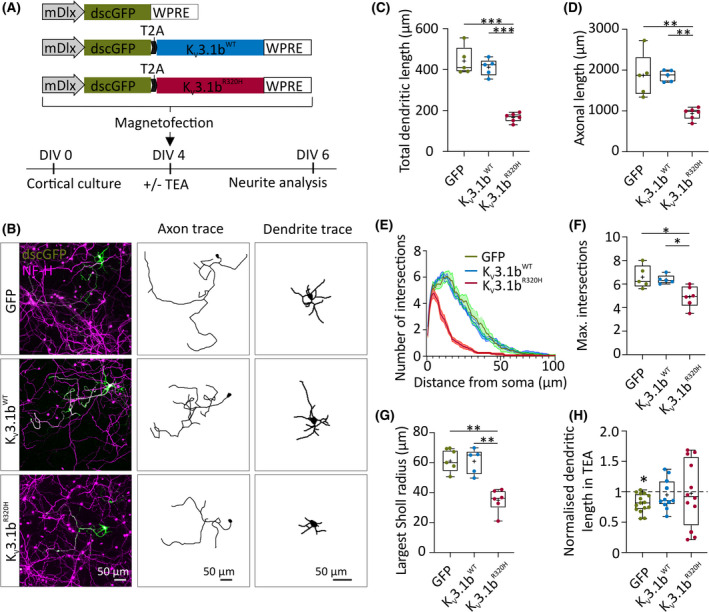
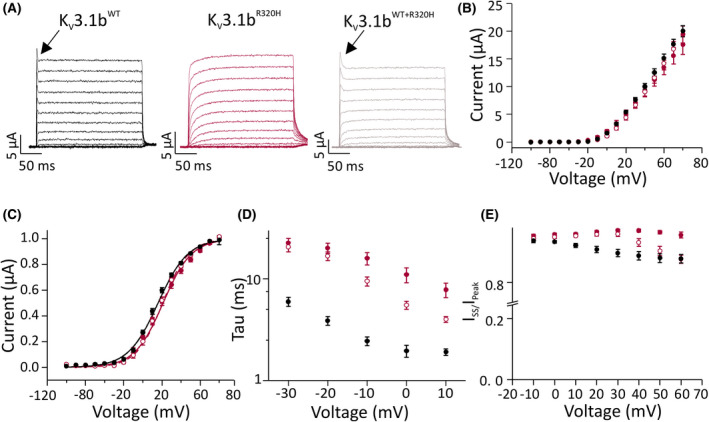
Expression of the K 3.1b variant profoundly reduced excitability of mature cortical interneurons, and cells expressing these channels were unable to support high-frequency firing. The mutant channel also had an unexpected effect on morphology, severely impairing neurite development and interneuron viability, an effect that could not be rescued by blocking K 3 channels. Oocyte recordings confirmed that in the adult K 3.1b isoform, R320H confers a dominant negative loss-of-function effect by slowing channel activation, but does not introduce potentially toxic gating pore currents.
Overall, our data suggest that, in addition to the regulation of high-frequency firing, K 3.1 channels play a hitherto unrecognized role in neuronal development. MEAK may be described as a developmental dendritopathy.
KCNC1 基因突变可导致严重的神经功能障碍,包括智力障碍、癫痫和共济失调。该通道的电压感应域中发生的 Arg320His 变体导致高度穿透性和特异性的进行性肌阵挛性癫痫伴严重共济失调,命名为钾通道突变所致肌阵挛性癫痫伴共济失调(MEAK)。KCNC1 编码电压门控钾通道 K3.1,该通道对于使中间神经元高频放电很重要,这增加了 MEAK 与中间神经元功能降低相关的可能性。
为了确定该变体如何引发 MEAK,我们在体外表达 K3.1b 在皮质中间神经元中,并研究其对神经元功能和形态的影响。我们还对表达 K3.1b 的卵母细胞进行了电生理记录,以确定该突变是否引入门控孔电流。
K3.1b 变体的表达显著降低了成熟皮质中间神经元的兴奋性,并且表达这些通道的细胞无法支持高频放电。该突变通道对形态也有意外影响,严重损害了神经突发育和中间神经元活力,这种影响不能通过阻断 K3 通道来挽救。卵母细胞记录证实,在成年 K3.1b 同工型中,R320H 通过减缓通道激活赋予显性负失活作用,但不会引入潜在毒性的门控孔电流。
总的来说,我们的数据表明,除了调节高频放电外,K3.1 通道在神经元发育中还发挥着迄今为止尚未认识到的作用。MEAK 可被描述为一种发育性树突病。