Hull Erin A, Barajas Marco, Burkart Kenneth A, Fung Samantha R, Jackson Brian P, Barrett Pamela M, Neumann Rebecca B, Olden Julian D, Gawel James E
Environmental Sciences, School of Interdisciplinary Arts and Sciences, University of Washington Tacoma, 1900 Commerce Street, Tacoma, WA 98402, United States.
Environmental Sciences, School of Interdisciplinary Arts and Sciences, University of Washington Tacoma, 1900 Commerce Street, Tacoma, WA 98402, United States.
Sci Total Environ. 2021 May 20;770:145318. doi: 10.1016/j.scitotenv.2021.145318. Epub 2021 Jan 22.
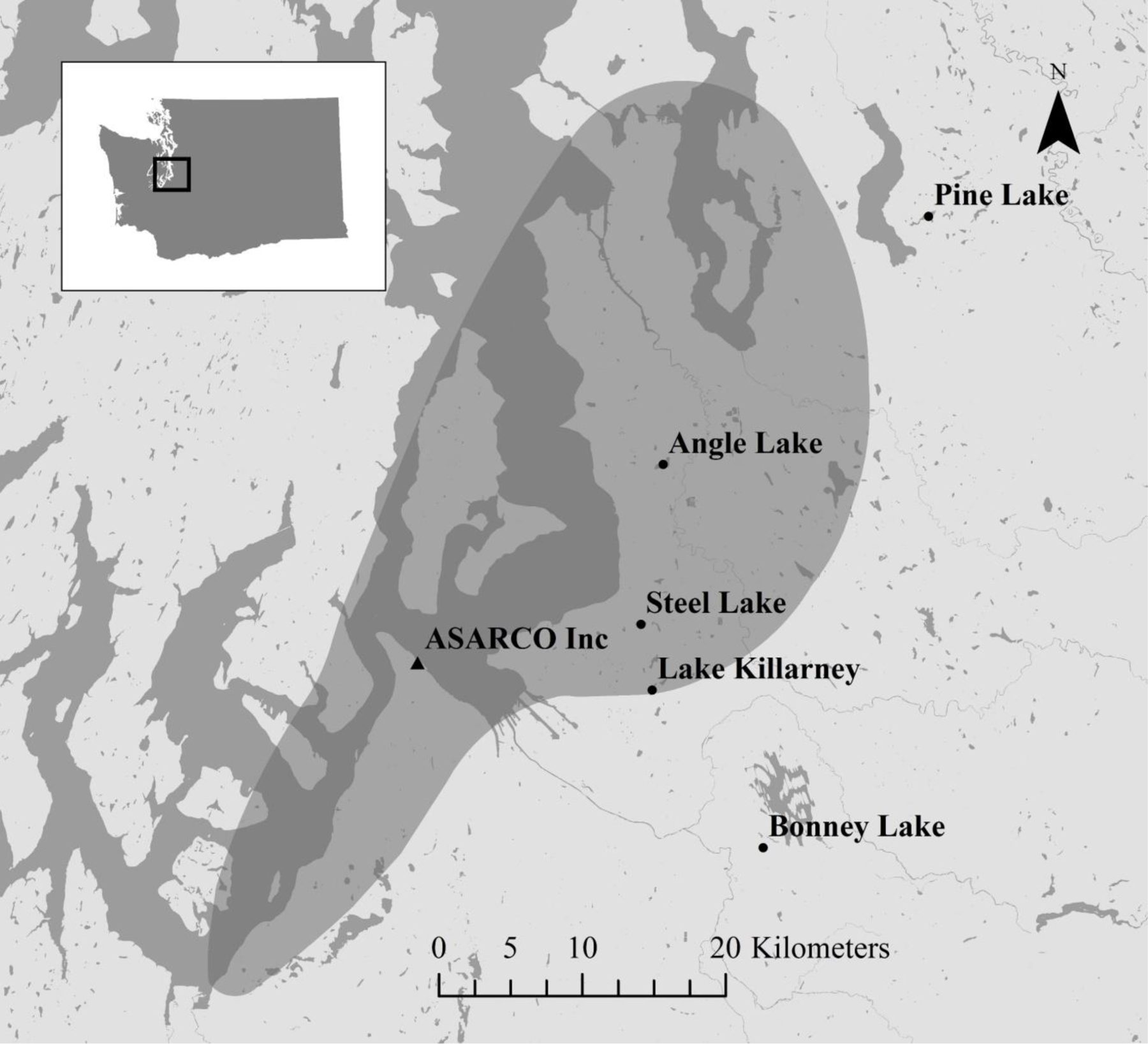
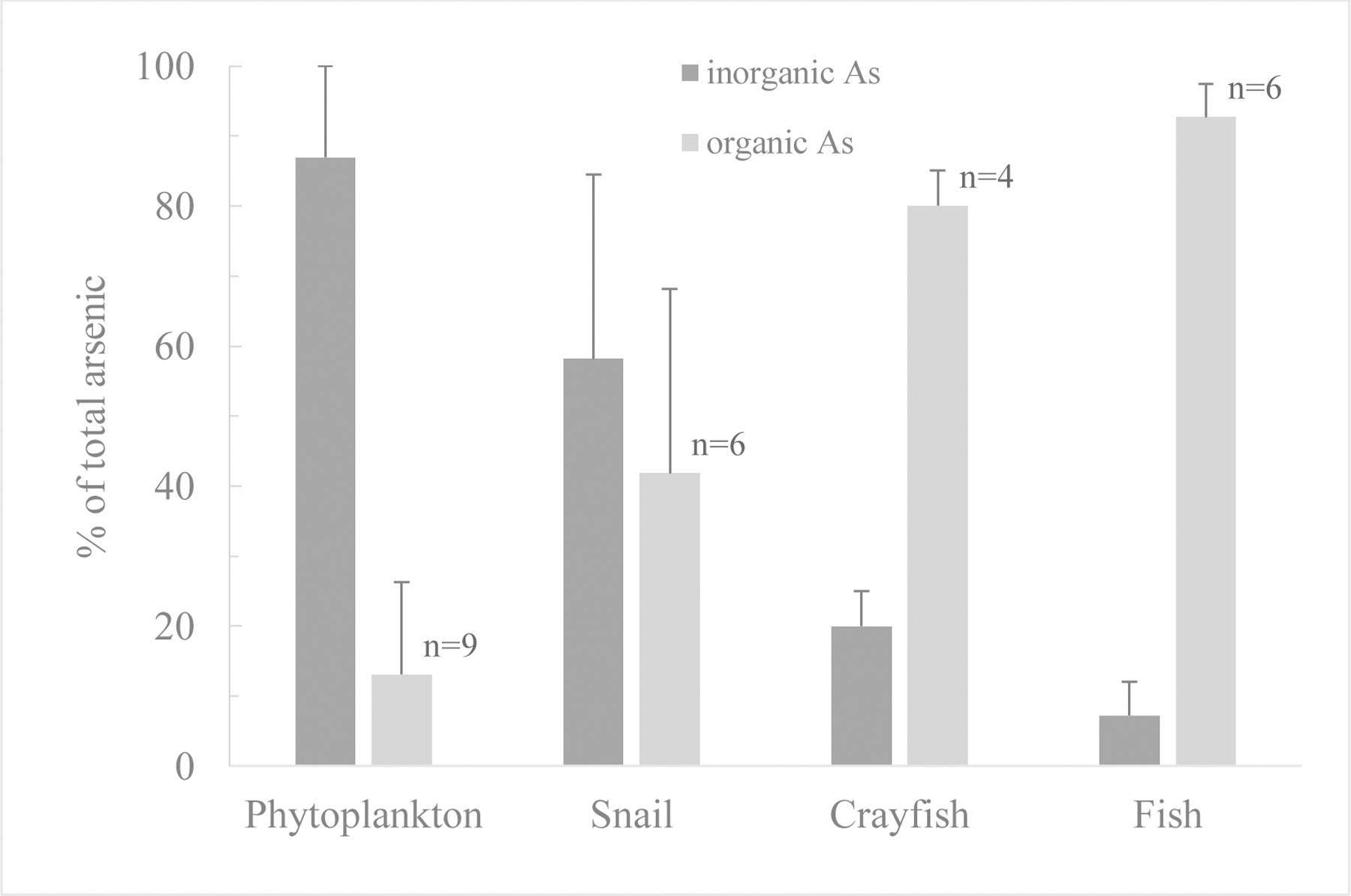
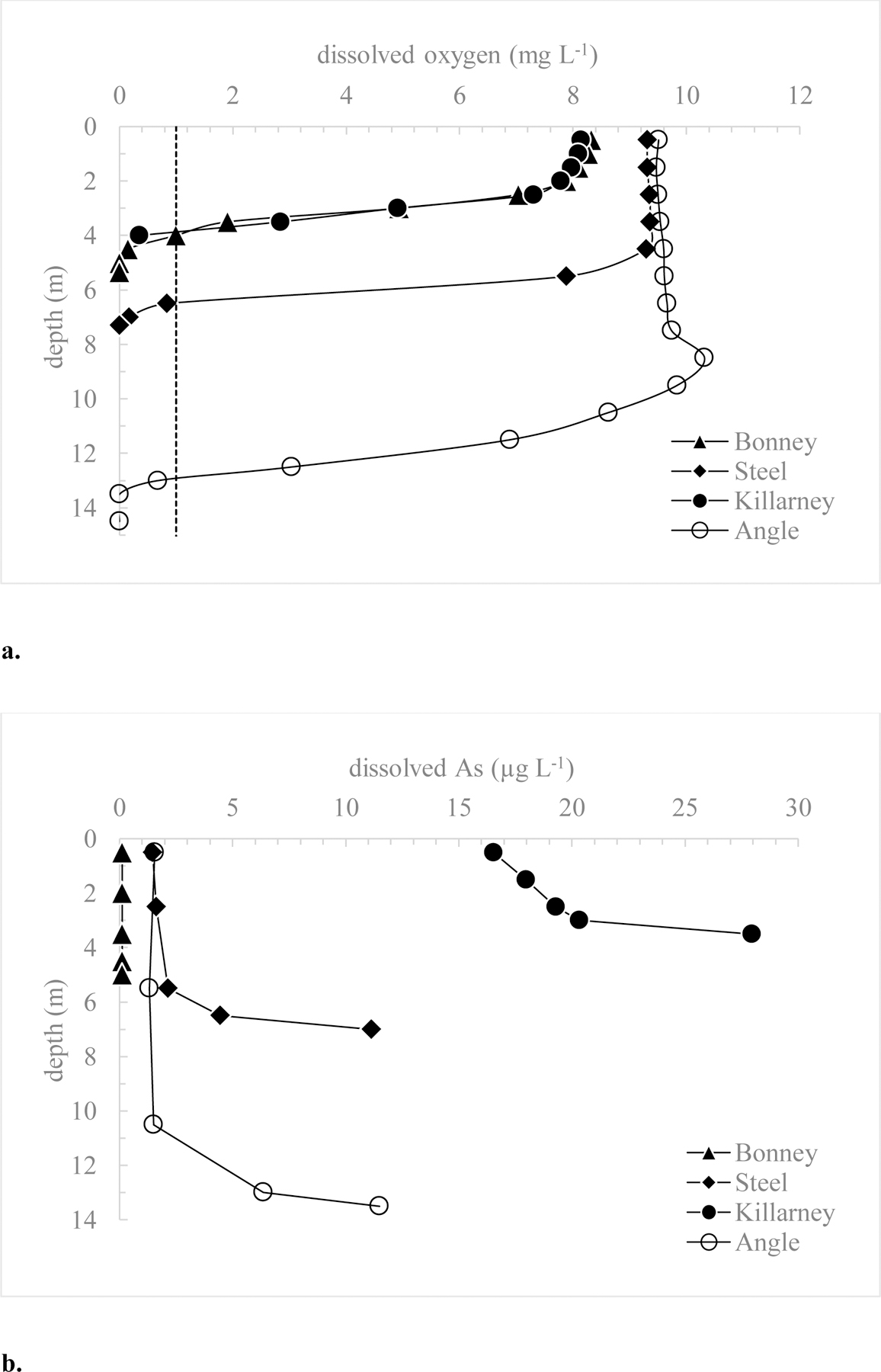
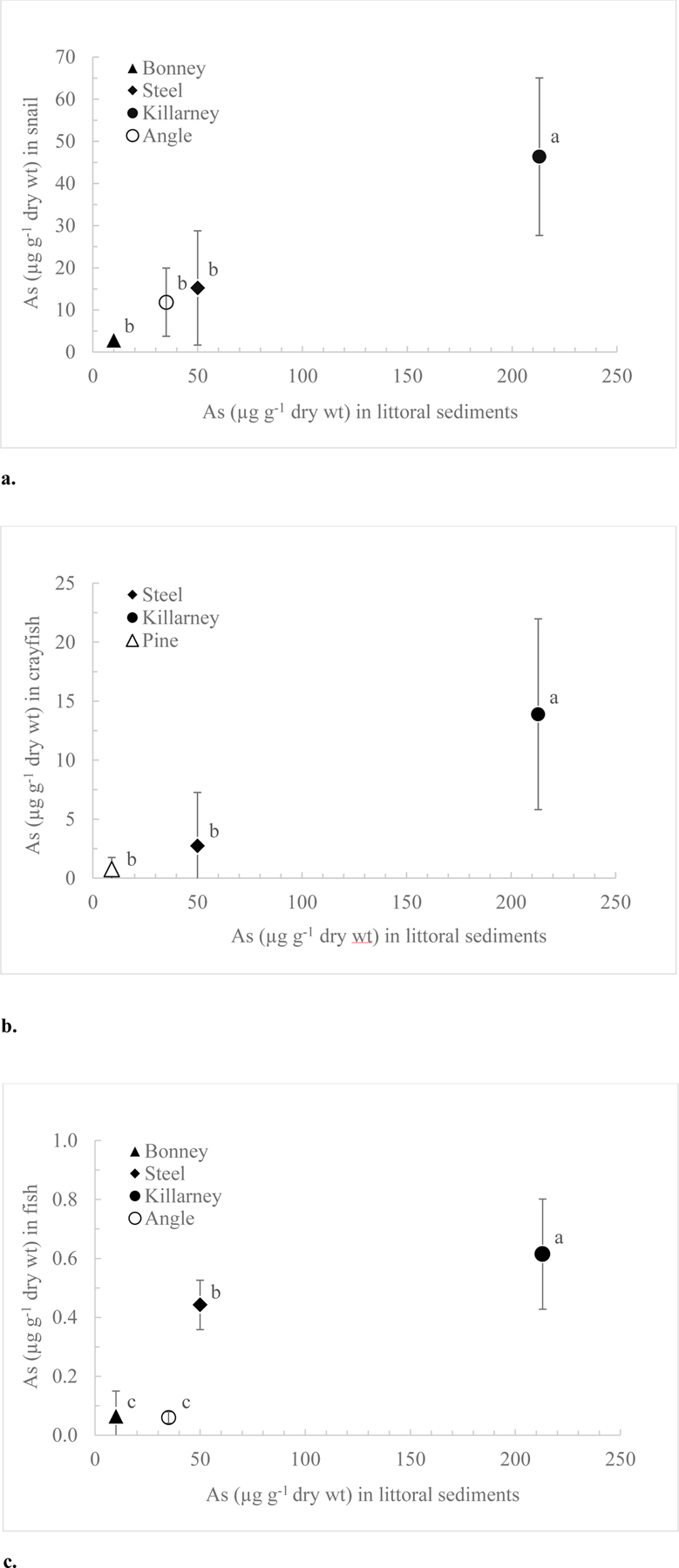
Arsenic (As) causes cancer and non-cancer health effects in humans. Previous research revealed As concentrations over 200 μg g in lake sediments in the south-central Puget Sound region affected by the former ASARCO copper smelter in Ruston, WA, and significant bioaccumulation of As in plankton in shallow lakes. Enhanced uptake occurs during summertime stratification and near-bottom anoxia when As is mobilized from sediments. Periodic mixing events in shallow lakes allow dissolved As to mix into oxygenated waters and littoral zones where biota reside. We quantify As concentrations and associated health risks in human-consumed tissues of sunfish [pumpkinseed (Lepomis gibbosus) and bluegill (Lepomis macrochirus)], crayfish [signal (Pacifastacus leniusculus) and red swamp (Procambarus clarkii)], and snails [Chinese mystery (Bellamya chinensis)] from lakes representing a gradient of As contamination and differing mixing regimes. In three shallow lakes with a range of arsenic in profundal sediments (20 to 206 μg As g), mean arsenic concentrations ranged from 2.9 to 46.4 μg g in snails, 2.6 to 13.9 μg g in crayfish, and 0.07 to 0.61 μg g in sunfish. Comparatively, organisms in the deep, contaminated lake (208 μg g in profundal sediments) averaged 11.8 μg g in snails and 0.06 μg g in sunfish. Using inorganic As concentrations, we calculated that consuming aquatic species from the most As-contaminated shallow lake resulted in 4-10 times greater health risks compared to the deep lake with the same arsenic concentrations in profundal sediments. We show that dynamics in shallow, polymictic lakes can result in greater As bioavailability compared to deeper, seasonally stratified lakes. Arsenic in oxygenated waters and littoral sediments was more indicative of exposure to aquatic species than profundal sediments, and therefore we recommend that sampling methods focus on these shallow zones to better indicate the potential for uptake into organisms and human health risk.
砷(As)会对人类造成癌症及非癌症类健康影响。此前的研究表明,华盛顿州鲁斯顿市原阿萨柯铜冶炼厂影响下的普吉特海湾中南部地区,湖泊沉积物中的砷含量超过200微克/克,且浅湖中浮游生物体内砷有显著生物累积现象。夏季分层期间以及近底部缺氧时,沉积物中的砷被释放出来,生物摄取量会增加。浅湖中的周期性混合事件会使溶解态砷混入含氧水域以及生物群落栖息的沿岸带。我们对来自不同砷污染梯度和混合状态的湖泊中的太阳鱼[菱角太阳鱼(Lepomis gibbosus)和蓝鳃太阳鱼(Lepomis macrochirus)]、小龙虾[信号螯虾(Pacifastacus leniusculus)和红沼泽螯虾(Procambarus clarkii)]以及蜗牛[中华圆田螺(Bellamya chinensis)]等人类食用组织中的砷含量及相关健康风险进行了量化。在三个深底沉积物砷含量范围不同(20至206微克/克)的浅湖中,蜗牛体内的平均砷含量在2.9至46.4微克/克之间,小龙虾体内为2.6至13.9微克/克,太阳鱼体内为0.07至0.61微克/克。相比之下,在深且受污染的湖泊(深底沉积物中为208微克/克)中,蜗牛体内平均含量为11.8微克/克,太阳鱼体内为0.06微克/克。利用无机砷含量,我们计算得出,食用来自砷污染最严重的浅湖中的水生物种,与深湖底沉积物砷含量相同的情况下相比,健康风险要高出4至10倍。我们发现,与更深的季节性分层湖泊相比,浅的多混合型湖泊中的动态变化会导致更高的砷生物可利用性。含氧水域和沿岸沉积物中的砷比深底沉积物更能表明水生物种的暴露情况,因此我们建议采样方法应侧重于这些浅水区,以便更好地表明生物摄取潜力和对人类健康的风险。