Sorbonne Université, CNRS, Institut de Biologie Paris Seine, Laboratoire de Biologie du Développement, IBPS, UMR7622, F-75005 Paris, France.
Mosaiques Diagnostics, 30659 Hannover, Germany.
Dis Model Mech. 2021 May 1;14(5). doi: 10.1242/dmm.047498. Epub 2021 May 4.
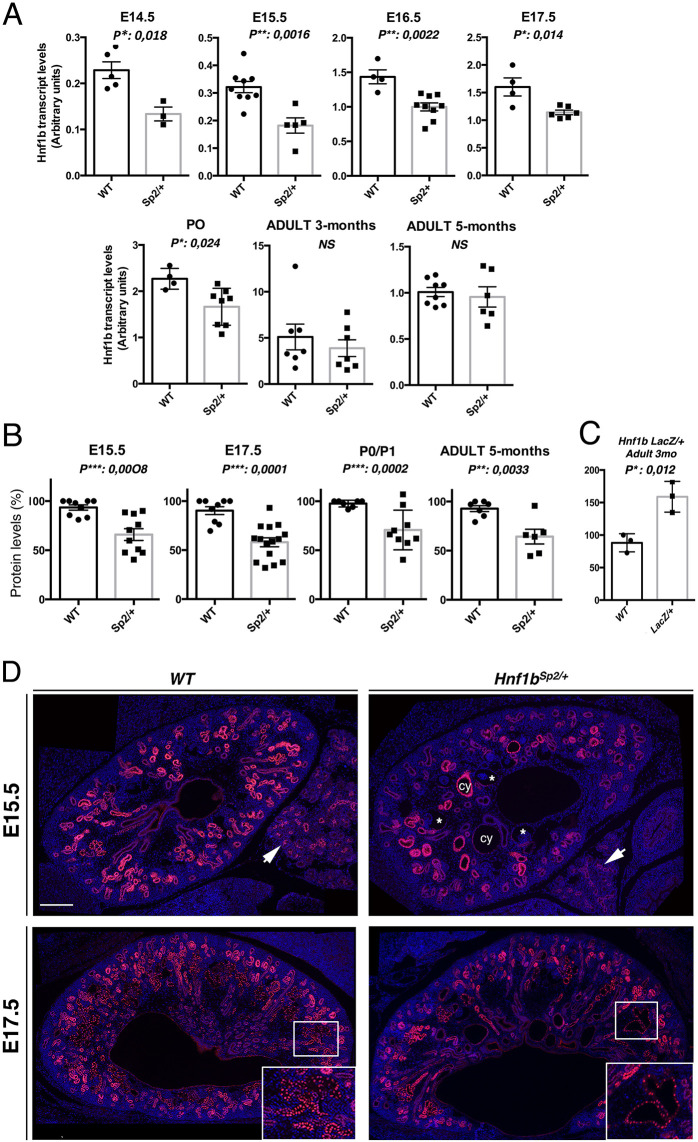
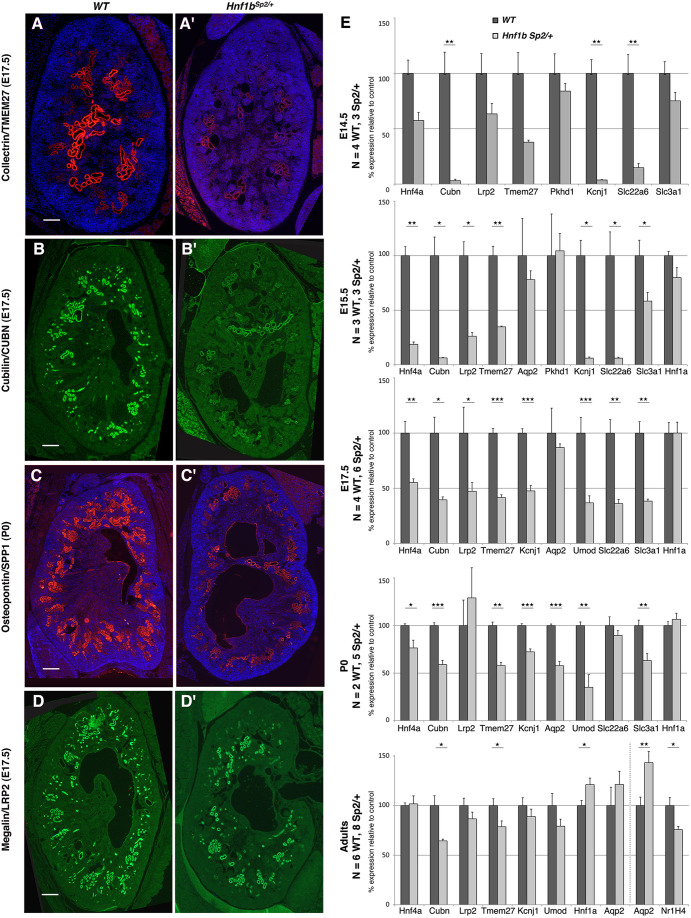
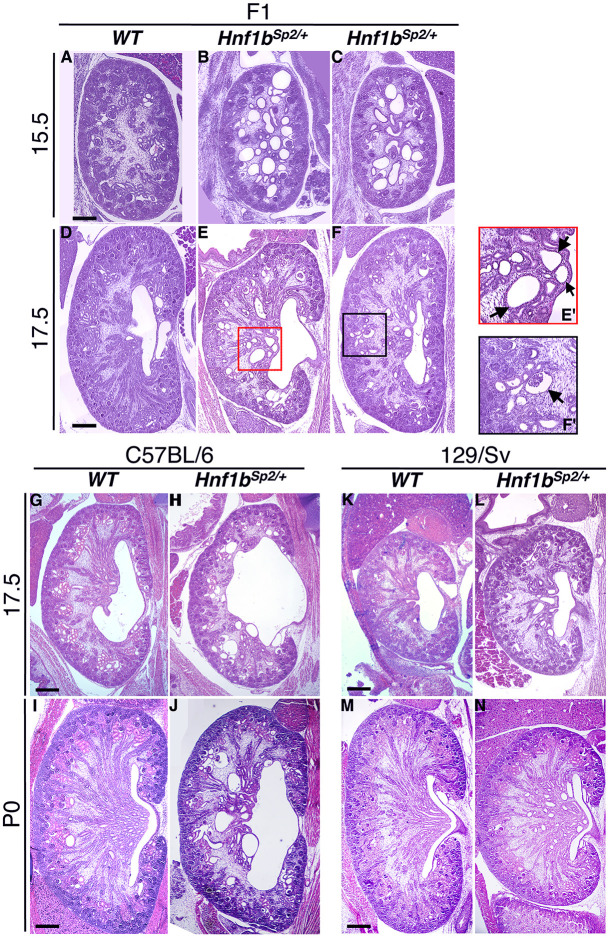
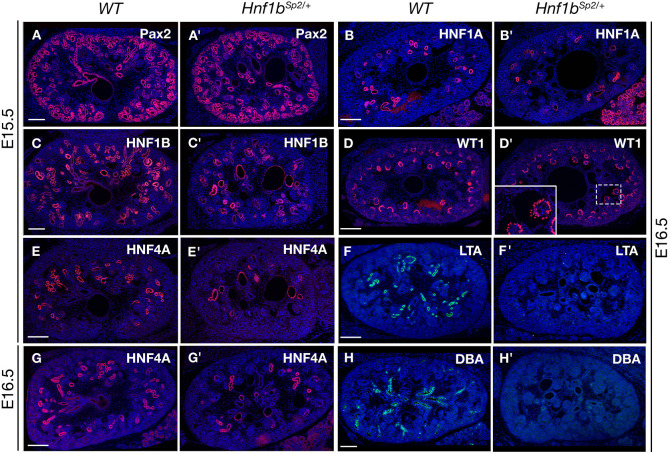
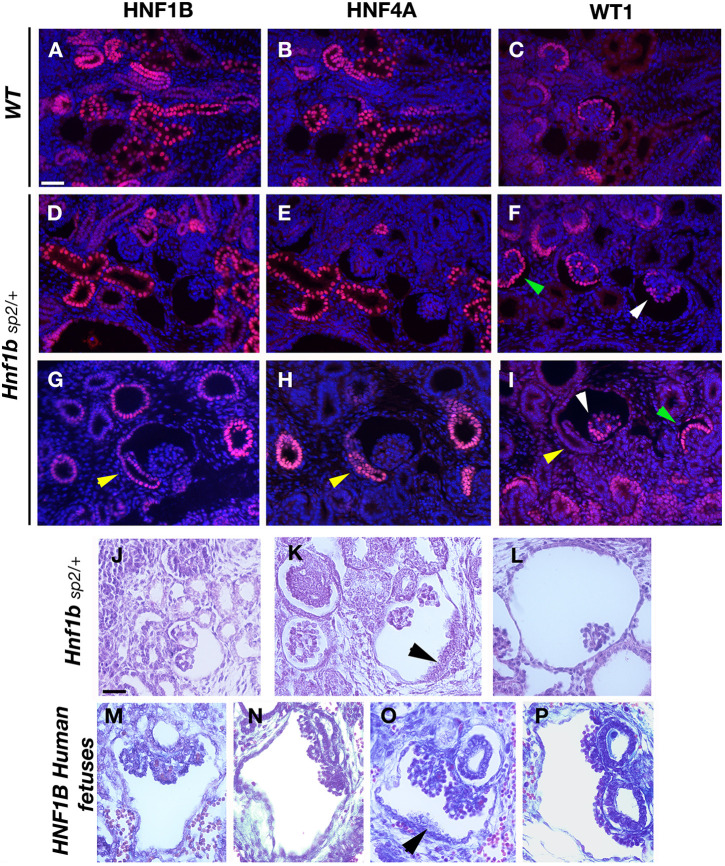
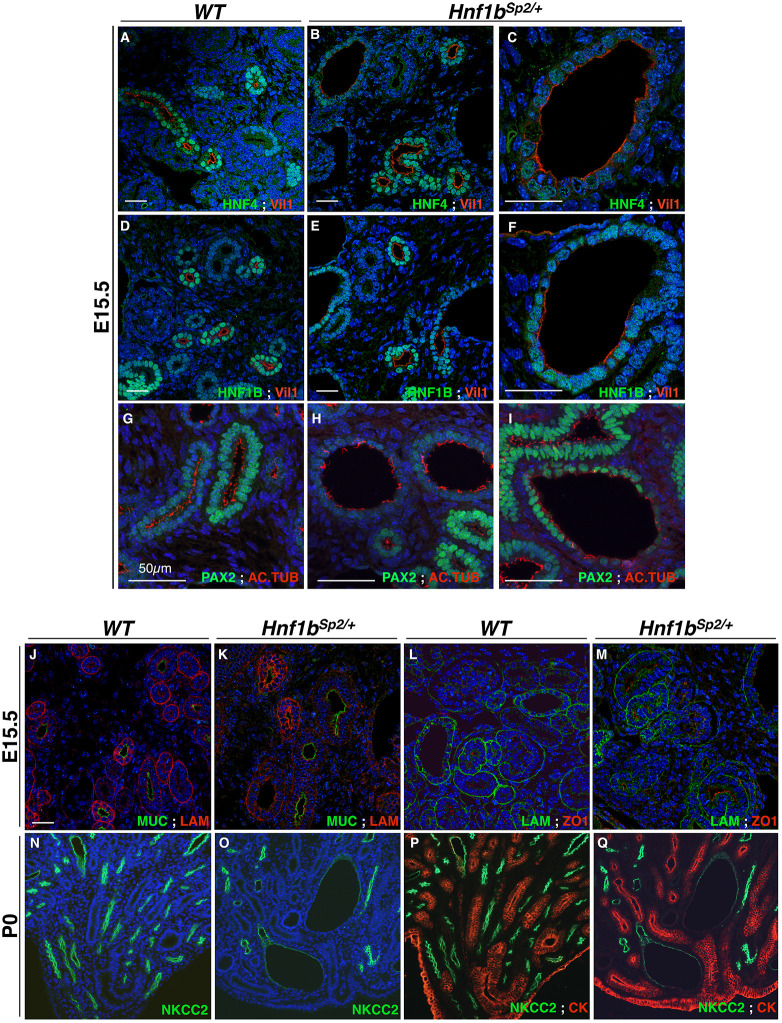
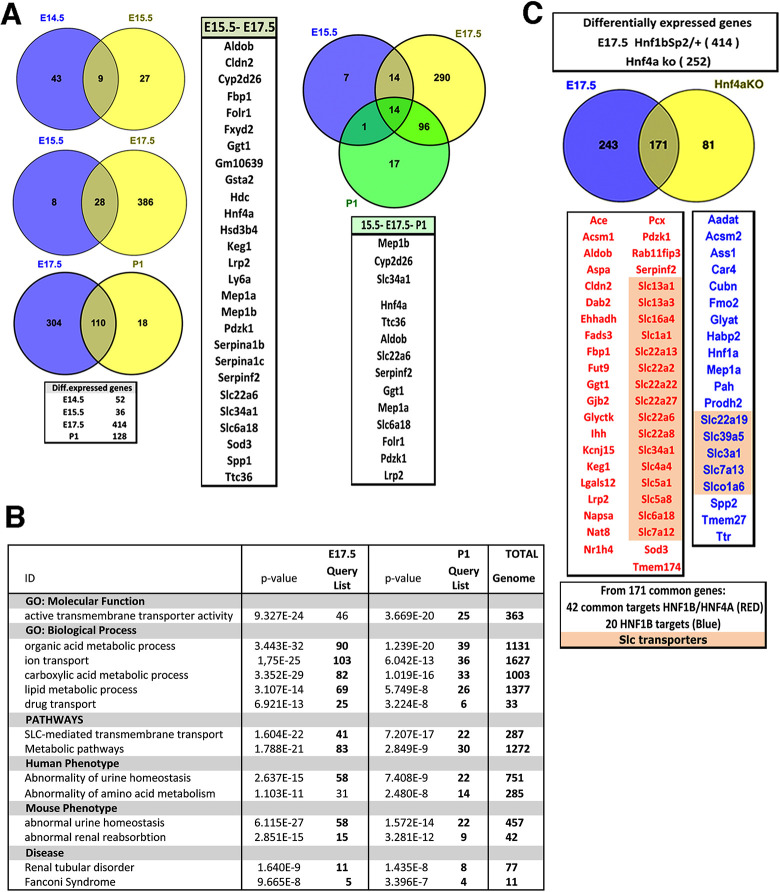
Heterozygous mutations in HNF1B cause the complex syndrome renal cysts and diabetes (RCAD), characterized by developmental abnormalities of the kidneys, genital tracts and pancreas, and a variety of renal, pancreas and liver dysfunctions. The pathogenesis underlying this syndrome remains unclear as mice with heterozygous null mutations have no phenotype, while constitutive/conditional Hnf1b ablation leads to more severe phenotypes. We generated a novel mouse model carrying an identified human mutation at the intron-2 splice donor site. Unlike heterozygous mice previously characterized, mice heterozygous for the splicing mutation exhibited decreased HNF1B protein levels and bilateral renal cysts from embryonic day 15, originated from glomeruli, early proximal tubules (PTs) and intermediate nephron segments, concurrently with delayed PT differentiation, hydronephrosis and rare genital tract anomalies. Consistently, mRNA sequencing showed that most downregulated genes in embryonic kidneys were primarily expressed in early PTs and the loop of Henle and involved in ion/drug transport, organic acid and lipid metabolic processes, while the expression of previously identified targets upon Hnf1b ablation, including cystic disease genes, was weakly or not affected. Postnatal analyses revealed renal abnormalities, ranging from glomerular cysts to hydronephrosis and, rarely, multicystic dysplasia. Urinary proteomics uncovered a particular profile predictive of progressive decline in kidney function and fibrosis, and displayed common features with a recently reported urine proteome in an RCAD pediatric cohort. Altogether, our results show that reduced HNF1B levels lead to developmental disease phenotypes associated with the deregulation of a subset of HNF1B targets. They further suggest that this model represents a unique clinical/pathological viable model of the RCAD disease.
HNF1B 杂合突变导致复杂的肾囊肿和糖尿病(RCAD)综合征,其特征为肾脏、生殖道和胰腺的发育异常,以及各种肾脏、胰腺和肝脏功能障碍。该综合征的发病机制尚不清楚,因为杂合子缺失突变的小鼠没有表型,而组成型/条件性 Hnf1b 缺失导致更严重的表型。我们构建了一种新型的携带鉴定的人类突变的小鼠模型,该突变位于内含子 2 剪接供体位点。与之前描述的杂合子小鼠不同,携带剪接突变的杂合子小鼠表现出 HNF1B 蛋白水平降低,并从胚胎第 15 天开始出现双侧肾囊肿,起源于肾小球、早期近端小管(PT)和中间肾单位,同时伴有 PT 分化延迟、肾积水和罕见的生殖道异常。一致地,mRNA 测序显示,胚胎肾脏中大多数下调基因主要在早期 PT 和 Henle 袢中表达,涉及离子/药物转运、有机酸和脂质代谢过程,而先前在 Hnf1b 缺失时鉴定的靶基因的表达则受到微弱或不受影响。出生后分析显示存在肾脏异常,从肾小球囊肿到肾积水,极少数情况下出现多囊性发育不良。尿蛋白质组学揭示了一种特定的预测肾功能和纤维化进行性下降的特征性谱,并且与最近报道的 RCAD 儿科队列中的尿液蛋白质组具有共同特征。总之,我们的结果表明,HNF1B 水平降低导致与一组 HNF1B 靶基因失调相关的发育性疾病表型。它们进一步表明,该模型代表了 RCAD 疾病的独特临床/病理可行模型。