Nightingale Brandon
Saba University School of Medicine, Church Street, The Bottom, Saba, Dutch Caribbean. Email:
Cardiol Res. 2021 Apr;12(2):60-66. doi: 10.14740/cr1221. Epub 2021 Feb 23.
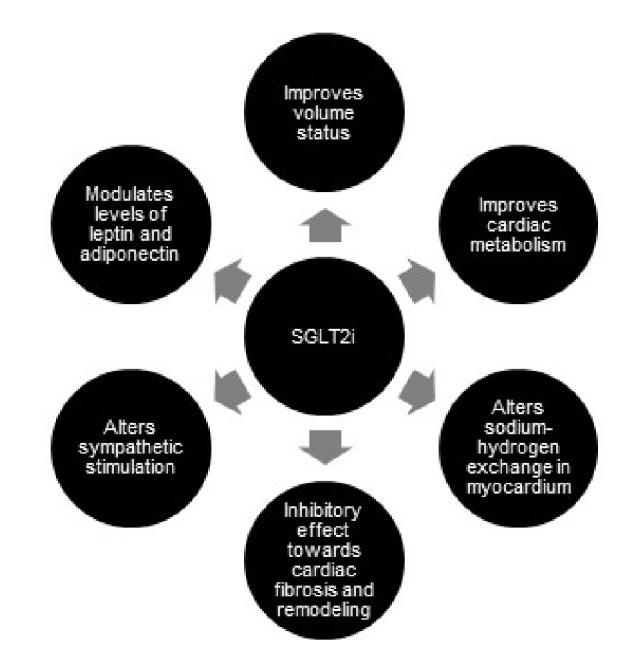
Diabetes mellitus is a well-known risk factor for heart failure, and the reasons why are well understood. The incidence of diabetes mellitus is continuing to rise, posing a major concern in the medical world. The comorbidities associated with diabetes mellitus create a major hindrance on daily living, and promote the development of a plethora of other diseases. It is known that by controlling modifiable risk factors, such as glycemic control and body mass index, patients achieve more favorable outcomes. But, this is not always realistic and controlling modifiable risk factors should be balanced with a pharmacologic option. A relatively new drug class, which acts as an inhibitor of the sodium glucose cotransporter-2 receptor, has shown favorable outcomes in the treatment of heart failure associated with diabetes. However, the mechanism of action of this new drug class is not fully understood. There are several different proposed mechanisms of action for how sodium glucose cotransporter-2 inhibitors work in regards to the treatment of heart failure. This review will elaborate on those proposed mechanisms of action and offer insight into future implications of this relatively new drug class.
糖尿病是心力衰竭的一个众所周知的危险因素,其原因也已得到充分理解。糖尿病的发病率持续上升,这在医学界引起了重大关注。与糖尿病相关的合并症给日常生活带来了重大障碍,并促进了许多其他疾病的发展。众所周知,通过控制可改变的风险因素,如血糖控制和体重指数,患者可获得更有利的结果。但是,这并不总是现实的,控制可改变的风险因素应与药物选择相平衡。一类相对较新的药物,作为钠葡萄糖协同转运蛋白-2受体的抑制剂,在治疗与糖尿病相关的心力衰竭方面已显示出良好的效果。然而,这类新药的作用机制尚未完全了解。关于钠葡萄糖协同转运蛋白-2抑制剂在心力衰竭治疗中的作用方式,有几种不同的作用机制被提出。本综述将详细阐述这些提出的作用机制,并深入探讨这类相对较新的药物类别的未来意义。