Ilundain López de Munain Andrea, Jimenez Veintemilla Cristina, Herranz Aguirre Mercedes, Viguria Sánchez Natividad, Ramos-Lacuey Beatriz, Urretavizcaya-Martínez María, Echeverría Esandi Laura, Pina López María Del Mar, García Howard Marcos, Fernández-Montero Alejandro, Moreno-Galarraga Laura
Department of Pediatrics, CHN, Complejo Hospitalario de Navarra, Servicio Navarro de Salud, C/Irunlarrea 3, 31080, Pamplona, Spain.
Department of Radiology, Pediatric Radiology, CHN, Complejo Hospitalario de Navarra, Servicio Navarro de Salud, C/Irunlarrea 3, 31080, Pamplona, Spain.
Eur J Radiol Open. 2021;8:100337. doi: 10.1016/j.ejro.2021.100337. Epub 2021 Mar 11.
Many articles have been published regarding chest-imaging in COVID-19, but fewer studies have been published in pediatric populations. COVID-19 symptoms in children are generally milder and radiological tests have fewer positive findings. Indications for chest imaging in pediatric COVID-19 patients remain unclear. This study aims to describe the chest radiographs performed in COVID-19 patients in a pediatric hospital, to review the current chest X-ray indications and to develop an specific age-adjusted protocol for chest-imaging in children with COVID-19.
Retrospective study in hospitalized pediatric COVID-19 patients in Navarre, Spain. Between March and December 2020, 44 children were included (mean age 3.8-year-old, 50 % males). Demographic information, cause of admission, symptoms, and clinical evolution were described. Chest imaging technique performed, indications and findings were analyzed. A literature review was performed searching for current COVID-19 pediatric chest-imaging indications.
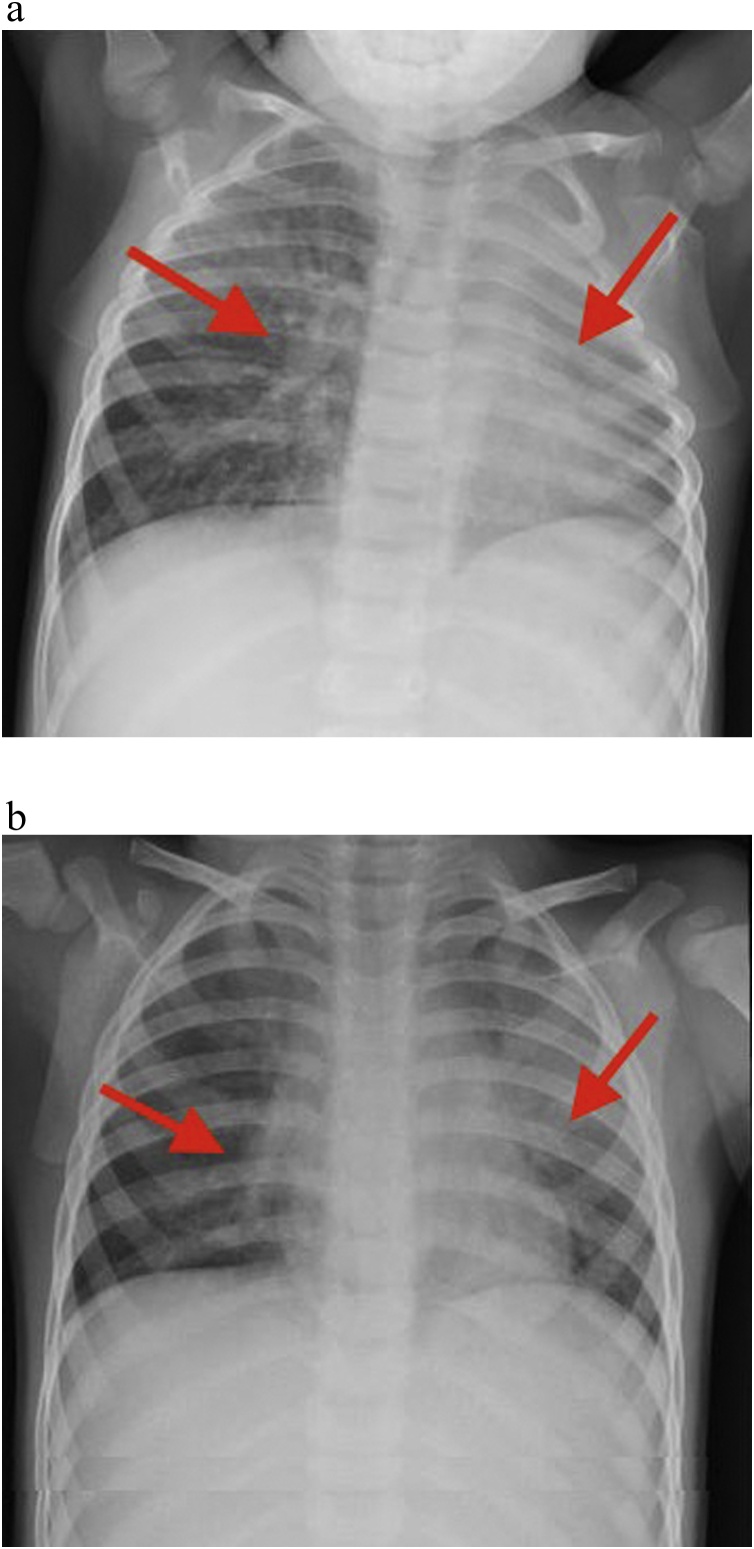
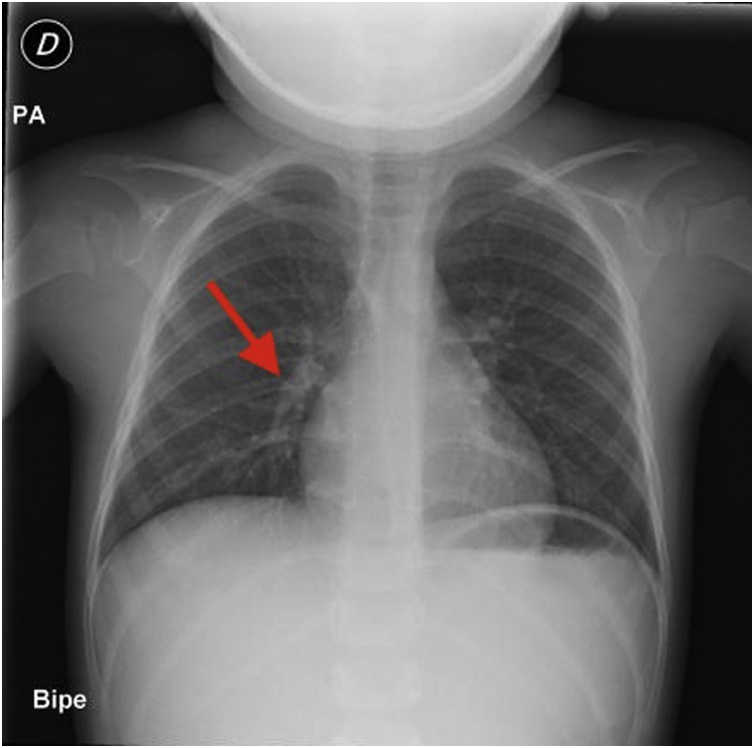
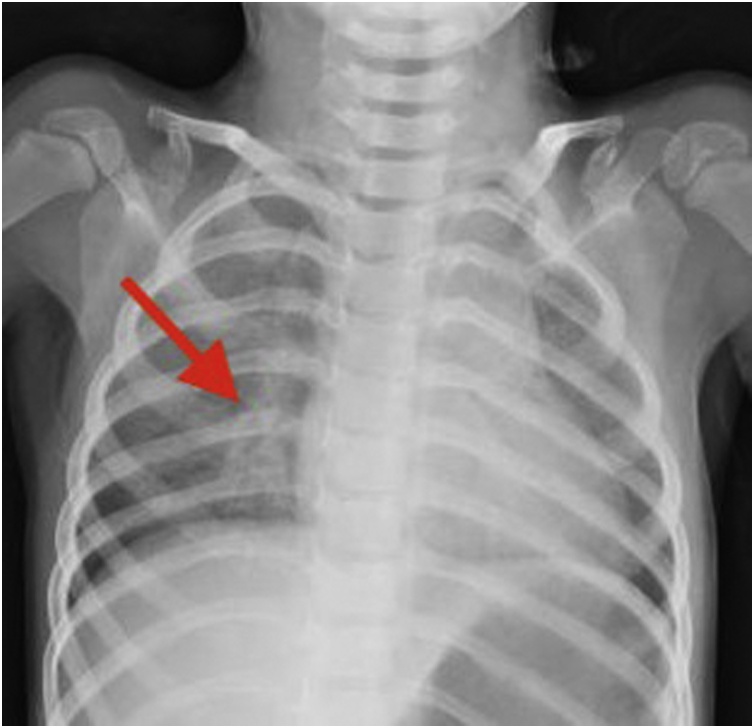
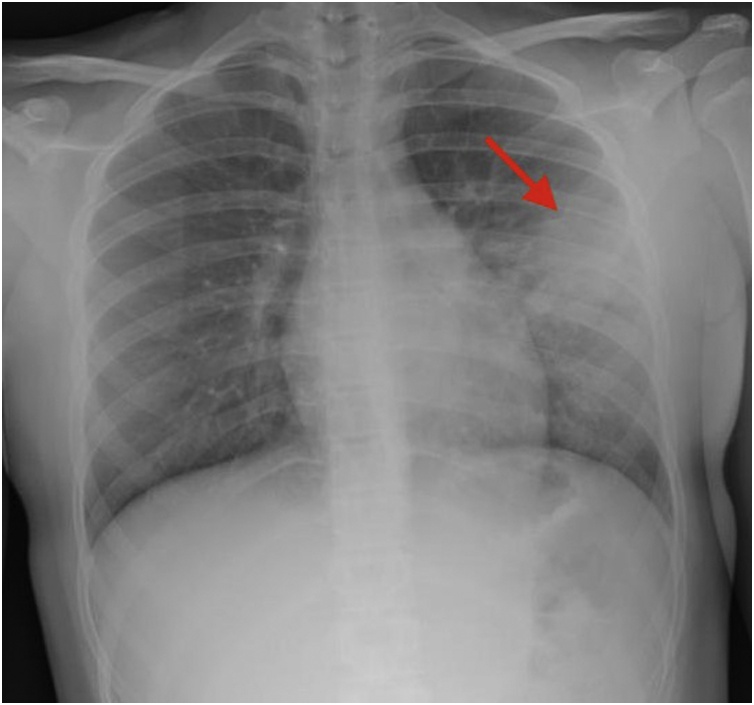
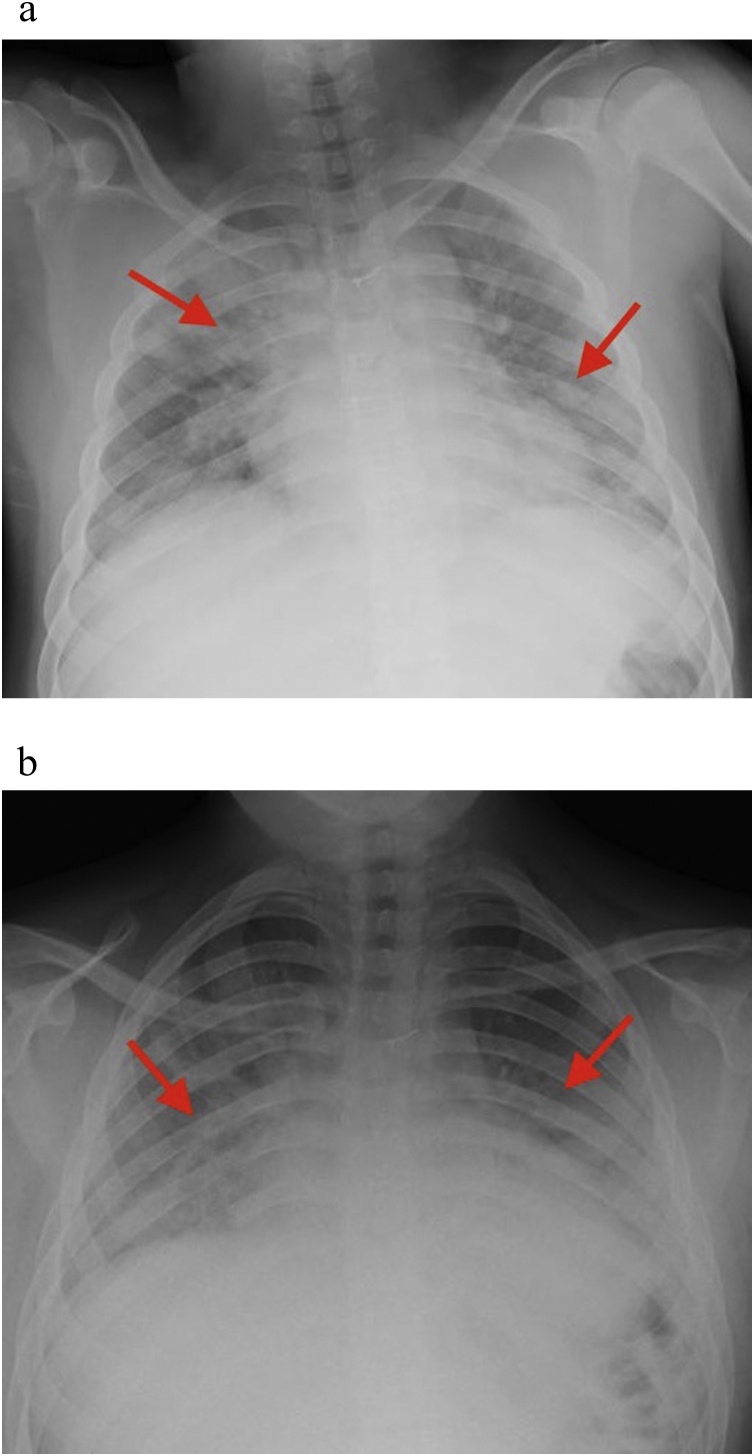
Chest X-rays were performed in 35 patients (80 % of admissions) and most common indications were fever and respiratory symptoms. 53 % of the chest X-rays were considered "normal" and the classical bilateral diffuse interstitial pattern, described in adults, was only present in 22 %. All patients with pathological chest X-rays were symptomatic and reported fever (100 %) and fever tended to be longer (fever duration: 4.25 vs. 2.46 days p:0.048) in patients with pathological radiographs. We present a specific protocol for chest-imaging in pediatric COVID-19 cases.
COVID-19 clinical manifestations and radiological findings are milder and less specific in children. Imaging should not be used as a screening tool or a routine complementary test in pediatric COVID-19 patients, not even in hospitalized cases.
关于新冠病毒肺炎(COVID-19)胸部影像学的文章已发表多篇,但针对儿科人群的研究较少。儿童COVID-19症状通常较轻,放射学检查阳性结果较少。儿科COVID-19患者胸部成像的指征仍不明确。本研究旨在描述一家儿科医院对COVID-19患者进行的胸部X线检查,回顾当前胸部X线检查的指征,并制定针对COVID-19儿童患者的特定年龄调整胸部成像方案。
对西班牙纳瓦拉住院的儿科COVID-19患者进行回顾性研究。2020年3月至12月期间,纳入44名儿童(平均年龄3.8岁,50%为男性)。描述了人口统计学信息、入院原因、症状和临床病程。分析了所进行的胸部成像技术、指征和结果。进行了文献综述,以查找当前COVID-19儿科胸部成像的指征。
35名患者(占入院患者的80%)进行了胸部X线检查,最常见的指征是发热和呼吸道症状。53%的胸部X线检查被认为“正常”,成人中描述的典型双侧弥漫性间质模式仅在22%的患者中出现。所有胸部X线检查异常的患者均有症状,且均报告有发热(100%),胸部X线检查异常的患者发热时间往往更长(发热持续时间:4.25天对2.46天,p:0.048)。我们提出了针对儿科COVID-19病例的胸部成像特定方案。
COVID-19在儿童中的临床表现和放射学表现较轻且特异性较低。影像学不应作为儿科COVID-19患者的筛查工具或常规补充检查,即使是住院病例也不例外。