Arisi Mariachiara, Soglia Simone, Guasco Pisani Edoardo, Venturuzzo Anna, Gelmetti Alessandra, Tomasi Cesare, Zane Cristina, Rossi Mariateresa, Lorenzi Luisa, Calzavara-Pinton Piergiacomo
Dermatology Department, ASST Spedali Civili di Brescia, University of Brescia, P.le Spedali Civili 1, 25123, Brescia, Italy.
Department of Clinical and Experimental Sciences, University of Brescia, Brescia, Italy.
Dermatol Ther (Heidelb). 2021 Jun;11(3):855-866. doi: 10.1007/s13555-021-00514-y. Epub 2021 Mar 18.
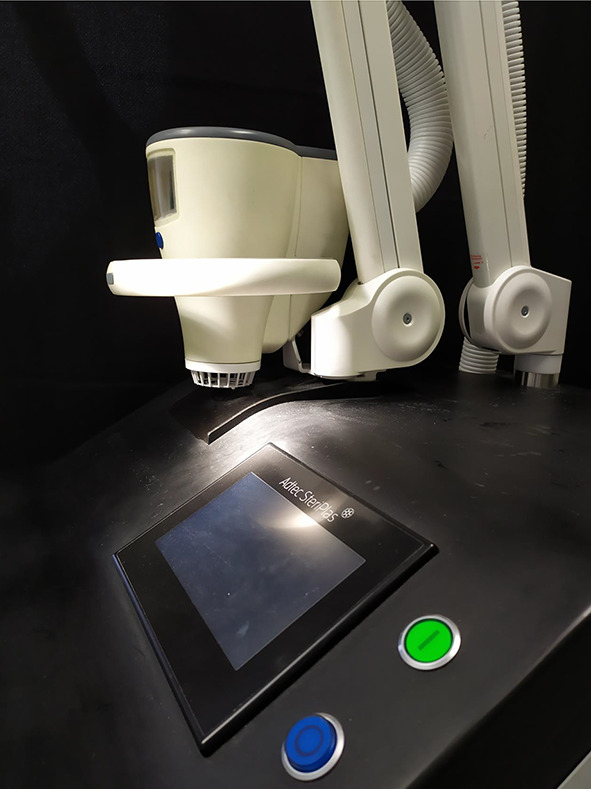
Cold atmospheric plasma (CAP) has been clinically demonstrated to be an effective treatment for actinic keratosis (AK) in a number of case series. In this study, we evaluated the efficacy of CAP in the treatment of multiple AKs and assessed morphological changes induced on the skin field of cancerization both clinically and by high-frequency ultrasound (HFUS).
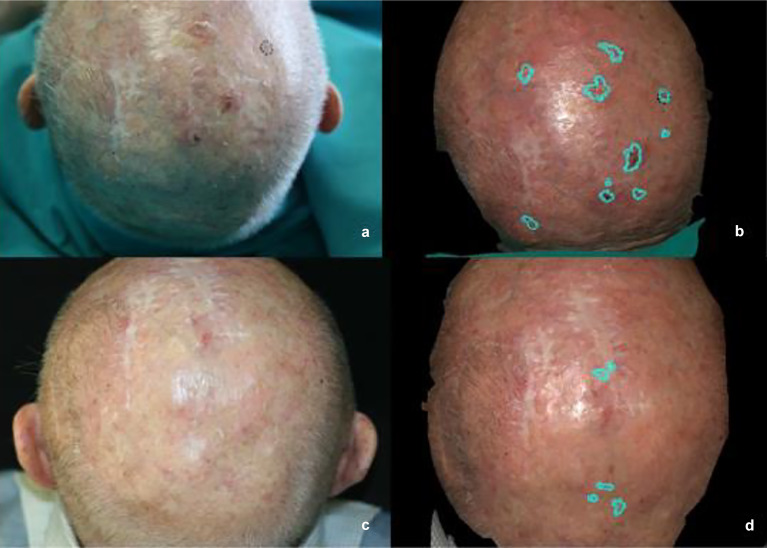
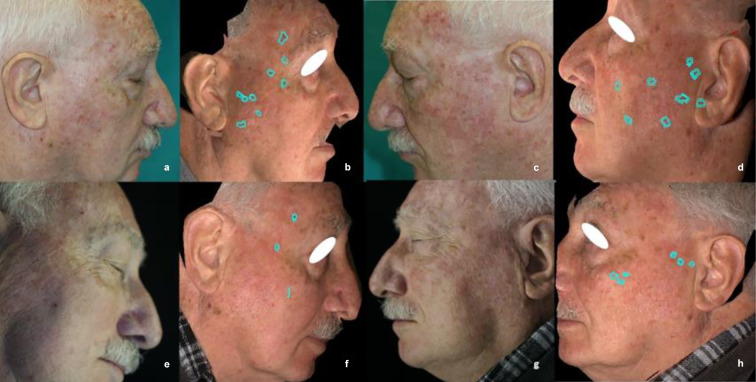
Patients with multiple grade I-II AKs of the scalp and/or face who were resistant or intolerant to conventional field-directed treatments were enrolled. CAP treatments were performed using a microwave-driven argon plasma jet. At baseline and 3 months after the last CAP session, performance indexes were determined using three-dimensional digital pictures and HFUS investigations were performed on a representative Olsen grade II AK and a small spot of clinically unaffected skin within the test area.
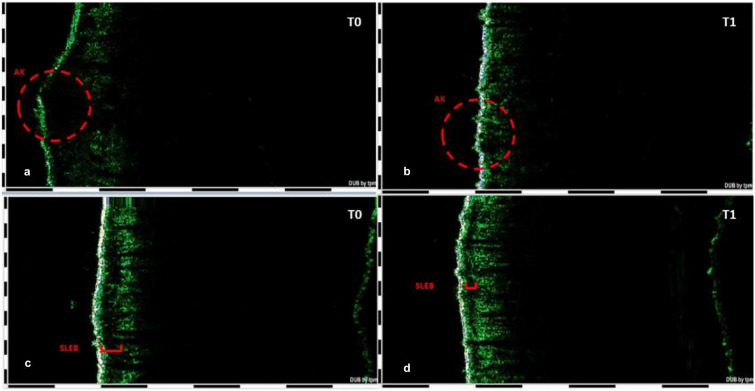
Twelve patients were enrolled in the study. All clinical variables showed a statistically significant reduction after CAP. HFUS evaluation revealed that the total, epidermal and dermal thicknesses of the target AKs had not changed with treatment. CAP therapy significantly increased dermal density in both the target AK and the surrounding photodamaged skin and signficantly decreased the thickness of the subepidermal low-echogenic band in the perilesional skin, which is an ultrasound sign of photodamage.
Cold atmospheric plasma was found to be an effective treatment for patients with multiple AKs. CAP was not followed by skin atrophy. HFUS examiniation showed the CAP improved features of chronic photodamage of the dermis of the skin underlying and surrounding the AK spots.
在多个病例系列中,冷大气等离子体(CAP)已在临床上被证明是治疗光化性角化病(AK)的有效方法。在本研究中,我们评估了CAP治疗多发性AK的疗效,并通过临床和高频超声(HFUS)评估了其在致癌皮肤区域诱导的形态学变化。
纳入头皮和/或面部患有多发性I-II级AK且对传统区域定向治疗耐药或不耐受的患者。使用微波驱动的氩等离子体射流进行CAP治疗。在基线和最后一次CAP治疗后3个月,使用三维数字照片确定性能指标,并对一个代表性的奥尔森II级AK和测试区域内一小片临床未受影响的皮肤进行HFUS检查。
12名患者纳入本研究。CAP治疗后所有临床变量均显示出统计学上的显著降低。HFUS评估显示,目标AK的总厚度、表皮厚度和真皮厚度在治疗后没有变化。CAP治疗显著增加了目标AK和周围光损伤皮肤的真皮密度,并显著降低了病变周围皮肤表皮下低回声带的厚度,这是光损伤的超声表现。
发现冷大气等离子体对多发性AK患者是一种有效的治疗方法。CAP治疗后未出现皮肤萎缩。HFUS检查显示,CAP改善了AK斑点下方和周围皮肤真皮慢性光损伤的特征。