Department of Medicine, Division of Cardiovascular Medicine, Stanford University School of Medicine, Stanford, CA, 94305, USA.
Stanford Cardiovascular Institute, Stanford University School of Medicine, Stanford, CA, 94305, USA.
Basic Res Cardiol. 2021 Mar 19;116(1):19. doi: 10.1007/s00395-021-00858-8.
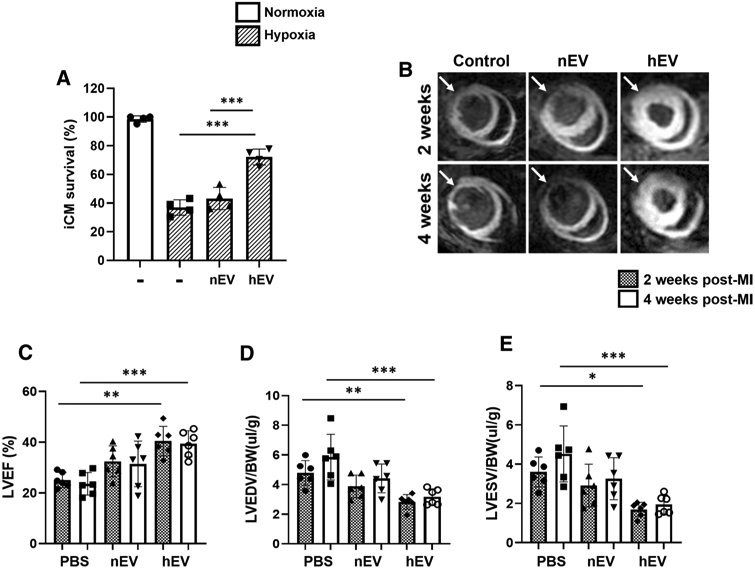
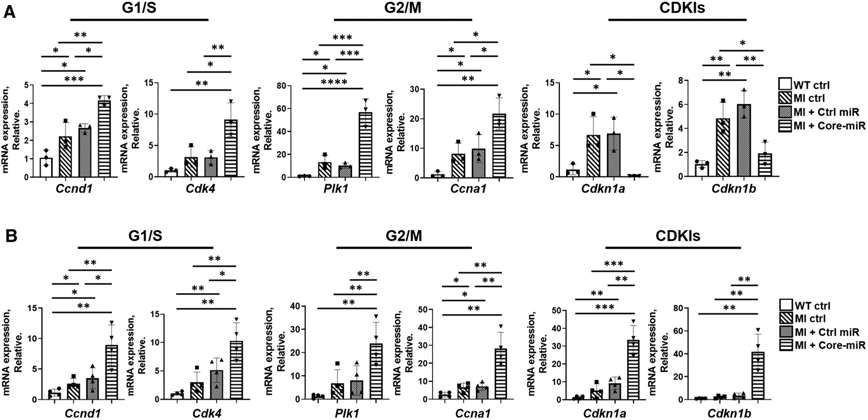
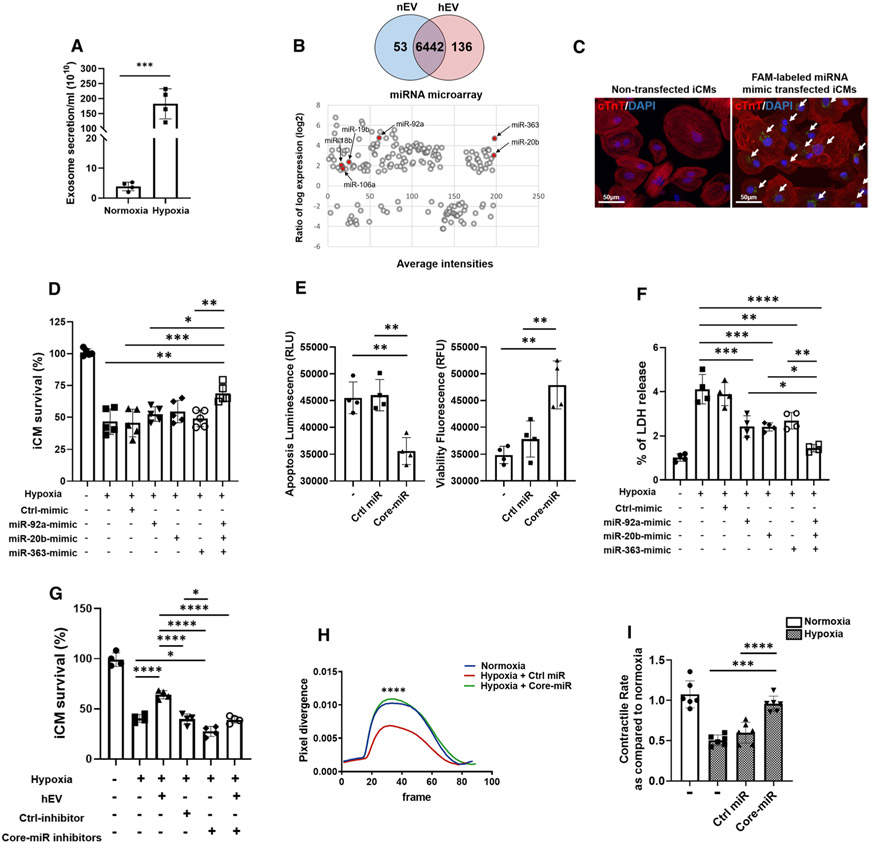
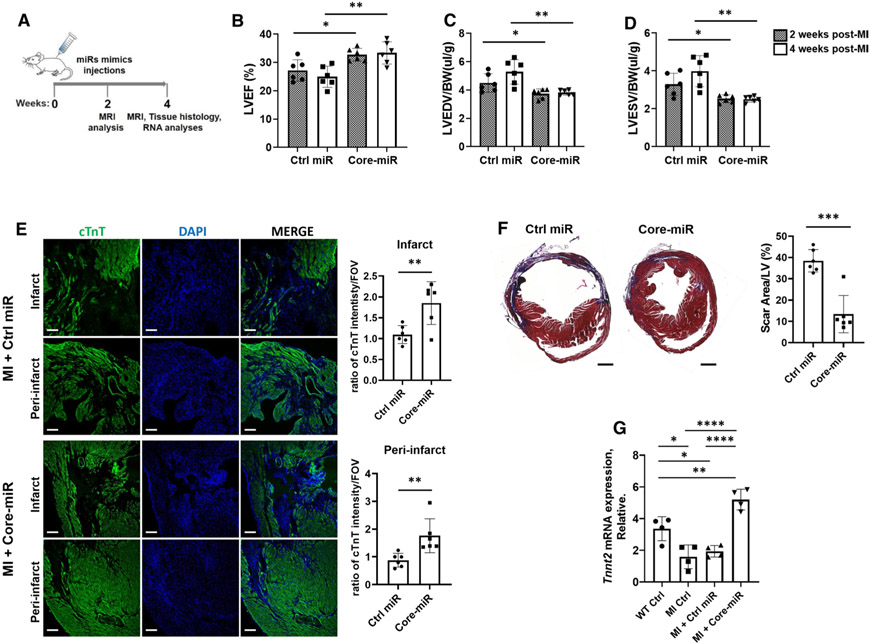
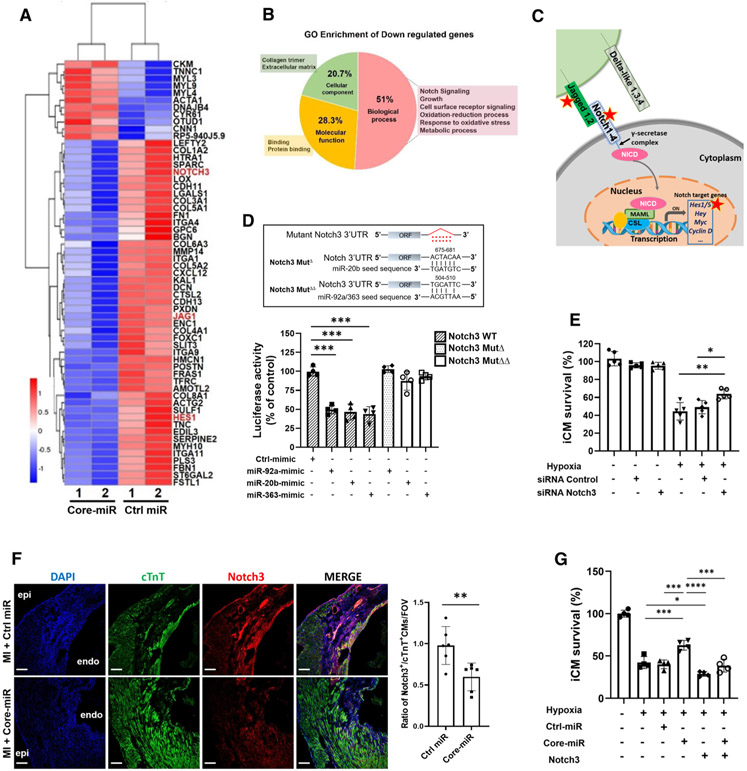
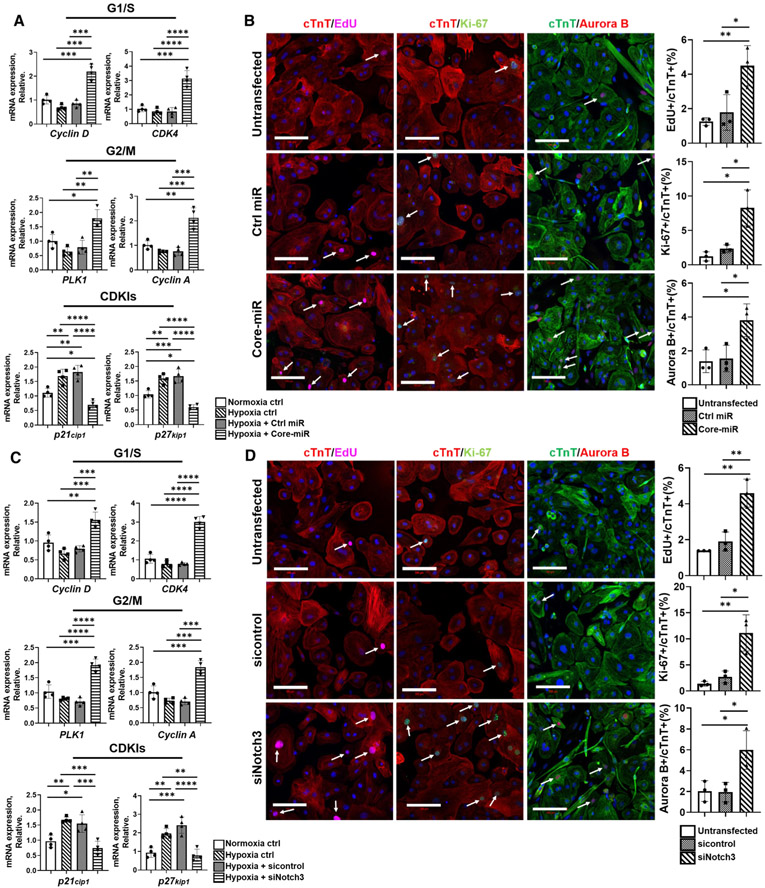
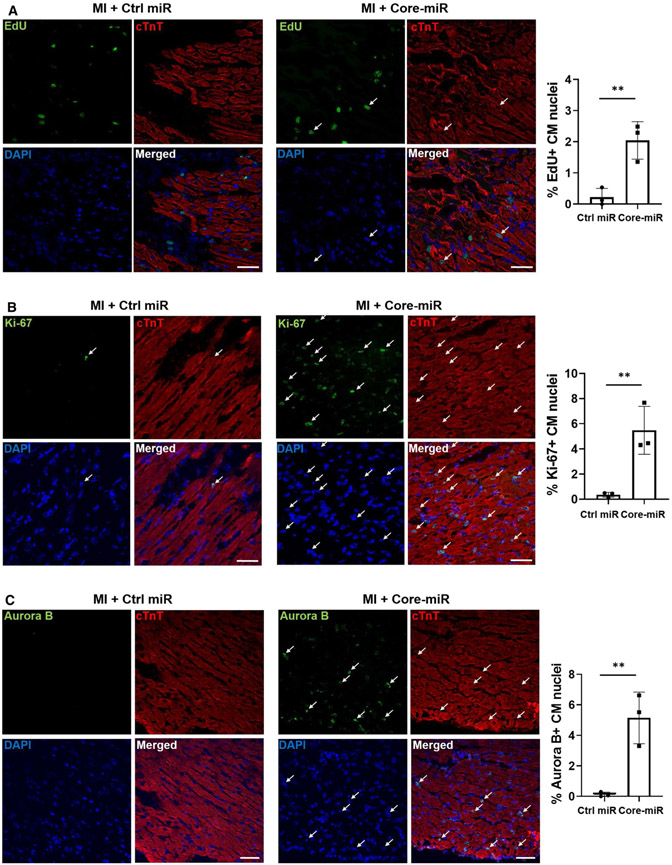
Endogenous capability of the post-mitotic human heart holds great promise to restore the injured myocardium. Recent evidence indicates that the extracellular vesicles (EVs) regulate cardiac homeostasis and regeneration. Here, we investigated the molecular mechanism of EVs for self-repair. We isolated EVs from human iPSC-derived cardiomyocytes (iCMs), which were exposed to hypoxic (hEVs) and normoxic conditions (nEVs), and examined their roles in in vitro and in vivo models of cardiac injury. hEV treatment significantly improved the viability of hypoxic iCMs in vitro and cardiac function of severely injured murine myocardium in vivo. Microarray analysis of the EVs revealed significantly enriched expression of the miR-106a-363 cluster (miR cluster) in hEVs vs. nEVs. This miR cluster preserved survival and contractility of hypoxia-injured iCMs and maintained murine left-ventricular (LV) chamber size, improved LV ejection fraction, and reduced myocardial fibrosis of the injured myocardium. RNA-Seq analysis identified Jag1-Notch3-Hes1 as a target intracellular pathway of the miR cluster. Moreover, the study found that the cell cycle activator and cytokinesis genes were significantly up-regulated in the iCMs treated with miR cluster and Notch3 siRNA. Together, these results suggested that the miR cluster in the EVs stimulated cardiomyocyte cell cycle re-entry by repressing Notch3 to induce cell proliferation and augment myocardial self-repair. The miR cluster may represent an effective therapeutic approach for ischemic cardiomyopathy.
人胚干细胞来源的心肌细胞(iCMs)在缺氧条件下可分泌富含 miR-106a-363 簇(miR 簇)的细胞外囊泡(EVs),该 EVs 可促进心肌细胞存活和收缩力,维持左心室(LV)腔大小,改善 LV 射血分数,并减少损伤心肌的纤维化,提示 miR 簇可能通过抑制 Notch3 诱导细胞增殖,从而促进心肌细胞周期再进入,增强心肌自我修复。该 miR 簇可能为缺血性心肌病提供一种有效的治疗方法。