ISGlobal, Hospital Clínic-Universitat de Barcelona, Rosello 132, 5ª 2ª, 08036, Barcelona, Spain.
Centro de Investigação em Saúde de Manhiça, 1929, Maputo, Mozambique.
Parasit Vectors. 2021 Mar 20;14(1):172. doi: 10.1186/s13071-021-04675-9.
Despite remarkable success obtained with current malaria vector control strategies in the last 15 years, additional innovative measures will be needed to achieve the ambitious goals for malaria control set for 2030 by the World Health Organization (WHO). New tools will need to address insecticide resistance and residual transmission as key challenges. Endectocides such as ivermectin are drugs that kill mosquitoes which feed on treated subjects. Mass administration of ivermectin can effectively target outdoor and early biting vectors, complementing the still effective conventional tools. Although this approach has garnered attention, development of ivermectin resistance is a potential pitfall. Herein, we evaluate the potential role of xenobiotic pumps and cytochrome P450 enzymes in protecting mosquitoes against ivermectin by active efflux and metabolic detoxification, respectively.
We determined the lethal concentration 50 for ivermectin in colonized Anopheles gambiae; then we used chemical inhibitors and inducers of xenobiotic pumps and cytochrome P450 enzymes in combination with ivermectin to probe the mechanism of ivermectin detoxification.
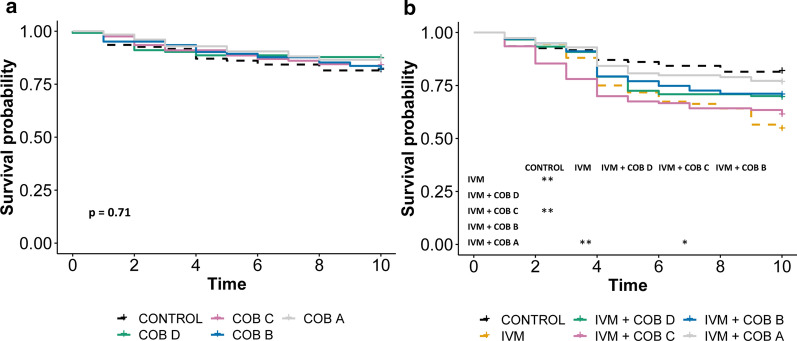
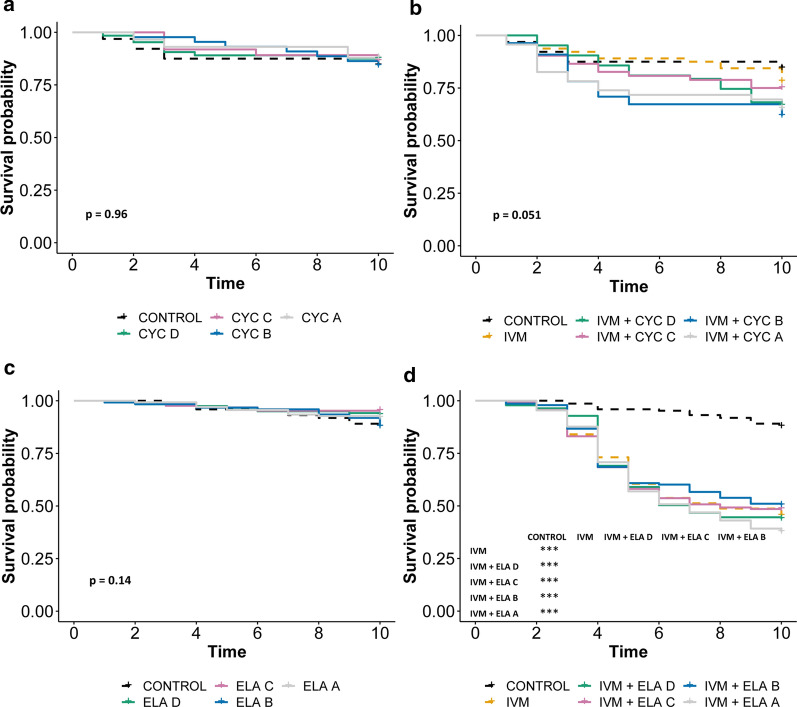
Dual inhibition of xenobiotic pumps and cytochromes was found to have a synergistic effect with ivermectin, greatly increasing mosquito mortality. Inhibition of xenobiotic pumps alone had no effect on ivermectin-induced mortality. Induction of xenobiotic pumps and cytochromes may confer partial protection from ivermectin.
There is a clear pathway for development of ivermectin resistance in malaria vectors. Detoxification mechanisms mediated by cytochrome P450 enzymes are more important than xenobiotic pumps in protecting mosquitoes against ivermectin.
尽管在过去 15 年中,当前的疟疾病媒控制策略取得了显著成效,但为实现世界卫生组织(WHO)设定的 2030 年疟疾控制宏伟目标,还需要采取额外的创新措施。新工具将需要解决杀虫剂耐药性和残留传播等关键挑战。伊维菌素等驱虫剂是一种杀死以接受治疗的人为食的蚊子的药物。大规模使用伊维菌素可以有效地针对户外和早期叮咬的病媒,补充仍然有效的传统工具。尽管这种方法引起了关注,但伊维菌素耐药性的发展是一个潜在的陷阱。在此,我们评估了外来生物泵和细胞色素 P450 酶通过主动外排和代谢解毒分别保护蚊子免受伊维菌素的潜在作用。
我们确定了伊维菌素对定殖的冈比亚按蚊的致死浓度 50;然后,我们使用化学抑制剂和诱导剂的外来生物泵和细胞色素 P450 酶与伊维菌素结合,以探究伊维菌素解毒的机制。
发现外来生物泵和细胞色素的双重抑制与伊维菌素具有协同作用,大大增加了蚊子的死亡率。单独抑制外来生物泵对伊维菌素诱导的死亡率没有影响。外来生物泵和细胞色素的诱导可能会对伊维菌素提供部分保护。
在疟疾病媒中,伊维菌素耐药性的发展有明确的途径。细胞色素 P450 酶介导的解毒机制比外来生物泵更能保护蚊子免受伊维菌素的侵害。