Programme for Development Studies (PUED), National Autonomous University of Mexico, Mexico City, Mexico; University of Bristol, Bristol, United Kingdom.
Institute of Geography, National Autonomous University of Mexico, Mexico City, Mexico.
Am J Prev Med. 2021 Apr;60(4):471-477. doi: 10.1016/j.amepre.2020.10.015. Epub 2020 Dec 9.
Several studies in developed and developing countries have analyzed the health risk factors associated with COVID-19 mortality. Comorbid diseases are a key explanatory factor behind COVID-19 mortality, but current studies treat comorbidities in isolation, at average-population values, and rarely assess how death risk varies for different health profiles across institutions. Estimating death risk variations for different interactions between comorbid diseases and across healthcare institutions is crucial to gaining a significant depth of understanding in relation to mortality during the pandemic.
This study relies on data from approximately half a million people in Mexico (of all recorded cases through August 15, 2020) and on Bayesian estimation to provide a more robust estimate of the combined effect of several comorbidities and institutional inequalities on COVID-19 mortality.
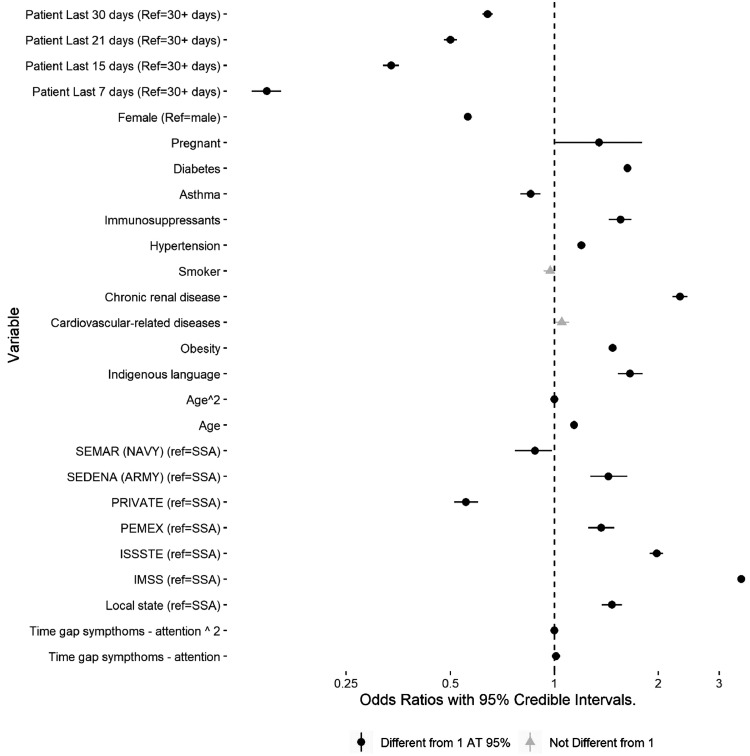
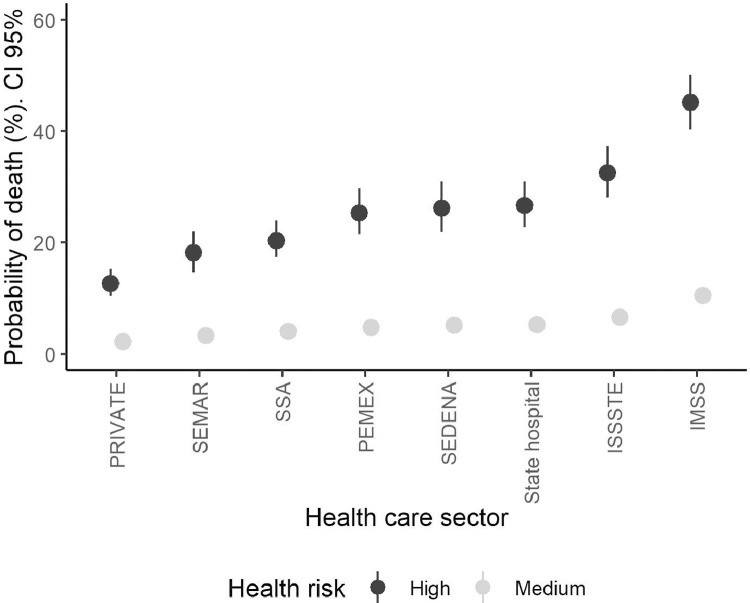
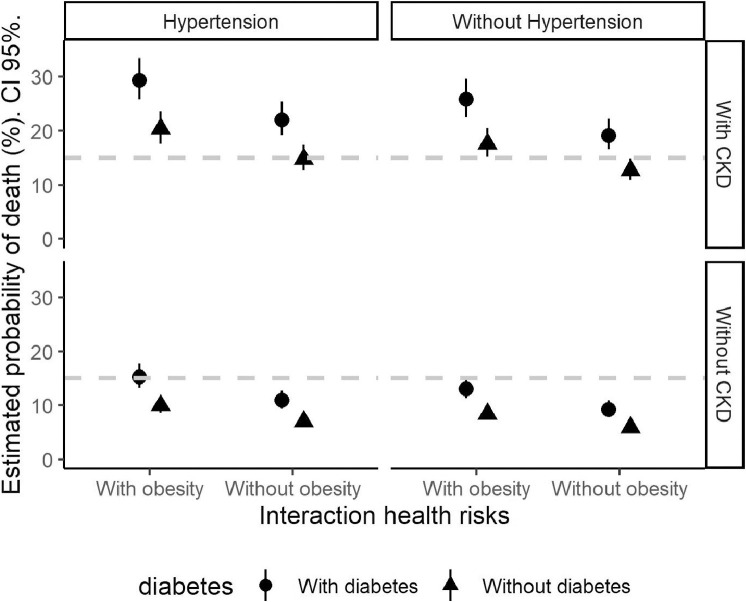
The findings of the study illustrate the additive effects of several comorbid diseases, with the presence of obesity, diabetes, hypertension, and chronic kidney disease increasing the mortality risk of COVID-19. There are also variations in the risk of death across the heterogeneous Mexican health system.
This study shows that COVID-19 mortality risk sharply increases in patients with 2 or more comorbid diseases (obesity, diabetes, hypertension, and cardiovascular diseases) in Mexico. However, death risk varied significantly across institutions for patients with the same comorbidity profile.
一些发达国家和发展中国家的研究分析了与 COVID-19 死亡率相关的健康风险因素。合并症是 COVID-19 死亡率的一个关键解释因素,但目前的研究将合并症孤立地、以平均人口值来处理,很少评估不同医疗机构中不同健康状况的死亡风险如何变化。估计不同合并症之间的相互作用以及不同医疗机构的死亡风险变化对于深入了解大流行期间的死亡率至关重要。
本研究依赖于墨西哥约 50 万人的数据(截至 2020 年 8 月 15 日所有记录病例)和贝叶斯估计,以提供更稳健的估计,了解几种合并症和医疗机构不平等对 COVID-19 死亡率的综合影响。
研究结果说明了几种合并症的累加效应,肥胖症、糖尿病、高血压和慢性肾病的存在增加了 COVID-19 的死亡率风险。在异构的墨西哥卫生系统中,死亡风险也存在差异。
本研究表明,在墨西哥,患有 2 种或多种合并症(肥胖症、糖尿病、高血压和心血管疾病)的 COVID-19 患者的死亡率风险急剧增加。然而,对于具有相同合并症特征的患者,不同医疗机构的死亡风险差异显著。