Bochennek K, Simon A, Laws H-J, Groll A H, Lehrnbecher T
Pädiatrische Hämatologie und Onkologie, Klinik für Kinder- und Jugendmedizin, Johann Wolfgang Goethe-Universität, Theodor-Stern-Kai 7, 60590 Frankfurt, Deutschland.
Pädiatrische Hämatologie und Onkologie, Kinderklinik, Universitätsklinikum Homburg, Homburg, Deutschland.
Monatsschr Kinderheilkd. 2021;169(5):443-450. doi: 10.1007/s00112-021-01146-4. Epub 2021 Mar 15.
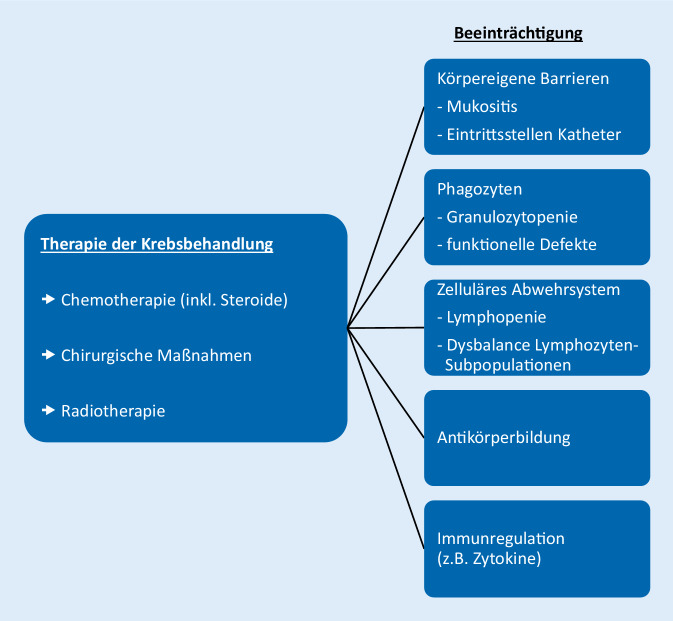
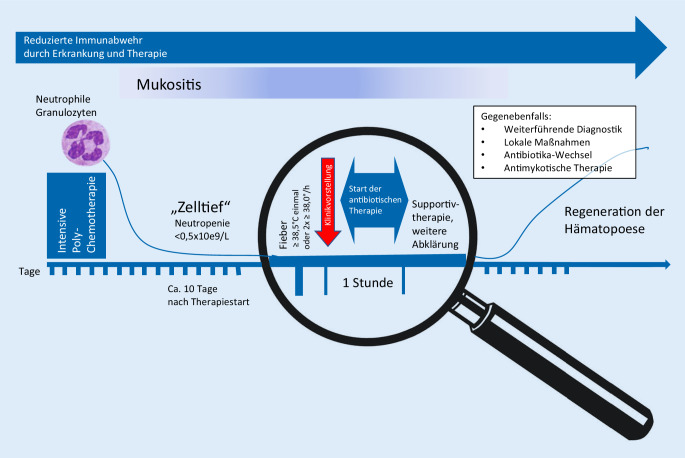
Febrile neutropenia is the most common potential emergency situation in children and adolescents with cancer. The host response of these patients is severely compromised by treatment-induced immunosuppression resulting in a lack of important defence mechanisms, so that bacterial infections and in certain risk groups also fungal infections can be life threatening. As the clinical course of these infectious complications may be rapid and fatal, early antibiotic treatment can save lives. This article aims to raise awareness to this emergency situation and gives an overview of the management of pediatric cancer patients with febrile neutropenia.
发热性中性粒细胞减少是癌症患儿和青少年中最常见的潜在紧急情况。这些患者的宿主反应因治疗引起的免疫抑制而严重受损,导致缺乏重要的防御机制,因此细菌感染以及在某些风险组中真菌感染也可能危及生命。由于这些感染并发症的临床过程可能迅速且致命,早期抗生素治疗可以挽救生命。本文旨在提高对这种紧急情况的认识,并概述发热性中性粒细胞减少的儿科癌症患者的管理。