
生物炭浸出液对低温下水稻幼苗脱落酸途径的影响
Biochar's Leacheates Affect the Abscisic Acid Pathway in Rice Seedlings Under Low Temperature.
作者信息
Yuan Jun, Meng Jun, Liang Xiao, Yang E, Yang Xu, Chen Wen-Fu
机构信息
Liaoning Biochar Engineering and Technology Research Center, Shenyang Agricultural University, Shenyang, China.
Eastern Liaoning University, Dandong, China.
出版信息
Front Plant Sci. 2021 Mar 4;12:646910. doi: 10.3389/fpls.2021.646910. eCollection 2021.
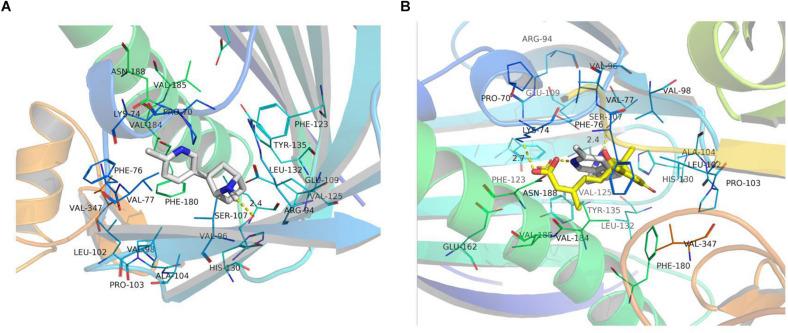
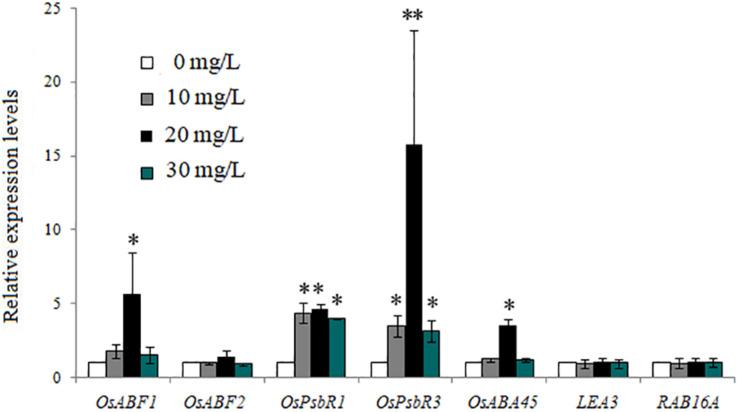
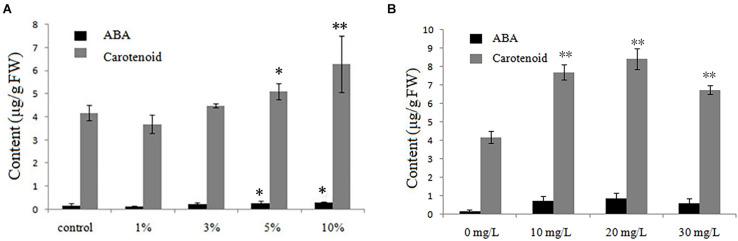
Organic molecules of biochar's leacheates are known to increase the cold resistance of rice seedlings. Yet, it remains unclear whether the organic molecules of biochar leacheates can interact with the abscisic acid (ABA) signaling pathway associated with low temperature. This study used experiments and bioinformatics (molecular docking) to determine which of the organic molecules of biochar's leacheates could influence the ABA signaling pathway. Specifically, we investigated whether these molecules affected ABA, a plant hormone linked to cold resistance. The contents of endogenous ABA and its precursor carotenoids were determined under low-temperature stress (10°C) and treatment with different concentrations of biochar leacheates. With increased leacheate concentrations, the endogenous ABA and carotenoid contents also increased, as did the expression of ABA- and cold-related genes. When rice seedlings were instead treated with exogenous ABA, it also affected the above-measured indexes; hence, we surmised that certain water-soluble organic molecules of biochar could exert a similar effect as ABA. We first used gas chromatography/mass spectrometry (GC/MS) to identify the organic molecules in the biochar extract, and then we used molecular docking software Autodock to show how they interact. We found that the molecule (1R, 2R, 4S)-2-(6-chloropyridin-3-yl)-7-azabicyclo(2.2.1)heptane was simplified, as Cyah could dock with the ABA receptor protein OsPYL2 in rice, which shows Cyah in biochar is probably an analog of ABA, with a similar function. Based on these results, we conclude that organic molecules of biochar's leacheates could enter into rice plants and interact with ABA-related proteins to affect the ABA signaling pathway, thereby improving the cold stress resistance of plants.
已知生物炭浸出液中的有机分子可提高水稻幼苗的抗寒性。然而,生物炭浸出液中的有机分子是否能与低温相关的脱落酸(ABA)信号通路相互作用仍不清楚。本研究通过实验和生物信息学(分子对接)来确定生物炭浸出液中的哪些有机分子会影响ABA信号通路。具体而言,我们研究了这些分子是否会影响ABA,一种与抗寒相关的植物激素。在低温胁迫(10°C)和不同浓度生物炭浸出液处理下,测定了内源ABA及其前体类胡萝卜素的含量。随着浸出液浓度的增加,内源ABA和类胡萝卜素含量以及ABA和低温相关基因的表达也增加。当用外源ABA处理水稻幼苗时,也会影响上述测量指标;因此,我们推测生物炭中的某些水溶性有机分子可能发挥与ABA类似的作用。我们首先使用气相色谱/质谱联用仪(GC/MS)鉴定生物炭提取物中的有机分子,然后使用分子对接软件Autodock展示它们之间的相互作用方式。我们发现分子(1R, 2R, 4S)-2-(6-氯吡啶-3-基)-7-氮杂双环(2.2.1)庚烷被简化为Cyah,它可以与水稻中的ABA受体蛋白OsPYL2对接,这表明生物炭中的Cyah可能是ABA的类似物,具有相似的功能。基于这些结果,我们得出结论,生物炭浸出液中的有机分子可以进入水稻植株并与ABA相关蛋白相互作用,影响ABA信号通路,从而提高植物的抗寒胁迫能力。


 Zotero 插件