Yao Hongyan, Xin Danli, Zhan Zongyi, Li Zijing
Ningbo Eye Hospital, Ningbo University, Ningbo 315000, China.
Ningbo Key Laboratory of Ocular Tissue Transplantation, Ningbo 315000, China.
Evid Based Complement Alternat Med. 2021 Mar 5;2021:6642600. doi: 10.1155/2021/6642600. eCollection 2021.
Compound Xueshuantong capsule (CXC) and Hexuemingmu tablet (HXMMT) are two important Chinese patent medicines (CPMs) frequently used to treat proliferative diabetic retinopathy (PDR), especially when complicated with vitreous hemorrhage (VH). However, a network pharmacology approach to understand the therapeutic mechanisms of these two CPMs in PDR has not been applied.
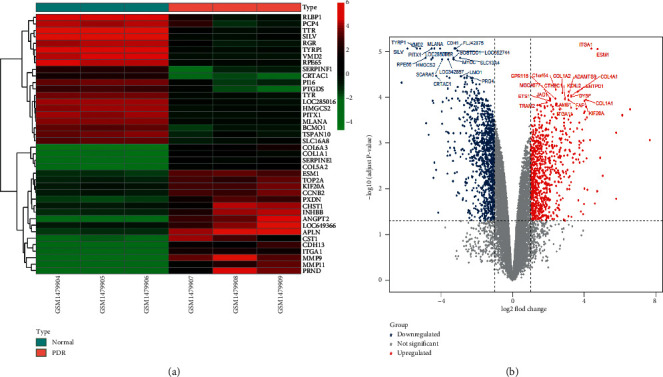
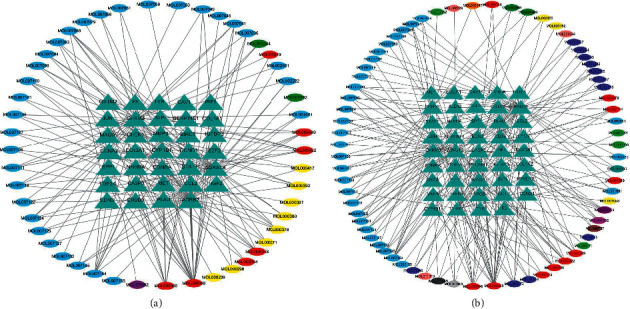
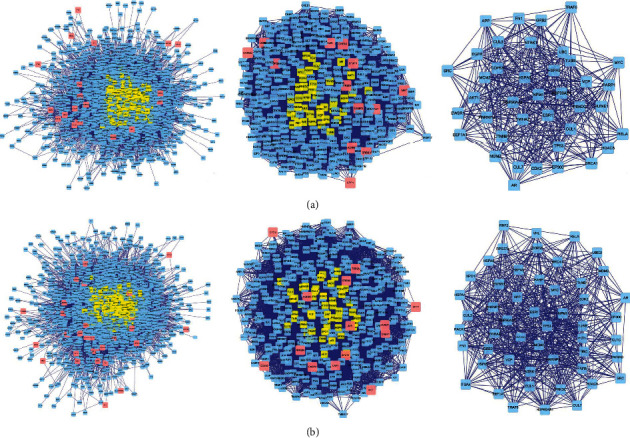
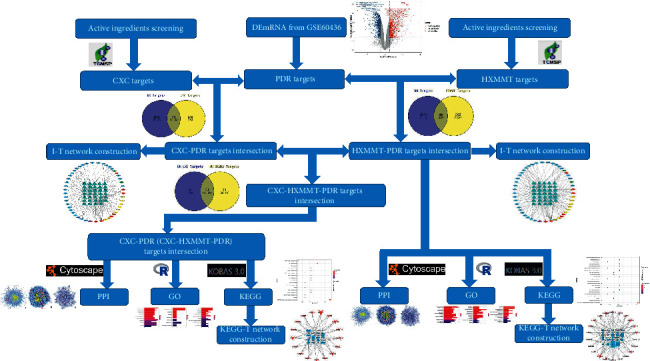
To identify differences in the active ingredients between CXC and HXMMT and to comparatively predict and further analyze the molecular targets shared by these CPMs and PDR. . The differentially expressed messenger RNAs (mRNAs) between normal retinal tissues in healthy individuals and active fibrovascular membranes in PDR patients were retrieved from the Gene Expression Omnibus database. The active ingredients of CXC and HXMMT and the targets of these ingredients were retrieved from the Traditional Chinese Medicine Systems Pharmacology database. The intersections of the CPM (CXC and HXMMT) targets and PDR targets were determined. Then, Gene Ontology and Kyoto Encyclopedia of Genes and Genomes (KEGG) analyses were performed, and the ingredient-target networks, protein-protein interaction networks, and KEGG-target (KEGG-T) networks were constructed.
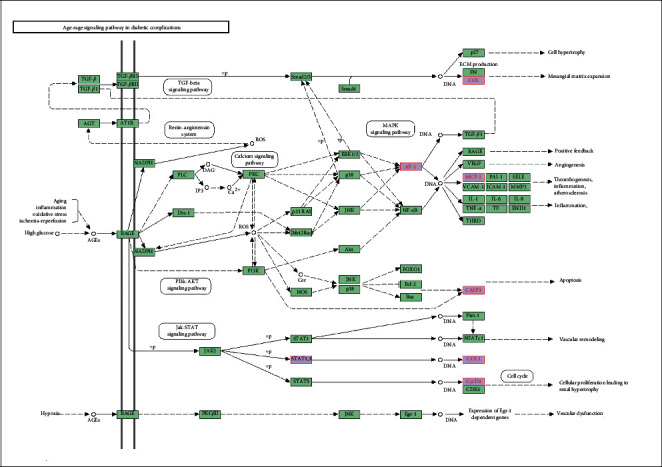
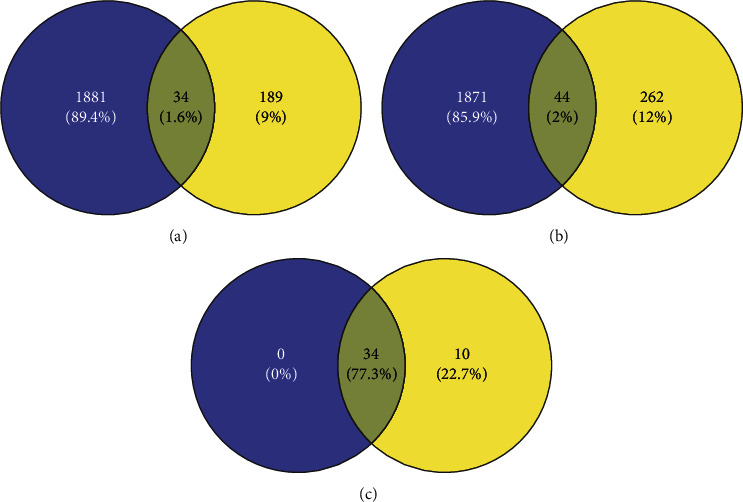
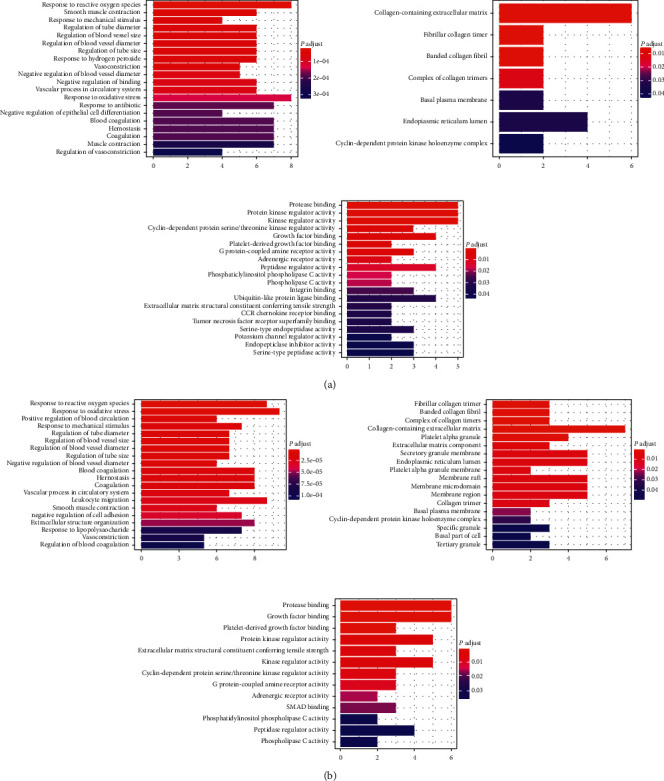
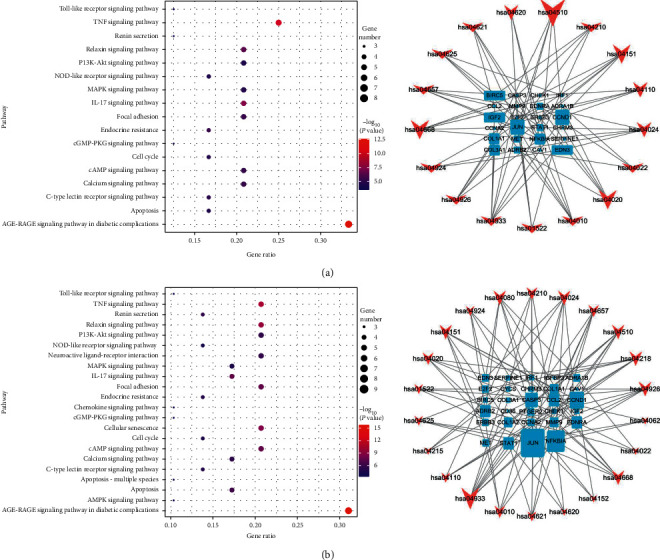
CXC contains 4 herbs, and HXMMT contains 19. is the only herb common to both. CXC had 34 potential therapeutic targets in PDR, while HXMMT had these 34 and 10 additional targets. Both CPMs shared the following main processes: response to reactive oxygen species and oxidative stress, regulation of blood vessel diameter and size, vasoconstriction, smooth muscle contraction, hemostasis, and blood coagulation. The shared pathways included the AGE-RAGE signaling pathway in diabetic complications, TNF signaling pathway, relaxin signaling pathway, and IL-17 signaling pathway.
Both CXC and HXMMT include components effective at treating PDR and affect the following main processes: response to reactive oxygen species and oxidative stress, regulation of blood vessels, and blood coagulation. , the only herb common to both CPMs, contains many useful active ingredients. The PDR-CXC and PDR-HXMMT networks shared 34 common genes (RELA, HSPA8, HSP90AA, HSP90AB1, BRCA, EWSR1, CUL7, HNRNPU, MYC, CTNNB1, MDM2, YWHAZ, CDK2, AR, FN1, HUWE1, TP53, TUBB, EP300, GRB2, VCP, MCM2, EEF1A1, NTRK1, TRAF6, EGFR, PRKDC, SRC, HDAC5, APP, ESR1, AKT1, UBC, and COPS5), and the PDR-HXMMT network has 10 additional genes (RNF2, VNL, RPS27, COPS5, XPO1, PARP1, RACK1, YWHAB, and ITGA4). The top 5 pathways with the highest gene ratio in both networks were the AGE-RAGE signaling pathway in diabetic complications, TNF signaling pathway, relaxin signaling pathway, IL-17 signaling pathway, and focal adhesion. Additional pathways such as neuroactive ligand-receptor interaction, chemokine signaling pathway, and AMPK signaling pathway were enriched with HXMMT targets. Thus, HXMMT has more therapeutic targets shared by different active ingredients and more abundant gene functions than CXC, which may be two major reasons why HXMMT is more strongly recommended than CXC as an auxiliary treatment for new-onset VH secondary to PDR. However, the underlying mechanisms still need to be further explored.
复方血栓通胶囊(CXC)和和血明目片(HXMMT)是常用于治疗增殖性糖尿病视网膜病变(PDR)的两种重要中成药,尤其是在合并玻璃体积血(VH)时。然而,尚未应用网络药理学方法来理解这两种中成药在PDR中的治疗机制。
识别CXC和HXMMT之间活性成分的差异,并比较预测和进一步分析这些中成药与PDR共有的分子靶点。从基因表达综合数据库中检索健康个体正常视网膜组织与PDR患者活跃纤维血管膜之间差异表达的信使核糖核酸(mRNA)。从中药系统药理学数据库中检索CXC和HXMMT的活性成分及其靶点。确定中成药(CXC和HXMMT)靶点与PDR靶点的交集。然后进行基因本体论和京都基因与基因组百科全书(KEGG)分析,并构建成分-靶点网络、蛋白质-蛋白质相互作用网络和KEGG-靶点(KEGG-T)网络。
CXC含4味药,HXMMT含19味药。 是两者唯一共有的药味。CXC在PDR中有34个潜在治疗靶点,而HXMMT除这34个靶点外还有10个额外靶点。两种中成药共有的主要过程包括:对活性氧和氧化应激的反应、血管直径和大小的调节、血管收缩、平滑肌收缩、止血和血液凝固。共有的通路包括糖尿病并发症中的AGE-RAGE信号通路、TNF信号通路、松弛素信号通路和IL-17信号通路。
CXC和HXMMT均包含对治疗PDR有效的成分,并影响以下主要过程:对活性氧和氧化应激的反应、血管调节和血液凝固。 是两种中成药唯一共有的药味,含有许多有用的活性成分。PDR-CXC和PDR-HXMMT网络共有34个共同基因(RELA、HSPA8、HSP90AA、HSP90AB1、BRCA、EWSR1、CUL7、HNRNPU、MYC、CTNNB1、MDM2、YWHAZ、CDK2、AR、FN1、HUWE1、TP53、TUBB、EP300、GRB2、VCP、MCM2、EEF1A1、NTRK1、TRAF6、EGFR、PRKDC、SRC、HDAC5、APP、ESR1、AKT1、UBC和COPS5),PDR-HXMMT网络还有10个额外基因(RNF2、VNL、RPS27、COPS5、XPO1、PARP1、RACK1、YWHAB和ITGA4)。两个网络中基因比例最高的前5条通路是糖尿病并发症中的AGE-RAGE信号通路、TNF信号通路、松弛素信号通路、IL-17信号通路和粘着斑。HXMMT靶点还富集了神经活性配体-受体相互作用、趋化因子信号通路和AMPK信号通路等其他通路。因此,HXMMT比CXC具有更多不同活性成分共有的治疗靶点和更丰富的基因功能,这可能是HXMMT比CXC更强烈推荐作为PDR继发新发VH辅助治疗的两个主要原因。然而,其潜在机制仍需进一步探索。