Nguyen Hien V, Campbell Katrin, Painter Gavin F, Young Sarah L, Walker Greg F
School of Pharmacy, University of Otago, Dunedin 9016, New Zealand.
Department of Pathology, University of Otago, Dunedin 9016, New Zealand.
Data Brief. 2021 Feb 25;35:106883. doi: 10.1016/j.dib.2021.106883. eCollection 2021 Apr.
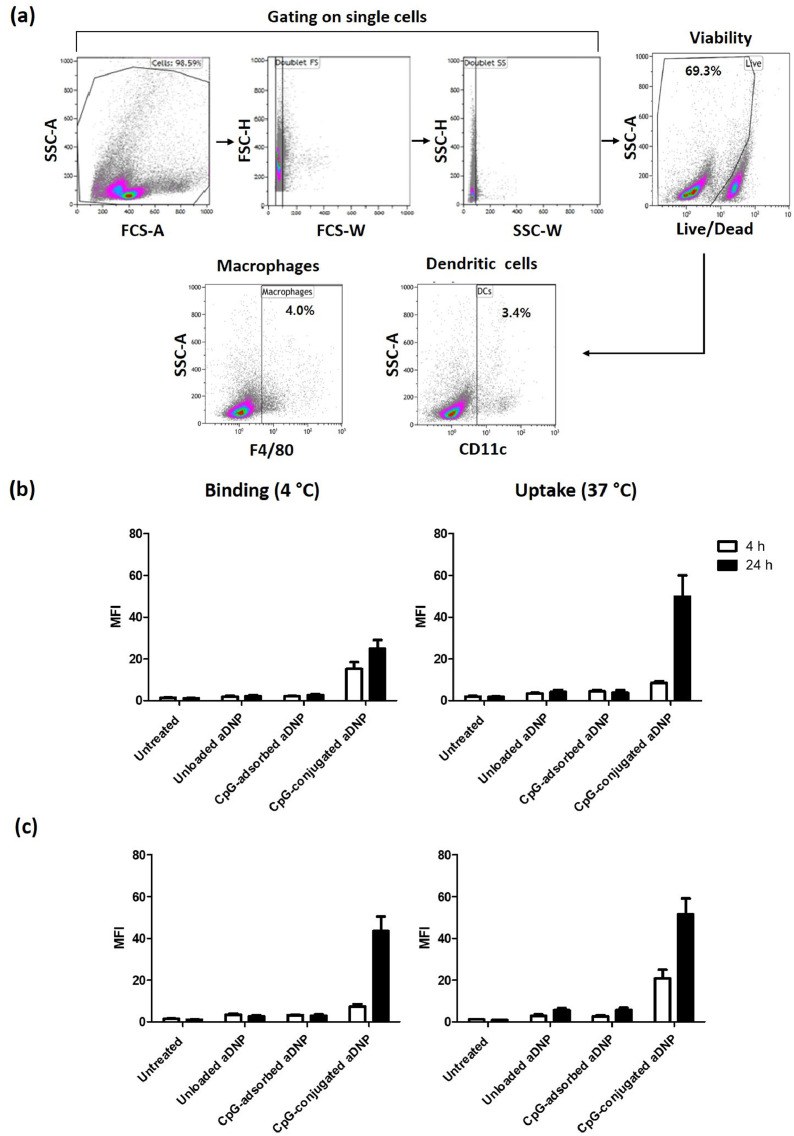
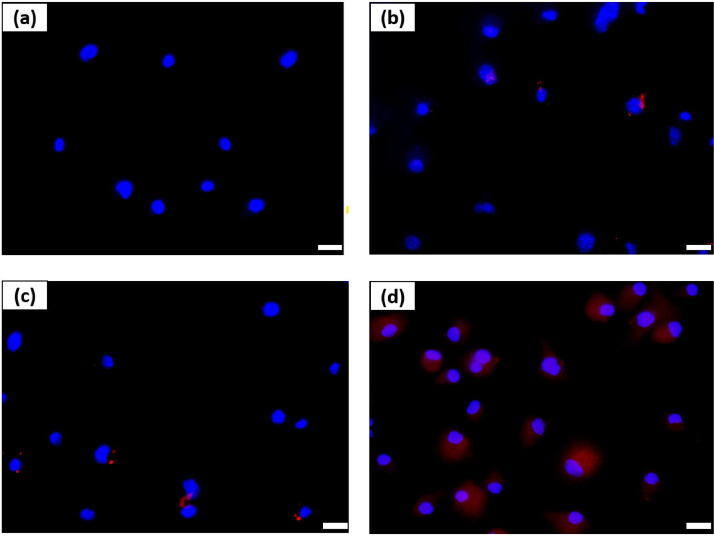
Cytosine-phosphate-guanine (CpG) oligonucleotides are commonly-used vaccine adjuvants to promote the activation of antigen-presenting cells (APCs). To mount an effective immune response, CpG needs to be internalized and bind to its endosomal Toll-like receptor 9 (TLR-9) inside the APCs. Using flow cytometry and fluorescence microscopy, this article presents the cellular uptake data of the amino-dextran nanoparticle (aDNP) and aDNP loaded with CpG immobilized on its surface by either electrostatic adsorption or covalent conjugation. The uptake of fluorescently-labelled aDNPs by murine splenic dendritic cells and macrophages was determined by flow cytometry and uptake by murine bone-marrow-derived dendritic cells was evaluated by fluorescence microscopy. The data presented in this paper correlates with the immune-stimulatory activity observed for the two different CpG loading methods in the research article "" (Nguyen ., 2020) [1]. The data provide experimental evidence for a better understanding how the nanoparticle surface loading method of CpG influences the uptake of these nanoparticles by antigen-presenting cells as a step guide in the design of more effective vaccine formulations.