Welty Francine K, Schulte Fabian, Alfaddagh Abdulhamied, Elajami Tarec K, Bistrian Bruce R, Hardt Markus
Division of Cardiovascular Medicine, Beth Israel Deaconess Medical Center, Boston, MA, USA.
The Forsyth Institute, Cambridge, MA, USA.
FASEB J. 2021 Apr;35(4):e21448. doi: 10.1096/fj.202002471R.
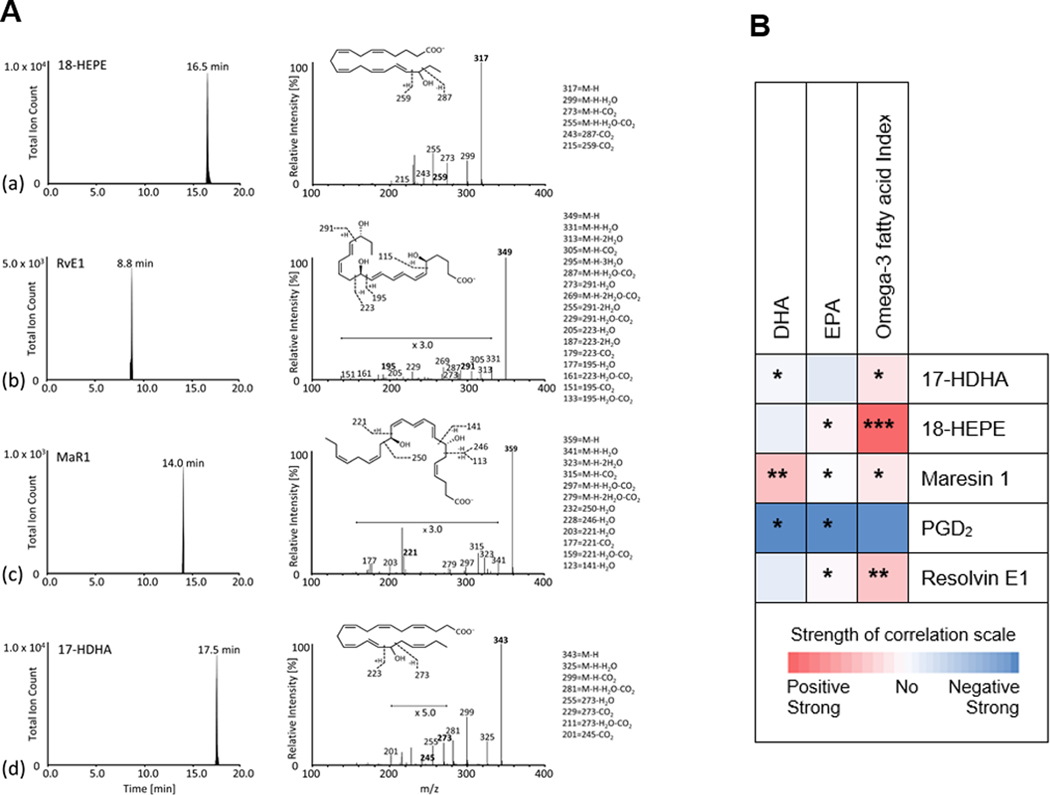
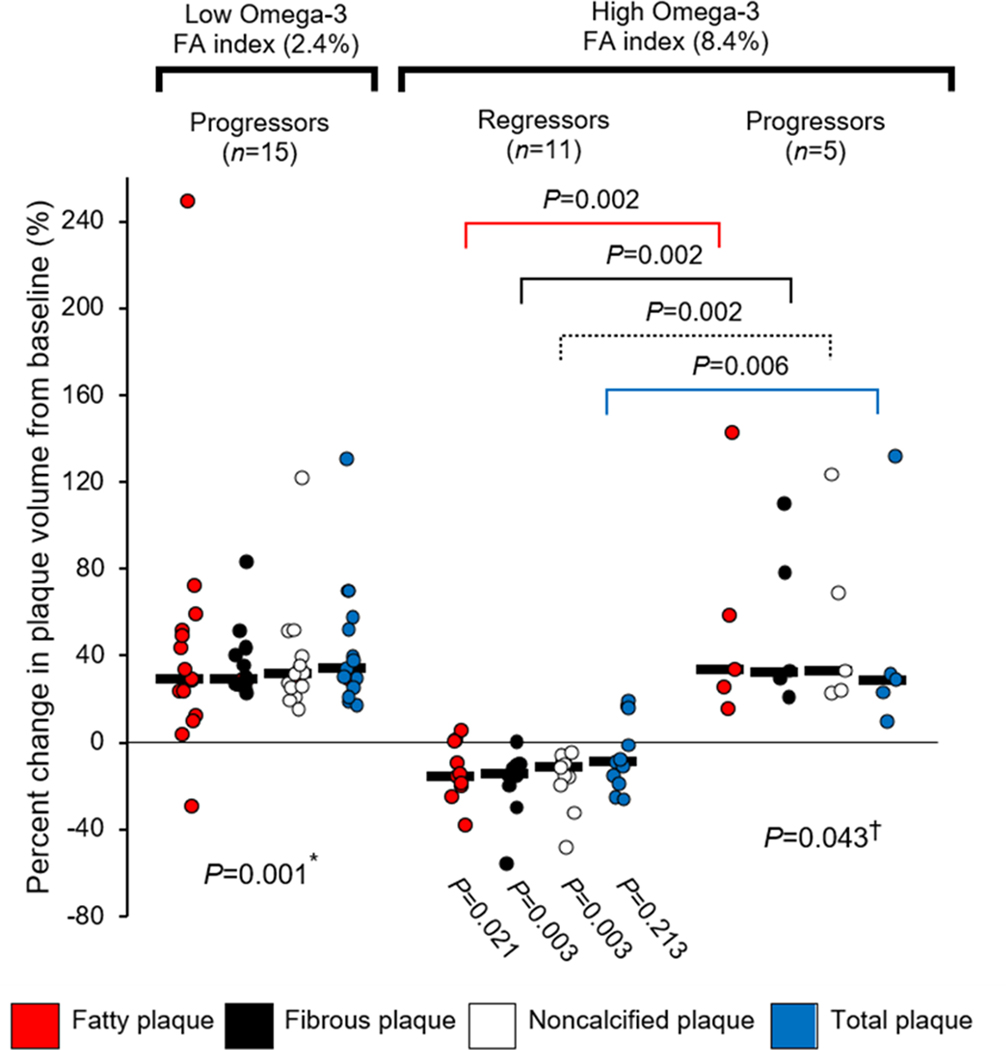
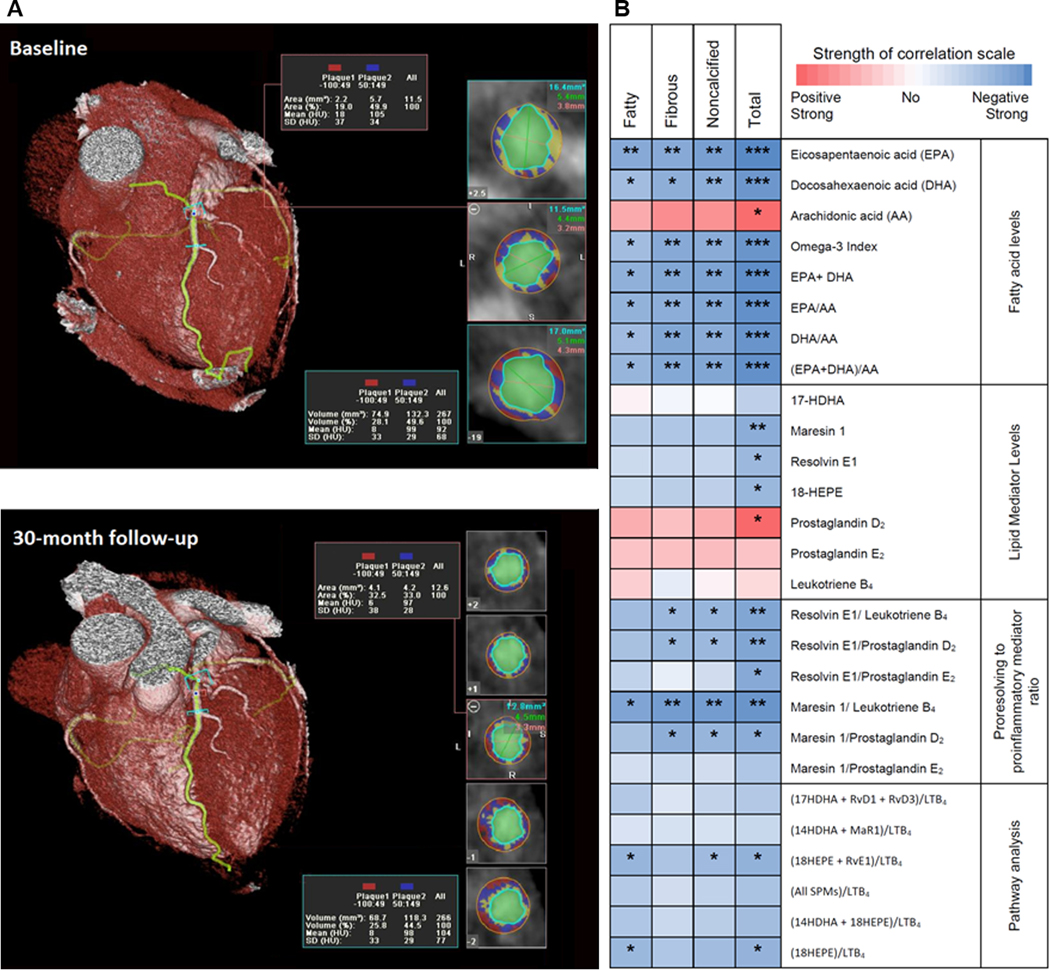
Inflammation in arterial walls leads to coronary artery disease (CAD). We previously reported that a high omega-3 fatty index was associated with prevention of progression of coronary atherosclerosis, a disease of chronic inflammation in the arterial wall. However, the mechanism of such benefit is unclear. The two main omega-3 fatty acids, eicosapentaenoic acid (EPA) and docosahexaenoic acid (DHA), are precursors of specialized pro-resolving lipid mediators (SPMs)-resolvins and maresins-which actively resolve chronic inflammation. To explore whether SPMs are associated with coronary plaque progression, levels of SPMs and proinflammatory mediators (leukotriene B [LTB ] and prostaglandins) were measured using liquid chromatography-tandem mass spectrometry in 31 statin-treated patients with stable CAD randomized to either EPA and DHA, 3.36 g daily, or no EPA/DHA (control). Coronary plaque volume was measured by coronary computed tomographic angiography at baseline and at 30-month follow-up. Higher plasma levels of EPA+DHA were associated with significantly increased levels of two SPMs-resolvin E1 and maresin 1-and 18-hydroxy-eicosapentaenoic acid (HEPE), the precursor of resolvin E1. Those with low plasma EPA+DHA levels had a low (18-HEPE+resolvin E1)/LTB ratio and significant plaque progression. Those with high plasma EPA+DHA levels had either low (18-HEPE+resolvin E1)/LTB ratios with significant plaque progression or high (18-HEPE+resolvin E1)/LTB ratios with significant plaque regression. These findings suggest that an imbalance between pro-resolving and proinflammatory lipid mediators is associated with plaque progression and potentially mediates the beneficial effects of EPA and DHA in CAD patients.
动脉壁炎症会引发冠状动脉疾病(CAD)。我们之前报道过,高ω-3脂肪酸指数与预防冠状动脉粥样硬化进展相关,冠状动脉粥样硬化是一种动脉壁慢性炎症疾病。然而,这种益处的机制尚不清楚。两种主要的ω-3脂肪酸,二十碳五烯酸(EPA)和二十二碳六烯酸(DHA),是特殊促消退脂质介质(SPM)——消退素和maresin——的前体,它们能积极消退慢性炎症。为了探究SPM是否与冠状动脉斑块进展相关,我们使用液相色谱-串联质谱法测量了31例接受他汀类药物治疗的稳定型CAD患者的SPM和促炎介质(白三烯B [LTB]和前列腺素)水平,这些患者被随机分为两组,一组每天服用3.36克EPA和DHA,另一组不服用EPA/DHA(对照组)。通过冠状动脉计算机断层血管造影在基线和30个月随访时测量冠状动脉斑块体积。较高的血浆EPA + DHA水平与两种SPM——消退素E1和maresin 1——以及消退素E1的前体18-羟基二十碳五烯酸(HEPE)的水平显著升高相关。血浆EPA + DHA水平低的患者(18-HEPE + 消退素E1)/LTB比值低,且斑块有显著进展。血浆EPA + DHA水平高的患者要么(18-HEPE + 消退素E1)/LTB比值低且斑块有显著进展,要么(18-HEPE + 消退素E1)/LTB比值高且斑块有显著消退。这些发现表明,促消退和促炎脂质介质之间的失衡与斑块进展相关,并可能介导了EPA和DHA对CAD患者的有益作用。