Institute of Immunology and Infection Research, University of Edinburgh, Edinburgh, United Kingdom.
Centre for Immunity, Infection and Evolution, University of Edinburgh, Edinburgh, United Kingdom.
Elife. 2021 Mar 23;10:e63838. doi: 10.7554/eLife.63838.
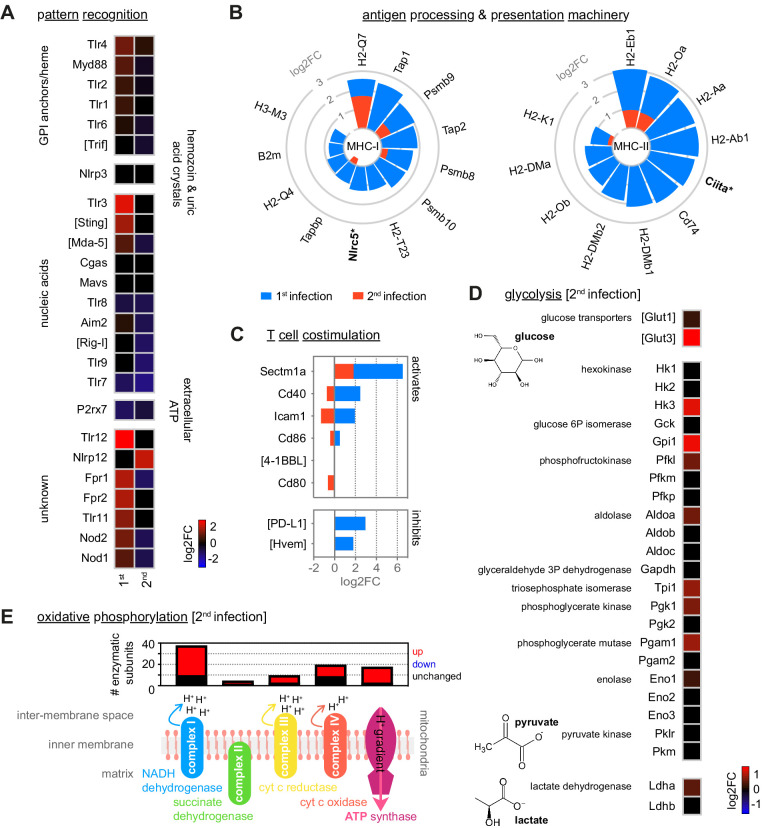
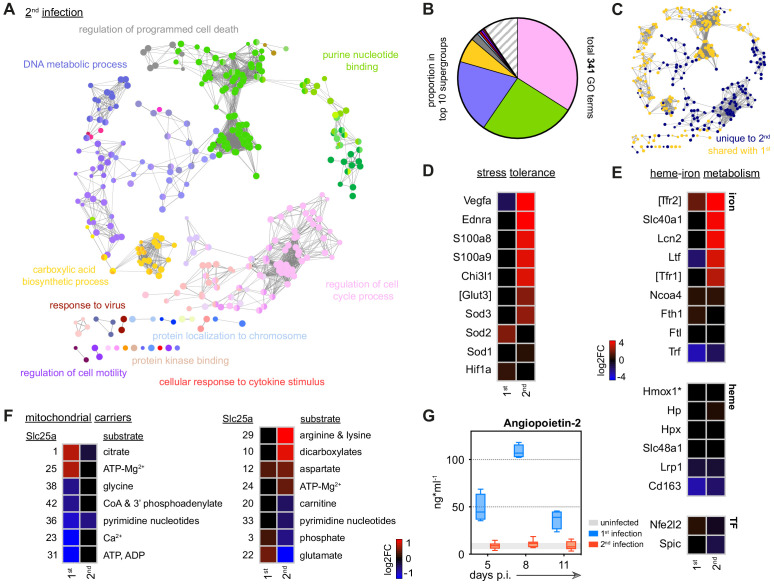
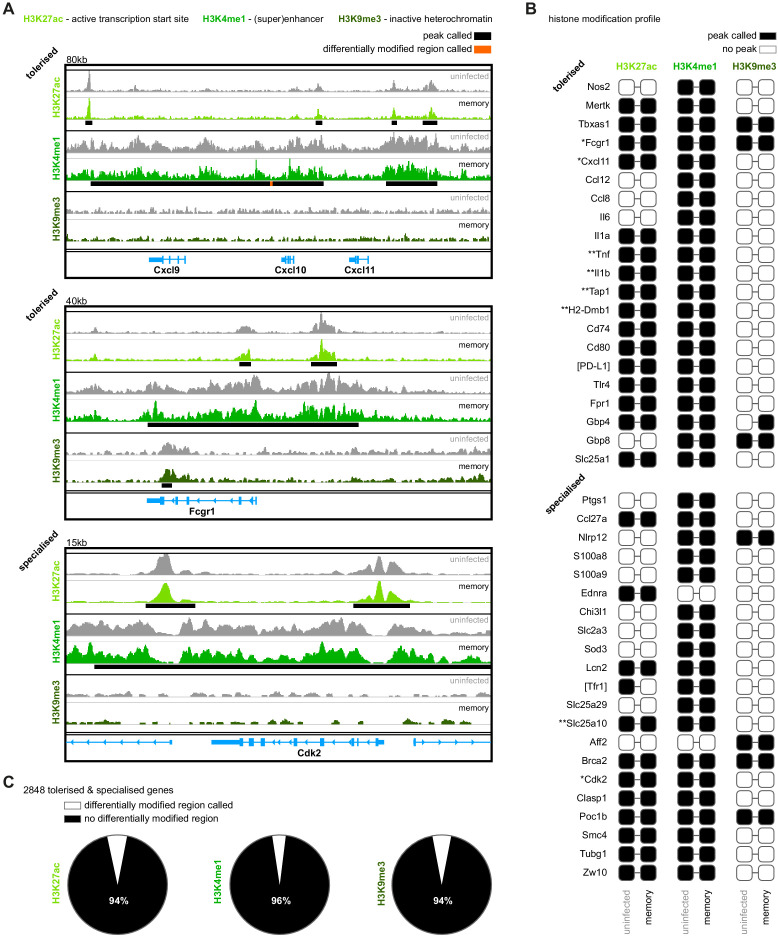
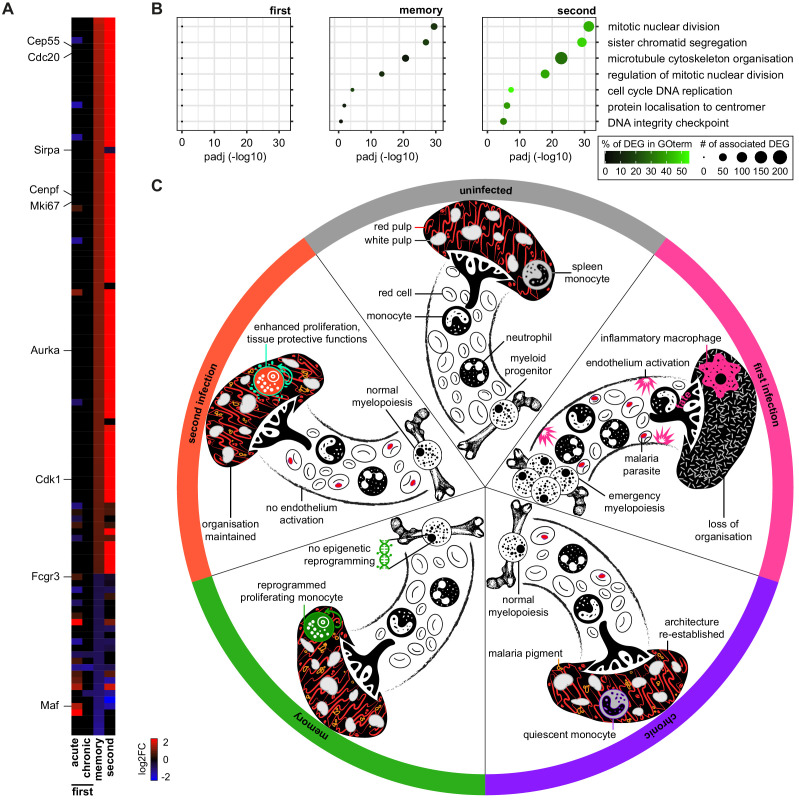
Immunity to malaria is often considered slow to develop but this only applies to defense mechanisms that function to eliminate parasites (resistance). In contrast, immunity to severe disease can be acquired quickly and without the need for improved pathogen control (tolerance). Using , we show that a single malaria episode is sufficient to induce host adaptations that can minimise inflammation, prevent tissue damage and avert endothelium activation, a hallmark of severe disease. Importantly, monocytes are functionally reprogrammed to prevent their differentiation into inflammatory macrophages and instead promote mechanisms of stress tolerance to protect their niche. This alternative fate is not underpinned by epigenetic reprogramming of bone marrow progenitors but appears to be imprinted within the remodelled spleen. Crucially, all of these adaptations operate independently of pathogen load and limit the damage caused by malaria parasites in subsequent infections. Acquired immunity to malaria therefore prioritises host fitness over pathogen clearance.
疟疾免疫通常被认为发展缓慢,但这仅适用于消除寄生虫的防御机制(抗性)。相比之下,对严重疾病的免疫可以迅速获得,而无需改善病原体控制(耐受)。使用,我们表明,单次疟疾发作足以诱导宿主适应,从而最大程度地减少炎症、防止组织损伤和避免内皮细胞激活,这是严重疾病的标志。重要的是,单核细胞的功能被重新编程,以阻止其分化为炎症性巨噬细胞,而是促进应激耐受机制来保护其龛位。这种替代命运不是由骨髓祖细胞的表观遗传重编程来支撑的,而是似乎在重塑的脾脏中留下印记。至关重要的是,所有这些适应都独立于病原体载量,限制了后续感染中疟原虫引起的损害。因此,疟疾获得性免疫优先考虑宿主适应性而不是清除病原体。