Donnelly Centre, University of Toronto, Toronto, ON, Canada.
Department of Biochemistry, University of Toronto, Toronto, ON, Canada.
Nat Commun. 2021 Mar 22;12(1):1806. doi: 10.1038/s41467-021-22102-6.
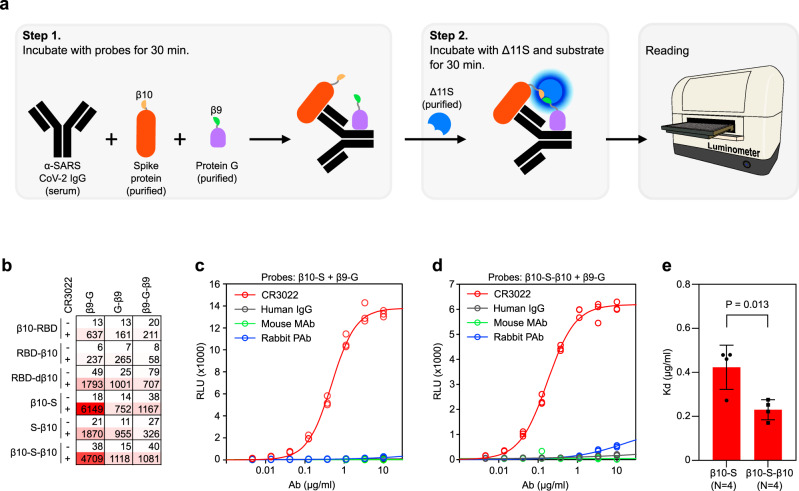
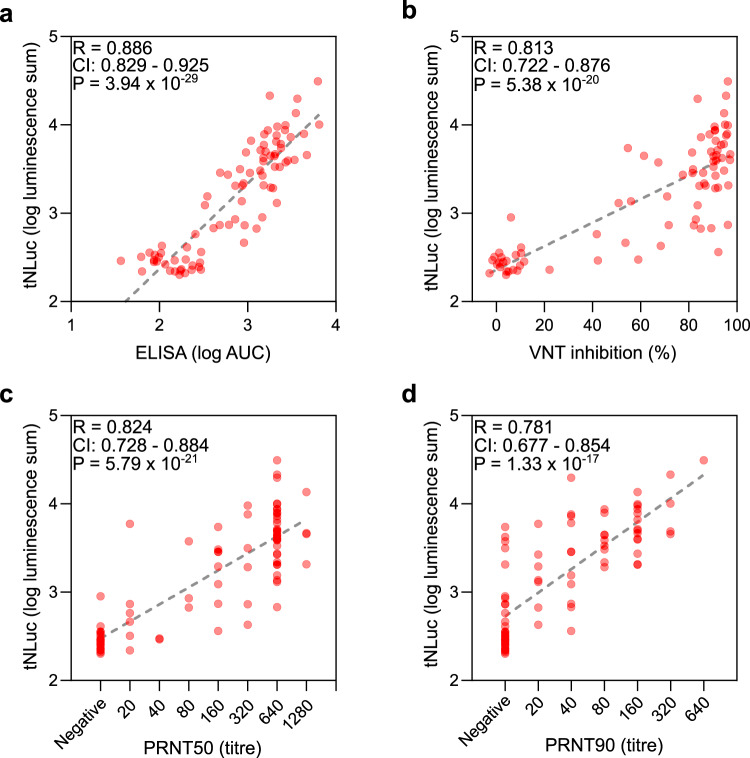
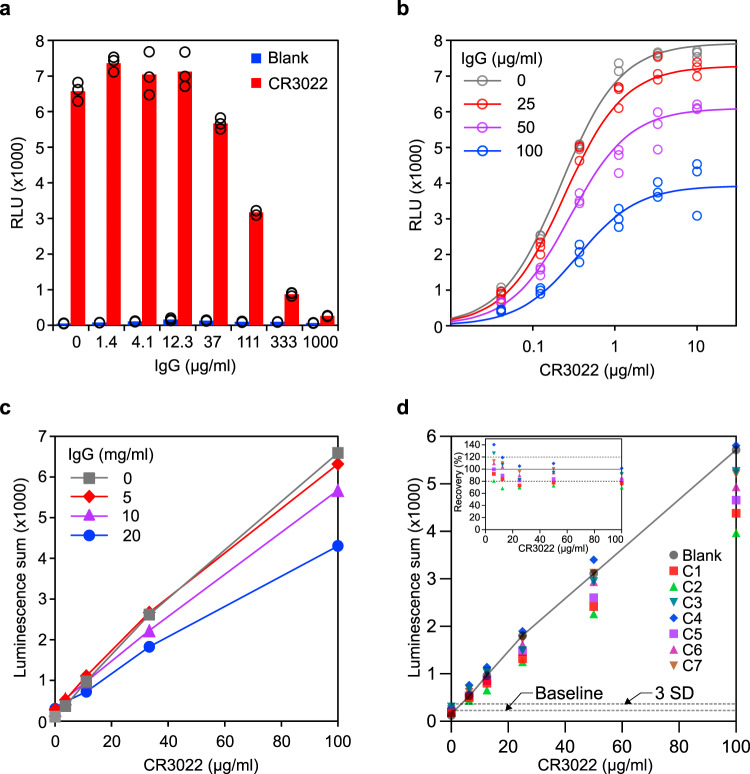
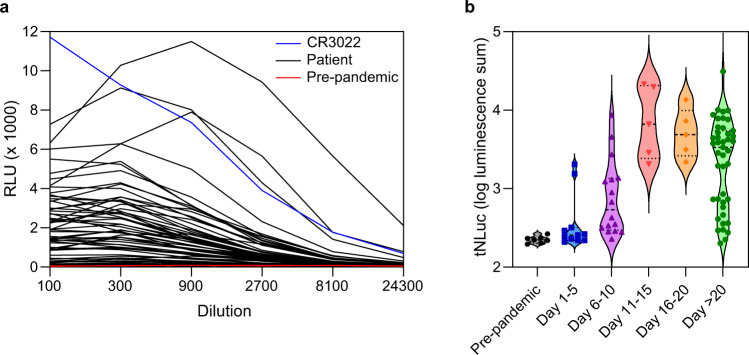
Better diagnostic tools are needed to combat the ongoing COVID-19 pandemic. Here, to meet this urgent demand, we report a homogeneous immunoassay to detect IgG antibodies against SARS-CoV-2. This serological assay, called SATiN, is based on a tri-part Nanoluciferase (tNLuc) approach, in which the spike protein of SARS-CoV-2 and protein G, fused respectively to two different tNLuc tags, are used as antibody probes. Target engagement of the probes allows reconstitution of a functional luciferase in the presence of the third tNLuc component. The assay is performed directly in the liquid phase of patient sera and enables rapid, quantitative and low-cost detection. We show that SATiN has a similar sensitivity to ELISA, and its readouts are consistent with various neutralizing antibody assays. This proof-of-principle study suggests potential applications in diagnostics, as well as disease and vaccination management.
需要更好的诊断工具来应对持续的 COVID-19 大流行。在这里,为了满足这一迫切需求,我们报告了一种用于检测针对 SARS-CoV-2 的 IgG 抗体的均相免疫测定法。这种血清学测定法称为 SATiN,它基于三聚体 Nanoluciferase(tNLuc)方法,其中 SARS-CoV-2 的刺突蛋白和蛋白 G 分别融合到两个不同的 tNLuc 标签上,用作抗体探针。探针的靶标结合允许在存在第三个 tNLuc 成分的情况下重新构成功能性荧光素酶。该测定法直接在患者血清的液相中进行,能够快速、定量和低成本地进行检测。我们表明,SATiN 与 ELISA 具有相似的灵敏度,并且其读数与各种中和抗体测定法一致。这项原理验证研究表明,它可能在诊断、疾病和疫苗管理方面具有应用潜力。