Department of Stomatology, Nanfang Hospital, Southern Medical University, Guangzhou, P.R. China.
Theranostics. 2021 Mar 4;11(10):4759-4769. doi: 10.7150/thno.54072. eCollection 2021.
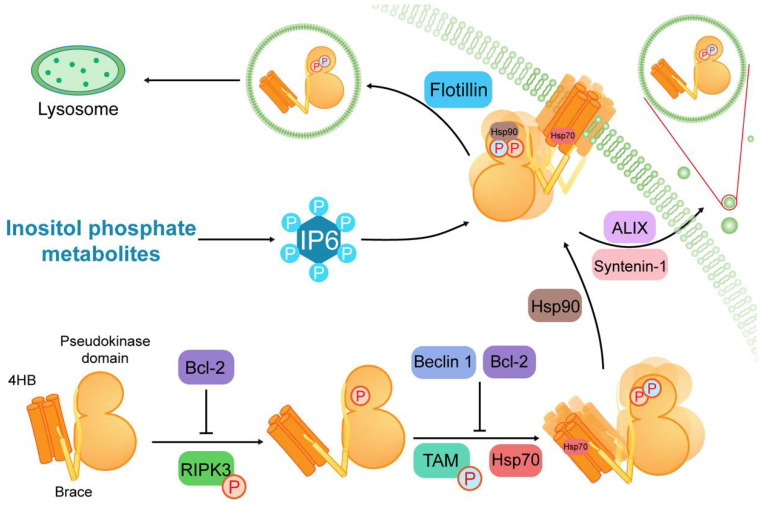
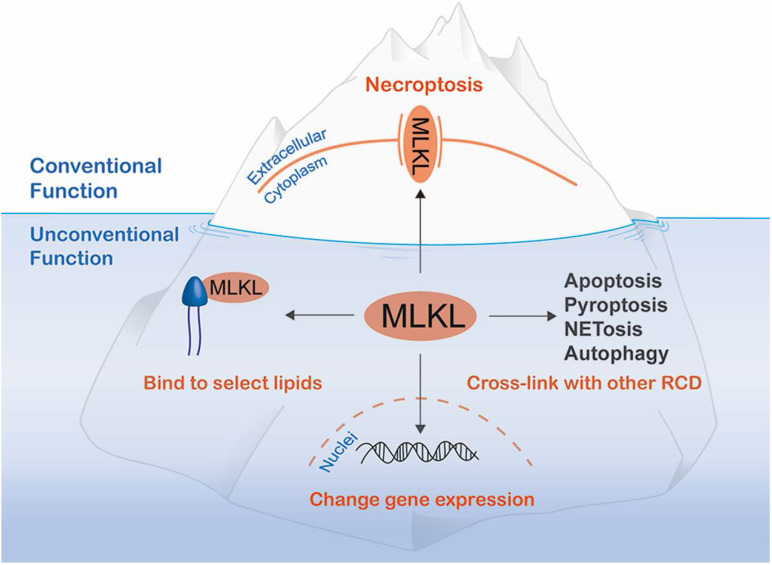
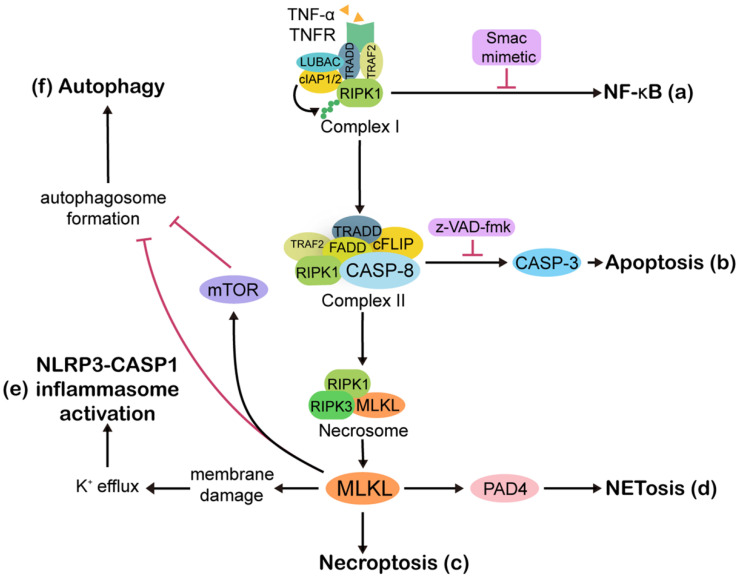
Recently, necroptosis, as a programmed cell death pathway, has drawn much attention as it has been implicated in multiple pathologies, especially in the field of inflammatory diseases. Pseudokinase mixed lineage kinase domain-like protein (MLKL) serves as a terminal-known obligate effector in the process of necroptosis. To date, the majority of research on MLKL has focused on its role in necroptosis, and the prevailing view has been that the sole function of MLKL is to mediate necroptosis. However, increasing evidence indicates that MLKL can serve as a regulator of many diseases via its non-necroptotic functions. These functions of MLKL shed light on its functional complexity and diversity. In this review, we briefly introduce the current state of knowledge regarding the structure of MLKL, necroptosis signaling, as well as cross-linkages among necroptosis and other regulated cell death pathways, and we particularly highlight recent progress related to newly identified functions and inhibitors of MLKL. These discussions promote a better understanding of the role of MLKL in diseases, which will foster efforts to pharmacologically target this molecule in clinical treatments.
最近,细胞程序性坏死途径坏死性凋亡作为一种细胞程序性死亡途径,由于其与多种病理学相关,尤其是在炎症性疾病领域,引起了广泛关注。假激酶混合谱系激酶结构域样蛋白(MLKL)作为坏死性凋亡过程中的终末必需效应因子。迄今为止,大多数关于 MLKL 的研究都集中在其在坏死性凋亡中的作用上,普遍认为 MLKL 的唯一功能是介导坏死性凋亡。然而,越来越多的证据表明,MLKL 可以通过其非坏死性凋亡功能作为许多疾病的调节剂。这些 MLKL 的功能阐明了其功能的复杂性和多样性。在这篇综述中,我们简要介绍了 MLKL 的结构、坏死性凋亡信号以及坏死性凋亡与其他受调控的细胞死亡途径之间的交联的最新研究现状,特别强调了最近发现的 MLKL 的新功能及其抑制剂的研究进展。这些讨论促进了对 MLKL 在疾病中的作用的更好理解,这将有助于努力在临床治疗中靶向该分子。