Department of Medicine (Cardiology), Emory University School of Medicine, Atlanta, GA, USA.
Department of Surgery, Carlyle Fraser Heart Center, Emory University School of Medicine, Atlanta, GA, USA.
Theranostics. 2021 Mar 4;11(10):4790-4808. doi: 10.7150/thno.57456. eCollection 2021.
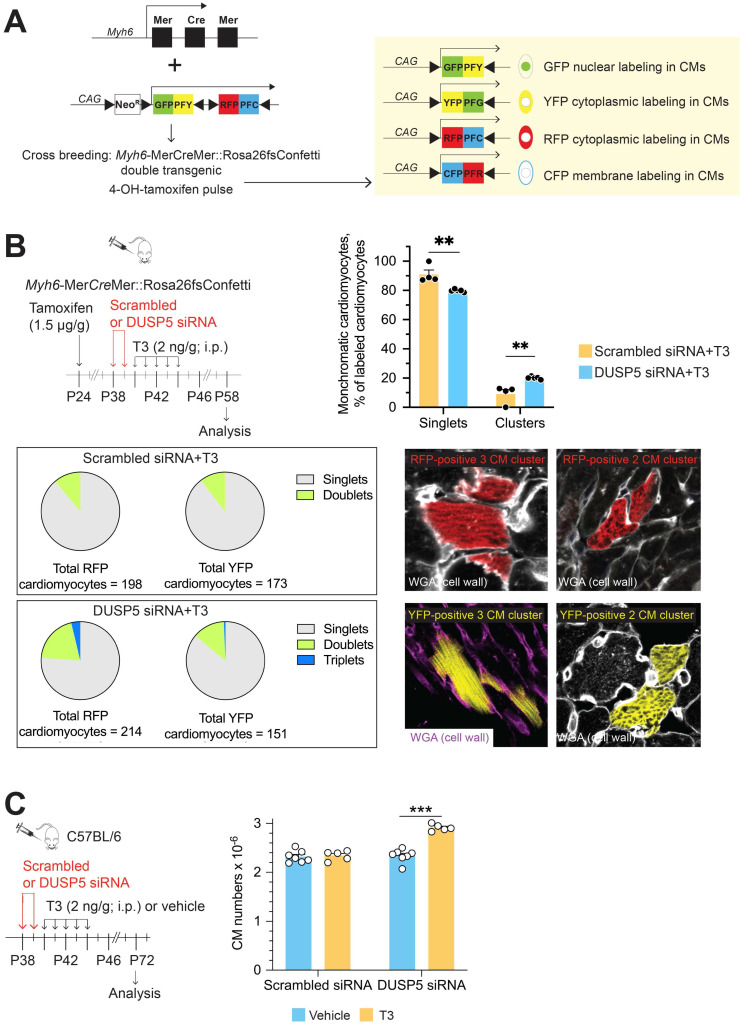
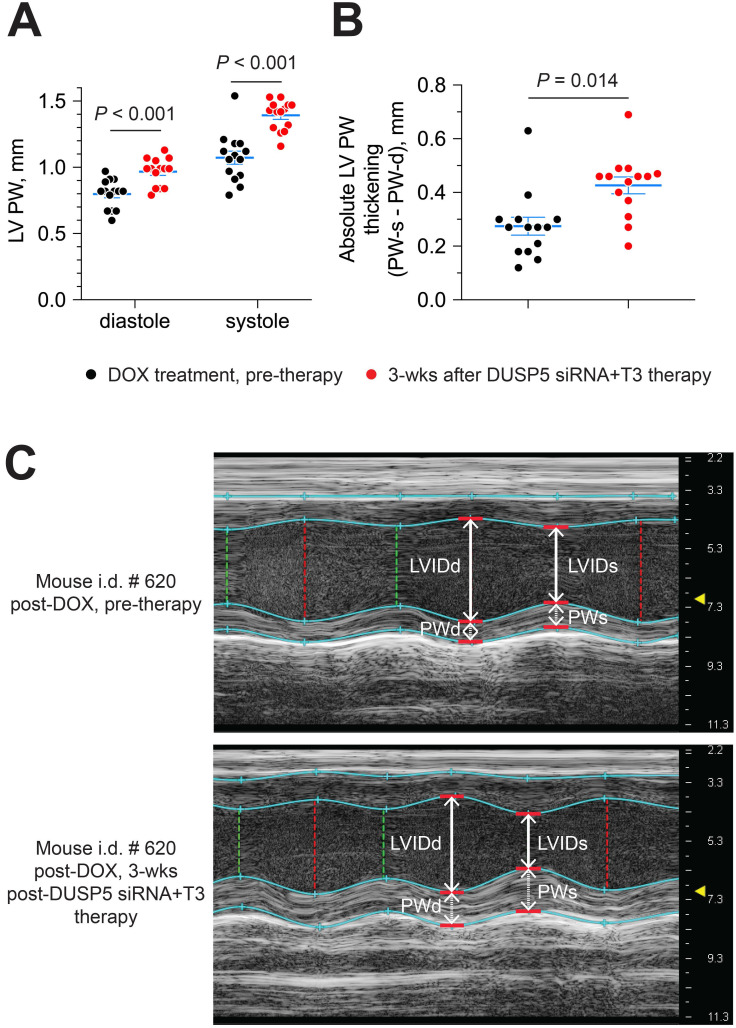
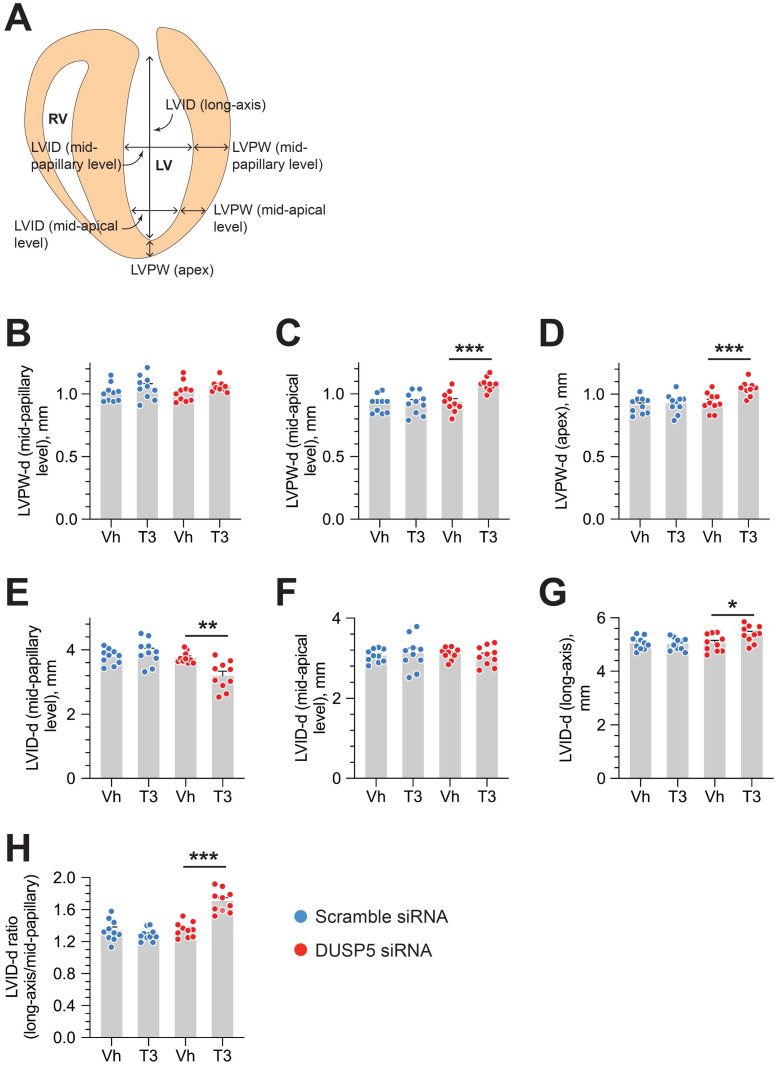
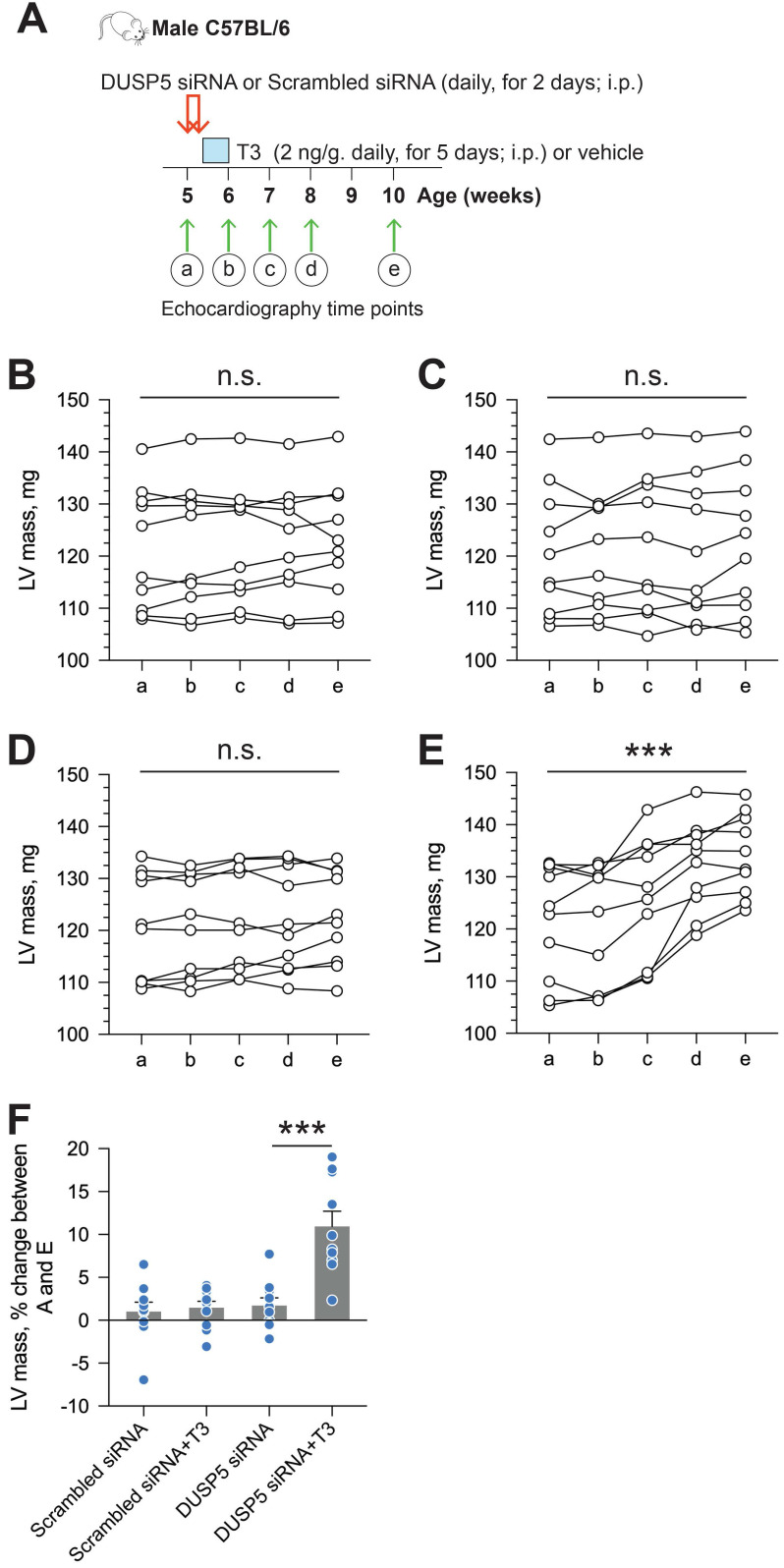
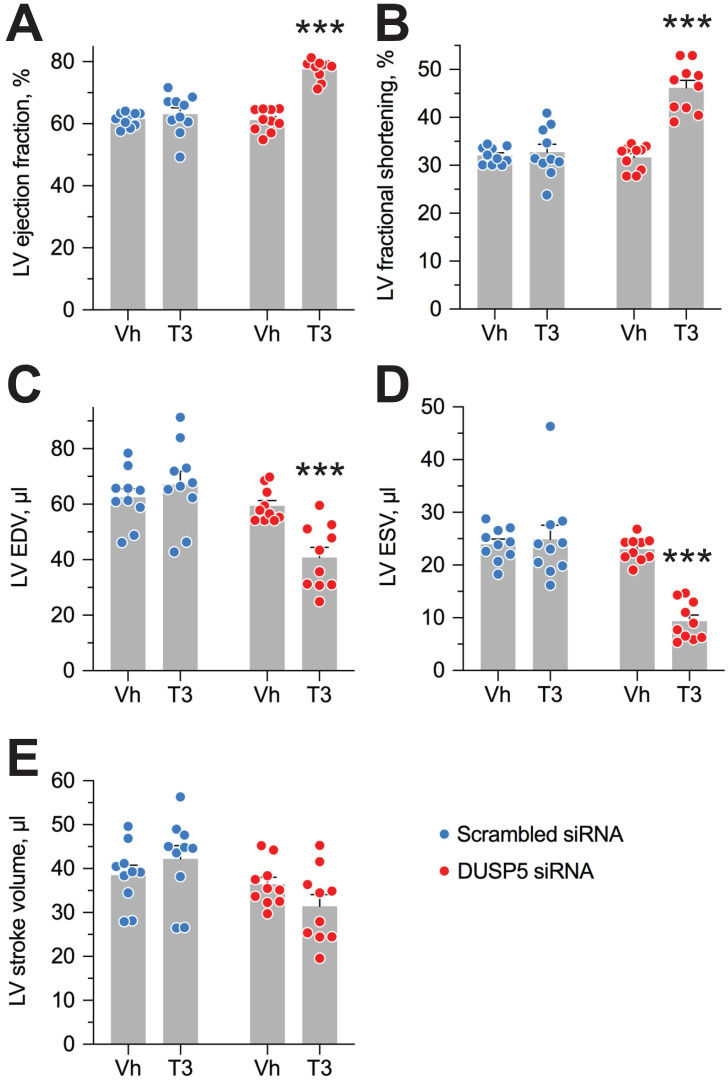
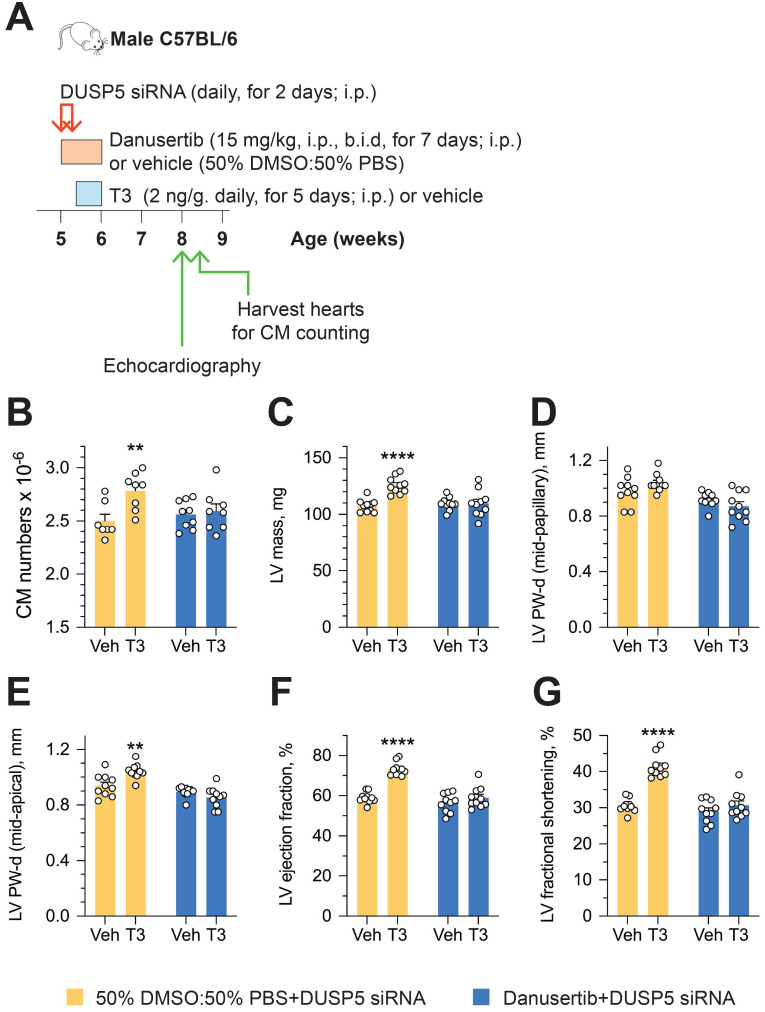
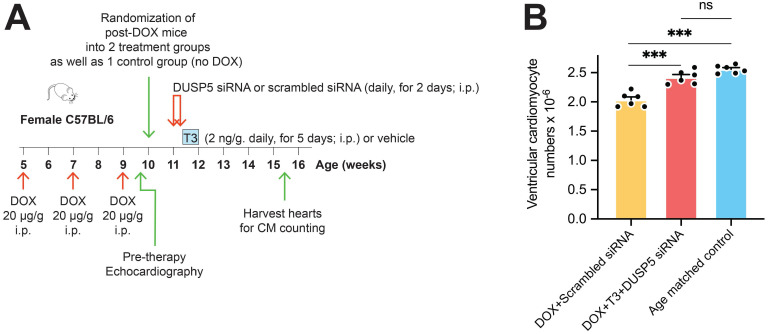
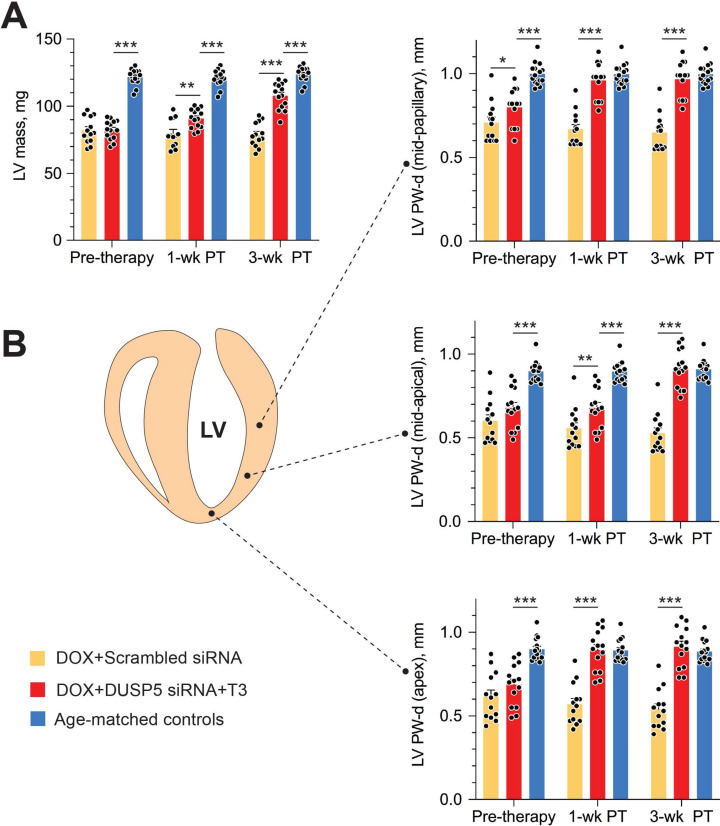
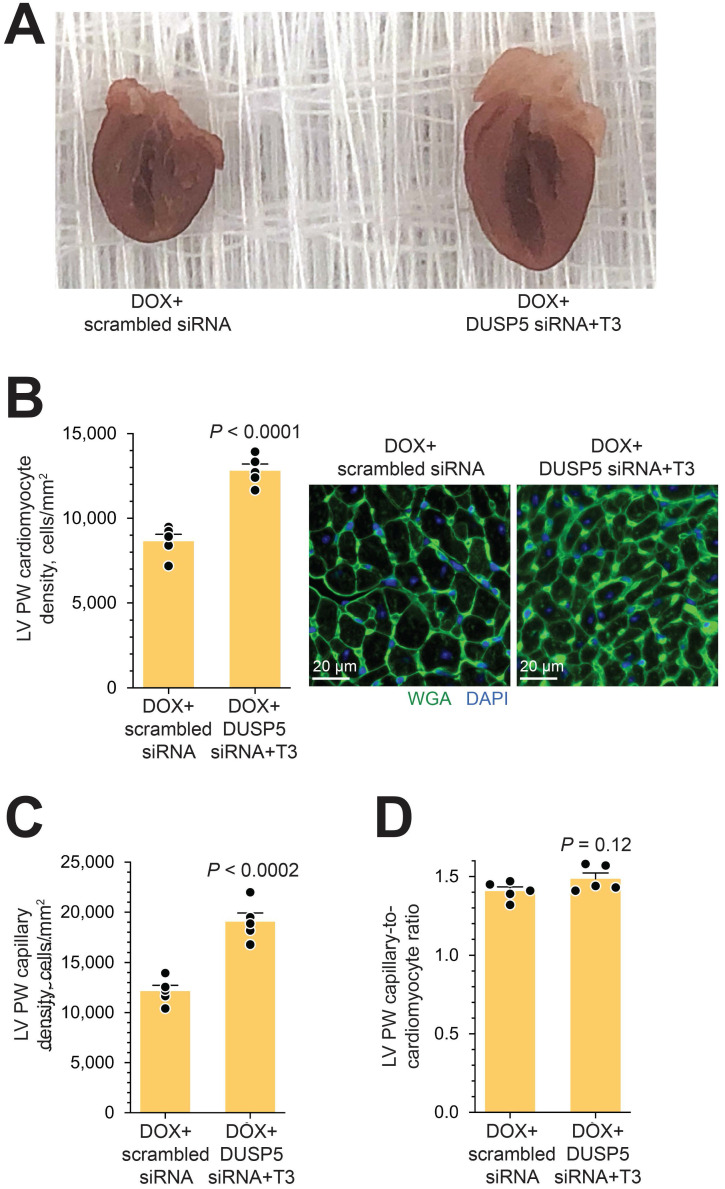
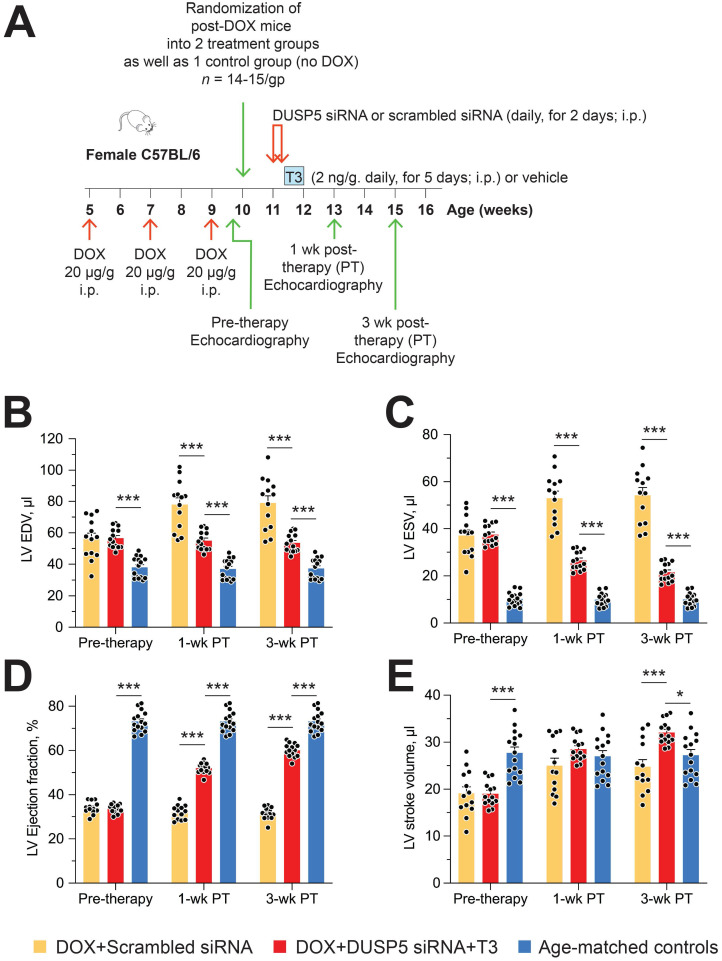
Doxorubicin is a widely used anticancer drug. However, its major side effect, cardiotoxicity, results from cardiomyocyte loss that causes left ventricle (LV) wall thinning, chronic LV dysfunction and heart failure. Cardiomyocyte number expansion by thyroid hormone (T3) during preadolescence is suppressed by the developmental induction of an ERK1/2-specific dual specificity phosphatase 5 (DUSP5). Here, we sought to determine if a brief course of combined DUSP5 suppression plus T3 therapy replaces cardiomyocytes lost due to preexisting doxorubicin injury and reverses heart failure. We used -jetPEI to deliver DUSP5 or scrambled siRNA to ~5-week-old C57BL6 mice followed by 5 daily injections of T3 (2 ng/µg body weight). Genetic lineage tracing using -MerMer::Rosa26fs-Confetti mice and direct cardiomyocyte number counting, along with cell cycle inhibition (danusertib), was used to test if this treatment leads to cardiomyocyte generation and improves LV contractile function. Three doses of doxorubicin (20 µg/g) given at 2-weekly intervals, starting at 5-weeks of age in C57BL6 mice, caused severe heart failure, as evident by a decrease in LV ejection fraction. Mice with an ~40 percentage point decrease in LVEF post-doxorubicin injury were randomized to receive either DUSP5 siRNA plus T3, or scrambled siRNA plus vehicle for T3. Age-matched mice without doxorubicin injury served as controls. In uninjured adult mice, transient therapy with DUSP5 siRNA and T3 increases cardiomyocyte numbers, which is required for the associated increase in LV contractile function, since both are blocked by danusertib. In mice with chronic doxorubicin injury, DUSP5 siRNA plus T3 therapy rebuilds LV muscle by increasing cardiomyocyte numbers, which reverses LV dysfunction and prevents progressive chamber dilatation. RNA therapies are showing great potential. Importantly, a GMP compliant -jetPEI system for delivery of siRNA is already in use in humans, as is T3. Given these considerations, our findings provide a potentially highly translatable strategy for addressing doxorubicin cardiomyopathy, a currently untreatable condition.
多柔比星是一种广泛应用的抗癌药物。然而,其主要的副作用——心脏毒性,是由心肌细胞损失引起的,导致左心室(LV)壁变薄、慢性 LV 功能障碍和心力衰竭。在青春期前,甲状腺激素(T3)通过细胞数量扩张,但这种扩张会被发育过程中 ERK1/2 特异性双重特异性磷酸酶 5(DUSP5)所抑制。在这里,我们试图确定短暂的联合 DUSP5 抑制和 T3 治疗是否能替代因预先存在的多柔比星损伤而丢失的心肌细胞,并逆转心力衰竭。我们使用 -jetPEI 将 DUSP5 或乱序 siRNA 递送至~5 周龄的 C57BL6 小鼠,随后进行 5 天每日 T3(2ng/µg 体重)注射。使用 -MerMer::Rosa26fs-Confetti 小鼠进行遗传谱系追踪和直接心肌细胞计数,以及细胞周期抑制(danusertib),以测试这种治疗是否会导致 心肌细胞生成并改善 LV 收缩功能。在 C57BL6 小鼠中,在 5 周龄时每 2 周给予 3 次 20µg/g 的多柔比星,导致严重的心力衰竭,这从 LV 射血分数的降低可以明显看出。在多柔比星损伤后 LVEF 降低约 40%的小鼠被随机分为接受 DUSP5 siRNA 加 T3 或乱序 siRNA 加 T3 载体治疗的两组。未受伤的年龄匹配的小鼠作为对照组。在未受伤的成年小鼠中,短暂的 DUSP5 siRNA 和 T3 治疗可增加心肌细胞数量,这对于相关的 LV 收缩功能增加是必需的,因为这两者都被 danusertib 阻断。在慢性多柔比星损伤的小鼠中,DUSP5 siRNA 加 T3 治疗通过增加心肌细胞数量来重建 LV 肌肉,从而逆转 LV 功能障碍并防止进行性腔室扩张。RNA 疗法具有巨大的潜力。重要的是,一种符合 GMP 标准的 -jetPEI 系统已用于人类递送 siRNA,T3 也是如此。考虑到这些因素,我们的研究结果为解决多柔比星心肌病(一种目前无法治疗的疾病)提供了一种潜在的高度可转化策略。