Key Laboratory of Laboratory Medical Diagnostics, Chinese Ministry of Education, Chongqing Medical University, Chongqing 400016, China.
Experimental Teaching Center of Basic Medicine Science, Chongqing Medical University, Chongqing 400016, China.
Theranostics. 2021 Mar 5;11(10):4975-4991. doi: 10.7150/thno.55074. eCollection 2021.
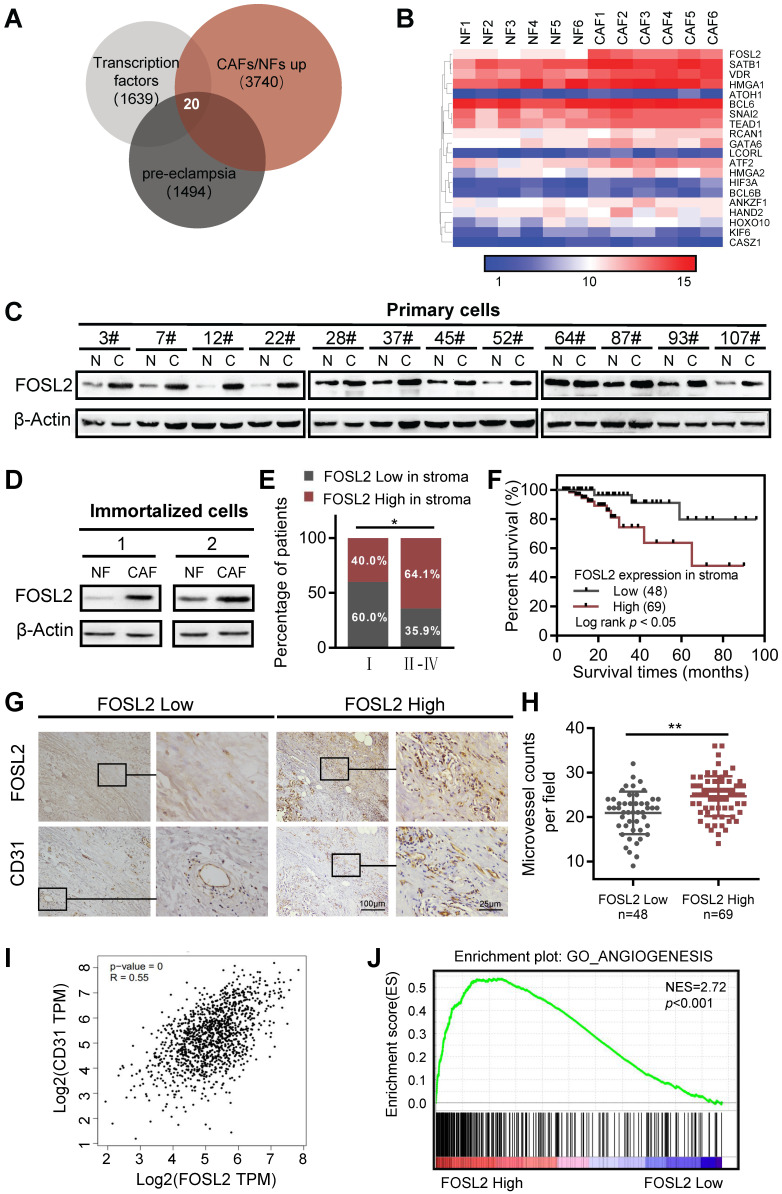
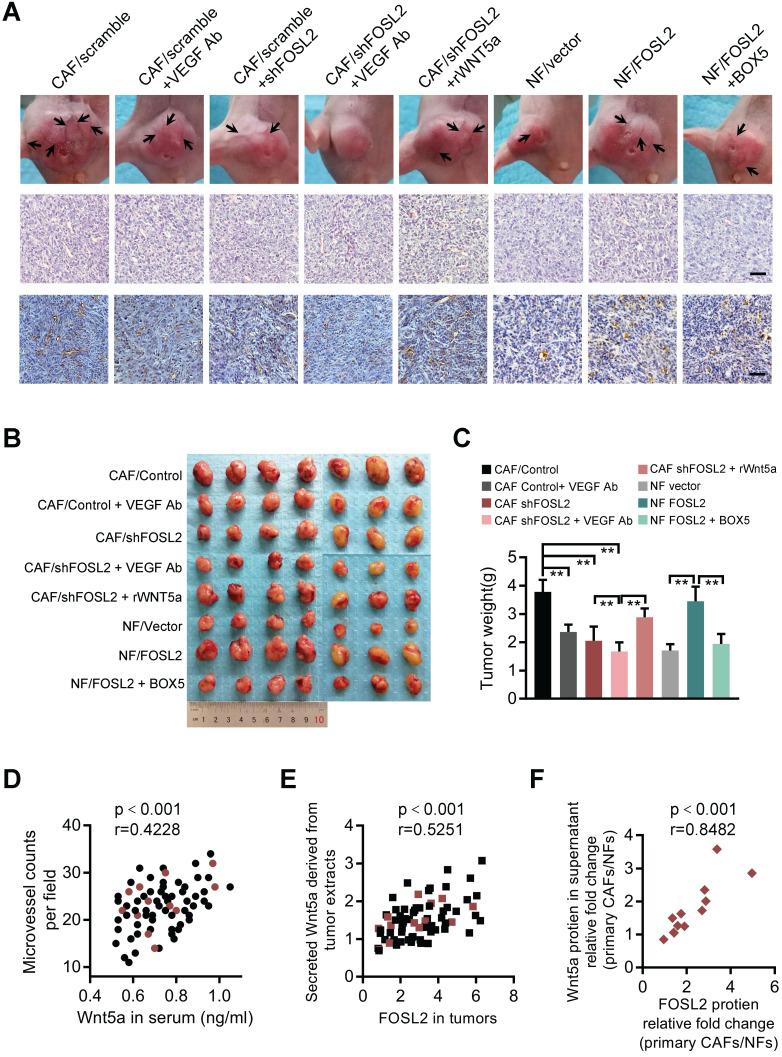
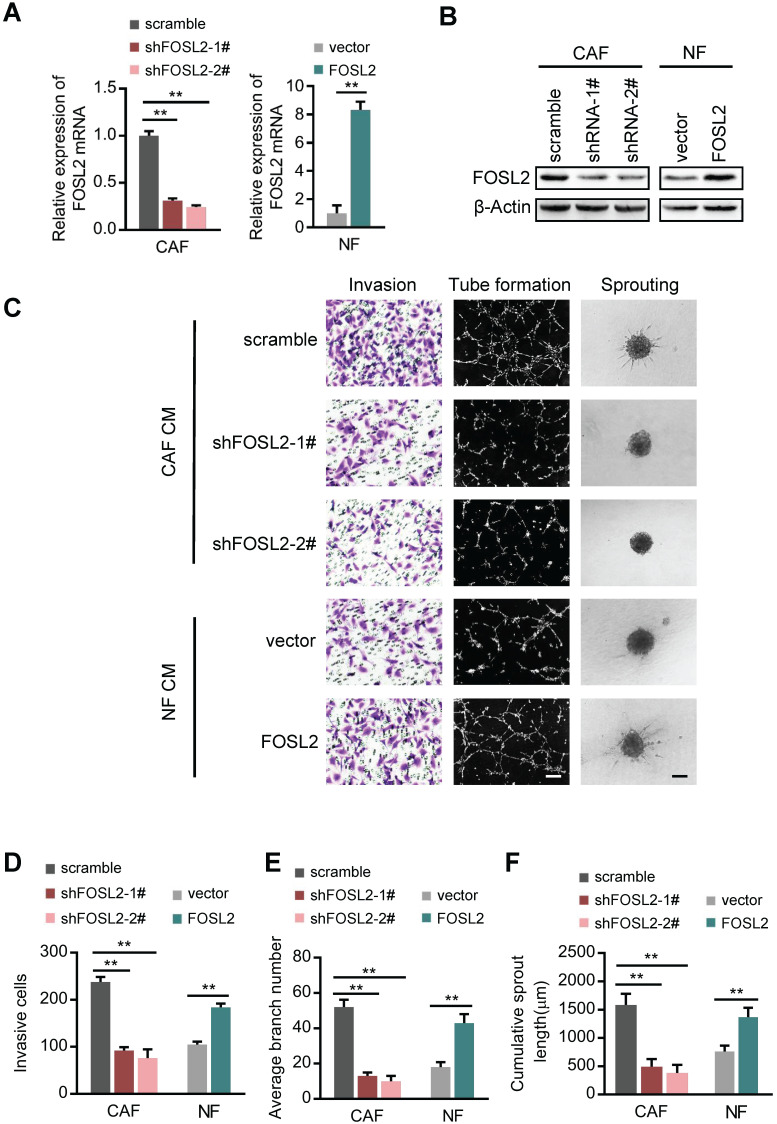
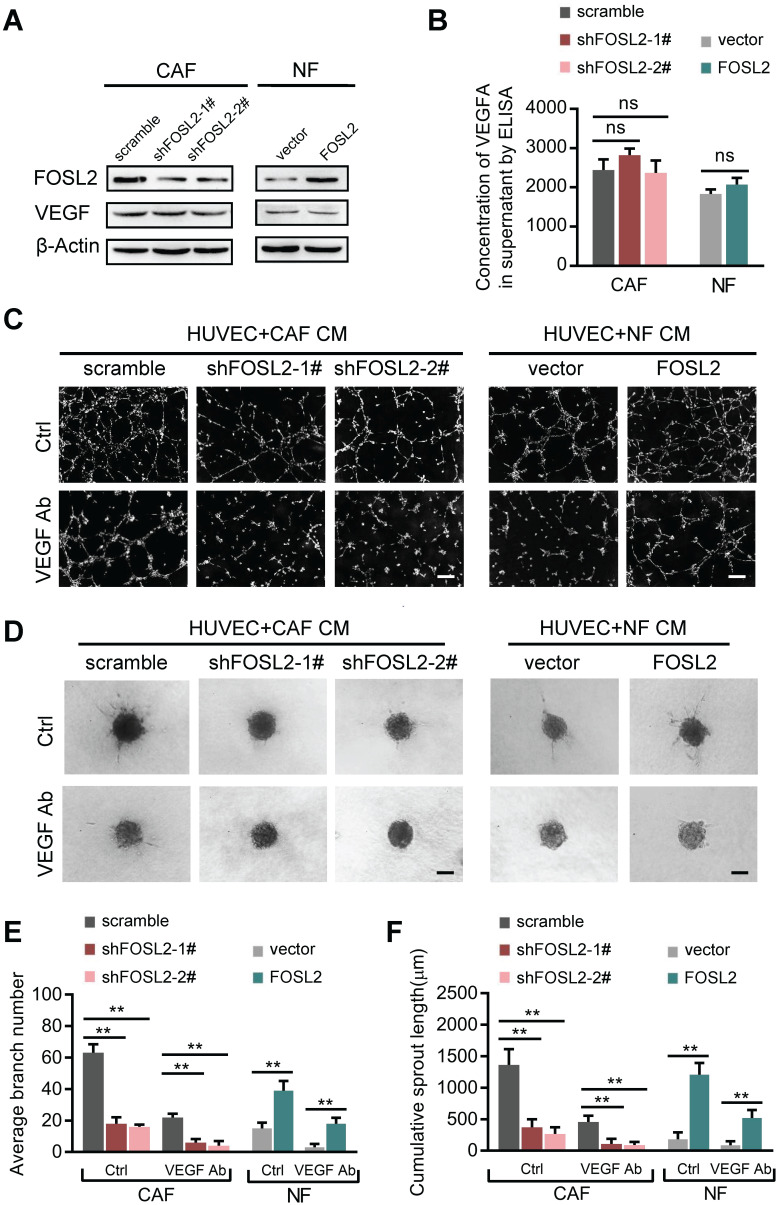
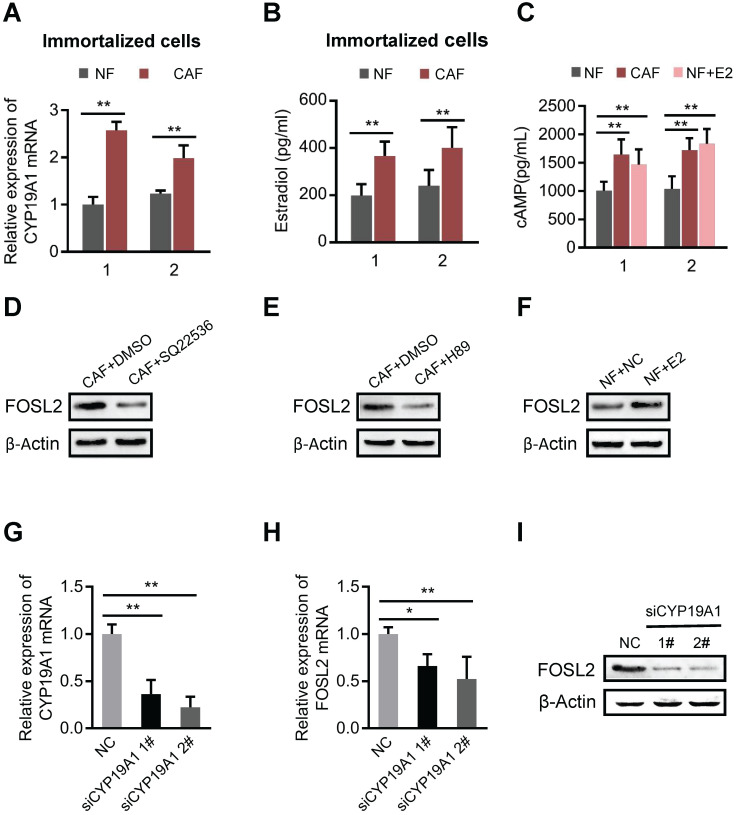
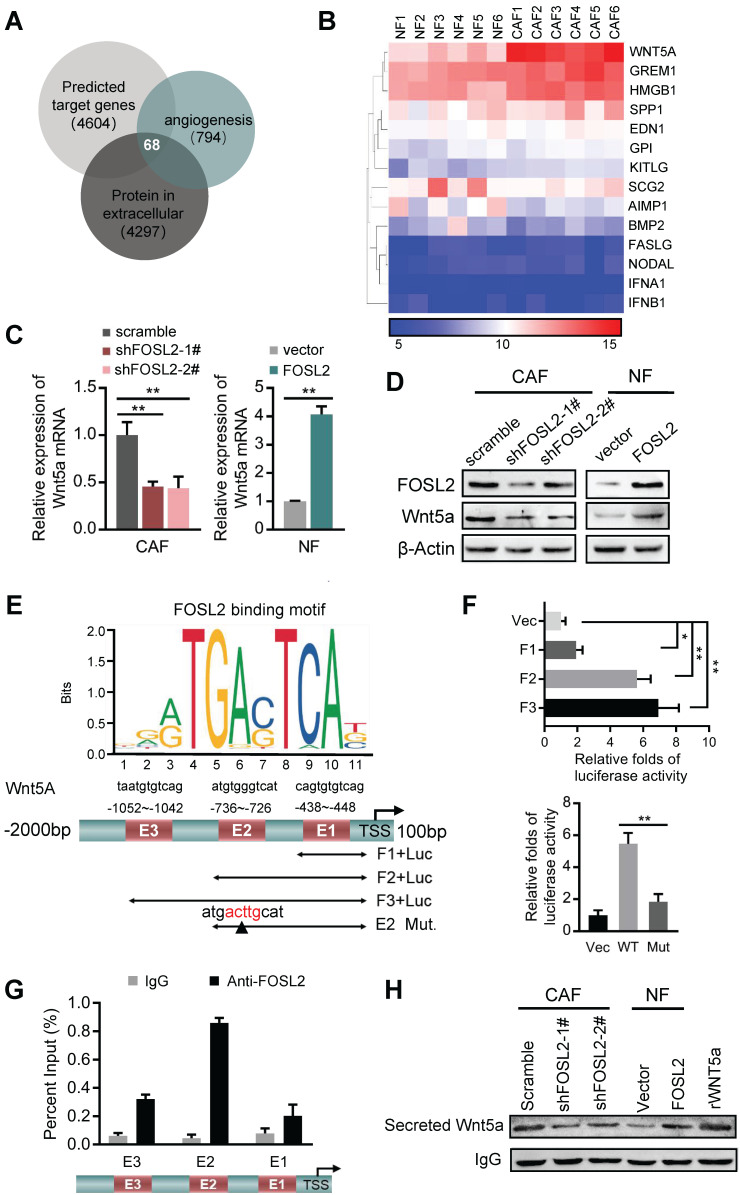
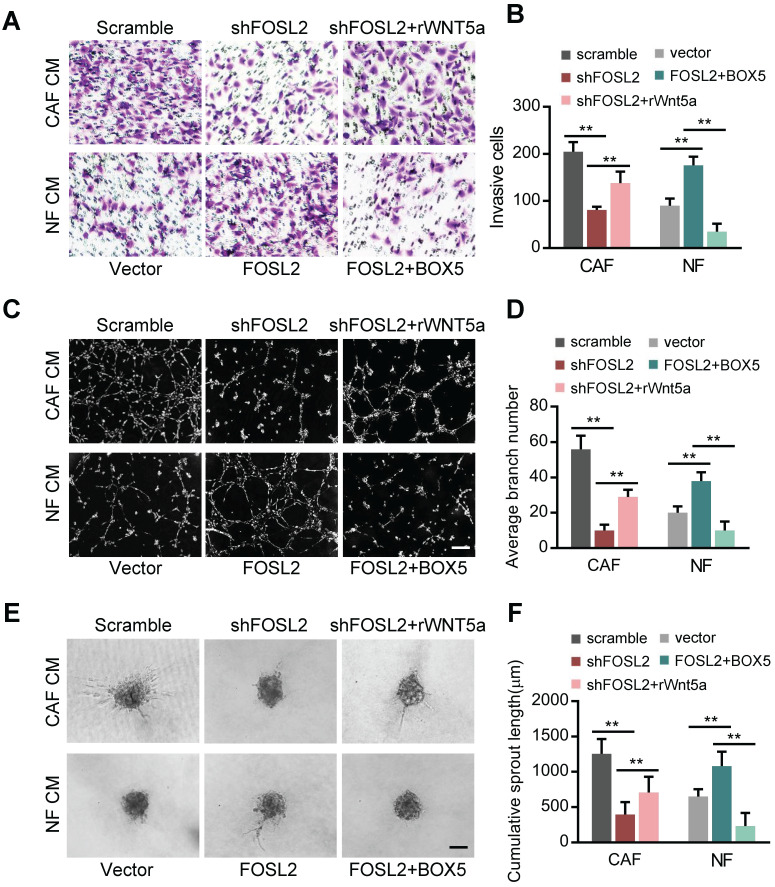
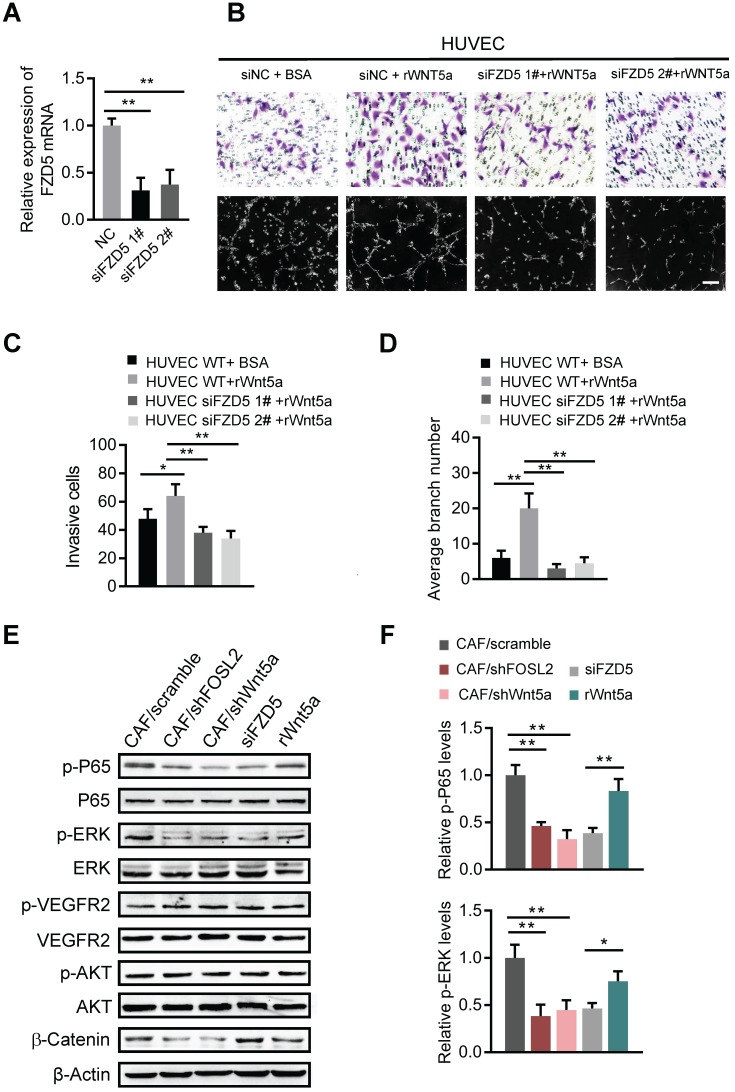
Cancer-associated fibroblasts (CAFs), a predominant component of the tumor microenvironment, contribute to aggressive angiogenesis progression. In clinical practice, traditional anti-angiogenic therapy, mainly anti-VEGF, provides extremely limited beneficial effects to breast cancer. Here, we reveal that FOS-like 2 (FOSL2), a transcription factor in breast CAFs, plays a critical role in VEGF-independent angiogenesis in stromal fibroblasts. FOSL2 and Wnt5a expression was assessed by qRT-PCR, western blotting and immunohistochemistry in primary and immortalized CAFs and clinical samples. FOSL2- or Wnt5a-silenced CAFs and FOSL2-overexpressing NFs were established to explore their proangiogenic effects. Invasion, tubule formation, three-dimensional sprouting assays, and orthotopic xenografts were conducted as angiogenesis experiments. FZD5/NF-κB/ERK signaling activation was evaluated by western blotting after blocking VEGF/VEGFR with an anti-VEGF antibody and axitinib. Dual luciferase reporter assays and chromatin immunoprecipitation were performed to test the role of FOSL2 in regulating Wnt5a expression, and Wnt5a in the serum of the patients was measured to assess its clinical diagnostic value for breast cancer patients. Enhanced FOSL2 in breast CAFs was significantly associated with angiogenesis and clinical progression in patients. The supernatant from CAFs highly expressing FOSL2 strongly promoted tube formation and sprouting of human umbilical vein endothelial cells (HUVECs) in a VEGF-independent manner and angiogenesis as well as tumor growth . Mechanistically, the enhanced FOSL2 in CAFs was regulated by estrogen/cAMP/PKA signaling. Wnt5a, a direct target of FOSL2, specifically activated FZD5/NF-κB/ERK signaling in HUVECs to promote VEGF-independent angiogenesis. In addition, a high level of Wnt5a was commonly detected in the serum of breast cancer patients and closely correlated with microvessel density in breast tumor tissues, suggesting a promising clinical value of Wnt5a for breast cancer diagnostics. FOSL2/Wnt5a signaling plays an essential role in breast cancer angiogenesis in a VEGF-independent manner, and targeting the FOSL2/Wnt5a signaling axis in CAFs may offer a potential option for antiangiogenesis therapy.
癌症相关成纤维细胞(CAFs)是肿瘤微环境的主要组成部分,促进了侵袭性血管生成的进展。在临床实践中,传统的抗血管生成治疗,主要是抗 VEGF,对乳腺癌的有益效果极为有限。在这里,我们揭示了乳腺癌 CAFs 中的转录因子 FOSL2 在基质成纤维细胞中独立于 VEGF 的血管生成中起着关键作用。通过 qRT-PCR、western blot 和免疫组化评估原代和永生化 CAFs 及临床样本中的 FOSL2 和 Wnt5a 表达。建立了 FOSL2 或 Wnt5a 沉默的 CAFs 和过表达 FOSL2 的 NF 细胞以探索它们的促血管生成作用。进行侵袭、小管形成、三维发芽测定和原位异种移植作为血管生成实验。用抗 VEGF 抗体和 axitinib 阻断 VEGF/VEGFR 后,通过 western blot 评估 FZD5/NF-κB/ERK 信号激活。进行双荧光素酶报告基因测定和染色质免疫沉淀以测试 FOSL2 在调节 Wnt5a 表达中的作用,以及测量患者血清中的 Wnt5a 以评估其对乳腺癌患者的临床诊断价值。增强的 FOSL2 在乳腺癌 CAFs 中与患者的血管生成和临床进展显著相关。高表达 FOSL2 的 CAFs 的上清液在 VEGF 独立的方式以及血管生成和肿瘤生长中强烈促进人脐静脉内皮细胞(HUVEC)的小管形成和发芽。机制上,CAFs 中增强的 FOSL2 受雌激素/cAMP/PKA 信号调节。Wnt5a 是 FOSL2 的直接靶标,特异性激活 HUVEC 中的 FZD5/NF-κB/ERK 信号以促进独立于 VEGF 的血管生成。此外,乳腺癌患者的血清中通常检测到高水平的 Wnt5a,与乳腺癌组织中的微血管密度密切相关,表明 Wnt5a 对乳腺癌诊断具有有前途的临床价值。FOSL2/Wnt5a 信号在 VEGF 独立的方式在乳腺癌血管生成中起重要作用,靶向 CAFs 中的 FOSL2/Wnt5a 信号轴可能为抗血管生成治疗提供潜在选择。