Institute for Biomedical Research and Innovation, National Research Council of Italy, Palermo, Italy.
IRCCS SDN, Naples, Italy.
Mol Genet Genomic Med. 2021 May;9(5):e1659. doi: 10.1002/mgg3.1659. Epub 2021 Mar 23.
Although enzyme replacement therapy with agalsidase beta resulted in a variety of clinical benefits, life-long biweekly intravenous infusion may impact on patients' quality of life. Moreover, regular infusions are time-consuming: although a stepwise shortening of infusion duration is allowed up to a minimum of 1.5 hr, in most centers it remains ≥3 hr, and no data exists about the safety and tolerability of agalsidase beta administration at maximum tolerated infusion rate.
In this study, we reported our experience with a stepwise infusion rate escalation protocol developed in our center in a cohort of 53 Fabry patients (both already receiving and treatment-naΪve), and explored factors predictive for the infusion rate increase tolerability.
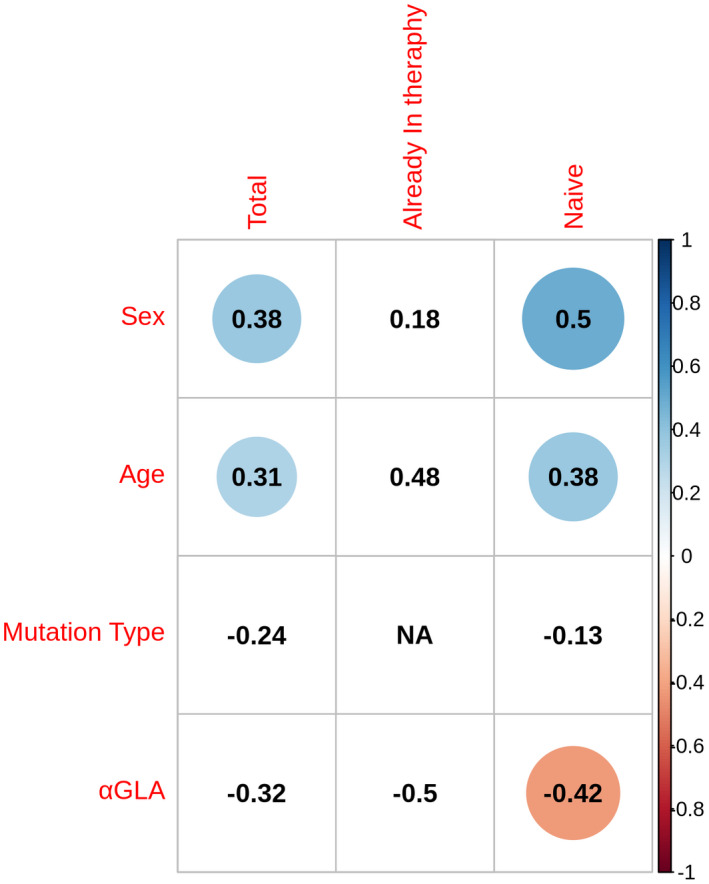
Fifty-two patients (98%) reduced infusion duration ≤3 hr; of these, 38 (72%) even reached a duration ≤2 hr. We found a significant difference between the mean duration reached by already treated and naΪve patients (p < .01). More severely affected patients (male patients and those with lower enzyme activity) received longer infusions for higher risk of infusion-associated reactions (IARs). A significant correlation between anti-agalsidase antibodies and IARs was found.
Our infusion rate escalation protocol is safe and could improve patient compliance, satisfaction and quality of life.
尽管β-半乳糖苷酶替代疗法有各种临床获益,但终身每两周静脉输注可能会影响患者的生活质量。此外,定期输注很耗时:虽然输注时间可以逐步缩短至 1.5 小时,但在大多数中心仍≥3 小时,而且关于以最大耐受输注率给予β-半乳糖苷酶的安全性和耐受性尚无数据。
在这项研究中,我们报告了我们在中心开发的逐步输注速率递增方案在 53 例法布瑞患者(已接受治疗和未接受治疗)队列中的经验,并探讨了可预测输注速率增加耐受性的因素。
52 例患者(98%)将输注时间缩短至≤3 小时;其中 38 例(72%)甚至达到≤2 小时。我们发现已接受治疗和未接受治疗患者的平均持续时间有显著差异(p<.01)。男性患者和酶活性较低的患者输注时间更长,因为输注相关反应(IAR)的风险更高。我们发现抗β-半乳糖苷酶抗体与 IAR 之间存在显著相关性。
我们的输注速率递增方案是安全的,可以提高患者的依从性、满意度和生活质量。