Laval University, Quebec City, QC, Canada.
CHU de Québec-Université Laval Research Center, Quebec City, QC, Canada.
Mol Genet Genomic Med. 2021 May;9(5):e1654. doi: 10.1002/mgg3.1654. Epub 2021 Mar 23.
There is little evidence on the performance of non-invasive prenatal testing (NIPT) for the detection of fetal sex chromosomal imbalances. In this review, we aimed to appraise and synthesize the literature on the performance of NIPT for the prenatal detection of fetal sex chromosome aneuploidies.
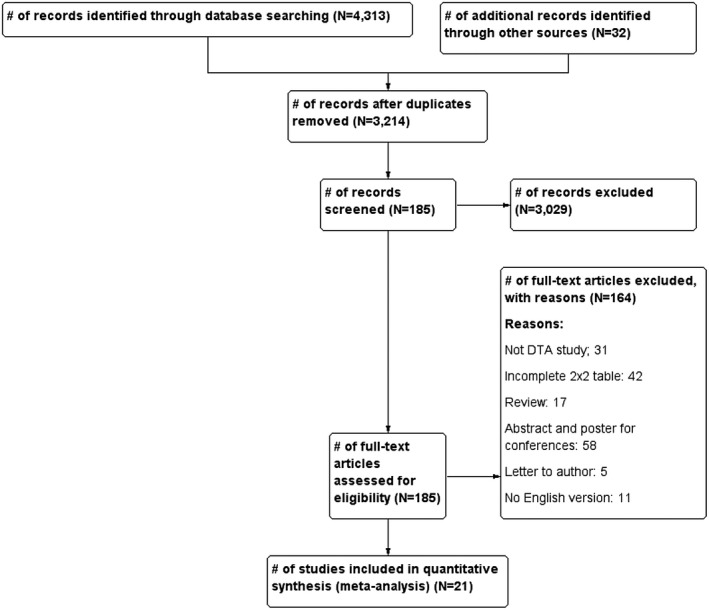
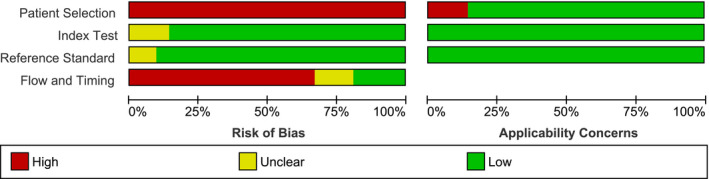
We performed our literature search in PubMed, Embase, Cochrane Library, Web of Science, and CADTH. Study selection and data extraction were performed by two reviewers independently. There were no restrictions on the study population. Meta-analyses were performed with "R" software. Pooled sensitivities and specificities with their 95% CI were estimated using a random-effects model. Heterogeneity between studies was assessed by a Q test.
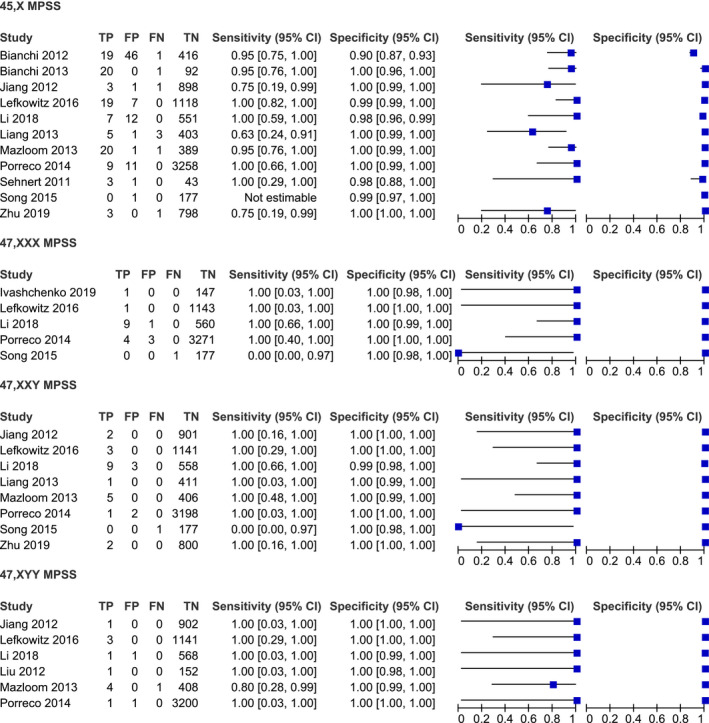
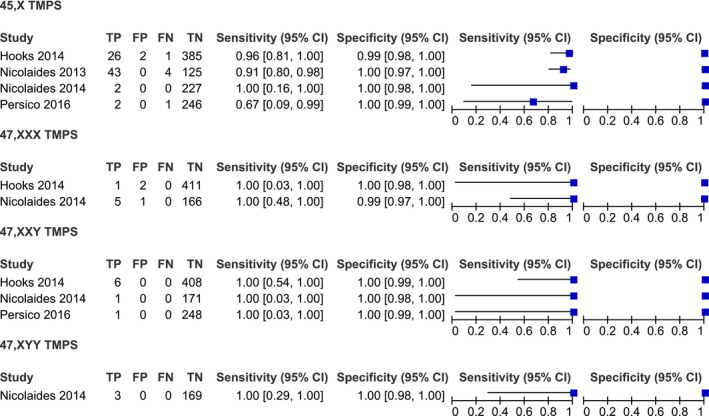
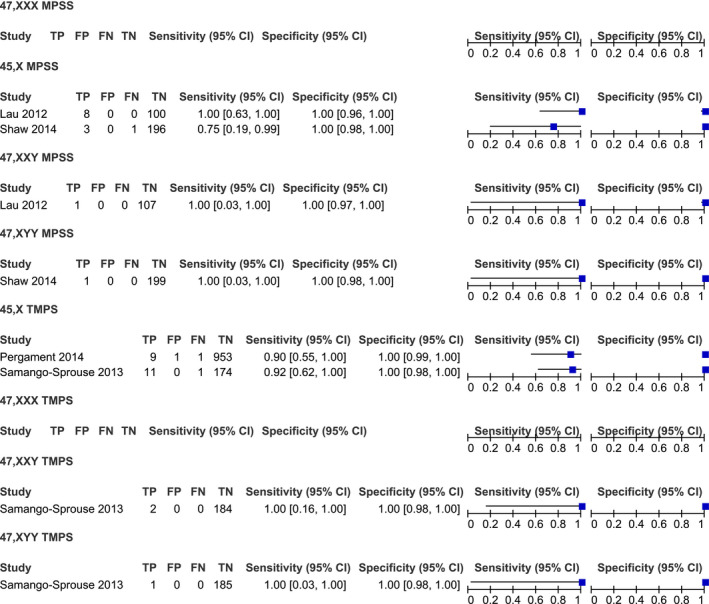
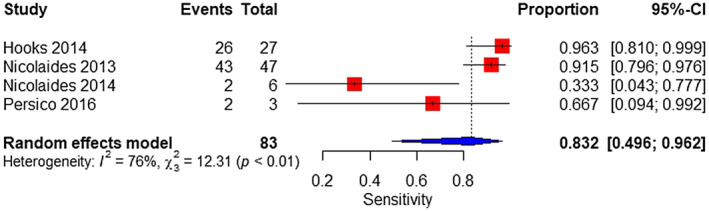
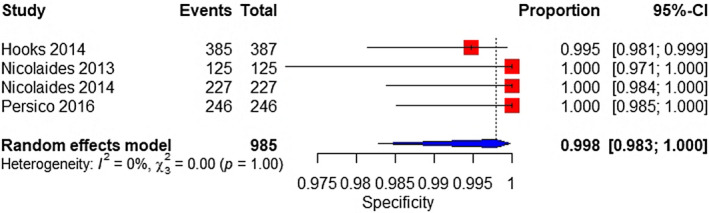
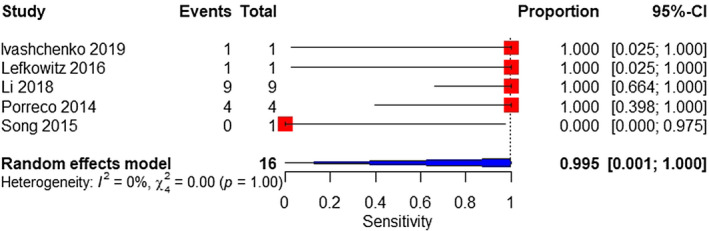
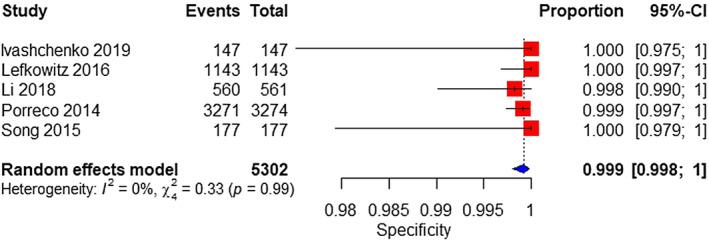
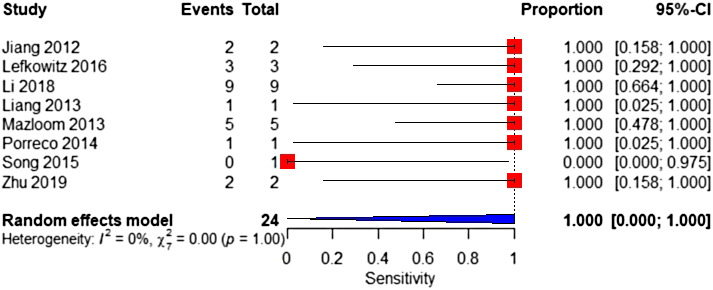
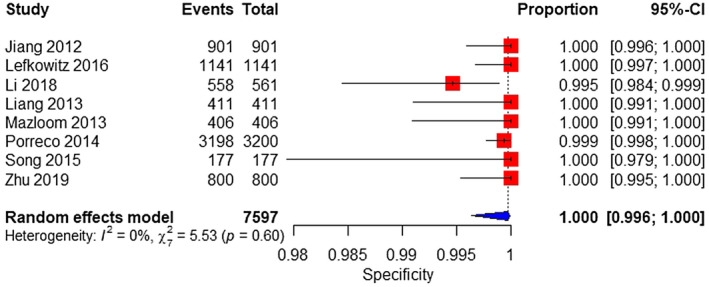
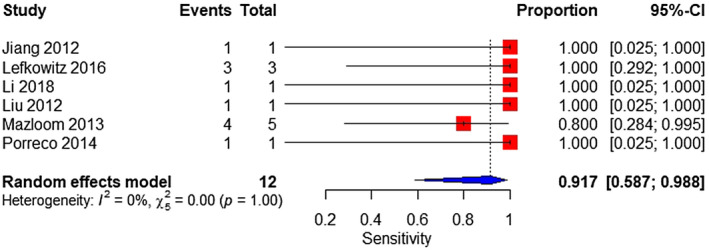
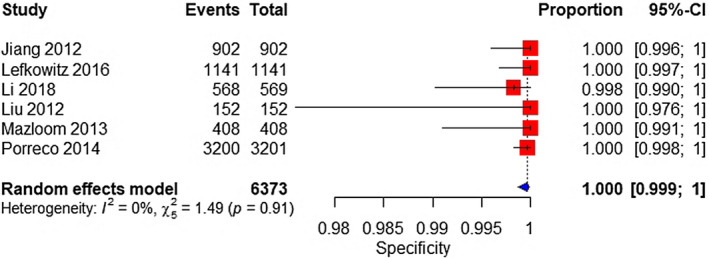
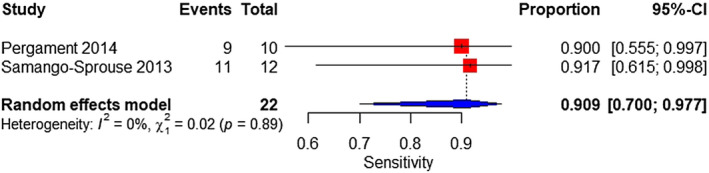
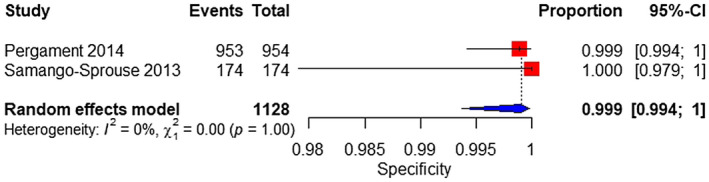
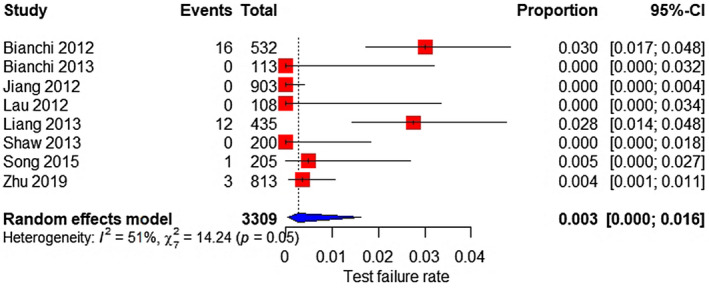
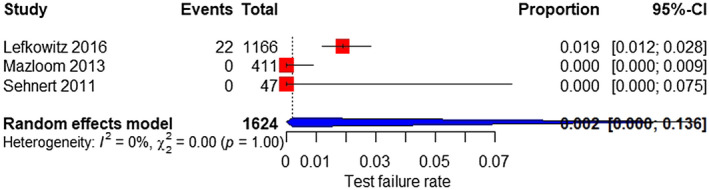
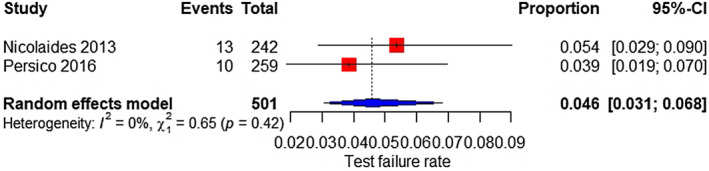
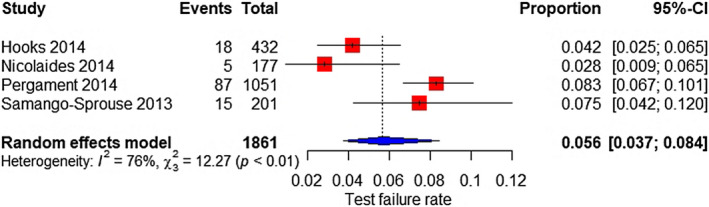
Based on 11 studies in high prior risk pregnancies, including 116 affected fetuses in aggregate, Massively Parallel Shotgun Sequencing (MPSS) had a sensitivity of 93.9% (95% CI 84.1%, 97.8%) and a specificity of 99.6% (95% CI 98.7%, 99.9%) for the detection of 45,X. Based on four studies in high-risk pregnancies, with 83 affected fetuses in aggregate, Targeted Massively Parallel Sequencing (TMPS) had a sensitivity of 83.2% (95% CI 49.6%, 96.2%) and specificity was 99.8% (95% CI 98.3%, 100%) for the detection of 45,X. In mixed-risk pregnancies, the sensitivity of TMPS for the detection of 45,X was 90.9% (2 studies; 95% CI 70%, 97.7%) and specificity 99.9% (2 studies; 95% CI 99.4%, 100%); MPSS data were not available in such pregnancies. Based on smaller numbers of studies, and small numbers of affected fetuses in either high-risk or mixed-risk pregnancies (using either MPSS or TMPS), the sensitivities and specificities were equal to or greater than 76.2% for 47,XXX, 47,XXY and 47, XYY. The test failures for SCAs were 0.2% (95% CI 0%, 13.6%) for MPSS and 5.6% (95% CI 3.7%, 8.4%) for TMPS.
High-quality studies are still desirable in order to estimate the performance of NIPT for the detection of sex chromosome imbalances.
关于非侵入性产前检测(NIPT)在检测胎儿性染色体不平衡方面的性能,目前证据有限。在这项综述中,我们旨在评估和综合 NIPT 用于产前检测胎儿性染色体非整倍体的文献。
我们在 PubMed、Embase、Cochrane 图书馆、Web of Science 和 CADTH 中进行了文献检索。两名评审员独立进行了研究选择和数据提取。对研究人群没有限制。使用“R”软件进行荟萃分析。使用随机效应模型估计合并的敏感性和特异性及其 95%CI。通过 Q 检验评估研究之间的异质性。
基于 11 项高先证风险妊娠研究,共纳入 116 例受累胎儿,大规模平行测序(MPSS)检测 45,X 的敏感性为 93.9%(95%CI 84.1%,97.8%),特异性为 99.6%(95%CI 98.7%,99.9%)。基于 4 项高风险妊娠研究,共纳入 83 例受累胎儿,靶向大规模平行测序(TMPS)检测 45,X 的敏感性为 83.2%(95%CI 49.6%,96.2%),特异性为 99.8%(95%CI 98.3%,100%)。在混合风险妊娠中,TMPS 检测 45,X 的敏感性为 90.9%(2 项研究;95%CI 70%,97.7%),特异性为 99.9%(2 项研究;95%CI 99.4%,100%);此类妊娠中 MPSS 数据不可用。基于较小数量的研究,以及高风险或混合风险妊娠中受累胎儿数量较少(使用 MPSS 或 TMPS),47,XXX、47,XXY 和 47,XYY 的敏感性和特异性均等于或大于 76.2%。SCAs 的检测失败率为 MPSS 为 0.2%(95%CI 0%,13.6%),TMPS 为 5.6%(95%CI 3.7%,8.4%)。
仍需要高质量的研究来估计 NIPT 检测性染色体不平衡的性能。