Postgraduate School in Radiodiagnostics, Università del Piemonte Orientale, Novara, Italy.
Postgraduate School in Radiodiagnostics, Università degli Studi di Torino, Torino, Italy.
Eur Radiol. 2021 Sep;31(9):7077-7087. doi: 10.1007/s00330-021-07740-0. Epub 2021 Mar 23.
To assess changes in working patterns and education experienced by radiology residents in Northwest Italy during the COVID-19 pandemic.
An online questionnaire was sent to residents of 9 postgraduate schools in Lombardy and Piedmont, investigating demographics, changes in radiological workload, involvement in COVID-19-related activities, research, distance learning, COVID-19 contacts and infection, changes in training profile, and impact on psychological wellbeing. Descriptive and χ statistics were used.
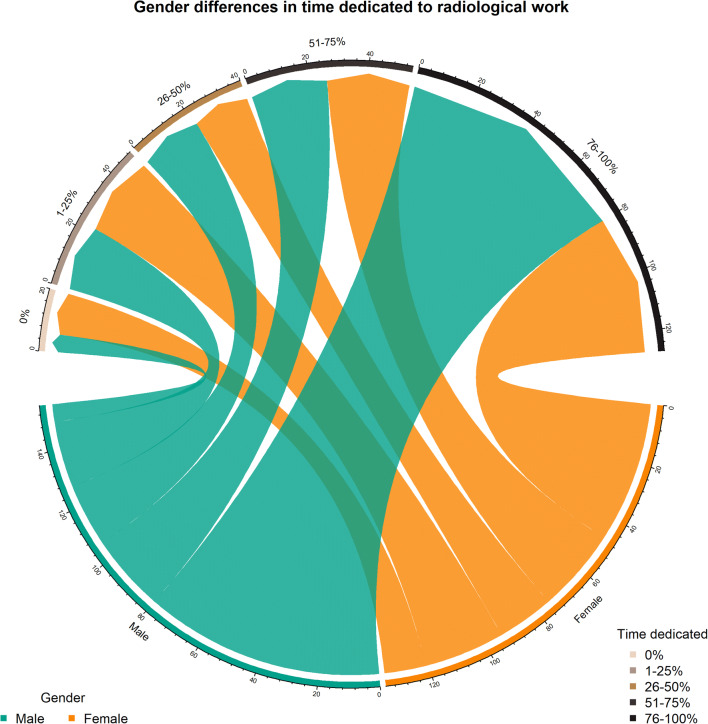
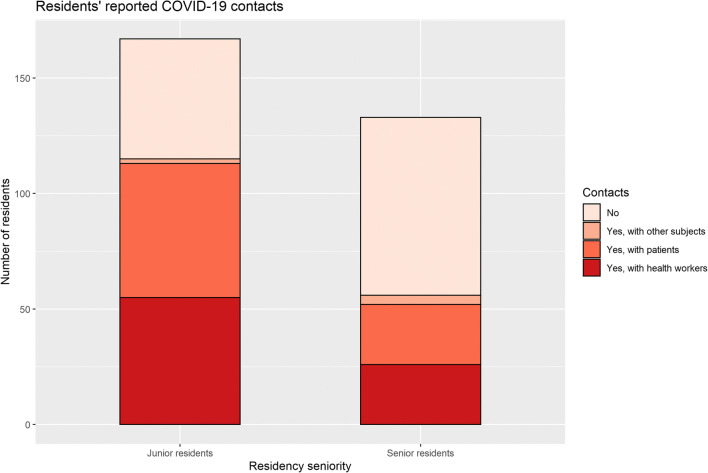
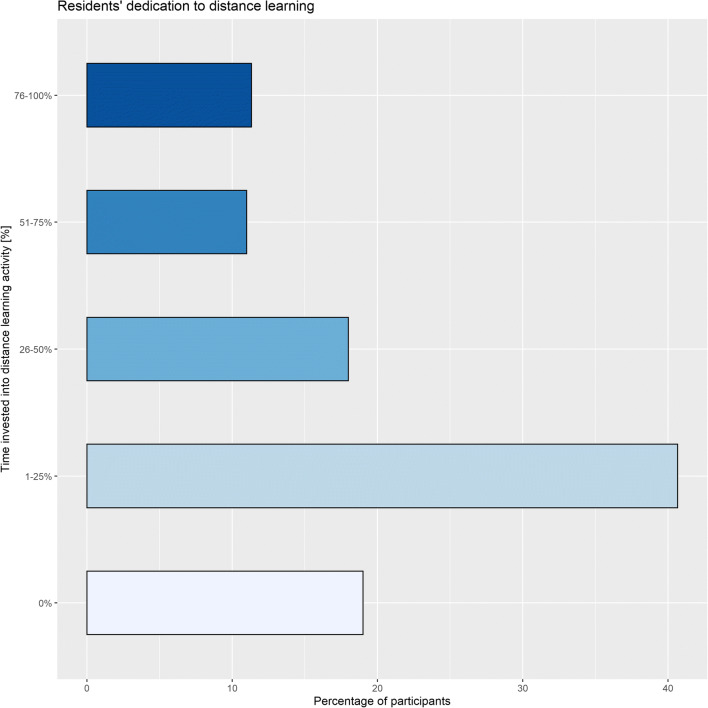
Among 373 residents invited, 300 (80%) participated. Between March and April 2020, 44% (133/300) of respondents dedicated their full time to radiology; 41% (124/300) engaged in COVID-19-related activities, 73% (90/124) of whom working in COVID-19 wards; 40% (121/300) dedicated > 25% of time to distance learning; and 66% (199/300) were more involved in research activities than before the pandemic. Over half of residents (57%, 171/300) had contacts with COVID-19-positive subjects, 5% (14/300) were infected, and 8% (23/300) lost a loved one due to COVID-19. Only 1% (3/300) of residents stated that, given the implications of this pandemic scenario, they would not have chosen radiology as their specialty, whereas 7% (22/300) would change their subspecialty. The most common concerns were spreading the infection to their loved ones (30%, 91/300), and becoming sick (7%, 21/300). Positive changes were also noted, such as being more willing to cooperate with other colleagues (36%, 109/300).
The COVID-19 pandemic changed radiology residents' training programmes, with distance learning, engaging in COVID-19-related activities, and a greater involvement in research becoming part of their everyday practice.
• Of 300 participants, 44% were fully dedicated to radiological activity and 41% devoted time to COVID-19-related activities, 73% of whom to COVID-19 wards. • Distance learning was substantial for 40% of residents, and 66% were involved in research activities more than before the COVID-19 pandemic. • Over half of residents were exposed to COVID-19 contacts and less than one in twenty was infected.
评估 COVID-19 大流行期间意大利西北部放射科住院医师工作模式和教育经历的变化。
向伦巴第和皮埃蒙特 9 个研究生院校的住院医师发送在线问卷,调查人口统计学、放射科工作量变化、参与 COVID-19 相关活动、研究、远程学习、COVID-19 接触和感染、培训概况变化以及对心理健康的影响。使用描述性和 χ 统计数据。
在邀请的 373 名住院医师中,有 300 名(80%)参与了调查。在 2020 年 3 月至 4 月期间,44%(133/300)的受访者全职从事放射科工作;41%(124/300)参与了 COVID-19 相关活动,其中 73%(90/124)在 COVID-19 病房工作;40%(121/300)投入超过 25%的时间进行远程学习;66%(199/300)比大流行前更积极参与研究活动。超过一半的住院医师(57%,171/300)与 COVID-19 阳性患者有接触,5%(14/300)感染,8%(23/300)因 COVID-19 失去亲人。只有 1%(3/300)的住院医师表示,鉴于这种大流行情况的影响,他们不会选择放射科作为自己的专业,而 7%(22/300)会改变自己的专业。最常见的担忧是将感染传播给亲人(30%,91/300)和生病(7%,21/300)。还注意到了一些积极的变化,例如更愿意与其他同事合作(36%,109/300)。
COVID-19 大流行改变了放射科住院医师的培训计划,远程学习、参与 COVID-19 相关活动以及更多地参与研究成为他们日常实践的一部分。
在 300 名参与者中,44% 全职从事放射科活动,41% 投入时间参与 COVID-19 相关活动,73% 参与 COVID-19 病房。
远程学习对 40%的住院医师来说是大量的,66%的住院医师比 COVID-19 大流行前更多地参与研究活动。
超过一半的住院医师接触过 COVID-19 接触者,不到五分之一的人感染。