Department of Radiology, Norrköping, Sweden.
Department of Health, Medicine and Caring Sciences, Linköping University, Norrköping, Sweden.
J Hand Surg Eur Vol. 2021 Jul;46(6):621-625. doi: 10.1177/17531934211001730. Epub 2021 Mar 24.
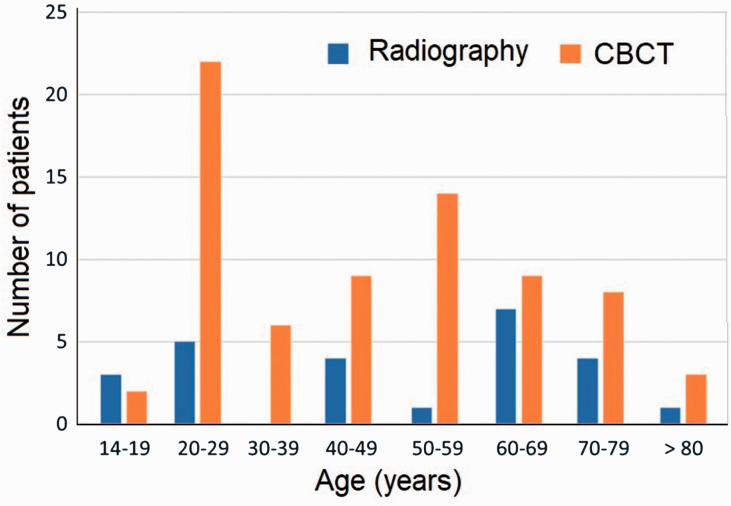
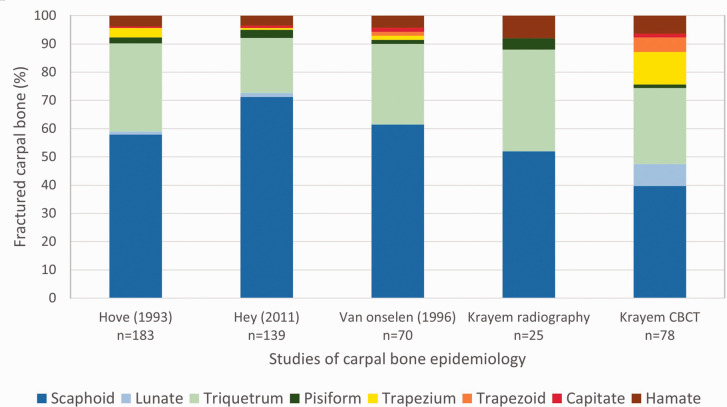
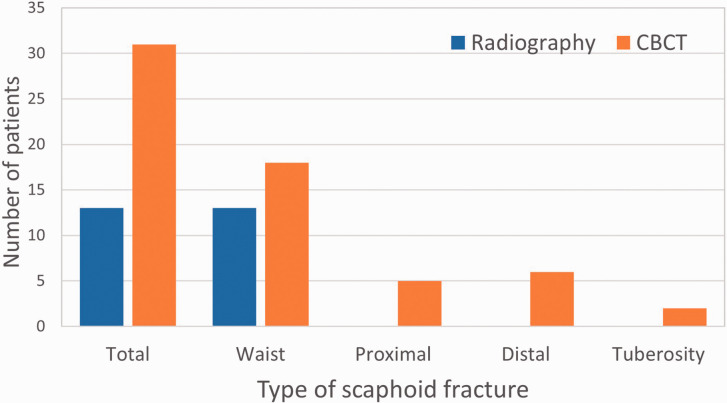
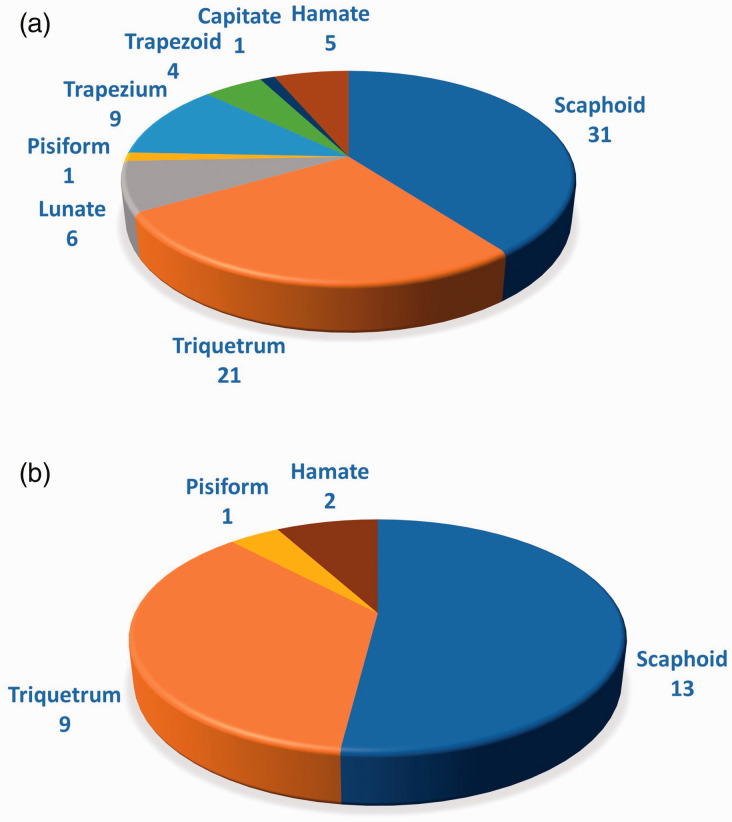
In 2016, our primary modality for radiological examination of wrist trauma, was changed from radiography to cone-beam computed tomography (CBCT). This is a retrospective survey of carpal bone fractures detected by CBCT during 6 months in 2016/2017, compared with those found on conventional radiographs during 6 months in 2013/2014. The incidence of carpal fractures was three times higher during the CBCT period (92/100,000 per year) compared with the radiography period (29/100,000 per year) and the spectrum of anatomical locations was different between the two periods, with fractures of the lunate ( = 6), trapezium ( = 9), trapezoid ( = 4) and capitate ( = 1) detected by CBCT, in contrast to no fractures of these bones diagnosed during the 6 months radiography period. We suggest a more liberal use of CBCT for examination of wrist trauma considering the benefits of being able to give patients a correct primary diagnosis, treatment and prognosis. III.
2016 年,我们对腕部创伤进行放射学检查的主要方式从 X 光摄影改为锥形束 CT(CBCT)。这是一项回顾性调查,比较了 2016/2017 年 CBCT 检查 6 个月期间发现的腕骨骨折与 2013/2014 年 X 光摄影检查 6 个月期间发现的骨折。与 X 光摄影检查相比,CBCT 检查期间腕骨骨折的发生率高三倍(每年每 10 万人中有 92 例),且两个时期的解剖部位分布不同,CBCT 检查发现有月骨( = 6 例)、舟骨( = 9 例)、大多角骨( = 4 例)和头状骨( = 1 例)骨折,而在 X 光摄影检查的 6 个月期间未诊断出这些骨骼的骨折。鉴于能够为患者提供正确的初步诊断、治疗和预后,我们建议更自由地使用 CBCT 来检查腕部创伤。III。