Kaneko Yutaro, Hatano Ryo, Hirota Naoto, Isambert Nicolas, Trillet-Lenoir Véronique, You Benoit, Alexandre Jérôme, Zalcman Gérard, Valleix Fanny, Podoll Thomas, Umezawa Yoshimi, Takao Seiichi, Iwata Satoshi, Hosono Osamu, Taguchi Tetsuo, Yamada Taketo, Dang Nam H, Ohnuma Kei, Angevin Eric, Morimoto Chikao
Y's AC Co., Ltd., 2-6-8, Kudan-minami, Chiyoda-ku, Tokyo, 102-0074, Japan.
Department of Therapy Development and Innovation for Immune Disorders and Cancers, Graduate School of Medicine, Juntendo University, Tokyo, Japan.
Biomark Res. 2021 Mar 23;9(1):21. doi: 10.1186/s40364-021-00273-0.
The phase I trial of the humanized anti-CD26 monoclonal antibody YS110 for CD26-expressing tumors was conducted recently. The present study identifies a potential prognostic biomarker for CD26-targeted therapy based on the phase I data.
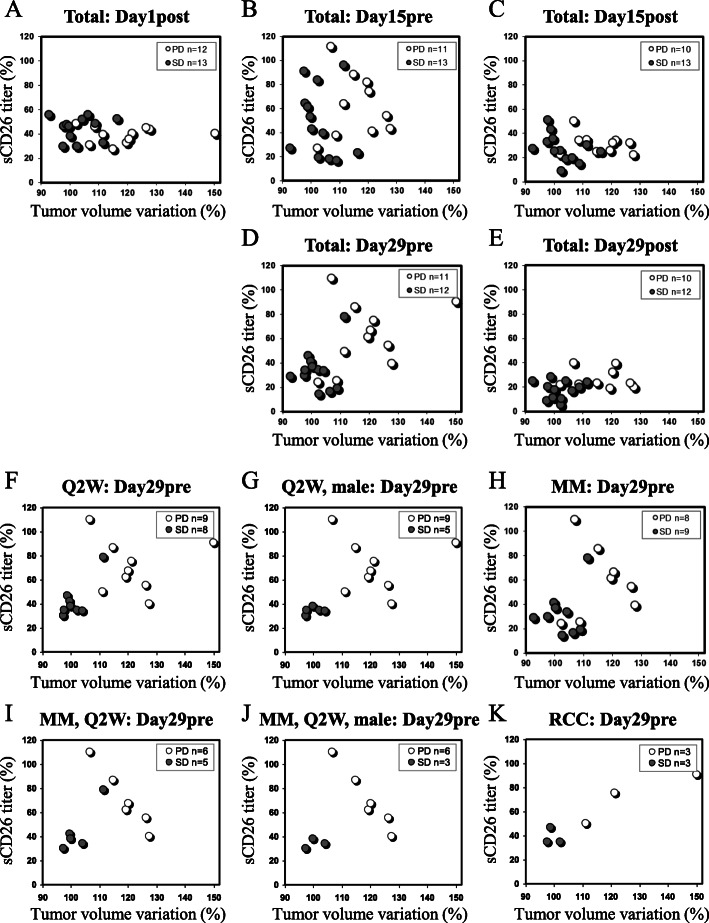
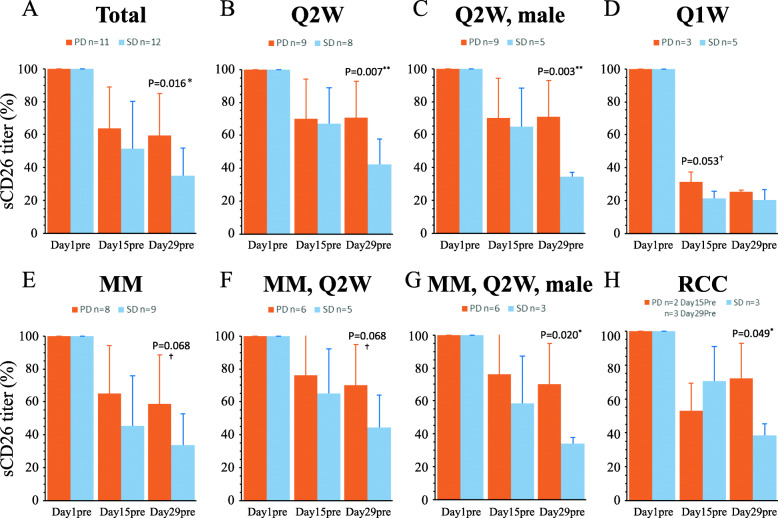
Box and Whisker plot analysis, Scatter plot analysis, Peason product moment correlation/Spearman's rank-difference correlation, Bar graph analysis, and Receiver Operating Characteristics (ROC) were used to examine the correlation between sCD26 titer variation with YS110 administration and tumor volume change, RECIST criteria evaluation and progression free survival (PFS). Mechanism for serum sCD26 titer variation was confirmed by in vitro experimentation.
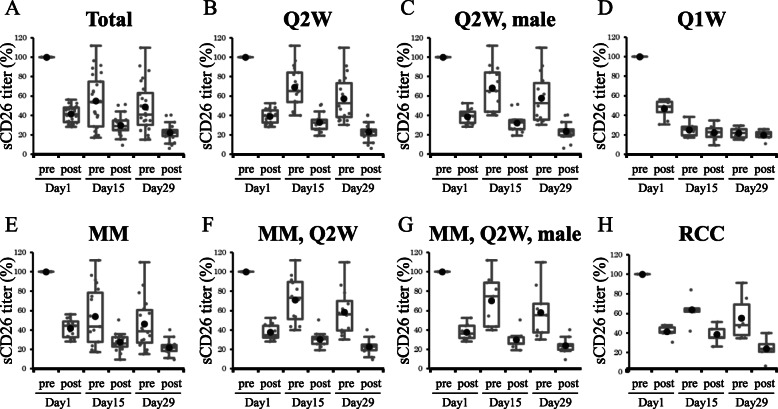
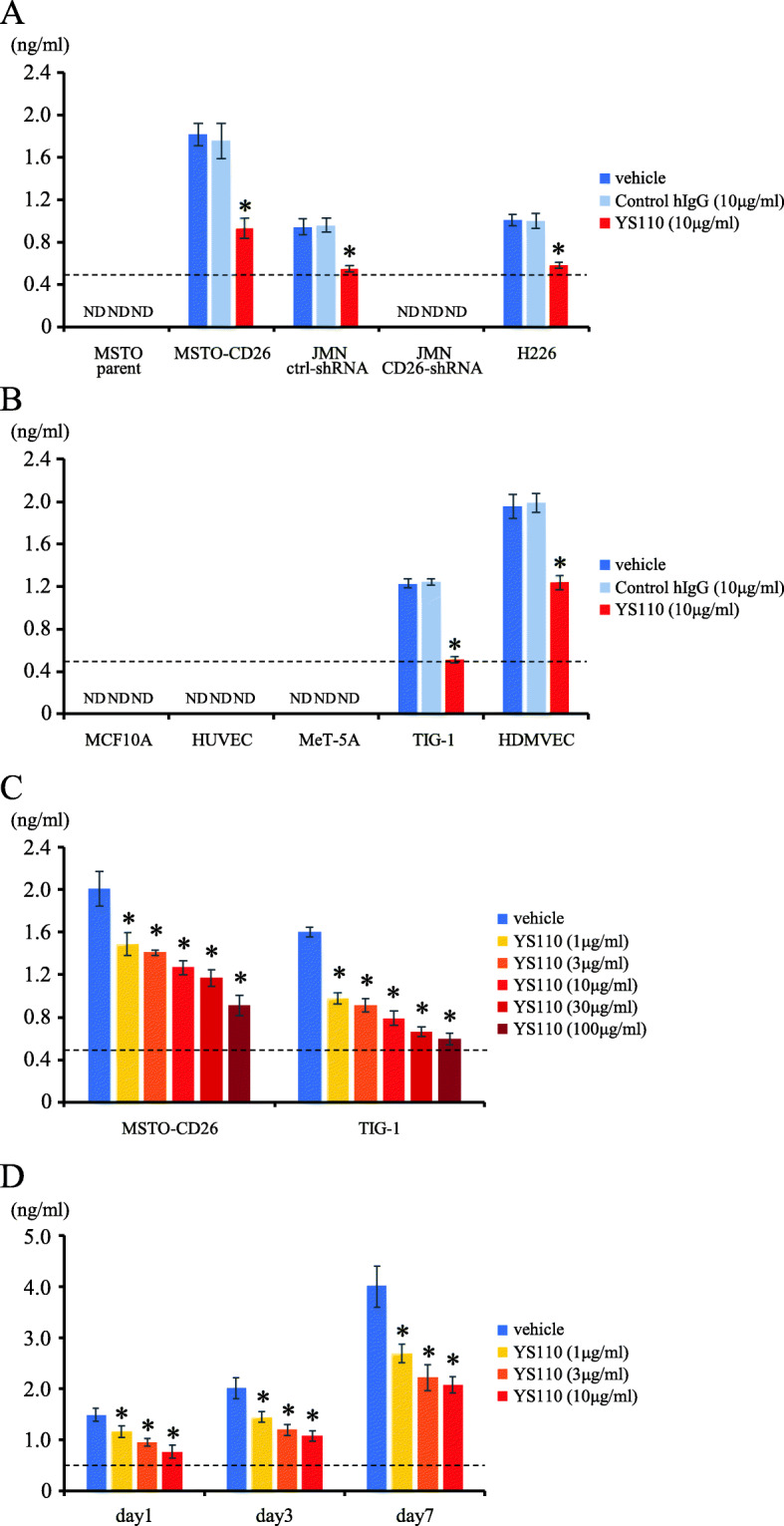
Serum sCD26/DPP4 titer was reduced following YS110 administration and gradually recovered until the next infusion. Serum sCD26/DPP4 titer before the next infusion was sustained at lower levels in Stable Disease (SD) cases compared to Progressive Disease cases. ROC analysis defined the cut-off level of serum sCD26/DPP4 titer variation at day 29 pre/post for the clinical outcome of SD as tumor response or PFS. In vitro experimentation confirmed that YS110 addition reduced sCD26 production from CD26-expressing tumor and non-tumor cells.
Our study indicates that serum sCD26/DPP4 titer variation in the early phase of YS110 treatment is a predictive biomarker for evaluating therapeutic efficacy.
人源化抗CD26单克隆抗体YS110针对表达CD26的肿瘤的I期试验最近已经开展。本研究基于I期数据确定了一种针对CD26靶向治疗的潜在预后生物标志物。
采用箱线图分析、散点图分析、皮尔逊积矩相关/斯皮尔曼等级差异相关、柱状图分析和受试者工作特征(ROC)分析来检测给予YS110后可溶性CD26(sCD26)滴度变化与肿瘤体积变化、实体瘤疗效评价标准(RECIST)评估及无进展生存期(PFS)之间的相关性。通过体外实验证实血清sCD26滴度变化的机制。
给予YS110后血清sCD26/二肽基肽酶4(DPP4)滴度降低,并逐渐恢复,直至下一次输注。与疾病进展的病例相比,疾病稳定(SD)病例在下一次输注前血清sCD26/DPP4滴度维持在较低水平。ROC分析确定了第29天治疗前后血清sCD26/DPP4滴度变化对于SD临床结局(作为肿瘤反应或PFS)的截断水平。体外实验证实加入YS110可降低表达CD26的肿瘤细胞和非肿瘤细胞产生sCD26。
我们的研究表明,YS110治疗早期血清sCD26/DPP4滴度变化是评估治疗疗效的预测生物标志物。