Departments of Ophthalmology, School of Medicine and Dentistry, University of Rochester, Rochester, NY, 14642, USA.
Departments of Pediatrics, School of Medicine and Dentistry, University of Rochester, Rochester, NY, 14642, USA.
Free Radic Biol Med. 2021 May 1;167:287-298. doi: 10.1016/j.freeradbiomed.2021.03.005. Epub 2021 Mar 21.
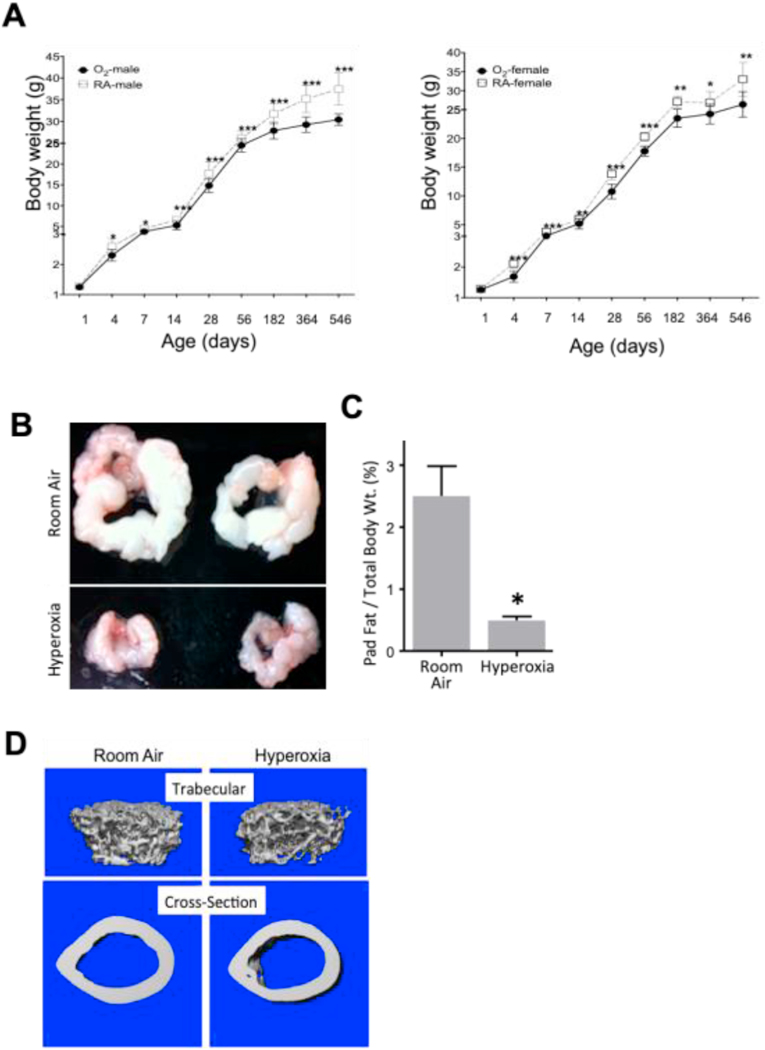
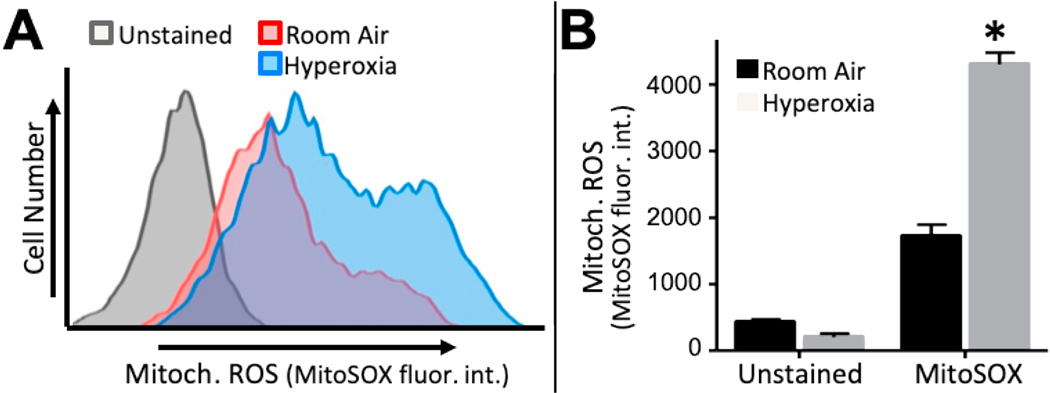
Preterm birth is a risk factor for growth failure and development of respiratory disease in children and young adults. Their early exposure to oxygen may contribute to lung disease because adult mice exposed to hyperoxia as neonates display reduced lung function, changes in the host response to respiratory viral infections, and develop pulmonary hypertension and heart failure that shortens their lifespan. Here, we provide new evidence that neonatal hyperoxia also impairs growth by inhibiting fat accumulation. Failure to accumulate fat may reflect a systemic defect in adipogenic potential of stem cells because bone marrow-derived mesenchymal cells (BMSCs) isolated from the mice grew slower and were more oxidized compared to controls. They also displayed reduced capacity to accumulate lipid and differentiate into adipocytes. BMSCs from adult mice exposed to neonatal hyperoxia express lower levels of peroxisome proliferator-activated receptor gamma (PPARγ), a transcription factor that drives adipocyte differentiation. The defect in adipogenesis was rescued by expressing PPARγ in these cells. These findings reveal early life exposure to high levels of oxygen may suppresses fat accumulation and impair adipogenic differentiation upstream of PPARγ signaling, thus potentially contributing to growth failure seen in people born preterm.
早产是儿童和青年时期生长发育不良和呼吸道疾病的危险因素。他们早期接触氧气可能会导致肺部疾病,因为新生期暴露于高氧环境中的成年小鼠显示肺功能下降、宿主对呼吸道病毒感染的反应发生变化,并发展为肺动脉高压和心力衰竭,从而缩短其寿命。在这里,我们提供了新的证据,证明新生儿高氧还通过抑制脂肪积累来阻碍生长。脂肪积累不足可能反映了干细胞成脂潜能的全身性缺陷,因为与对照组相比,从小鼠分离的骨髓间充质细胞(BMSC)生长更慢,且更易氧化。它们积累脂质和分化为脂肪细胞的能力也降低了。暴露于新生儿高氧环境中的成年小鼠的 BMSC 表达较低水平的过氧化物酶体增殖物激活受体γ(PPARγ),PPARγ 是一种驱动脂肪细胞分化的转录因子。在这些细胞中表达 PPARγ 可挽救成脂发生缺陷。这些发现表明,生命早期暴露于高水平的氧气可能会抑制脂肪积累,并抑制 PPARγ 信号传导上游的脂肪生成分化,从而可能导致早产儿生长发育不良。