Department of Molecular Biology and Genetics, Johns Hopkins University School of Medicine, Baltimore, MD, USA.
Oncology Department, Johns Hopkins University School of Medicine, Baltimore, MD, USA.
Nat Commun. 2021 Mar 23;12(1):1836. doi: 10.1038/s41467-021-22070-x.
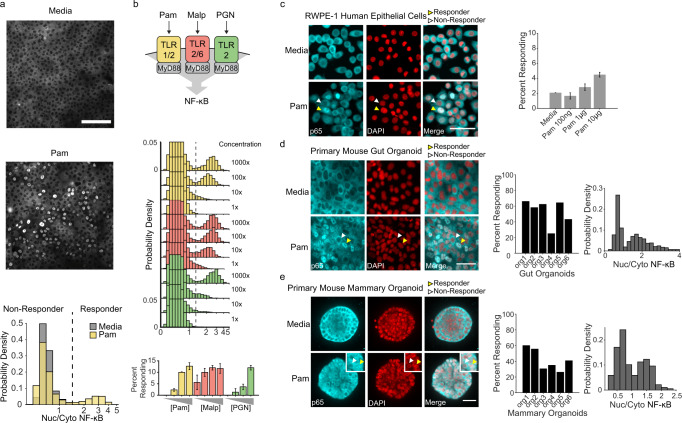
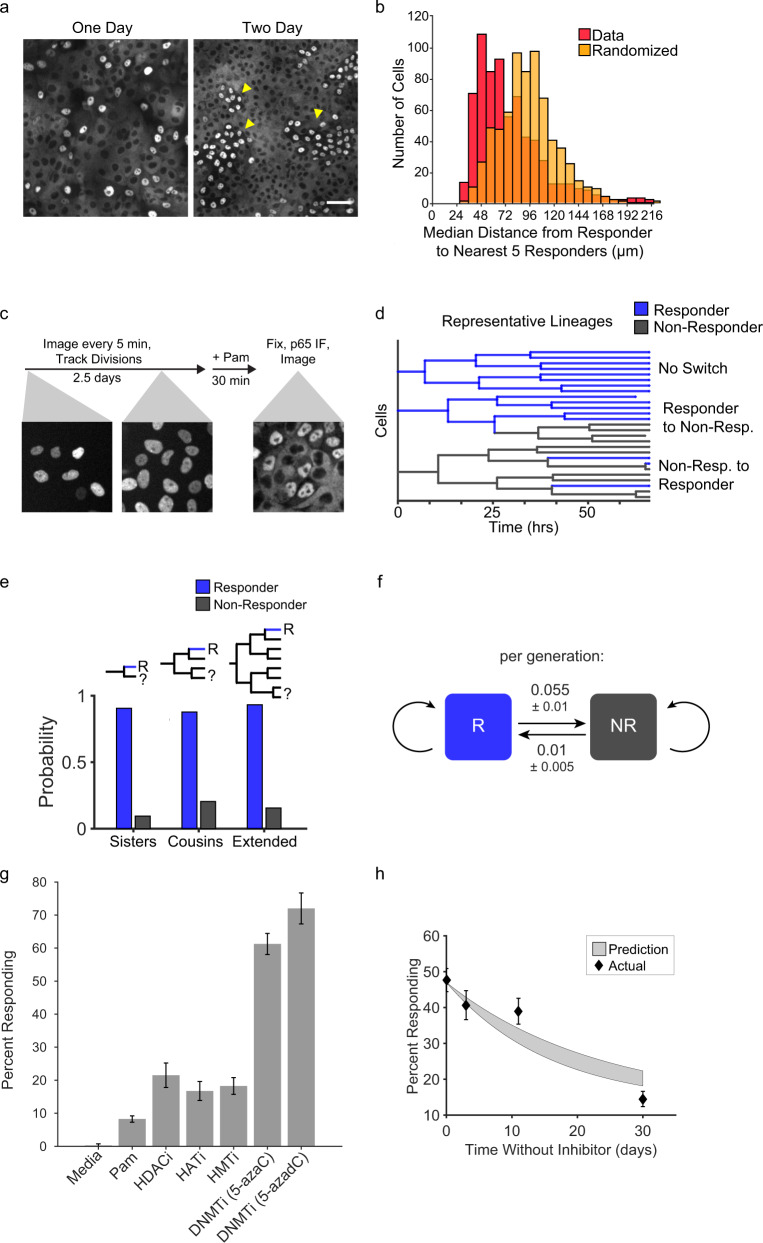
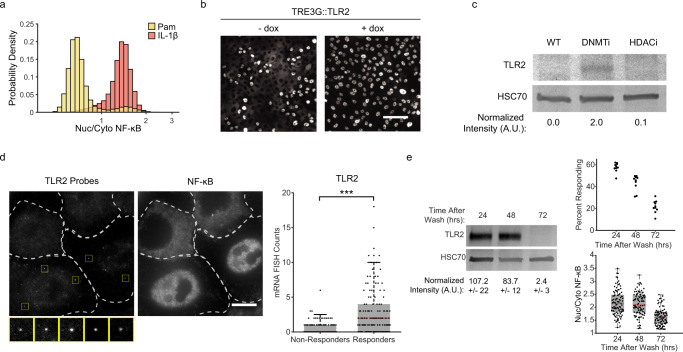
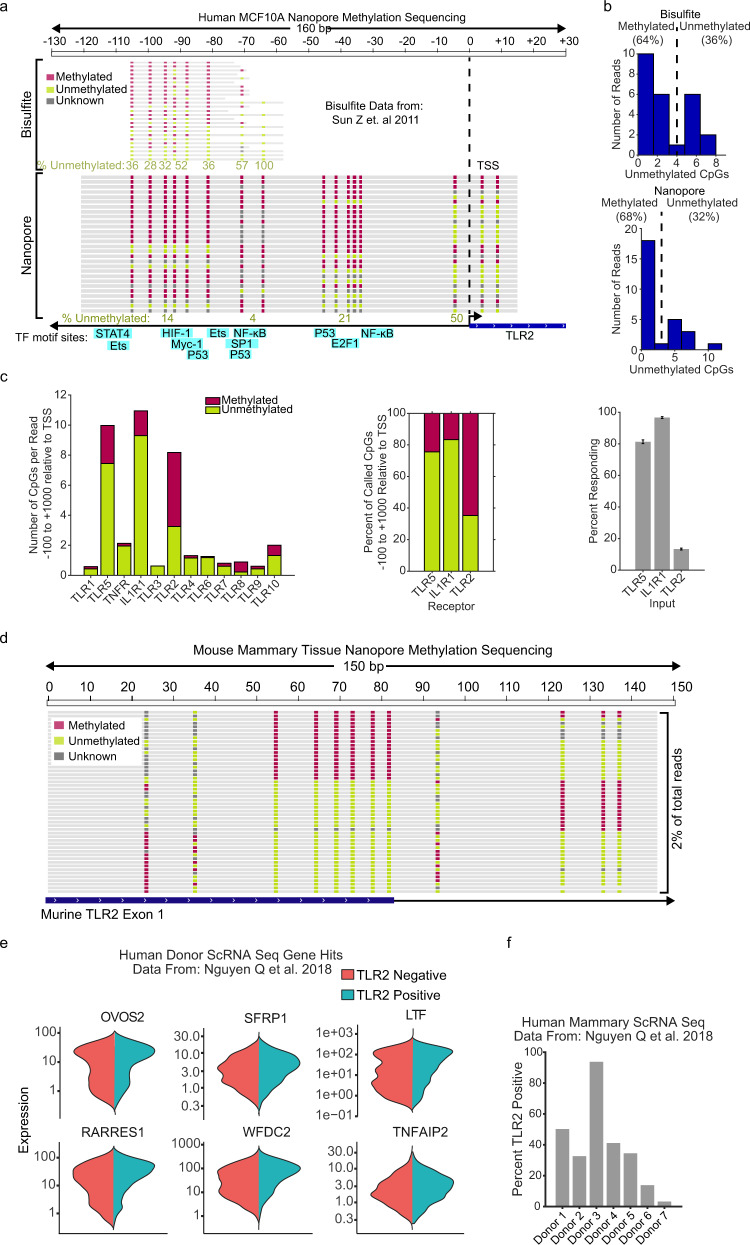
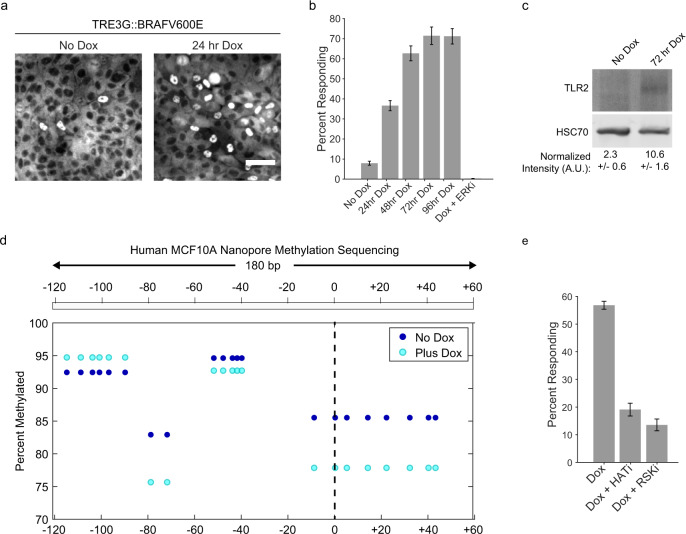
To prevent damage to the host or its commensal microbiota, epithelial tissues must match the intensity of the immune response to the severity of a biological threat. Toll-like receptors allow epithelial cells to identify microbe associated molecular patterns. However, the mechanisms that mitigate biological noise in single cells to ensure quantitatively appropriate responses remain unclear. Here we address this question using single cell and single molecule approaches in mammary epithelial cells and primary organoids. We find that epithelial tissues respond to bacterial microbe associated molecular patterns by activating a subset of cells in an all-or-nothing (i.e. digital) manner. The maximum fraction of responsive cells is regulated by a bimodal epigenetic switch that licenses the TLR2 promoter for transcription across multiple generations. This mechanism confers a flexible memory of inflammatory events as well as unique spatio-temporal control of epithelial tissue-level immune responses. We propose that epigenetic licensing in individual cells allows for long-term, quantitative fine-tuning of population-level responses.
为了防止宿主或其共生微生物群落受到损伤,上皮组织必须使免疫反应的强度与生物威胁的严重程度相匹配。Toll 样受体使上皮细胞能够识别微生物相关的分子模式。然而,减轻单细胞中生物噪声以确保定量适当反应的机制仍不清楚。在这里,我们使用乳腺上皮细胞和原代类器官的单细胞和单分子方法来解决这个问题。我们发现,上皮组织通过以全有或全无(即数字)的方式激活细胞亚群来响应细菌微生物相关的分子模式。响应细胞的最大分数受双模态表观遗传开关调节,该开关允许 TLR2 启动子在多个世代中转录。这种机制赋予了炎症事件的灵活记忆,以及上皮组织水平免疫反应的独特时空控制。我们提出,单个细胞中的表观遗传许可允许对群体水平反应进行长期的、定量的微调。