Department of Integrative Physiology and Center for Microbial Exploration, University of Colorado Boulder, Boulder, CO, 80309, USA.
Laboratory for Molecular Psychosomatics, Department of Psychosomatic Medicine and Psychotherapy, University Ulm, 89081, Ulm, Germany.
Sci Rep. 2021 Mar 23;11(1):6665. doi: 10.1038/s41598-021-85897-w.
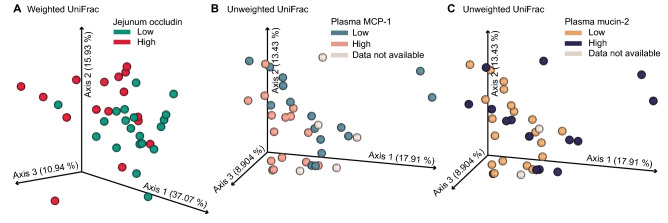
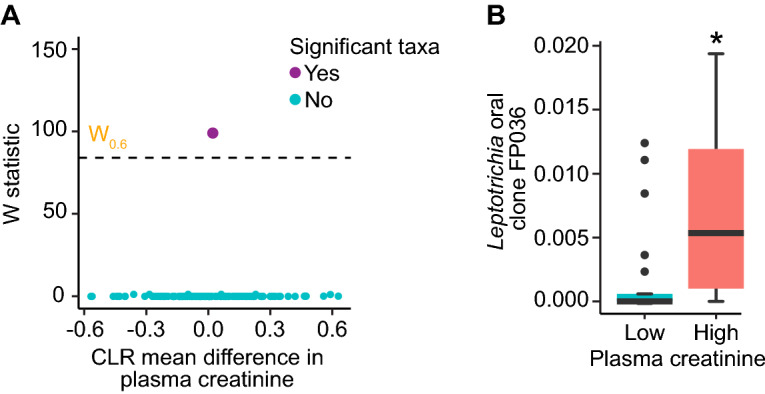
Severe injuries are frequently accompanied by hemorrhagic shock and harbor an increased risk for complications. Local or systemic inflammation after trauma/hemorrhage may lead to a leaky intestinal epithelial barrier and subsequent translocation of gut microbiota, potentially worsening outcomes. To evaluate the extent with which trauma affects the gut microbiota composition, we performed a post hoc analysis of a murine model of polytrauma and hemorrhage. Four hours after injury, organs and plasma samples were collected, and the diversity and composition of the cecal microbiome were evaluated using 16S rRNA gene sequencing. Although cecal microbial alpha diversity and microbial community composition were not found to be different between experimental groups, norepinephrine support in shock animals resulted in increased alpha diversity, as indicated by higher numbers of distinct microbial features. We observed that the concentrations of proinflammatory mediators in plasma and intestinal tissue were associated with measures of microbial alpha and beta diversity and the presence of specific microbial drivers of inflammation, suggesting that the composition of the gut microbiome at the time of trauma, or shortly after trauma exposure, may play an important role in determining physiological outcomes. In conclusion, we found associations between measures of gut microbial alpha and beta diversity and the severity of systemic and local gut inflammation. Furthermore, our data suggest that four hours following injury is too early for development of global changes in the alpha diversity or community composition of the intestinal microbiome. Future investigations with increased temporal-spatial resolution are needed in order to fully elucidate the effects of trauma and shock on the gut microbiome, biological signatures of inflammation, and proximal and distal outcomes.
严重损伤常伴有出血性休克,并增加并发症的风险。创伤/出血后局部或全身炎症可能导致肠上皮屏障通透性增加,随后肠道微生物群易位,可能使预后恶化。为了评估创伤对肠道微生物群落组成的影响程度,我们对多器官创伤和出血的小鼠模型进行了事后分析。损伤后 4 小时,采集器官和血浆样本,通过 16S rRNA 基因测序评估盲肠微生物组的多样性和组成。虽然实验组之间盲肠微生物的α多样性和微生物群落组成没有差异,但休克动物的去甲肾上腺素支持导致了更高的α多样性,这表明有更多独特的微生物特征。我们观察到,血浆和肠道组织中促炎介质的浓度与微生物α和β多样性的测量值以及炎症的特定微生物驱动因素的存在相关,这表明创伤时或创伤暴露后不久肠道微生物组的组成可能在决定生理结果方面发挥重要作用。总之,我们发现肠道微生物α和β多样性的测量值与全身和局部肠道炎症的严重程度之间存在关联。此外,我们的数据表明,损伤后 4 小时肠道微生物组α多样性或群落组成尚未发生全局变化。为了充分阐明创伤和休克对肠道微生物组、炎症的生物学特征以及近端和远端结果的影响,需要进行具有更高时空分辨率的进一步研究。