University of California San Diego, La Jolla, CA, USA.
San Diego State University, San Diego, CA, USA.
Biol Sex Differ. 2023 Nov 6;14(1):79. doi: 10.1186/s13293-023-00564-1.
The gut microbiome has been linked to many diseases with sex bias including autoimmune, metabolic, neurological, and reproductive disorders. While numerous studies report sex differences in fecal microbial communities, the role of the reproductive axis in this differentiation is unclear and it is unknown how sex differentiation affects microbial diversity in specific regions of the small and large intestine.
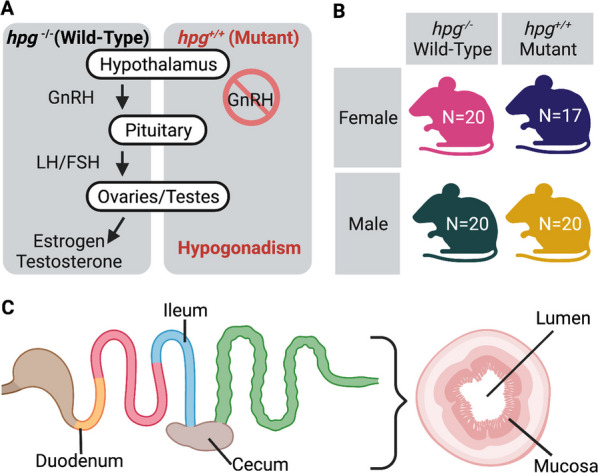
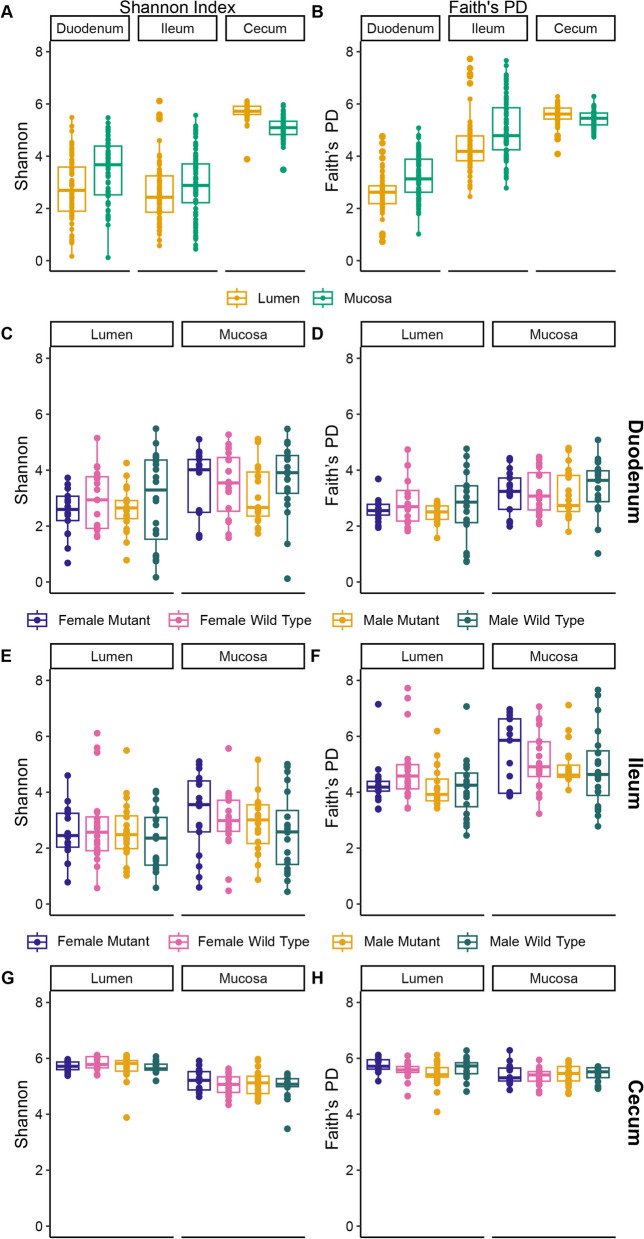
We used a genetic hypogonadal mouse model that does not produce sex steroids or go through puberty to investigate how sex and the reproductive axis impact bacterial diversity within the intestine. Using 16S rRNA gene sequencing, we analyzed alpha and beta diversity and taxonomic composition of fecal and intestinal communities from the lumen and mucosa of the duodenum, ileum, and cecum from adult female (n = 20) and male (n = 20) wild-type mice and female (n = 17) and male (n = 20) hypogonadal mice.
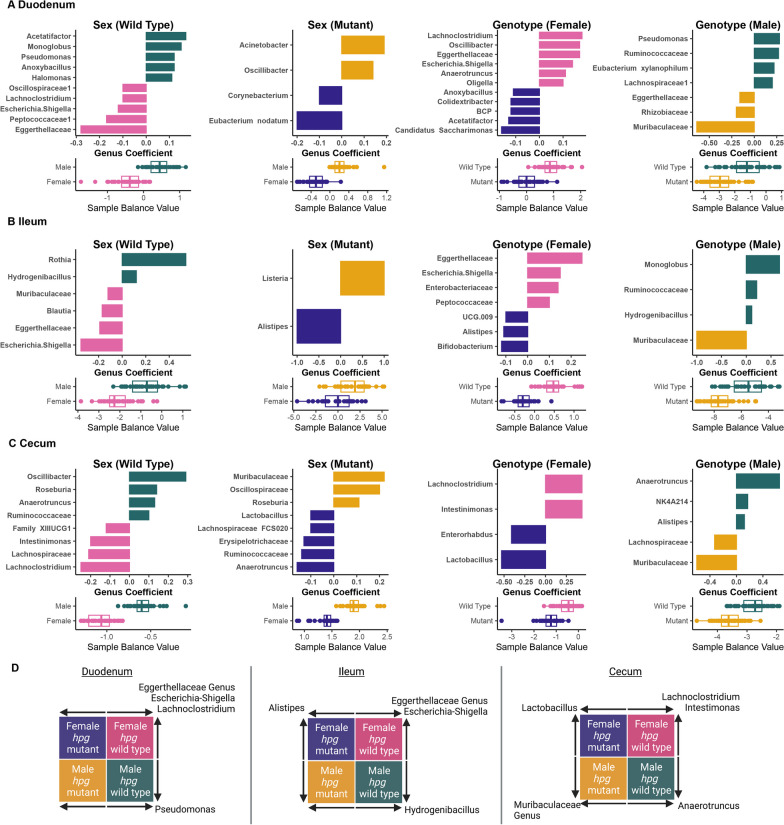
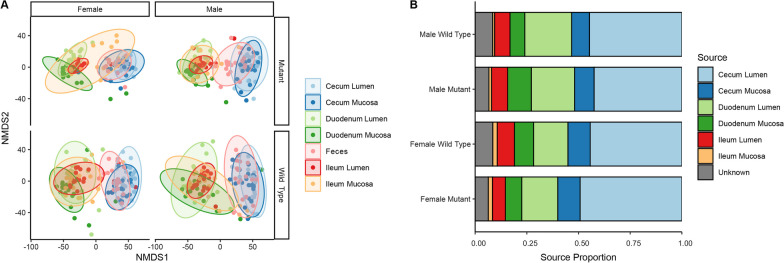
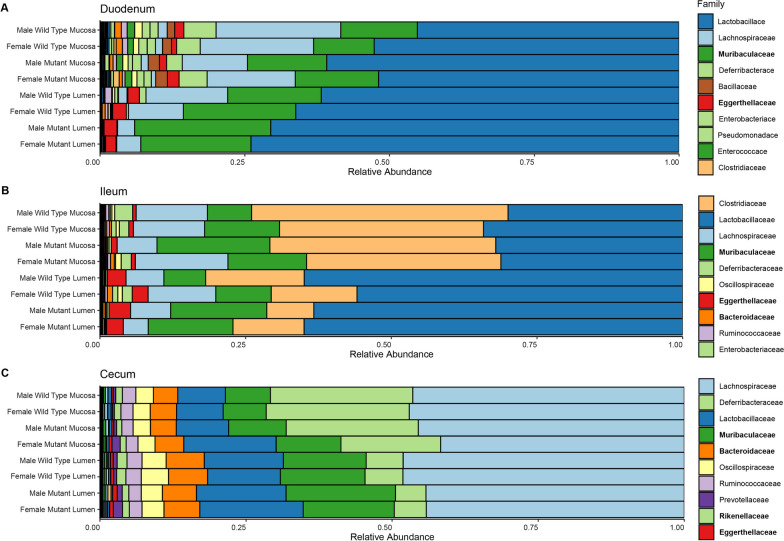
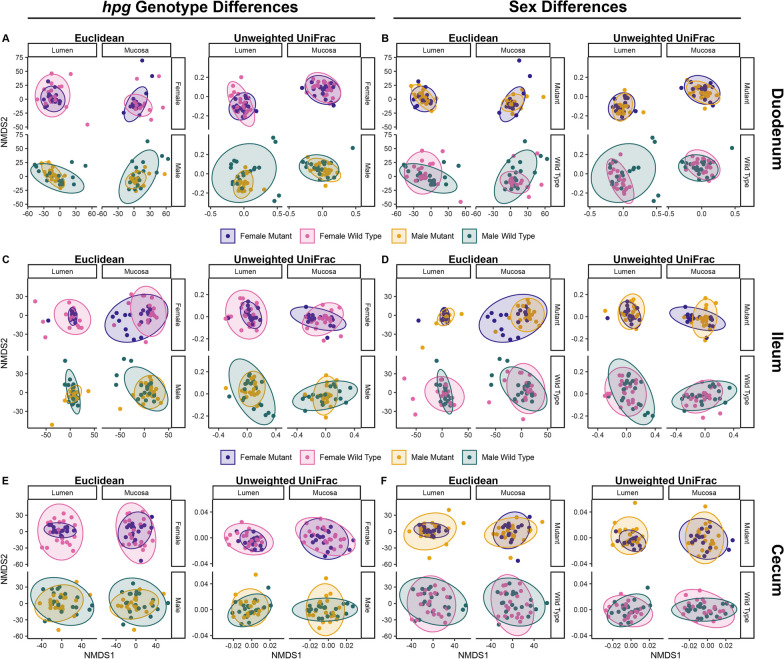
Both sex and reproductive axis inactivation altered bacterial composition in an intestinal section and niche-specific manner. Hypogonadism was significantly associated with bacteria from the Bacteroidaceae, Eggerthellaceae, Muribaculaceae, and Rikenellaceae families, which have genes for bile acid metabolism and mucin degradation. Microbial balances between males and females and between hypogonadal and wild-type mice were also intestinal section-specific. In addition, we identified 3 bacterial genera (Escherichia Shigella, Lachnoclostridium, and Eggerthellaceae genus) with higher abundance in wild-type female mice throughout the intestinal tract compared to both wild-type male and hypogonadal female mice, indicating that activation of the reproductive axis leads to female-specific differentiation of the gut microbiome. Our results also implicated factors independent of the reproductive axis (i.e., sex chromosomes) in shaping sex differences in intestinal communities. Additionally, our detailed profile of intestinal communities showed that fecal samples do not reflect bacterial diversity in the small intestine.
Our results indicate that sex differences in the gut microbiome are intestinal niche-specific and that sampling feces or the large intestine may miss significant sex effects in the small intestine. These results strongly support the need to consider both sex and reproductive status when studying the gut microbiome and while developing microbial-based therapies.
肠道微生物群与许多具有性别偏向的疾病有关,包括自身免疫、代谢、神经和生殖障碍。虽然许多研究报告了粪便微生物群落中的性别差异,但生殖轴在这种分化中的作用尚不清楚,也不知道性别分化如何影响小肠和大肠特定区域的微生物多样性。
我们使用一种遗传低性腺小鼠模型,该模型不产生性激素或经历青春期,以研究性别和生殖轴如何影响肠道内细菌的多样性。我们使用 16S rRNA 基因测序,分析了来自成年雌性(n=20)和雄性(n=20)野生型小鼠以及雌性(n=17)和雄性(n=20)低性腺小鼠的粪便和肠道腔及黏膜的肠道和腔内群落的 alpha 和 beta 多样性以及分类组成。
性别和生殖轴失活均以肠道节段和生态位特异性的方式改变细菌组成。低性腺与拟杆菌科、 Eggerthellaceae 科、 Muribaculaceae 科和 Rikenellaceae 科的细菌显著相关,这些细菌具有胆汁酸代谢和粘蛋白降解的基因。雄性和雌性之间以及低性腺和野生型小鼠之间的微生物平衡也是肠道节段特异性的。此外,我们还发现了 3 个细菌属(Escherichia Shigella、Lachnoclostridium 和 Eggerthellaceae 属)在整个肠道中,野生型雌性小鼠的丰度高于野生型雄性和低性腺雌性小鼠,这表明生殖轴的激活导致肠道微生物组的雌性特异性分化。我们的研究结果还表明,生殖轴以外的因素(即性染色体)也会影响肠道群落的性别差异。此外,我们对肠道群落的详细分析表明,粪便样本不能反映小肠中的细菌多样性。
我们的研究结果表明,肠道微生物组中的性别差异是肠道生态位特异性的,并且采样粪便或大肠可能会错过小肠中重要的性别影响。这些结果强烈支持在研究肠道微生物组和开发基于微生物的疗法时,既要考虑性别,也要考虑生殖状态。